When Should You Use a Paddle Leash, and When Should You Not?
I’ll help you decide when a paddle leash is useful, when it creates more risk than it prevents, and how to choose a simple setup that won’t turn a kayak capsize into a tangled recovery problem.
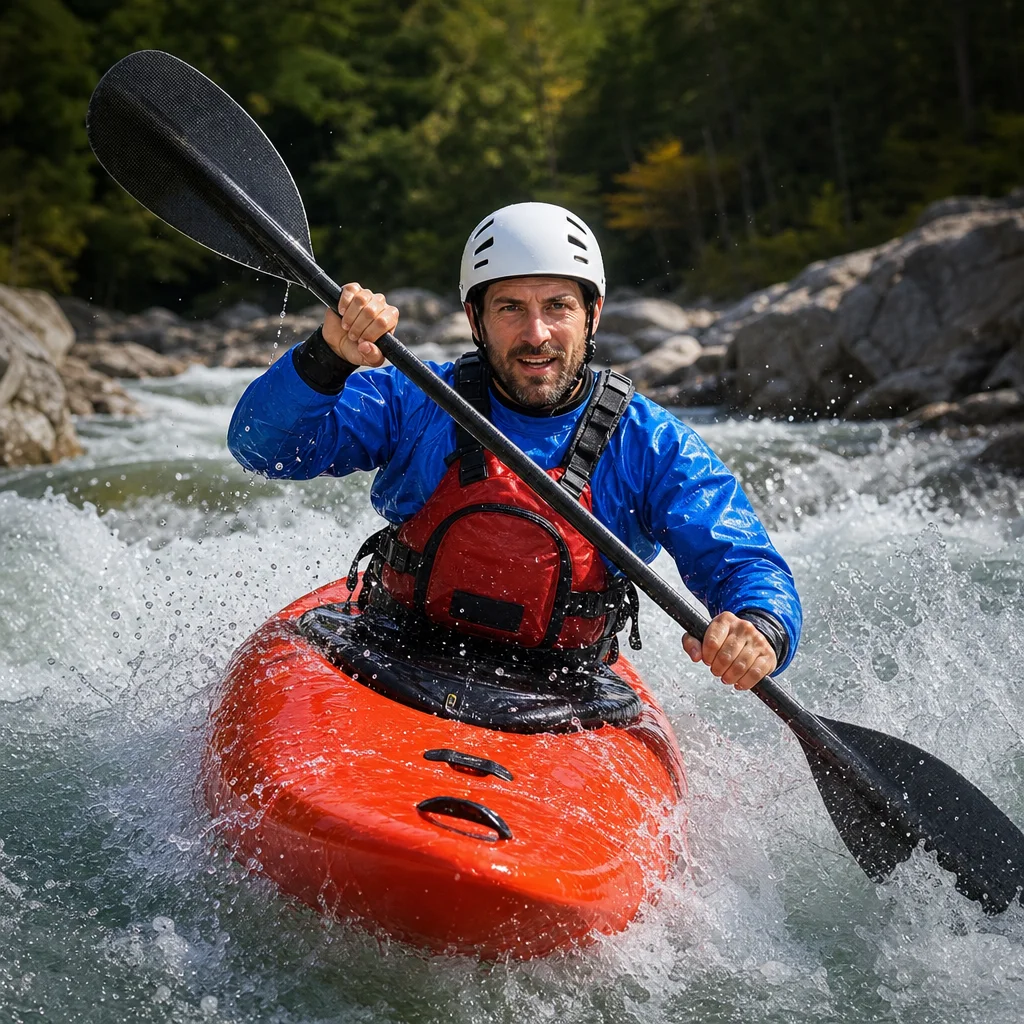
By Kyle Bennett · Kayak Gear
A paddle leash can solve a simple problem: keeping your paddle close after you drop it or capsize. But the same tether that prevents a long swim for your paddle can also create an entanglement hazard, especially in current, wind, surf, or a serious capsize.
The minimalist answer isn't “always use one” or “never use one.” Use a paddle leash when the conditions and kayak setup make recovering a separated paddle difficult, and leave it off when the tether could interfere with your ability to separate from the kayak or manage moving water.
What a paddle leash does—and doesn’t do
A paddle leash connects your paddle to your kayak with a short, coiled, or retractable tether. If you let go of the paddle, the leash keeps it nearby instead of allowing wind, waves, or current to carry it away.
That can be valuable for:
- Preventing the loss of an expensive paddle
- Keeping a paddle within reach after a routine drop
- Making a calm-water capsize recovery less frustrating
- Helping a solo paddler avoid being separated from essential equipment
A leash doesn't replace a personal flotation device, a spare-paddle plan, or good paddle control. It also doesn’t guarantee that the paddle will remain safely positioned during a capsize. The leash may pull the paddle back toward you, the boat, or nearby obstacles, depending on the water and how it is attached.
Think of it as equipment retention, not safety equipment by itself.
When a paddle leash is usually useful
Calm, open water with a sit-on-top kayak
A leash can make sense on a sit-on-top kayak used on a lake, sheltered bay, or other relatively calm water. If you drop the paddle, you can usually see it, stay above the kayak, and manage the tether without being enclosed by the boat.
This is particularly useful when you’re taking a break, adjusting clothing, helping another paddler, or practicing basic skills. A paddle that drifts a few yards away can be inconvenient even when the water is calm.
Keep the leash short enough that it doesn’t form a large loop around your body or the kayak. Attach it to a secure point intended for equipment, rather than a loose accessory, fishing line, or improvised cord.
Solo paddling where replacing the paddle would be difficult
If you’re paddling alone and have no practical way to retrieve or replace a separated paddle, retaining it may be worth the trade-off. This is more relevant on a long shoreline route or remote lake than on a small, busy pond where a companion or launch point is close by.
Even in this situation, the leash shouldn't be your only plan. Carrying a spare paddle, when your kayak and route allow it, gives you a better backup than relying on a tether that could become damaged or tangled.
Short breaks and low-risk skill practice
A leash can be helpful when practicing strokes or beginner drills in protected water. It keeps the paddle available while you focus on posture, edging, or getting back into the kayak.
For capsize practice, however, use the leash only if your instructor or experienced partner can help you evaluate the setup. Practice should include releasing, controlling, or removing the leash—not simply assuming it will behave predictably in every position.
When you should leave the leash off
Fast current, rivers, and water around obstacles
Moving water changes the risk calculation. A loose paddle can become a snag point when the kayak, paddle, or tether is pushed against a rock, strainer, dock, bridge support, or other obstruction.
A tether can also pull the paddle across the kayak or toward you while the current loads it. That may make it harder to orient yourself, hold the boat, or swim clear. In strong current, getting free of the equipment is generally more important than saving the paddle.
For river paddling, follow the practices taught by a qualified instructor or local paddling organization. Many paddlers choose not to use a paddle leash in moving water because the entanglement and snagging consequences can be serious.
Surf, shore break, and exposed coastal water
Breaking waves can move a kayak and paddle in different directions with considerable force. A leash may cause the paddle to rebound toward you or remain close to a boat that is being pushed through the surf.
Surf-specific equipment and techniques vary, but a standard recreational paddle leash shouldn't be treated as a universal solution for ocean conditions. If you’re entering surf or exposed coastal water, learn the local launch, capsize, and separation procedures first. In some situations, controlling the paddle without a tether is simpler and safer.
Sit-inside kayaks, especially during a wet exit
A sit-inside kayak creates a more complicated environment during a capsize. Your legs are inside the cockpit, your spray skirt may be attached, and the paddle leash can pass across spaces you need to clear quickly.
A tether around your wrist, torso, paddle shaft, or cockpit can restrict movement during a wet exit. It can also catch on deck lines or other equipment. If you can't confidently release or cut away from the leash while inverted, don’t use it in that setup.
A paddle leash may have a place in controlled, calm-water use with a sit-inside kayak, but it deserves more caution than it typically receives on a sit-on-top. Your ability to exit the boat cleanly comes first.
Fishing, touring, or deck setups with many loose items
A paddle leash is only one line on the kayak. Add fishing rods, anchor systems, deck bungees, camera straps, nets, or other accessories, and the chance of snagging increases.
If your deck already feels crowded, adding another tether may create more problems than it solves. Secure other equipment first, keep lines short and managed, and avoid arrangements that can loop around your hands, feet, neck, or torso.
Check the conditions before launching: Confirm the current, wind, surf, route, and local access or boating requirements for your trip. If a capsize could push you toward an obstacle or make a tether difficult to release, leave the paddle leash off and use a different paddle-retention plan.
The biggest mistake: treating a leash as automatic safety equipment
The most common mistake is attaching a leash because it sounds safer, without considering what happens when the kayak flips.
A tether is useful when a paddle is merely dropped. A capsize is different: you may be underwater, disoriented, separated from the cockpit, or trying to keep hold of the kayak. A leash that was harmless during normal paddling can become a line to manage at exactly the wrong moment.
Never wrap a paddle leash around your wrist, hand, waist, neck, or any part of your body. Attach it according to the product’s instructions and make sure you can release yourself from the system without searching for a complicated buckle.
Don't assume that a quick-release feature makes every leash appropriate for every environment. A release that is easy to find and operate in calm water may be difficult to use while wearing gloves, dealing with cold hands, or being pushed by waves.
How to choose a lower-risk setup
If a leash fits your type of paddling, keep the system simple.
Choose a purpose-built leash
Use a leash designed for kayak paddles rather than improvised rope, paracord, or a long elastic cord. Purpose-built products generally have attachment points and materials suited to repeated wet use, though quality and design still vary.
Inspect the tether, stitching, clips, and attachment loop before each outing. Replace it if the material is frayed, cracked, stretched, or no longer releases and reconnects reliably.
Attach it to a secure kayak point
The kayak-side connection should be strong enough for normal paddle retention but positioned where it won’t block your exit or catch easily. A manufacturer-provided attachment point is usually preferable to a random deck fitting.
Keep the leash away from rudder lines, foot controls, fishing gear, and cockpit edges. After attaching it, move through the strokes and body positions you’ll use on the water. Look for places where it could cross your hands or snag during a capsize.
Avoid excessive length
A long leash creates more loop and snag potential. It may also wrap around the paddle shaft, a deck fitting, or your body. Use only enough length for normal paddling and the movement required by your kayak.
Coiled leashes can reduce slack, but they aren't automatically tangle-proof. Check how the coil behaves when stretched, twisted, and pulled across the deck.
Test the release while upright
Before launching, locate the release and operate it while seated in the kayak. You should know which part to pull or disconnect without looking for long.
Don't test a new setup for the first time in rough water. Practice in a controlled area with a capable partner, and treat any inability to release the tether quickly as a reason to change or remove it.
Alternatives to a paddle leash
A leash isn't the only way to avoid losing your paddle.
- Use a spare paddle: A properly secured spare can be a more useful backup on longer trips, provided you know how to access it.
- Improve paddle control: Correct grip, relaxed hands, and a consistent stroke reduce ordinary drops.
- Stay within easy retrieval range: On calm water, positioning yourself and the kayak well can make a loose paddle easier to recover without a tether.
- Use a paddle float or other recovery gear when appropriate: These items support specific rescue techniques but require practice and shouldn't be confused with paddle retention.
- Paddle with a partner: A companion can help retrieve equipment, but you still need a plan for a capsize and separation.
The best alternative depends on the route, kayak, weather, and your ability to handle a capsize. Avoid adding gear simply because it is common; every line on a kayak deserves a reason and a safe place.
A simple decision checklist
Use a paddle leash when most of these statements are true:
- You’re on calm or protected water.
- You’re using a sit-on-top or a setup that allows a clean exit.
- Losing the paddle would create a significant problem.
- The leash is short, purpose-built, and securely attached.
- You can release or remove it quickly.
- It won’t interfere with other gear or recovery techniques.
Leave it off when any of these conditions apply:
- You’re in strong current, surf, or water near hazards.
- You’re wearing a spray skirt and can't confidently manage the tether during a wet exit.
- The leash can wrap around you, the paddle, or another piece of equipment.
- You’re relying on it instead of carrying appropriate backup equipment.
- You haven’t tested the setup in controlled conditions.
When in doubt, prioritize a clean separation from the kayak and a reliable capsize plan over retaining the paddle. For many recreational sit-on-top trips in calm water, a carefully fitted leash is a reasonable minimalist addition. For moving water, surf, or complicated sit-inside setups, leaving it off is often the simpler and safer choice.
Before your next launch, inspect the leash, identify its release, clear nearby lines, and rehearse what you’ll do if you drop the paddle or capsize. That short check will tell you more than the leash alone about whether it belongs on that particular trip.