How to Make a Kayak More Visible Near Motorized Traffic
I’ll compare the simplest ways to make a kayak easier to detect near motorized traffic, from clothing and high-visibility flags to lights, signaling, positioning, and route choices. You’ll also see where each aid helps—and why none makes a crossing automatically safe.
By Kyle Bennett · Kayak Gear
Motorized traffic can approach quickly, and a low kayak may be difficult to distinguish from glare, waves, shoreline clutter, or floating debris. Making yourself more visible helps, but it works best as part of a larger plan that reduces how often you share the same water and gives boat operators time to recognize your course.
The most useful approach is usually minimalist: choose a route with fewer conflicts, stay where you’re predictable, wear colors that contrast with the surroundings, and carry a reliable way to attract attention. Add lights or a flag when conditions, traffic, or local requirements justify them.
Start with route choice and positioning
Visibility aids aren't a substitute for avoiding difficult situations. A bright paddle blade does little if you’re hidden behind a dock, crossing a busy channel at the wrong angle, or traveling in fog when larger vessels can't maneuver easily.
Before launching, look for alternatives to the main traffic lane:
- Use protected shorelines, coves, marked paddling areas, or no-wake zones where they are available.
- Cross channels at the shortest reasonable route rather than traveling lengthwise in them.
- Avoid blind corners, narrow bends, harbor entrances, and the downstream side of busy crossings when another route exists.
- Plan around poor visibility, strong wind, heavy chop, and times when recreational or commercial traffic is busiest.
- Keep enough distance from moored boats, docks, and shoreline obstructions to see approaching traffic and be seen yourself.
When you must cross a traffic area, check in all directions before starting and continue looking while you cross. Make your intentions predictable. A steady, direct course is generally easier for another operator to interpret than repeated turns or last-second changes, but you should still yield and move out of danger when needed.
Check the local waterway rules: Before relying on a light, flag, sound signal, or particular crossing practice, check the current requirements for the lake, river, harbor, or coastal area you’ll use. Navigation rules and restrictions can vary by jurisdiction, vessel type, time of day, and waterway.
Compare the main visibility aids
No single product solves every visibility problem. Each aid improves a different part of the detection process, and some are more useful in daylight while others matter after dark.
| Visibility aid | Best use | Main limitations |
|---|---|---|
| Bright clothing or PFD | Daylight recognition at close to moderate range | Can blend into glare, vegetation, or reflective water; doesn’t identify your position precisely |
| High-visibility kayak or deck gear | Making the boat easier to distinguish | Color alone may be hard to see in low light or rough conditions |
| Visibility flag or raised panel | Improving your outline above the waterline | Can catch wind, interfere with gear, or become less effective when folded or poorly positioned |
| Reflective tape or material | Returning light from a flashlight or headlamp | Doesn't glow on its own and is weak when nobody is shining light at you |
| White light or navigation lighting | Showing your presence in darkness or reduced visibility | Must be used and positioned correctly; glare, battery failure, and legal requirements matter |
| Whistle or other sound signal | Attracting attention when visual detection fails | Sound direction can be difficult to judge, especially with wind and engine noise |
| VHF radio or electronic aid | Communicating or increasing awareness in suitable waters | Requires training, charging, coverage, and equipment appropriate to the area |
For most daytime trips, clothing, kayak color, a raised visibility aid, and route selection provide a sensible baseline. For dawn, dusk, darkness, fog, or heavy traffic, you need a more deliberate lighting and communication plan rather than simply adding brighter colors.
Use color and contrast intelligently
High-visibility colors such as fluorescent yellow, orange, or green can help during daylight, particularly against dark water or a muted shoreline. A vivid color isn't equally visible in every setting, though. Bright sun, whitecaps, autumn vegetation, and reflected light can reduce contrast.
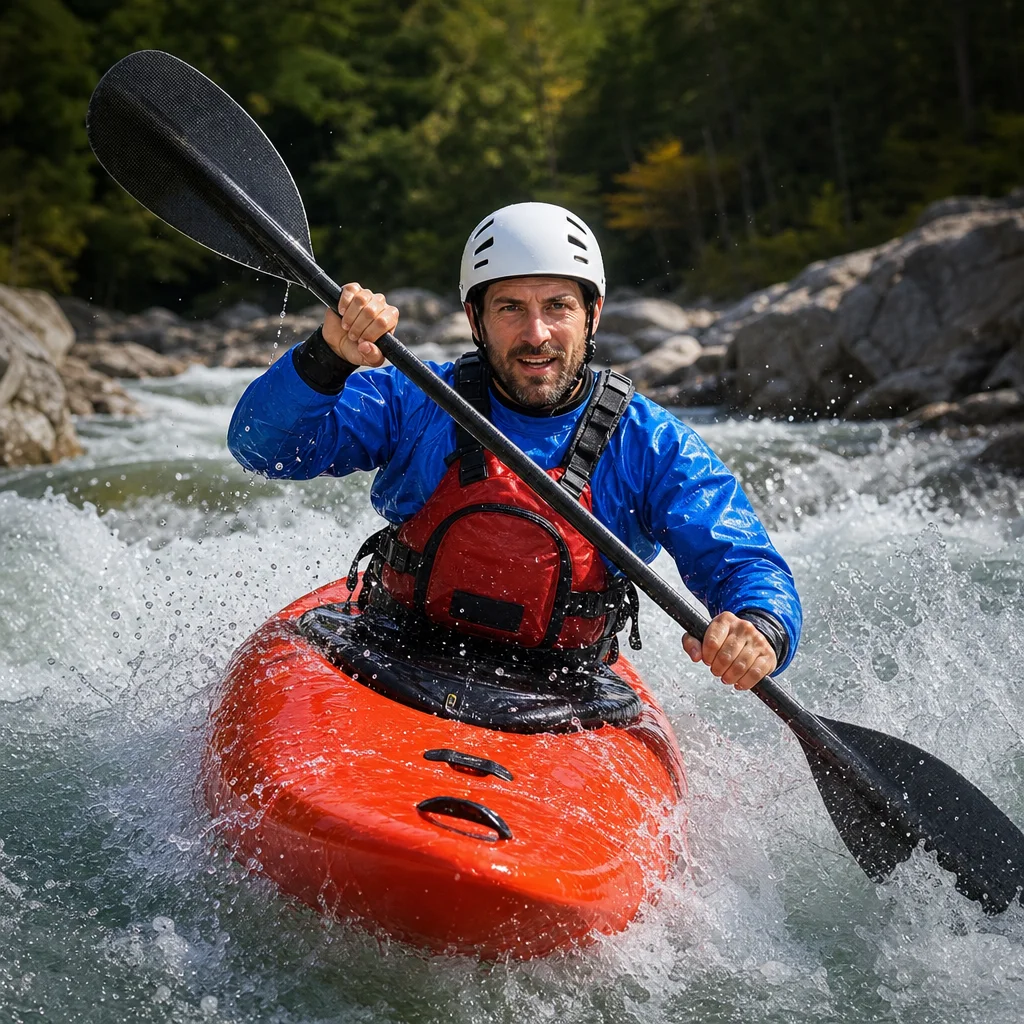
A practical setup is to combine contrasting colors instead of relying on one small patch. For example, a bright PFD or jacket, a visible kayak deck, and contrasting paddle blades create several chances for an approaching operator to notice movement. Keep the most visible items on your body or boat rather than under a spray skirt, behind a seat, or inside a hatch.
Choose gear that remains visible when you’re seated normally. A color that looks obvious while the kayak is on shore may disappear below a motorboat operator’s line of sight once you’re on the water.
Avoid treating camouflage or neutral clothing as a safety feature near motorized traffic. Those colors may be comfortable and practical in some environments, but they generally give other water users less visual contrast.
Raise a flag or visibility panel when it fits the trip
A small flag or high-visibility panel mounted above the kayak can make you easier to distinguish from a low angle. This can be especially useful where waves, reeds, or other boats may obscure the hull.
Keep the setup simple and secure:
- Position it where it won’t block your view, catch on branches, or interfere with a paddle stroke.
- Use a mount that won’t create a sharp hazard if you capsize or need to exit.
- Check that the flag remains extended in light wind rather than wrapping around its pole.
- Remove or fold it when transporting the kayak or navigating places where it could snag.
- Inspect the attachment point before each outing.
A flag is most useful as a daytime detection aid. It doesn't make you clearly visible at night, and it doesn't give you priority over a powered vessel. It can also be less useful in strong wind, heavy rain, or rough water if it folds flat or becomes difficult to distinguish from background clutter.
Add lights for low light, but don’t create glare
Darkness and reduced visibility require more than bright clothing. Use lighting that helps another person identify your position without blinding you or confusing the scene around you.
A light should be:
- Reliable and adequately charged for the full trip, with backup power when practical.
- Mounted or carried where it can be seen from likely directions.
- Protected from spray while remaining easy to access.
- Bright enough for detection without shining directly into your own eyes or reflecting off the deck.
- Used in a way that complies with the rules for your location and vessel.
A headlamp can help you inspect equipment or signal another person, but it may be a poor primary visibility light if it points only where your head is turned. A small light buried in a cockpit or covered by a spray deck has the same problem: it may work technically while remaining difficult for an approaching operator to see.
If you paddle after sunset, in fog, or during other restricted-visibility conditions, learn what lighting configuration applies to your kayak. Requirements can be specific, and an improvised arrangement may not satisfy them. In some situations, postponing the trip is the safer choice.
Carry a sound signal you can use immediately
A whistle is inexpensive, compact, and useful when an approaching boat hasn't noticed you. Keep it attached to your PFD where you can reach it with either hand, rather than stored in a dry bag or deck box.
Practice taking it out and signaling without looking down. Engine noise, wind, and distance can reduce its effectiveness, so use it early when you need attention. A sound signal is for attracting attention, not for assuming that the other operator understands your intended maneuver.
In areas where a marine radio is appropriate, a handheld VHF can provide a stronger communication option than a whistle. It also adds complexity: you need to know how to operate it, keep it charged, protect it from water, and follow local channel and communication practices. It isn't a replacement for visual awareness or a personal flotation device.
Make your clothing and gear work together
The simplest visibility system is one you’ll actually wear and maintain. Your PFD should remain visible and properly fitted, and essential signaling equipment should stay attached to it. Consider reflective patches or tape on the PFD, paddle, and deck lines if you may encounter low light.
Reflective material only works when light from another source reaches it. It can improve recognition when illuminated by a boat’s spotlight or headlight, but it shouldn't be treated as a substitute for an appropriate active light.
Avoid overloading the kayak with poles, lights, flags, and accessories that create snag points or make a wet exit harder. More equipment can also produce false confidence. Visibility gear should support basic skills, not encourage you to enter conditions beyond your ability.
Use visibility as one layer of risk reduction
Before launching near motorized traffic, check the forecast, water conditions, daylight, traffic pattern, and route. Tell someone where you’re going and when you expect to return. Wear your PFD, keep your signaling device accessible, and stay alert instead of relying on a phone or camera to monitor what’s around you.
If an approaching boat’s intentions are unclear, create more separation when possible. Move toward a safer position early, avoid lingering in the vessel’s path, and be prepared for the operator not to see you or not to maneuver as expected. Larger vessels may have blind spots and limited ability to turn or stop.
A minimalist setup for many daytime trips is:
- A properly fitted, visible PFD
- Contrasting clothing or a high-visibility outer layer
- A kayak and paddle that stand out against the surroundings
- A securely mounted flag or raised visibility panel when useful
- A whistle attached to the PFD
- A route that avoids the busiest traffic whenever possible
Add appropriate lighting, backup power, or communication equipment when the trip extends into low light, remote areas, open coastal water, or more complex traffic. If conditions make it difficult for you to see motorized traffic early, visibility aids can't remove that hazard. The safest decision may be to choose a different route, wait for better conditions, or stay off the water.
Practical next steps
For your next trip, stand beside your loaded kayak and ask what another operator will actually see from a distance. Check whether your PFD, flag, light, and whistle remain accessible in your normal paddling position. Then review the route for blind spots and crossings before you launch.
Start with the fewest reliable aids that address your conditions, test them in daylight, and confirm the current local rules before using them after dark or in restricted visibility. Being easier to see is valuable, but avoiding conflicts and staying predictable remain the foundation of a safer outing.