How to Navigate a Kayak Route With a Locked Gate or Portage Closure
When a gate is locked or a portage is closed, a familiar kayak route can become a serious access and carry problem. I’ll help you assess the restriction, build a dependable alternate plan, and decide when to turn back.
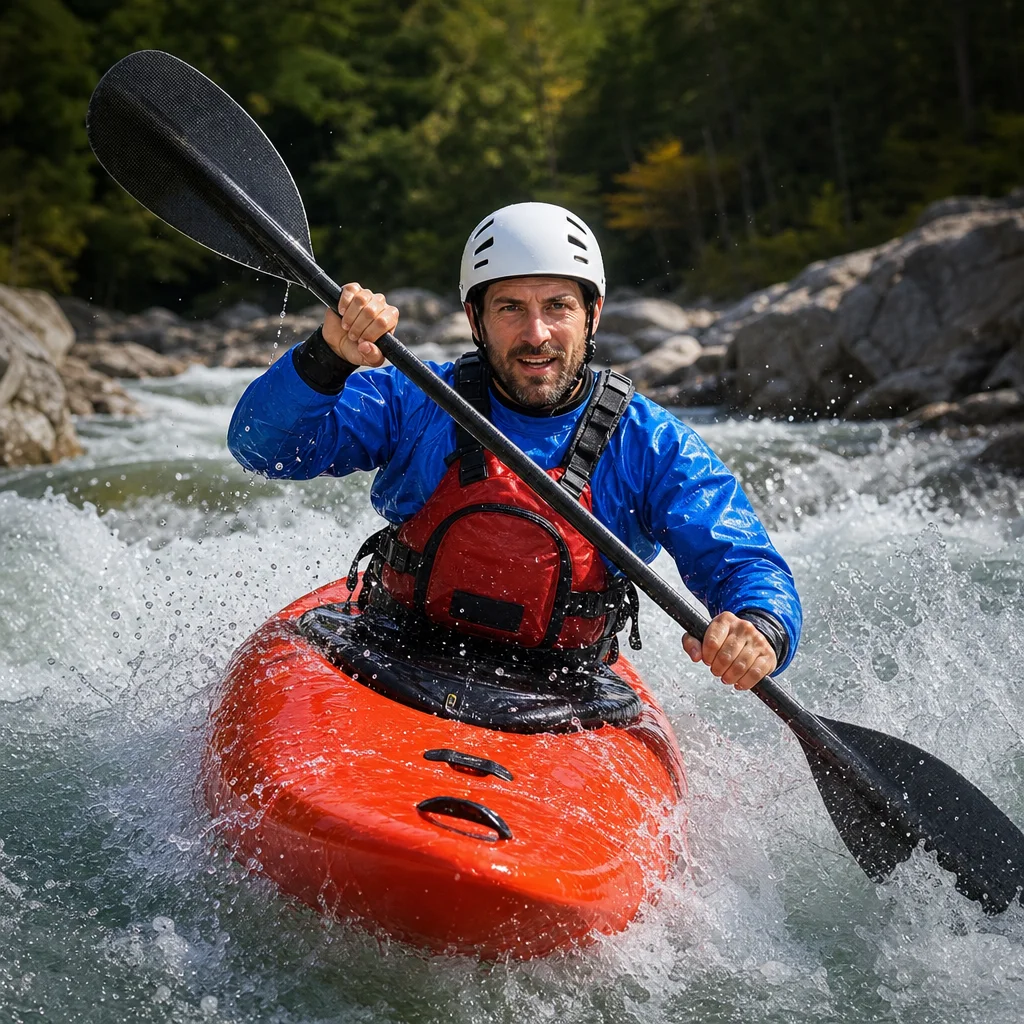
A locked gate or closed portage can change more than the distance of a kayak trip. It may remove your launch, block the only safe carry around a rapid, or force you onto land where access is private, steep, flooded, or unavailable to paddlers.
The safest response isn't to improvise at the barrier. Treat the closure as a route-planning problem: identify what has changed, determine whether the trip still works, and preserve a reliable way to exit if conditions deteriorate.
Start by identifying exactly what is closed
“Portage closed” can describe several different situations. The trail might be damaged, closed for construction, seasonally restricted, unsafe because of flooding, or unavailable because the landowner has withdrawn access. A locked gate may block a road, parking area, launch, or service route rather than the water itself.
Find out which part of your plan is affected:
- Launch access: You can’t legally or safely reach the water at the planned starting point.
- Takeout access: You may be able to begin the trip but have no dependable place to finish.
- Portage access: A rapid, dam, low-head structure, waterfall, or other hazard can no longer be bypassed on foot.
- Road access: Your vehicle can't reach a put-in, takeout, shuttle point, or emergency exit.
- River or shoreline access: The route remains visible on a map but is closed to public use.
A closure that appears minor on a map can be decisive in the field. A short portage may require a trail, bridge, or property crossing that has no practical substitute.
Confirm the restriction before you reroute: Check the current notice from the managing agency, park, landowner, or waterway authority, and confirm whether the closure affects paddling, parking, carrying boats, or all access. Look for an effective date, alternate route, seasonal limitation, and contact information.
Decide whether the barrier is passable in a legal and practical sense
Never assume that a locked gate is simply an obstacle to walk around. A gate can mark private property, a closed road, a construction zone, a wildlife-management restriction, or an area where emergency services can't safely reach you.
A practical assessment has three parts:
- Permission: Do you have a clear right to enter, park, carry, or launch there?
- Physical feasibility: Can you move your kayak and gear without a dangerous lift, unstable footing, or damage to the boat?
- Trip reliability: Will the access remain usable when you return, particularly if weather, water level, or daylight changes?
If any answer is uncertain, treat the access as unavailable. Don't climb a gate, move a barricade, use a closed portage, or cross posted private land to save a planned itinerary.
This is especially important around dams and other structures. A blocked portage may leave you with no safe way to avoid a hazard. If your route includes a compulsory carry, the closure isn't a minor inconvenience; it is a reason to remove that section from the trip.
Build alternate plans before choosing a new route
A good alternate plan is more than a second line on a mapping app. It should account for access, distance, carrying effort, water conditions, time, and a dependable exit.
Plan A: Use an officially provided alternative
The best substitute is usually the one identified by the managing agency or landowner. It may be a temporary launch, a signed detour, a different portage trail, or a revised takeout.
Check whether the alternative is suitable for your boat and group. A route that works for a lightweight solo kayak may be unrealistic for a loaded touring kayak. Confirm the distance from parking to water, trail surface, slope, steps, and whether a cart is allowed or useful.
Plan B: Shorten the trip
If the closure removes a downstream access point, consider turning the trip into an out-and-back from a confirmed launch. This can be more reliable than adding an unfamiliar road shuttle or carrying along an untested trail.
Shortening the route also creates a larger time margin. That matters when the alternate launch is harder to find, the carry is slower, or the group is dealing with heavier boats and gear.
Plan C: Move to a different section
A separate section of the same waterway may offer better access, but don’t assume that similar mileage means similar difficulty. Current, wind exposure, boat traffic, shoreline development, and emergency access can vary sharply between sections.
Treat the new section as a new trip. Review the launch, takeout, hazards, weather exposure, and likely bailout points instead of relying on your original route notes.
Plan D: Cancel or postpone
Cancellation is a valid route choice when the closure removes a required safety feature or makes the schedule too tight. A trip that only works if a closed trail reopens, a stranger grants access, or the group carries boats over rough ground isn't a dependable plan.
Compare the real cost of a detour
Distance alone is a poor way to compare alternatives. Use the following questions:
- How much additional paddling does the detour add?
- How many extra carries are required?
- Is the carry over a maintained trail or an uncertain shoreline?
- Can everyone in the group handle the boat weight and terrain?
- Does the alternate route add exposed crossings or faster current?
- Will you still have daylight if the trip runs late?
- Is there a usable bailout or emergency exit?
- Can your vehicle reach the revised takeout without special access?
A longer paddle on familiar, sheltered water may be less demanding than a short route with a steep portage. Conversely, a route that avoids a carry may introduce open-water exposure that requires a different level of preparation.
For a group, plan around the least experienced or least physically capable paddler. A strong paddler carrying two boats may make a workaround appear feasible, but it can create a failure point if that person becomes injured or exhausted.
Recheck maps against conditions on the ground
Digital maps are useful for finding possible access points, but they can preserve old roads, informal launches, and trails that are no longer open. Compare several sources when the route matters: an agency map, a current notice, a detailed topographic map, and recent local information where available.
Pay attention to:
- Property boundaries and posted access restrictions
- Seasonal road or gate closures
- Bridges and crossings that may not permit boat carrying
- Shorelines that become impassable at high or low water
- Parking rules and overnight restrictions
- Cell coverage and road access near bailout points
- Portage trails that are closed for erosion, construction, fire, or storm damage
Water level can also change the meaning of a closure. A shoreline carry that is possible during ordinary conditions may disappear during high water, while a shallow landing may become unusable at low water. Record the conditions your alternate plan depends on and establish a point at which you’ll abandon it.
Prepare the kayak and gear for an unexpected carry
Route reliability includes the condition of your equipment. A closure may turn a short paddle into a longer carry, so inspect the parts of the kayak and transport system that will absorb extra handling.
Before leaving, check:
- Carry handles and attachment points
- Grab loops and deck lines
- Hatch covers and cockpit fittings
- Cart straps, wheels, and frame connections
- PFD condition and fit
- Footwear grip and suitability for wet, uneven ground
- Dry bags and how securely they are attached
Pack so the kayak can be unloaded quickly if the carry changes. Keep essential items, including communication equipment, first aid supplies, water, and weather protection, accessible rather than buried in a tightly packed hatch.
For a longer carry, distribute weight so the boat remains balanced and manageable. Loose equipment can shift, catch on vegetation, or fall out when the kayak is tilted. If you use a cart, understand its limits; a cart that works on pavement may be unreliable on mud, stairs, rocks, or narrow trails.
Communicate the change to someone on shore
Update your trip contact when the route changes. Give them the new launch and takeout, the alternate access points, expected timing, and the decision point where you’ll turn back or cancel.
If the closure forces a different shuttle, make sure the driver knows exactly where to meet you and whether the area allows parking. Don’t rely on a meeting point described only as “the old boat ramp.” Use the current name, coordinates, road approach, and a backup location when possible.
On the water, keep the group together through the revised section. A locked gate or closed trail often increases uncertainty, and splitting up can leave one person searching for access while others wait without a clear plan.
Use a simple go-or-no-go decision
Before launching, ask:
- Is every access point currently open to us?
- Do we have permission to use each launch, carry, and takeout?
- Is the alternate portage physically suitable for the boats and group?
- Can we complete the route with a reasonable time margin?
- Do we have a safe bailout if weather or water conditions change?
- Would the trip still be manageable if the alternate access is slower than expected?
If the answer to a critical question is no, choose the shorter route, move to a different section, or postpone. The goal isn't to preserve the original itinerary at any cost. It is to keep the trip predictable enough that a routine access problem doesn’t become an emergency.
Make the next trip easier to plan
After the outing, save the useful details: the closure notice, the date you checked it, the condition of the alternate access, the actual carry time, parking limitations, and any equipment problem you found. Update your route notes rather than relying on memory.
Access conditions change, but a well-maintained plan can absorb those changes. Keep at least one confirmed alternative for routes with mandatory portages, and periodically inspect the kayak, cart, straps, and carry gear that make those alternatives possible.
When a gate is locked or a portage is closed, pause before searching for a shortcut. Confirm the restriction, remove any access that depends on guesswork, compare realistic alternatives, and choose the plan that leaves the most room for an ordinary problem. That approach protects the trip today and makes future route decisions more dependable.