How to Plan a Safe Kayak Outing During Spring Runoff
When snowmelt raises flows and fills a river with cold water and debris, a familiar route can behave very differently. I’ll show you how to evaluate conditions, access, route difficulty, and contingency plans before committing to a spring runoff outing.
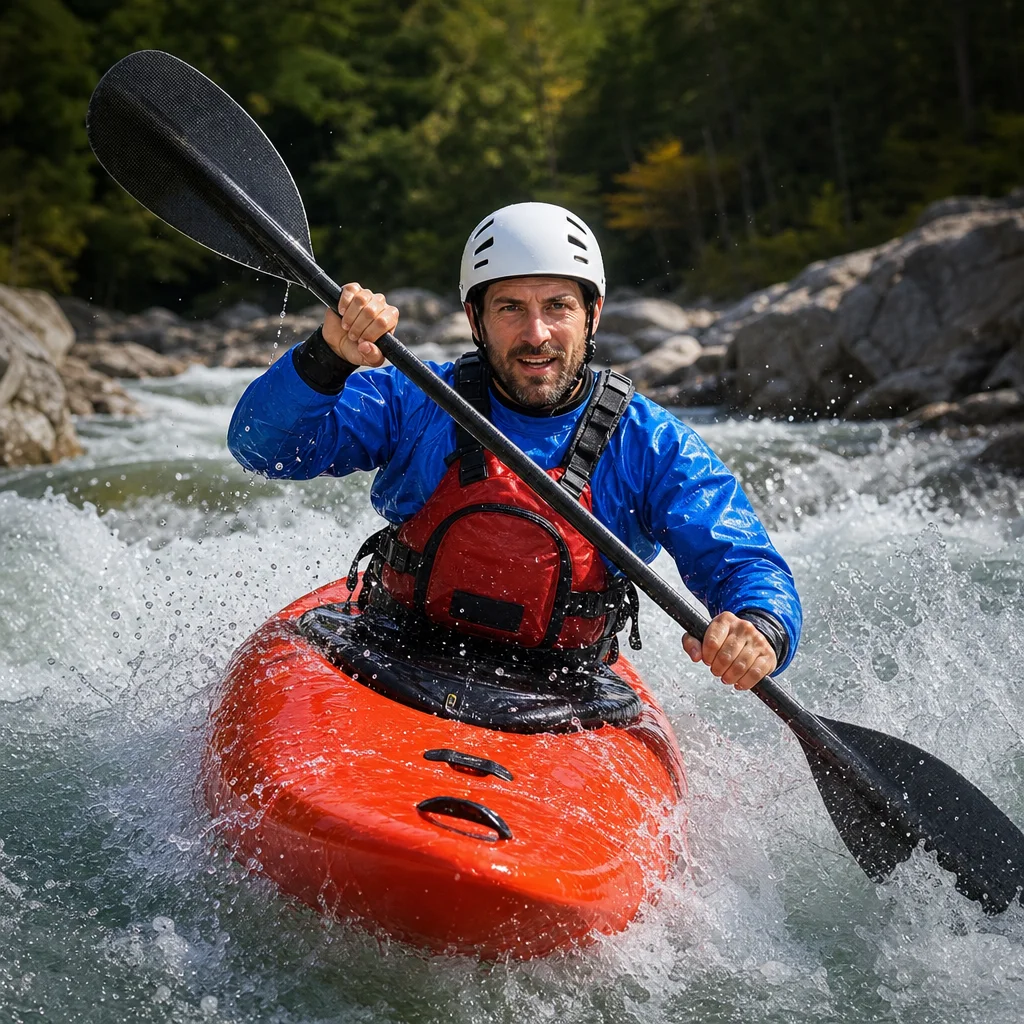
Spring runoff can turn a manageable kayak trip into a committing one. Snowmelt may raise water levels quickly, increase current speed, move strainers into the channel, and make familiar launches or takeouts unusable. Cold water also reduces the margin for error, even when the air feels warm.
Planning for runoff isn’t just a matter of checking whether the river is technically open. You need to understand how conditions are changing, how your route will behave at those flows, and what you’ll do if the water is higher, colder, or more obstructed than expected.
Start with the water, not the calendar
The date of your trip tells you very little by itself. Runoff timing varies by elevation, snowpack, recent weather, rain, and watershed size. A river that is moderate in one spring can be fast and debris-filled in another.
Look at the full trend rather than one gauge reading. Check whether the flow has been rising, falling, or fluctuating over the previous several days. A falling river can still contain large amounts of floating debris, while a rising river may continue to become more difficult throughout the day.
Pay attention to the relationship between weather and flow:
- Warm temperatures can accelerate snowmelt, especially after a cold period.
- Rain falling on an existing snowpack can produce a rapid increase in runoff.
- Overnight freezes may slow the morning rise without making the river safer overall.
- High-elevation tributaries may respond later than the main river.
- A nearby gauge may not represent the section you plan to paddle.
A useful gauge is one that reflects the same watershed and, ideally, a location close to your launch and takeout. If the river has several tributaries between the gauge and your section, treat the reading as an estimate rather than a direct description of conditions.
Check the runoff picture before leaving: Review current gauge trends, weather, watershed reports, closures, and recent local observations for the exact section you intend to paddle. Confirm that the launch, takeout, and intended route are currently accessible rather than assuming last season’s information still applies.
Evaluate cold water separately from air temperature
Cold water is one of the defining hazards of spring runoff. You can become chilled quickly after a capsize, swim, or prolonged immersion, even on a sunny day. A wet paddler may also struggle with reduced dexterity, poor decision-making, and fatigue before realizing how serious the problem has become.
Choose clothing for the water temperature and the consequences of an unplanned swim, not for the afternoon forecast. Depending on conditions and the type of outing, that may mean a properly fitted wetsuit or dry suit, insulating layers, appropriate footwear, and protection for your hands and head. Avoid cotton as a primary insulating layer because it loses much of its usefulness when wet.
Your clothing system should still allow you to paddle, re-enter, perform a rescue, and walk along shore if the route requires it. Overheating during a long carry is inconvenient, but underdressing for a cold-water swim can be dangerous.
Before launching, consider how long a swimmer might be exposed before reaching shore. A wide, swift channel with steep banks presents a different cold-water problem from a narrow creek where an assisted rescue is close at hand.
Look for hazards created by higher flows
Spring runoff changes more than the speed of the current. It can reshape the river and expose hazards that are absent or less significant at lower water.
Debris and strainers
Floating logs, branches, and other debris may enter the river from tributaries, unstable banks, or previously snow-covered areas. Some hazards remain partly submerged and are difficult to see from upstream. Trees that were once beside the channel can become strainers when higher water reaches their branches.
Treat wood across or near the current as a major hazard. Don’t assume you can paddle over a log, squeeze through a narrow gap, or reverse once you’re committed. A clean-looking channel can also conceal submerged branches, fences, cables, or old structures.
Scan continuously rather than relying on a single inspection at the launch. The river may carry new debris into your path during the outing.
Stronger hydraulics
Higher flow can create stronger eddies, lateral currents, boils, waves, and reversal lines. A feature that was easy to ferry across at lower water may become difficult to cross or may push you toward a hazard before you can recover.
Study how current interacts with bends, bridge abutments, islands, and constrictions. Water moving around an obstruction often accelerates and may form a downstream hazard. Don’t judge difficulty only by wave height; fast current near a bank obstacle can be more consequential than a larger wave in open water.
Banks and shorelines
Runoff can undercut banks and make familiar eddies unstable. Mud, snow, ice, and saturated soil can make launching or landing awkward. In steep terrain, high water may also increase the chance of rockfall or small slides.
Identify several possible landing areas before you launch. A shoreline that looks accessible on a map may be private, fenced, densely vegetated, or too steep to use in an emergency.
Match the route to the runoff version of your skills
Intermediate paddlers often have enough experience to recognize ordinary river features but may underestimate how much higher water changes the timing and consequences of mistakes. Use the route’s current characteristics, not its reputation, to make the decision.
Consider:
- Current speed and how quickly you can reach shore
- The number and severity of rapids or moving-water features
- Whether hazards can be scouted from land
- The availability of reliable eddies and landing areas
- The length of the section and options to exit early
- The difficulty of carrying a kayak around an obstruction
- Your ability to perform a self-rescue in cold, moving water
- Whether your group can assist a swimmer without creating a second emergency
A familiar flatwater route may develop broad, wind-like current or narrow passages during runoff. A river section rated for one flow range may behave very differently outside that range. If you don’t know how the route changes at the expected level, choose a section with more escape options or postpone the trip.
For a first outing of the season, avoid combining several unknowns. Don’t pair a new river section with unusually high flow, cold water, uncertain access, and a small or inexperienced group. Reduce at least one variable by choosing a known route, a lower-risk access point, or a more forgiving weather window.
Plan around access changes
Spring conditions can close roads, wash out parking areas, damage docks, or leave launch paths covered in snow and mud. Seasonal gates may still be closed, and high water may make a takeout unsafe even if the road is open.
Verify both ends of the trip and the route between them. Check whether parking rules, land access, shuttle roads, and waterway closures have changed. Be especially cautious with takeouts below dams, bridges, or fast current, where a small change in shoreline conditions can make landing difficult.
If a shuttle is required, build in time for delays and identify a backup takeout. Leave enough daylight for a long carry or an unplanned walk. A phone may help with coordination, but it shouldn't be your only plan in a cold, remote, or poorly covered area.
Build a conservative float plan
Give a trusted person a written plan that includes the river section, launch and takeout, expected start and finish times, vehicle details, group members, and the point at which they should contact emergency services. Update that person if the route changes.
Carry equipment that supports the actual environment rather than the ideal one. For moving, cold water, this commonly includes a properly fitted personal flotation device, reliable paddle, appropriate thermal protection, communication or signaling equipment, first-aid supplies, repair essentials, water, and food. Secure loose items so a capsize doesn't turn your gear into additional debris.
Your group should discuss rescue roles before launching. Decide who will call for help, who will manage boats, and where you will regroup if someone swims. Establish a clear turnaround rule, such as a worsening forecast, rising gauge, excessive debris, or loss of a safe exit. A decision made in calm water is easier to follow than an argument in the middle of a rapid.
Scout when the consequences justify it
Scouting is especially valuable when runoff has changed a section since your last visit. Look for new wood, altered channels, missing eddies, damaged banks, and landing areas that are no longer usable. If a feature can't be seen clearly from the water, treat that uncertainty as a reason to stop and inspect it.
You don’t need to scout every ordinary stretch, but you should inspect blind corners, constrictions, steep drops, bridge approaches, and any place where a capsize could carry a paddler into an obstruction. If a safe portage or retreat isn't available, don’t commit simply because the feature looks runnable from a distance.
Make the final decision at the launch
Conditions at the put-in may reveal problems that forecasts and maps didn't. Look downstream for debris, unusually fast current, difficult eddies, and changes in the intended channel. Test whether you can control the kayak, stop where planned, and reach shore safely in the first section.
Be willing to shorten the trip, move to a lower-risk location, or cancel. Turning around before launching is a successful planning decision, not a failed outing. Runoff gives you another opportunity later; it doesn't reward forcing a marginal plan.
Practical next steps
Before your next spring outing:
- Compare recent gauge trends with the forecast rather than checking a single number.
- Confirm water temperature, access status, closures, and current route conditions.
- Inspect the section for debris, changed channels, and reliable emergency exits.
- Match your clothing and rescue equipment to a cold-water swim.
- Brief the group on hazards, communication, turnaround rules, and rescue roles.
- Choose the conservative option when several uncertainties overlap.
A safe runoff plan is less about finding one perfect flow level than understanding how the entire system is changing. When cold water, rising current, debris, and limited access appear together, leave yourself more skill, time, and escape options than you would need on a settled summer trip.