How to Paddle a Kayak Through a Narrow Boat Channel
I’ll show you how to avoid the common mistake of treating a narrow boat channel like open water, with practical guidance on visibility, positioning, crossings, communication, and checking local navigation rules.
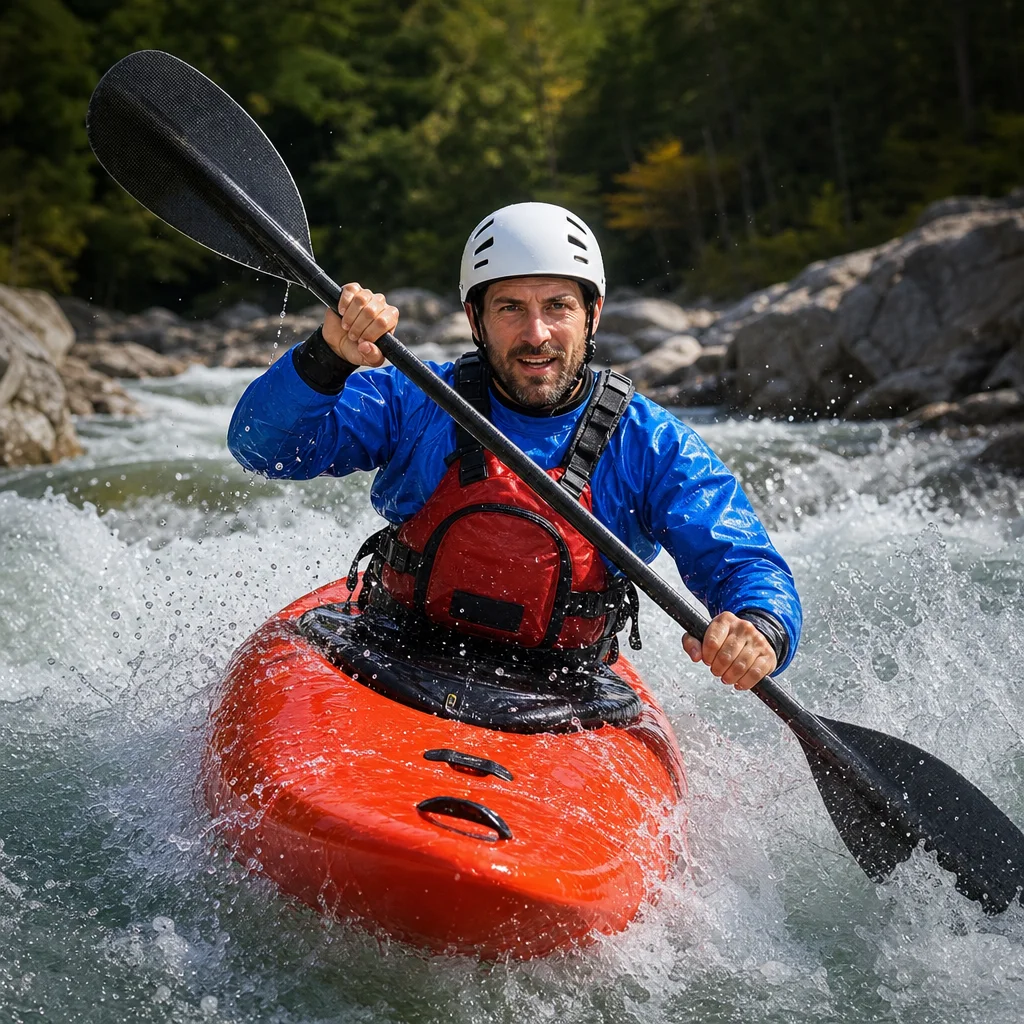
A narrow channel changes the way you need to paddle. You have less room to correct a mistake, fewer escape routes, and a greater chance that a motorboat operator won’t see you until the last moment. The safest approach isn't to prove that a kayak can fit; it’s to make your position predictable and give powered traffic as much usable space as conditions allow.
The details vary between harbors, canals, and busy lakes, so treat local signs, markings, and regulations as part of your route planning. The following habits help you prevent the most common problems when you do share confined water.
Start by reading the channel
Before entering, look at the waterway as a traffic system rather than simply a passage between two points. Identify the marked navigation channel, likely launch and landing areas, bends, bridges, ferry routes, moored boats, and places where a kayak could move clear if traffic approaches.
A channel that looks quiet from shore may have poor visibility around a bend or heavy traffic hidden behind moored vessels. Wind, glare, rain, and low light can also make a small kayak difficult to spot. If you can’t see far enough ahead to make a sensible decision, slow down or wait in a safe area outside the traffic path.
Check your kayak before entering. Make sure your paddle, personal flotation device, whistle or other signaling device, and any required lights are accessible. Keep loose gear secured so you’re not forced to look down or reach across the kayak when a boat is approaching.
Check the waterway rules: Before launching, confirm the channel’s current local requirements, including restricted areas, direction-of-travel rules, crossing provisions, required safety equipment, lighting, and any seasonal or event-related closures. Signs and buoy systems take priority over general advice.
Make yourself visible without pretending you’re easy to see
Visibility is a shared responsibility, but you have limited ability to influence how a motorboat operator notices you. Use high-contrast clothing or a bright outer layer, keep your kayak and paddle visible, and avoid drifting in front of dark banks or cluttered moorings when a safer position is available.
A raised paddle can help attract attention briefly, but it shouldn’t be your primary plan. Waving continuously may be misunderstood, and a small kayak can disappear in glare or wave troughs even when you can clearly see a larger boat.
Pay attention to the operator’s likely sightline. A person in a motorboat may be looking past you, toward a bend, through a windshield, or at other traffic. If you’re unsure whether you’ve been seen, assume you haven’t. Don’t wait for the boat to get close before taking action.
At night or in reduced visibility, follow the applicable requirements for lights and signals. Avoid assuming that a headlamp alone makes you compliant or easily identifiable. A light aimed directly at an approaching operator can also create glare, so use lighting in a way that helps others determine your position without obscuring their view.
Choose a predictable position
Your position should reduce conflict, not merely keep you moving. In a wide marked channel, stay out of the main route when you can do so safely and legally. Use the edge or a designated non-navigation area if it provides adequate depth and doesn’t put you against a wall, bank, moored boat, or other hazard.
Don’t hug an edge automatically. A narrow strip beside a wall may leave you nowhere to turn, amplify wake, or place you in the blind spot of boats passing close by. A shallow margin may also tempt you into scraping the hull or grounding just as traffic arrives.
Avoid stopping in the center of a channel to adjust gear, check a map, take a photograph, or wait for a companion. If you need to pause, move to a permitted, visible position outside the traffic path. Keep scanning behind you as well as ahead; a faster boat may approach from the rear with little warning.
Predictability matters more than perfect precision. Make gradual course changes, hold a steady speed, and avoid zigzagging between the bank, buoys, and open water. A motorboat operator has a better chance of judging your movement when you maintain a clear, consistent track.
Handle bends, bridges, and blind spots conservatively
Blind corners are among the most hazardous places to meet traffic. Reduce speed before the corner, stay where you have the best view without obstructing the channel, and listen for engines or warning signals. If the bend is tight and you can’t see what’s coming, wait in a safe location rather than edging around it.
The same applies to bridge openings, culverts, lock approaches, and gaps between moored boats. These areas can funnel traffic and limit your ability to turn. Look for posted signals and follow any instructions from lock staff, harbor personnel, or other authorized operators.
A bridge arch or moored vessel can block both your view and the view of an approaching boat. Don’t assume that silence means the route is clear. If you need to pass through a restricted sightline, do it only when the route is open and your position is as visible and predictable as possible.
Decide when and how to cross
Crossing a boat channel is often safer than traveling lengthwise in it, but only when you can complete the crossing without forcing traffic to alter course abruptly. First, choose a visible crossing point with enough open water on both sides. Scan for boats ahead, behind, and on intersecting routes, then reassess before committing.
If the crossing is allowed and the gap is adequate, cross on a steady course that is close to perpendicular to the channel. This minimizes the time you spend in the traffic lane and makes your intention easier to interpret. Paddle with controlled, efficient strokes rather than sprinting blindly; a rushed crossing increases the chance of losing balance or drifting off course.
Don’t begin crossing because one boat has passed. Another boat may be following, hidden around a bend, or traveling in the opposite direction. Wait until you’ve accounted for the full visible traffic pattern and have room to finish.
Never weave across the channel to take a shorter route between openings. Don’t cross in front of a moving boat simply because you believe the operator can slow down. If a boat is approaching, remain clear or move to a safe holding position. A kayak’s maneuverability doesn’t guarantee that a larger vessel can stop, turn, or see you in time.
Some waterways establish specific crossing points, traffic lanes, or priorities. Others prohibit crossing in particular locations. Follow the local arrangement even if a different method seems more direct.
Communicate clearly, but don’t rely on signals alone
Make your intentions visible through your course and speed before trying to communicate with a gesture. If you need to attract attention, use a whistle or another recognized signaling device according to local practice. Short, deliberate signals are more useful than frantic waving.
A verbal exchange may be possible on a quiet canal, but engine noise and distance make shouting unreliable. A marine VHF radio can be useful for some paddlers in harbors or larger waterways, provided you know how to operate it and comply with applicable licensing and channel-use requirements. It isn’t a substitute for keeping a proper lookout.
Avoid assuming that a recreational hand signal has the same meaning everywhere. If another operator signals or calls to you and you’re uncertain, reduce speed, move clear when possible, and avoid making a sudden maneuver while trying to respond.
Manage wake and close passes
Large wakes can be more dangerous in a narrow channel because reflected waves bounce off walls, banks, and moored boats. When a boat passes, point your kayak toward the wake at a controlled angle rather than taking it broadside. Keep your paddle ready for bracing, lower your center of gravity, and maintain enough momentum to steer.
Where possible, move toward the part of the channel that gives you the most room from both the passing boat and hard surfaces. Don’t wedge yourself between a boat and a wall. Secure loose items before entering busy water, and avoid trying to photograph or converse during the pass.
After the first wave, keep watching. Secondary waves can arrive from a different direction after reflecting off the shoreline or another vessel. Let the water settle before resuming a longer crossing or adjusting equipment.
Common mistakes to prevent
Entering because the channel looks empty
A clear view at the launch point doesn’t reveal traffic beyond a bend. Pause at the entrance, listen, and plan where you’ll go if a boat appears immediately after you enter.
Assuming the kayak has automatic priority
Rules differ, but a legal right or general expectation doesn’t remove the need to avoid a collision. Treat every encounter as a risk-management problem and make your movements early, calm, and obvious.
Staying beside the bank at all costs
The edge may be shallow, obstructed, or outside the marked route but still unsafe because of walls, pilings, fishing lines, or moored boats. Choose the safest lawful position, not simply the closest one to shore.
Looking only forward
Check behind you regularly, especially before changing position or crossing. A quick shoulder check is useful, but don’t sacrifice balance or control by twisting suddenly. Slow down first if you need a better view.
Relying on a bright kayak or flag
High-visibility equipment helps, but it doesn’t make you detectable in every light or traffic condition. Good positioning, a proper lookout, and conservative decisions matter more than color alone.
A simple decision process on the water
When you spot a motorboat in a narrow channel, ask four questions:
- Can the operator clearly see me? If not, improve your position or leave the traffic path.
- Am I obstructing the main route? If so, move clear early, provided doing so is safe and permitted.
- Can I complete my intended crossing before the boat reaches me? If there’s any doubt, wait.
- Do local signs or rules change the usual approach? Follow the marked system rather than relying on memory.
If the answer to any question is uncertain, choose the option that creates more time and space. Turning back, waiting near a safe area, or using a different route is often a better outcome than forcing a close encounter.
Before your next trip, study the channel from a map and from shore, note the likely blind spots, and check the current local rules. On the water, keep your speed moderate, scan continuously, cross only with a clear plan, and leave the channel whenever you can do so safely. Those habits prevent most avoidable conflicts before they become emergency maneuvers.