How to Plan a Kayak Trip for Short Autumn Days
When the launch starts under a low sun and the takeout may come after dusk, I’ll show you how to build a conservative autumn kayak plan around daylight, changing temperatures, a clear turnaround point, and clothing that stays manageable on the water.
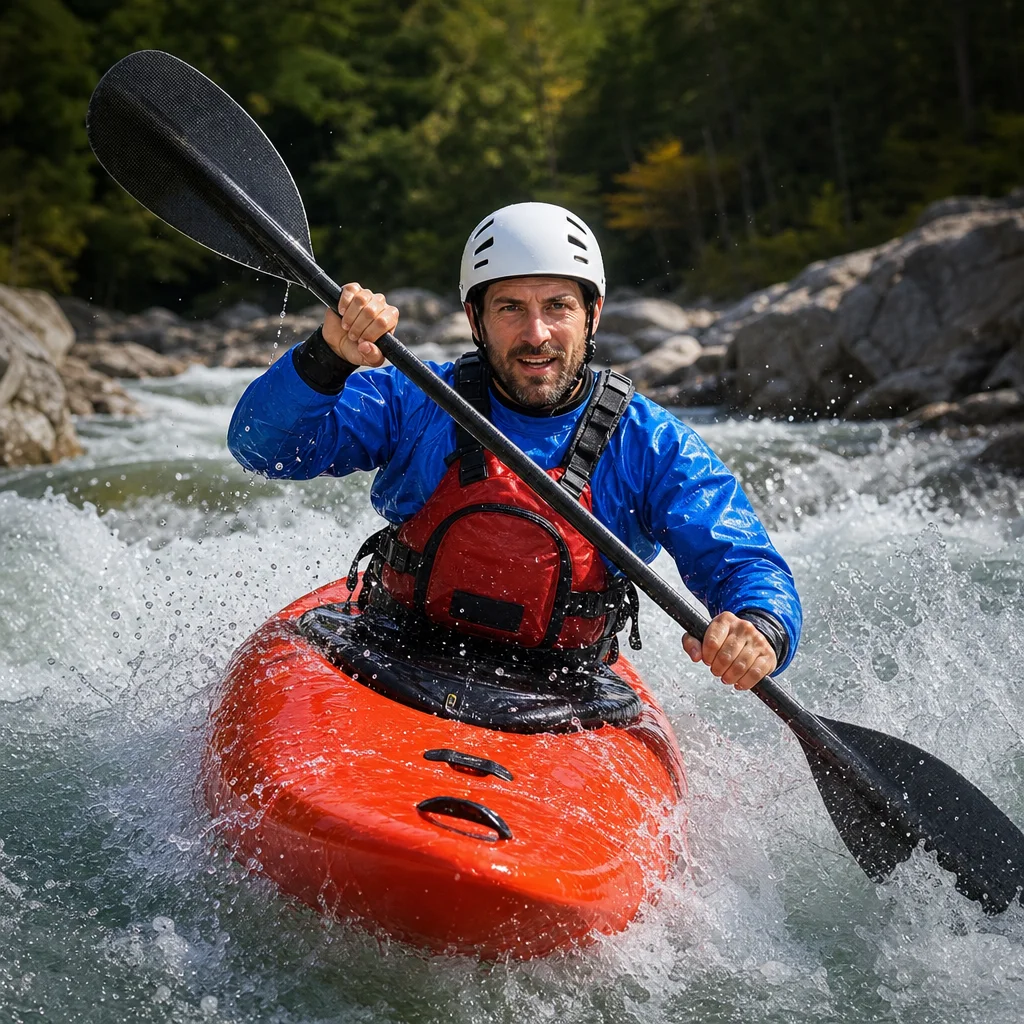
Autumn kayaking can look deceptively easy: calm water, fewer crowds, and comfortable temperatures at the launch. The complication is that daylight disappears sooner, air temperatures can drop quickly, and conditions may change before you reach the takeout.
A good short-day plan is less about covering distance and more about preserving options. You want a route that fits comfortably inside the available daylight, a turnaround point you’ll actually honor, and a clothing system that still works if the forecast is wrong.
Start with the daylight window
Use the time between a realistic launch and a realistic return—not the full period between sunrise and sunset—as your working window.
A realistic launch time includes parking, carrying the kayak, changing clothes, checking the boat, and getting on the water. A realistic return includes landing, emptying the kayak if needed, carrying gear, and reaching your vehicle before visibility becomes a problem.
For a first autumn trip, reserve a generous margin on both ends. If sunset is at 6:30 p.m., arriving at the launch at 5:45 p.m. doesn't give you 45 minutes of useful paddling time. You may have little daylight left after preparation, and a minor delay can turn the return into a low-light landing.
Treat civil twilight and local terrain as practical considerations rather than relying only on the published sunset time. Trees, steep banks, narrow channels, and shaded coves can become difficult to read well before the sky is fully dark.
Confirm the usable daylight: Check the current sunset and twilight times for the exact launch area, then account for setup, takeout, shade, and any restricted access hours before choosing your route.
Choose the route by recovery options, not mileage
Short autumn trips are often safer on familiar water with several easy exit points than on a longer, more scenic route with only one takeout.
Look for a route that gives you:
- A simple launch and landing
- Frequent places to get off the water if conditions worsen
- Clear landmarks for navigation
- Minimal exposure to strong wind or open crossings
- A turnaround point that doesn’t depend on reaching a particular destination
- A takeout that remains accessible during the hours you’ll use it
An out-and-back route is usually easier to shorten than a one-way trip. If you’re paddling a loop, identify where you can cut across or return the way you came. On a river, check whether current, low bridges, strainers, or private shorelines could make turning around difficult.
Don't use distance alone to estimate the trip. Wind, current, boat traffic, cold hands, photography stops, and a slower paddling partner can all reduce your speed. A route that is comfortable in midsummer may require a different turnaround point in October or November.
Set a turnaround point before launching
Your turnaround point should be based on time and conditions, not on how close you are to the next bend.
For example, you might decide to turn around at the earlier of:
- Your planned time limit
- A noticeable increase in wind or waves
- A drop in temperature that affects comfort or dexterity
- A partner becoming tired, cold, or uneasy
- A navigation or access issue
The time limit matters most. If you plan to be off the water by 4:30 p.m., set a turnaround time that leaves enough time to paddle back, handle a slower pace, and land without rushing. Build in more return time than you think you need if the route involves current, headwinds, or a group with mixed experience.
A turnaround rule only helps if everyone knows it before the trip. Make it normal to turn back early. In autumn, finishing with spare daylight is a successful outcome, not a missed objective.
Plan around changing temperatures
Autumn air can feel mild while the water remains cold. The temperature at the parking area may also be very different from the temperature after sunset or on a shaded stretch of water.
Plan for three stages:
- Before launch: You may be carrying the boat and working hard in cool air.
- While paddling: Your torso may warm up, but your hands, feet, and lower body can remain chilly.
- After landing: Sweat, wind, and fading light can make the return to the vehicle uncomfortable or hazardous.
Instead of choosing one heavy layer, use a system you can adjust. A typical setup may include a moisture-managing base layer, an insulating layer appropriate to the conditions, and a wind- or water-resistant outer layer. The exact combination depends on the water temperature, air temperature, wind, precipitation, and the type of kayak.
Avoid cotton as the main layer next to your skin when getting wet would create a serious problem. Cotton holds moisture and dries slowly. Whatever you wear, make sure it permits comfortable paddling and doesn’t interfere with your spray skirt, personal flotation device, or reentry technique.
Dress for an unexpected swim
Your clothing should be suitable for the consequences of immersion, not just the forecast while seated in the kayak. This is especially important in autumn, when cold water can rapidly reduce comfort and useful movement.
For colder water, many paddlers choose a wetsuit or drysuit rather than ordinary layers. Those systems have different fit, insulation, and maintenance requirements, so use equipment appropriate to the conditions and your skill level. If you’re uncertain whether your clothing is adequate for immersion, choose a more protected route, postpone the trip, or get advice from a qualified local instructor.
Keep a complete dry change of clothes in a waterproof container. Include warm layers, socks, gloves or hand protection, and a hat if those items are useful in your conditions. Store them so they’re accessible after landing rather than buried beneath every other piece of gear.
Pack for delay, not just the planned paddle
A short trip still deserves a compact contingency kit. You may need it because of a minor capsize, a blocked launch, a tired partner, or a slower return—not because the trip has become an expedition.
Bring or wear:
- A properly fitted personal flotation device
- A communication device protected from water
- A small light or headlamp for emergencies and vehicle access
- Extra clothing in a waterproof bag
- Water and a simple snack
- Basic first-aid supplies
- Any required navigation aids for the route
- A repair or rescue kit suited to your kayak and experience
- A way to secure the kayak during an unplanned stop
Keep the load organized. A cold or wet paddler may struggle to find a small item in a tightly packed boat. Put emergency gear where you can reach it without emptying the kayak, while keeping it secured against loss during a capsize.
A headlamp is particularly useful for autumn trips, even when you expect to finish in daylight. It can help with a dark parking area, a dropped item, or an unexpected delay. It shouldn't be treated as permission to plan a route that ends after dark.
Check the details that can change
Some planning information is local and time-sensitive. Launch gates may close earlier in autumn, water levels may alter the route, and seasonal restrictions can affect access. Weather forecasts also become less useful when the route is exposed to wind, narrow valleys, or rapidly changing conditions.
Verify today’s route conditions: Before leaving, check the latest forecast, wind, water conditions when available, launch and takeout access, seasonal closures, and any local boating requirements. Save the relevant information so you can refer to it without relying on a signal at the water.
Pay attention to more than the headline temperature. Wind direction, gusts, precipitation, cloud cover, and the time those conditions are expected to change may matter more than a mild afternoon reading.
Have a cancellation rule. For example, you may postpone when the forecast exceeds your comfort or skill level, when the return depends on a narrow weather window, or when the water temperature makes a capsize unacceptable for your current equipment and training. A conservative decision is easier to make before the kayak is on the roof.
Account for autumn-specific edge cases
Small planning details can become significant when daylight is limited.
Fog and low sun: Fog can reduce visibility and make familiar landmarks look different. Low sun can make it difficult to see into glare or identify waves. Carry navigation aids, slow down, and avoid depending on visual distance estimates alone.
Wet leaves and muddy access: A launch that is easy in summer may be slippery in autumn. Wear footwear with suitable traction and allow extra time to carry the boat safely.
Changing water levels: Rivers and tidal areas may look different from your last visit. Exposed rocks, faster current, shallow sections, or submerged obstacles can change the amount of effort required.
Shorter partner margins: If one paddler becomes cold or tired, the whole group may need to turn around. Keep the group together and avoid letting a confident paddler’s pace set the plan for everyone.
Wildlife and seasonal closures: Quieter water doesn't guarantee unrestricted access. Respect posted closures, protected areas, private property, and local wildlife guidance.
Use a simple pre-launch plan
Write down the essentials before you leave the vehicle:
- Launch location and intended takeout
- Planned launch and return times
- Turnaround time and location
- Weather conditions that would cancel or shorten the trip
- Communication method
- Emergency contact and expected return time
- Backup landing or exit points
Tell someone where you’re going, who is with you, and when they should become concerned if you haven’t checked in. Adjust that plan when the route or timing changes.
Before pushing off, check that your clothing is comfortable, your phone or communication device is protected, and your emergency items are accessible. Make sure every paddler understands the route, the turnaround rule, and what to do if the group becomes separated.
Practical next steps
For your next short autumn outing, choose a familiar route with more exit options than you expect to need. Work backward from the time you must be off the water, set a firm turnaround point, and leave a generous daylight margin.
Then dress for immersion rather than appearance, pack a dry change and light, and verify the local access and weather details on the day. If the plan only works when everyone paddles quickly and nothing goes wrong, it isn’t conservative enough for short autumn days.