How to Set Up a Kayak for a Paddler With Limited Hand Strength
I’ll help you avoid setting up a kayak that makes your hands do all the work, with practical choices for paddle weight, grip, seating, and lower-strain stroke technique.
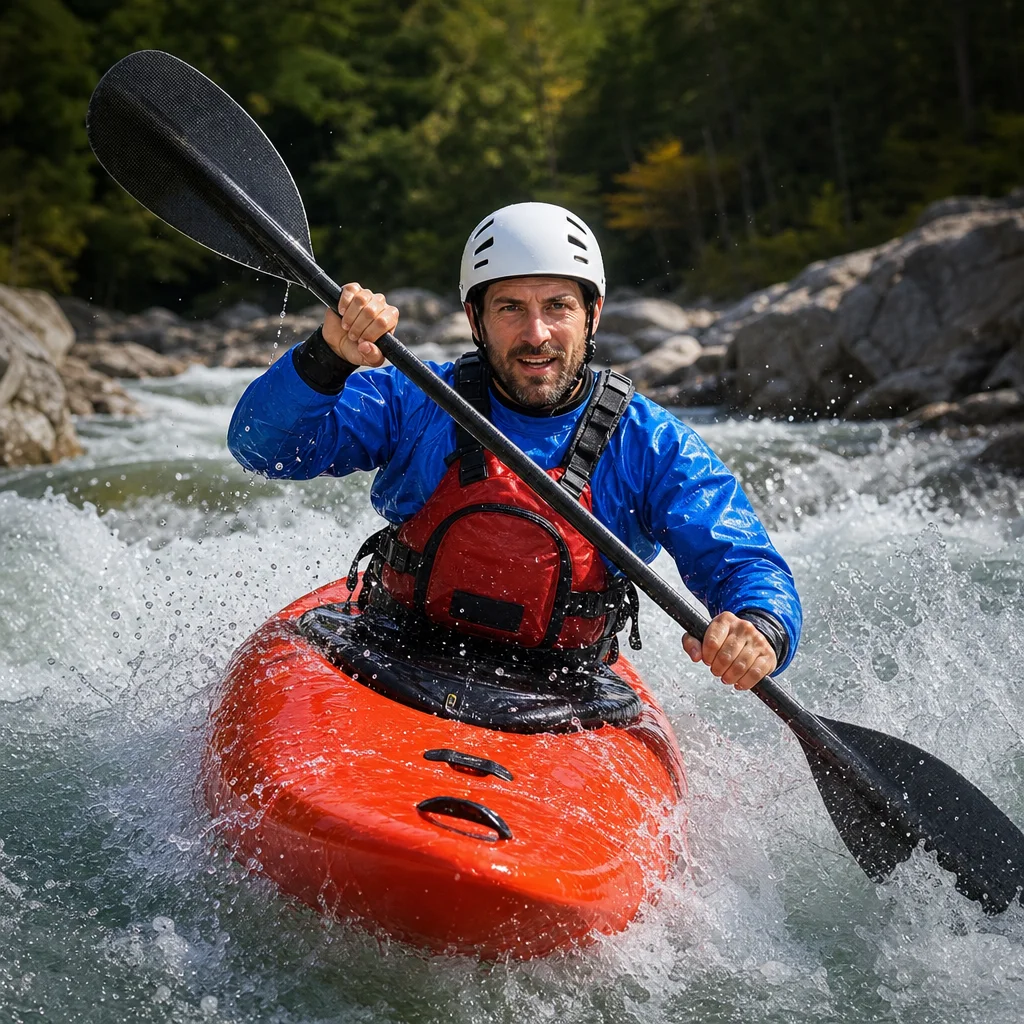
Limited hand strength doesn’t automatically rule out kayaking, but it does change how you should set up the boat. The common mistake is focusing only on a stronger grip when the real solution may involve reducing paddle load, improving body position, and making each stroke more efficient.
Your goal isn't to force your hands to match a standard setup. It’s to distribute effort across your torso, shoulders, legs, and boat so you can maintain control without exhausting your grip.
Start with the paddle
The paddle is usually the first place to reduce unnecessary strain. A heavy paddle increases the effort required for every stroke, correction, and recovery. Even a small difference becomes noticeable over a longer outing.
Choose a manageable weight
Compare paddles by actual weight rather than appearance. Fiberglass and carbon-shaft paddles are often lighter than basic aluminum-shaft models, although construction and blade size also matter. You don’t need the most expensive paddle; you need one you can lift, rotate, and control repeatedly without your hands tiring quickly.
A smaller blade can also reduce the resistance you feel in the water. This may make each stroke less powerful, but it can help you paddle at a steadier effort. For recreational trips, consistent control is generally more useful than producing maximum force for every stroke.
If possible, hold the paddle in the position you’ll actually use and make several slow, controlled movements. Pay attention to whether your wrists bend, your fingers open, or your shoulders tense. A paddle that feels comfortable for a few seconds may still be tiring over several minutes.
Consider shaft diameter and shape
A thinner shaft may be easier to wrap your fingers around, especially if a standard shaft leaves your hand partly open. Some paddles are available with smaller-diameter shafts or ovalized sections that make orientation easier.
A shaped or ovalized shaft can also reduce the need to squeeze tightly just to know which way the blade is facing. That can be useful when fatigue makes fine hand control more difficult.
Avoid choosing a shaft so narrow that you have to pinch it firmly to keep control. The right size lets you maintain a relaxed hold while still steering the paddle accurately.
Reconsider feathering
Feathering offsets the two blades at an angle. It may suit some paddlers, but it can also require more wrist rotation and precise control. A neutral or less-feathered setup may be more comfortable if rotating the paddle places strain on your hands or wrists.
There isn’t one correct blade angle for everyone. Start with the position that allows your wrists to stay as neutral as possible. Test it in calm, shallow water, then adjust in small steps if your stroke feels awkward.
Improve the grip without locking yourself in
Grip aids can help, but they should make the paddle easier to control rather than force your hands into a fixed position.
Useful grip options
Consider trying:
- Soft paddle grips or sleeves that increase comfort without requiring a tighter squeeze
- Foam tubing sized to fit over the shaft
- Paddles with a smaller-diameter shaft
- Lightly textured grip material that reduces slipping
- Fingerless paddling gloves if friction or pressure contributes to discomfort
The grip should remain secure when your hands are relaxed. If you have to clamp down to stop the paddle from sliding, the grip may be too smooth, too large, or poorly positioned.
Avoid adhesive or bulky additions that interfere with feathering, hand repositioning, or emergency release. Test any modification on land first, then in calm water where you can stop easily.
Be cautious with hand straps
Straps and loops that attach your hand to the paddle can seem helpful when grip strength is limited. They also deserve caution. You must be able to release the paddle quickly if it catches, twists, or becomes a problem during a capsize.
A setup that keeps the paddle from falling isn't automatically safer. Never use a hand attachment that prevents an immediate release or causes your wrist to bear the full force of a moving paddle.
Set the seat to support your whole body
A poor seat position makes your hands compensate for an unstable or inefficient posture. If your hips slide, your back rounds, or your feet have nothing firm to press against, you may grip the paddle harder to feel secure.
Sit upright, but stay relaxed
Adjust the backrest so it supports an upright posture without pushing you too far forward. You should be able to rotate your upper body and move your arms freely. Reclining too far can make it harder to engage your torso, while sitting rigidly upright may create tension in your shoulders.
Your hips should feel supported rather than wedged tightly into the cockpit. If the seat is loose enough for you to shift around, you may unconsciously use your hands to stabilize yourself. If it is too tight, entering, exiting, or adjusting position may become difficult.
Use your feet for stability
Set the foot braces so the balls of your feet can make contact while your knees remain comfortably bent. Your feet should provide a stable connection to the kayak without forcing your legs into a strained position.
When you press gently through one foot and rotate your torso, the paddle stroke doesn't have to come entirely from your forearms and hands. Use only as much leg pressure as feels controlled. A support partner can help check your foot position before launch, but you should be able to release your feet easily.
If your kayak has adjustable thigh braces, position them so they offer contact without trapping your legs. You need enough support to control the boat and enough freedom to exit safely.
Adapt the stroke to reduce hand demand
The most hand-intensive stroke is often a long, forceful stroke made with a tight grip. A shorter, smoother stroke can give you better control with less peak effort.
Use a relaxed control grip
Hold the paddle firmly enough to guide it, but avoid squeezing continuously. Keep your wrists as straight as you can, and let the larger muscles of your shoulders, back, and torso contribute to the movement.
You may find it useful to think of your lower hand as guiding the paddle rather than pulling as hard as possible. The upper hand helps position the shaft, while your torso and shoulders provide much of the movement.
If relaxing your grip makes the paddle feel unstable, check the paddle diameter and seating position before simply squeezing harder.
Take shorter strokes
Place the blade near your feet and finish the stroke around your hip rather than reaching far behind you. A shorter stroke can reduce twisting at the wrist and limit the amount of force you need to apply at the end of the stroke.
Paddle at a comfortable cadence instead of waiting until the kayak loses speed and then taking a powerful stroke. Frequent, moderate strokes may be easier to manage than occasional hard pulls.
Use corrective strokes early
Small steering corrections require less effort than large corrections made after the kayak has already turned. If you notice the bow beginning to wander, make a gentle adjustment while you still have control.
A rudder or skeg may reduce the amount of corrective paddling required in suitable conditions, but these systems don't replace basic boat control. Learn how the system works and practice deploying or adjusting it without relying on a tight grip.
Match the kayak to the setup
The kayak itself affects how much effort your hands must provide. A stable, predictable recreational kayak may be easier to manage than a narrow boat that demands constant balance corrections.
Look for a cockpit that allows comfortable entry and exit, an adjustable seat, usable foot braces, and controls you can operate without excessive force. Rudder pedals, seat straps, and hatch covers should be accessible and manageable before you commit to a trip.
A very wide kayak can feel stable but may require a longer paddle or more reaching. A very short kayak may turn easily but need frequent corrections. The best choice depends on your size, water conditions, and how much assistance you have.
Check your launch plan: Confirm that your personal flotation device fits correctly, your adaptive equipment is secure but releasable, and local rules and water conditions are suitable for the outing. Test the full setup close to shore before going farther from help.
Practice the complete setup before a trip
Assemble the kayak, paddle, seat, grip aids, and any support equipment before you arrive at the water. Sit in the boat for several minutes and rehearse the movements you’ll use most often.
Practice:
- Holding the paddle with a relaxed grip
- Repositioning your hands without losing control
- Making short forward strokes
- Stopping and turning with gentle corrections
- Releasing the paddle quickly
- Entering and exiting with your support partner’s planned assistance
Start in calm, shallow water with a capable partner nearby. Stop if you develop pain, numbness, unusual weakness, or loss of control. Fatigue is also a reason to end the session; you don’t need to wait until your hands can no longer manage the paddle.
Your support partner should know what assistance you want and what you prefer to do independently. Agree on simple signals for stopping, returning to shore, or needing help. Assistance should improve stability and access without pulling unexpectedly on your arms or kayak.
A simple setup decision checklist
Before choosing equipment, ask:
- Can you lift and control the paddle repeatedly without your grip failing?
- Does the shaft fit your hand without forcing a tight squeeze?
- Can your wrists remain reasonably neutral during the stroke?
- Does the seat keep you stable without restricting a safe exit?
- Can your feet support your posture without becoming trapped?
- Can you release every grip aid quickly?
- Can you stop, turn, and correct your course with moderate effort?
- Do you have a clear plan for fatigue, assistance, and returning to shore?
Make one change at a time when testing your setup. That makes it easier to identify what actually helps. In many cases, a lighter paddle, a more comfortable shaft, and better foot support will reduce hand strain more effectively than adding a stronger gripping aid.
The finished setup should let you maintain control with a relaxed, adaptable grip. Keep practicing in manageable conditions, adjust the boat before you adjust your effort, and treat increasing pain or loss of control as a signal to stop and reassess.