What to Do if You Capsize Close to Shore
I’ll explain how to respond to a near-shore kayak capsize, from managing panic and exiting safely to using your kayak for support and deciding whether it’s sensible to continue on calm, protected water.
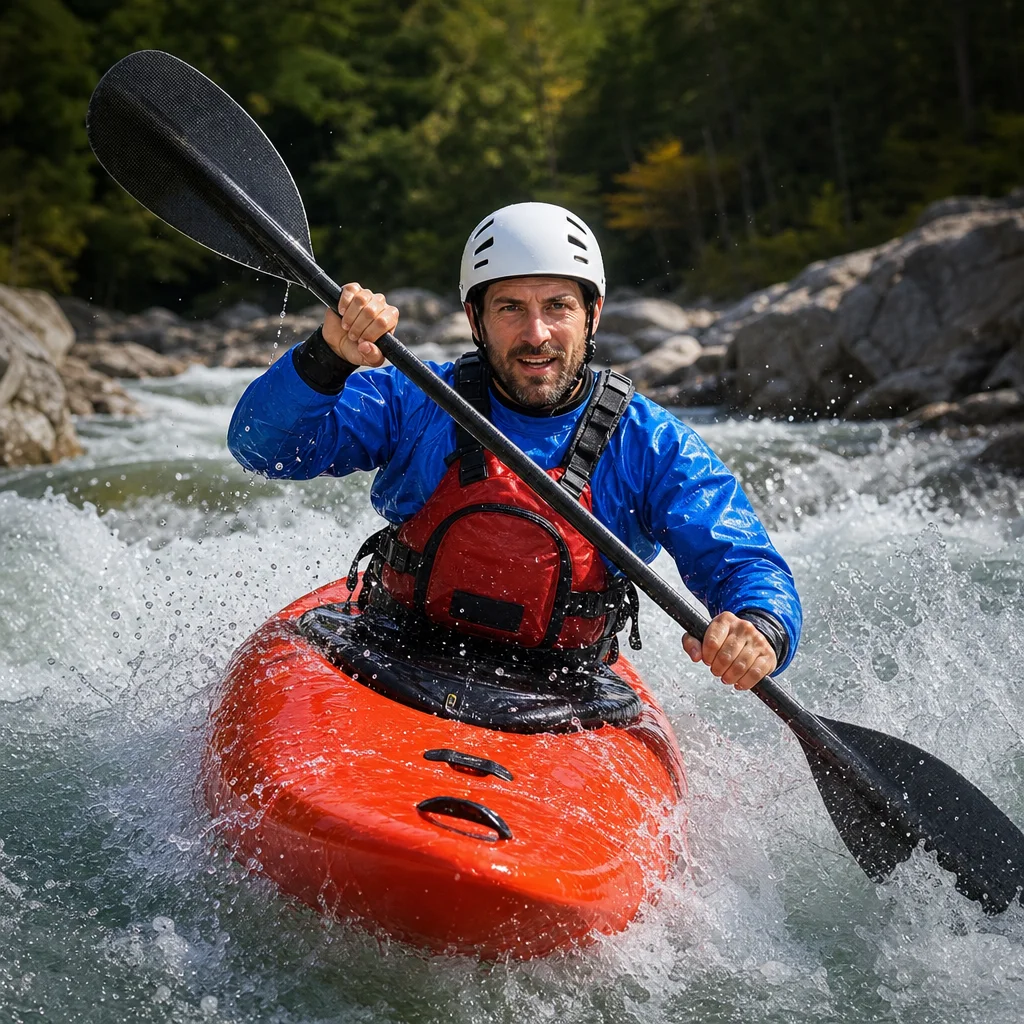
Capsizing close to shore can feel less serious than flipping in deep water, but the first few seconds still matter. You need to protect your breathing, avoid injury, stay connected to your kayak, and make a calm decision about getting to shore or continuing.
Near-shore conditions vary. A sandy, gently sloping shoreline is very different from a rocky bank, tangled vegetation, or shallow water with submerged branches. The steps below are intended for beginner paddlers on calm lakes and protected water, not for surf, strong current, or moving water.
Control the first few seconds
Your first priority is to get your face clear of the water and take a breath. Try not to fight the kayak or thrash. A controlled response gives you more time to assess what happened.
If you’re wearing a properly fitted personal flotation device (PFD), let it help keep you buoyant. Keep your head up, breathe slowly, and identify where your kayak and paddle are. You may be close to shore, but you still need to know whether you’re hurt and whether the water around you is safe.
If another paddler is nearby, say clearly that you’re okay or need help. A simple call such as “I’m out of the kayak” or “I need assistance” is more useful than trying to explain everything at once.
Check for immediate danger
Before attempting to stand, swim, or climb back in, consider:
- Are you injured, disoriented, or having trouble breathing?
- Is your PFD still fitted correctly?
- Is the kayak or paddle pressing against you?
- Are you drifting toward rocks, branches, a steep bank, or boat traffic?
- Is the water cold enough that continued immersion could quickly become a problem?
If you’re injured, can't keep your airway clear, or are becoming weak or confused, call for help or use your emergency communication method if you have one. Staying near the kayak makes you easier to locate.
Verify Your Safety Plan: Before your next outing, check the current emergency number, communication coverage, and local boating requirements for the lake or protected water you’ll visit. Rules for PFD use, signaling equipment, and access to shore can differ by location.
Exit the kayak safely
If you’re still in a capsized sit-in kayak, focus on exiting rather than trying to right the boat while trapped inside it. A spray skirt can make this more urgent.
- Stay calm and locate the release point. Find the spray-skirt grab loop if one is fitted. If you can’t locate it, pull the skirt edge away from the cockpit rim at a point you can reach.
- Release the skirt. Do this before attempting to push out. A skirt that remains attached can restrict your movement.
- Keep your face clear as you move. Place your hands on the cockpit rim or the kayak where you can push away from the boat.
- Slide or push yourself out. Don’t force your legs or twist aggressively. Move in a controlled way and surface beside the kayak.
- Hold onto the kayak. Once you’re out, keep a grip on a cockpit rim, deck line, or another secure part of the boat.
If you’re in a sit-on-top kayak, simply move away from the hull if it’s pressing against you, then hold onto it. Avoid grabbing sharp fittings, loose gear, or anything that could break or pull you under.
Don't stay inside an overturned sit-in kayak to retrieve equipment. Your breathing and ability to move come first.
Stay with the kayak and paddle
A kayak is easier for other people to see than a swimmer’s head, and it can provide useful flotation and support. Keep one hand on the boat whenever practical. If you’re separated from it, call out and swim toward it only if doing so doesn’t move you toward a hazard.
Your paddle may float, depending on its construction, but it’s not a substitute for the kayak or a PFD. Retrieve it only when you can do so without losing contact with the boat or exhausting yourself. If you have a paddle leash, be cautious around any line in the water. Loose lines can tangle around your legs or equipment.
If the kayak is drifting toward shore, guide it from the side rather than placing yourself between the hull and a hard surface. A boat pushed into rocks by wind or waves can trap fingers, legs, or your body.
Decide whether to move to shore
Being close to shore doesn’t automatically mean you should stand up and walk. The bottom may be uneven, slippery, muddy, or covered with hazards. In shallow moving water, putting a foot down can also create a serious entrapment risk. Calm lake water reduces some risks, but it doesn’t remove them.
Move toward shore when it is clearly safer than remaining in the water and you can do so without abandoning the kayak. Favor a gently sloping, open shoreline. Avoid:
- Rock walls, steep banks, and concrete structures
- Dense reeds, fallen trees, and submerged branches
- Areas with boat traffic or poor visibility
- Muddy bottoms where you may become stuck
- Any shoreline exposed to breaking waves or strong wind
If you can touch bottom, test it carefully rather than immediately standing. Keep your weight low, maintain a hand on the kayak, and look for obstacles. If the bottom is unstable or visibility is poor, remain buoyant and pull or swim the kayak toward a safer landing spot.
Once you reach shore, move far enough out of the water to stabilize yourself and the kayak. Check yourself for cuts, bruises, and signs of cold stress before dealing with loose gear.
Right the kayak without rushing
A capsized kayak may contain water and can feel heavier and less stable than expected. If you’re alongside it in shallow, hazard-free water, turn the kayak upright by using controlled movements rather than jerking it toward you.
For a sit-on-top kayak, flip it upright and let the drainage system do its work if the design allows. You may need to remove water manually, but don’t spend so long in cold water that you become chilled.
A sit-in kayak usually holds a significant amount of water after a capsize. If you’re at the shoreline, emptying it may be practical. In deeper water, beginners generally need a practiced assisted-rescue or self-rescue technique, such as using a bilge pump, paddle float, or help from another paddler. Trying an unfamiliar rescue method while cold or panicked can create more problems.
Decide whether to continue
The safest choice after a capsize is often to end the outing, especially if you’re a beginner or this was your first unexpected immersion. Continuing can be reasonable only when the situation is fully under control.
Before getting back in, consider these questions:
- Are you uninjured, warm enough, and thinking clearly?
- Is your PFD still secure and is all essential equipment accounted for?
- Is the kayak intact, with no serious damage or sharp breakage?
- Can you reliably get back into the kayak and stay stable?
- Are the weather, water, and shoreline conditions still calm?
- Do you have enough daylight, energy, and communication ability to return safely?
- Is there someone who knows where you are and can assist if needed?
If any answer is uncertain, go ashore and finish the trip. A wet paddle back isn't a useful test of determination. It can turn a manageable capsize into exhaustion, hypothermia, or another capsize.
If you do continue, shorten the route and stay close to a safe landing area. Recheck your spray skirt, seat, footrests, PFD, and loose gear. Paddle gently until you’re confident the kayak is handling normally again.
Prevent a repeat capsize
Once you’re safe, identify what caused the flip without blaming yourself. Common causes include reaching too far, turning while leaning, shifting weight suddenly, entering or exiting poorly, or allowing loose gear to interfere with balance.
For future calm-water trips:
- Practice a controlled wet exit in a supervised setting.
- Learn how your spray skirt’s release loop works before using it.
- Wear your PFD snugly every time you’re on the water.
- Keep heavy items low and centered, secured so they can’t shift.
- Practice turning and bracing skills in shallow, controlled water.
- Choose a shoreline where you can land safely if something goes wrong.
- Tell someone your route and expected return time.
A capsize close to shore should become a sequence of simple priorities: breathe, exit safely, stay with the kayak, assess the surroundings, reach a safe landing spot, and make a conservative decision about continuing. Practicing those steps before you need them makes a real incident much easier to manage.