How to Get Back Into a Sit-On-Top Kayak Without a Dock
Deep-water reentry depends on controlling the kayak before you try to climb aboard, and conditions can make swimming to shore the safer choice. I’ll walk you through the sequence, helpful equipment, and sensible limits for beginners.
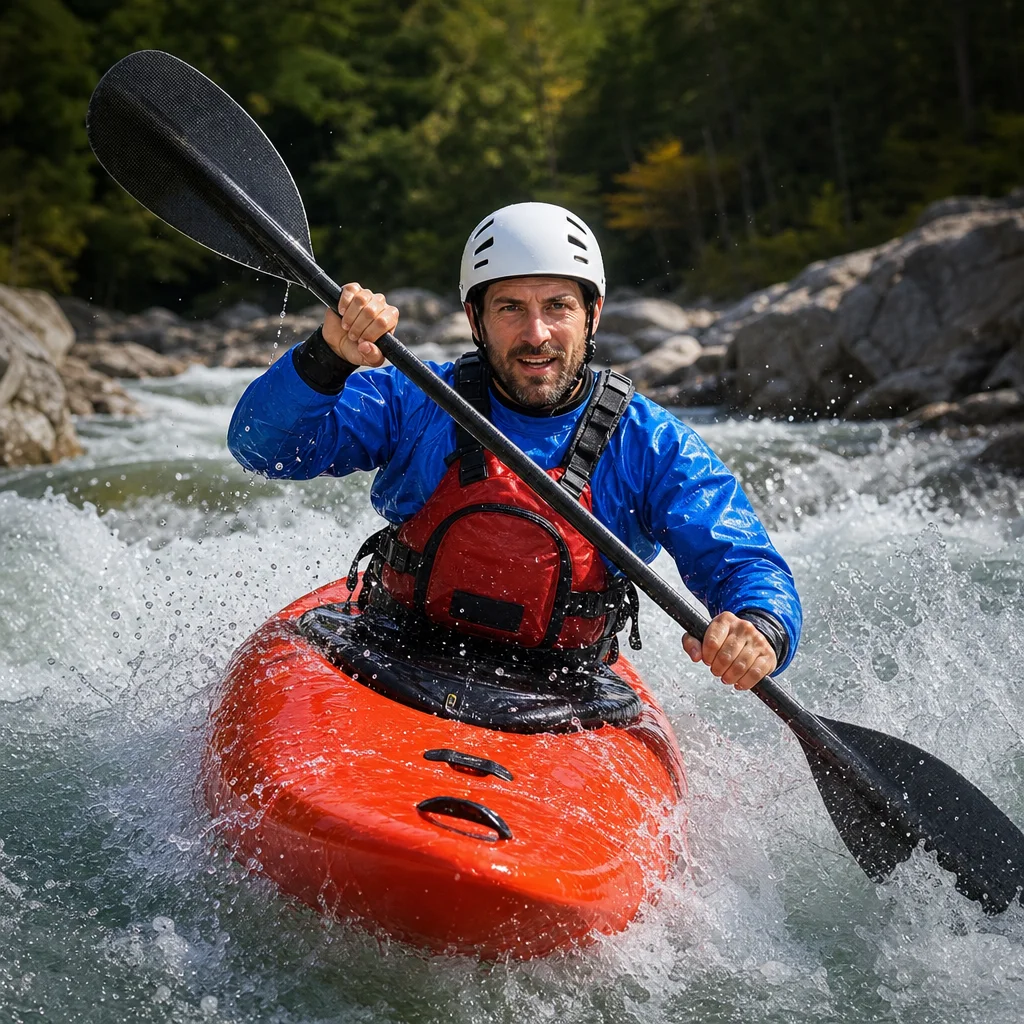
Falling out of a sit-on-top kayak is manageable when you keep hold of the boat, stay calm, and use a controlled reentry instead of trying to haul yourself straight up. The goal isn’t to climb high; it’s to get your chest across the kayak, lower your weight, and regain a stable seated position.
This technique works best in warm, calm inland water with a properly fitted personal flotation device (PFD). It still takes effort, so practice it with a paddling partner before you need it.
Check your local conditions: Before relying on any reentry plan, confirm current water temperature, weather, wind, current, access points, and local boating requirements. Cold water, moving water, or an injured paddler can change the safest response.
First, keep the situation under control
When you enter the water, your first priority is to keep your airway clear and maintain contact with the kayak and paddle. A kayak is easier for rescuers to see than a swimmer, and it provides support while you decide what to do next.
Take a breath and assess:
- Are you wearing your PFD correctly and fully fastened?
- Is the kayak upright, nearby, and free of hazards such as fishing lines or leashes?
- Is the paddle within reach?
- Are you hurt, cold, exhausted, or having trouble breathing?
- Is wind, current, boat traffic, or wave action pushing you away from the kayak or shore?
If you’re injured, becoming cold, or unable to make a strong attempt, don’t repeatedly exhaust yourself. Stay with the kayak, signal for help, and use a whistle, phone, or other communication device if you have one.
Prepare the kayak for reentry
Turn the kayak upright
If the kayak is upside down, swim to one end and grab a secure handle or carry point. Keep your body low in the water and use your legs to help roll the kayak upright. Don’t pull hard on loose deck lines, rudder cables, or accessories that aren’t designed as handles.
Once it’s upright, hold the kayak firmly. If the kayak has a lot of water in the seating area, some will drain through the scupper holes. You generally don’t need to empty every drop before reentering; getting back aboard and stabilizing the boat is usually more important.
Position the paddle
Place the paddle across the kayak, behind or just in front of the seat, where you can reach it after reentry. Keep one hand on the kayak while handling the paddle. If the paddle tends to drift away, a properly installed paddle leash can help in suitable conditions, but any leash creates an entanglement risk. You should know how to release it quickly, and it shouldn’t interfere with your ability to separate from the boat.
A paddle float can make the paddle a more effective temporary outrigger, but it adds setup time and only helps if you’ve practiced using it. A reentry stirrup can also reduce the strength needed to pull yourself aboard. These aids are useful for some paddlers, but they don’t replace practice or a realistic assessment of your ability.
The controlled deep-water reentry sequence
1. Approach the kayak from the side
Swim to the side of the kayak near the seat. Position your body roughly perpendicular to the hull, with your chest close to the kayak. Avoid approaching from the bow or stern and trying to climb lengthwise; that position gives you less control and can make the kayak swing away.
Keep your legs behind you and use your PFD for flotation. Don’t waste energy trying to tread water upright while reaching over the boat.
2. Make a wide, stable grip
Reach across the kayak and grab the far side of the hull, a secure handle, or a strong deck fitting intended for this purpose. Keep your near arm or forearm over the near side. A wide grip lets you pull your chest onto the kayak while limiting side-to-side movement.
If the paddle is positioned across the kayak, you may be able to hold the paddle shaft and the opposite side of the boat. Don’t rely on a loose paddle blade, fishing rod, camera mount, or other accessory as a handhold.
3. Kick and slide your chest onto the seat area
Use steady kicks rather than a sudden pull. Bring your upper body across the kayak until your stomach and chest are supported by the seat area or deck immediately in front of it. Your legs will remain in the water.
The kayak may roll toward you during this step. That’s normal. Keep your weight low and centered instead of trying to lift your whole torso high above the boat. If the kayak starts to slide away, pause, regain your grip, and reposition your body closer to the hull.
4. Get your weight centered
Once your chest is across the kayak, keep your body as flat as possible. Slowly bring one leg up and then the other, or use a stirrup if you have one. Your aim is to get your hips near the centerline before sitting upright.
Avoid twisting hard toward one side. A quick, one-sided movement is a common reason a paddler rolls back into the water. If you use a reentry stirrup, step into it carefully and pull yourself up while keeping your torso low. The strap should be short enough and positioned well enough that it doesn’t become a loose loop around your body.
5. Rotate into the seat
After both legs are over the kayak, remain low and turn your body so that you face forward. Slide or rotate into the seat rather than pushing yourself upright immediately.
Keep your hands on the kayak or paddle for support. Once seated, widen your knees, lower your center of gravity, and take a few calm breaths. Retrieve your paddle only after you feel stable.
Equipment that makes reentry easier
A properly fitted PFD
A PFD is the foundation of this process. It should fit snugly without restricting breathing or riding up over your head when you’re in the water. A loose PFD can make swimming and climbing more difficult.
Choose a design that allows you to move your shoulders and arms. Bulky gear around the lower back can also make a sit-on-top seat less comfortable, so check the fit in your actual kayak.
A paddle float
A paddle float attaches to one paddle blade and can turn the paddle into a stabilizing support when the shaft is secured across the kayak. It may help if you have limited upper-body strength or your kayak is particularly unstable.
It only works well when you can inflate, attach, and position it while in the water. Practice with the exact float and paddle you carry. An unpracticed paddle float can be more distraction than assistance during a stressful capsize.
A reentry stirrup
A stirrup is a strap or loop that hangs into the water and gives you a step. It can reduce the pulling strength required, especially for paddlers with shorter reach or limited upper-body power.
Use it as a step, not as a way to hoist your entire body suddenly. Keep your weight centered and control the strap so it doesn’t wrap around your legs or torso.
Communication and visibility equipment
A whistle attached where you can reach it, a waterproof communication device, and bright clothing or deck gear can make it easier to attract attention. Keep essential items secured to you or the kayak in a way that won’t create an entanglement hazard.
A bilge pump is usually less important for a self-bailing sit-on-top than it is for a sit-inside kayak, although a pump can still be useful for removing pooled water from some designs. Check how your specific kayak drains before choosing equipment.
When swimming to shore may be safer
Swimming to shore isn’t automatically the safer option. It may be reasonable when the shore is very close, the water is warm, conditions are calm, there’s no dangerous current or boat traffic, and you can keep your kayak with you or secure it without creating another hazard.
Even then, keep your PFD on. Use the kayak for support and pull it with you if doing so is practical. Leaving the kayak behind can make you harder to see and may create a retrieval or navigation problem later.
Stay with the kayak rather than swimming away when:
- The shore is farther than you can comfortably reach without resting.
- Wind or current could carry you away from land.
- The shoreline has rocks, breaking waves, steep banks, strainers, or heavy boat traffic.
- The water is cold enough that your coordination or judgment may deteriorate.
- You’re tired, injured, cramping, or struggling to keep your head above water.
- You can’t clearly see a safe landing point.
If you’re near shore but the landing looks hazardous, don’t let urgency push you into breaking waves or onto an unstable bank. Remaining with the kayak and signaling for assistance may be the better choice.
Practice before you need the skill
Practice reentry in shallow water only if the bottom is free of hazards and you can safely stand. A better progression is calm, warm, deep water with a partner nearby. Wear the clothing and PFD you normally paddle in, and practice with the equipment you actually carry.
Start by learning to stay calm in the water. Then practice these pieces separately:
- Keeping hold of the kayak and paddle.
- Turning the kayak upright.
- Positioning the paddle across the boat.
- Sliding your chest onto the seat area.
- Moving your hips to the centerline.
- Rotating into the seat without sudden movements.
Try the sequence from both sides if your kayak allows it. You may not be able to choose your preferred side after a capsize. Stop the session if you become cold or tired; fatigue can turn useful practice into an avoidable emergency.
A simple decision check
Before attempting reentry, ask yourself whether you can make a strong, controlled effort without losing contact with the kayak. If the answer is no, conserve energy, signal for help, and stay with the boat.
If you can reenter, use the side approach, keep your chest low, center your weight, and sit up only after the kayak is stable. If shore is genuinely close and safe, swimming while holding the kayak may be reasonable. In moving, cold, crowded, or rough water, the kayak is usually your best support and your most visible rescue aid.
After you’re back aboard, recover your paddle, check your PFD and equipment, and decide whether you can continue safely. A successful reentry is only part of the problem; getting back to shore without repeating the capsize is the next priority.