How to Choose a Kayak for Slow, Wide Rivers
When a calm, broad river leaves you choosing between a straight-tracking touring kayak and an easier-turning recreational model, I’ll help you compare the trade-offs. You’ll learn where stability, storage, durability, and price matter most for relaxed river trips.
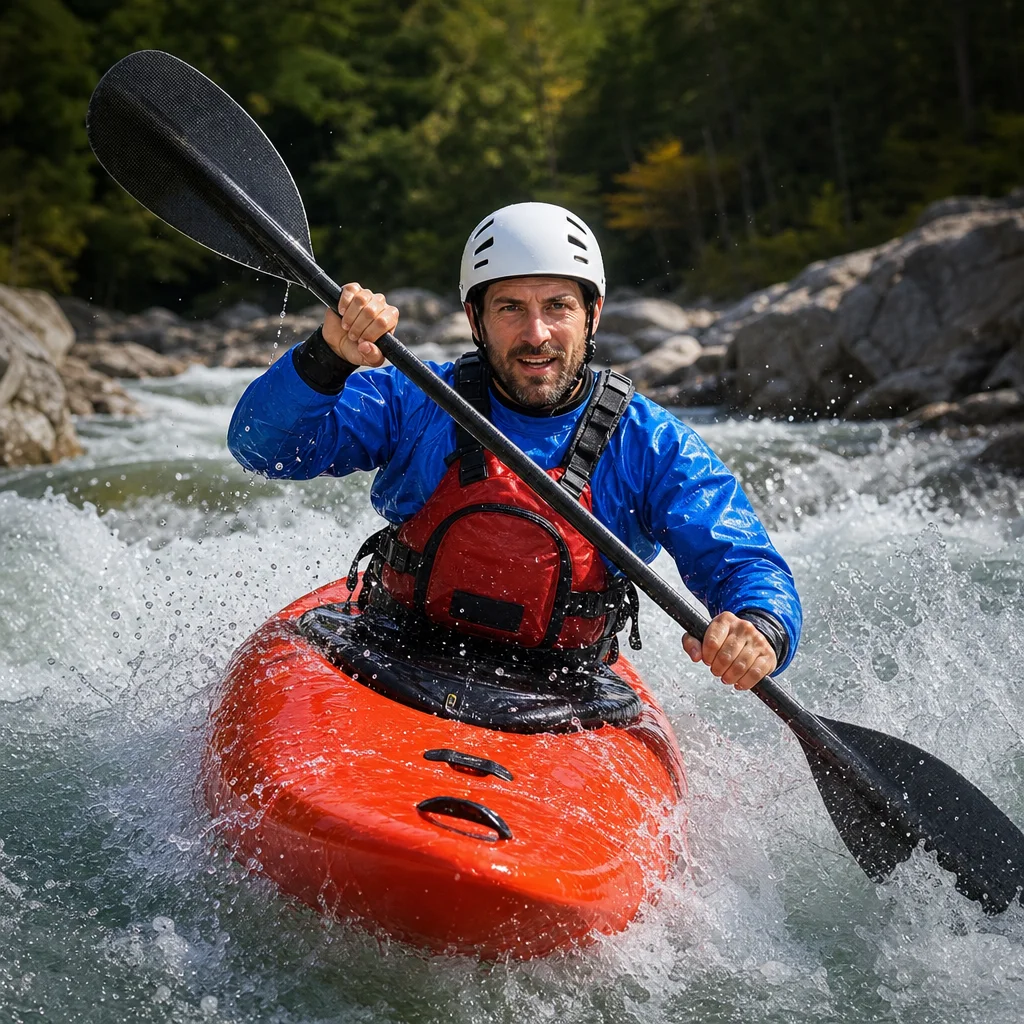
Slow, wide rivers look forgiving, but they still expose the differences between kayak designs. A boat that tracks beautifully across open water may feel awkward when you need to turn into a quiet cove, avoid a branch, or line up with a landing. A short, stable kayak may be pleasant near shore but inefficient when you paddle several miles.
For most recreational paddlers, the best choice isn't the fastest or most specialized kayak. It’s the least expensive boat that gives you enough stability, comfort, control, and capacity for the rivers you actually use.
Start with the river, not the kayak
Before comparing models, describe your typical trips as specifically as possible. “Slow and wide” is a useful starting point, but it doesn’t tell you everything a kayak needs to handle.
Consider these questions:
- Do you paddle close to shore or cross open stretches?
- Are there frequent bends, islands, sandbars, docks, or fallen trees?
- Will you carry lunch and extra clothing, or camp overnight?
- Do you launch from a gradual bank, a dock, or a rough shoreline?
- Is the river reliably calm, or can wind, boat traffic, or changing water levels create waves?
- Will you transport the kayak alone?
A broad river often rewards a kayak that moves efficiently in a straight line, but maneuverability still matters. A boat that requires a wide sweep stroke for every turn can become tiring on a winding river. Likewise, a very short recreational kayak may turn easily but make long crossings feel slow and wandering.
Think about the majority of your outings rather than an occasional ambition. Buying for a rare overnight trip can leave you carrying extra length, weight, and cost on every short afternoon paddle.
Check your actual launch conditions: Before buying, look at the access points and normal water conditions on the rivers you use. Confirm whether local rules, launch fees, parking limits, or required safety equipment apply, since these details can change by location and season.
Choose a useful length range
Length affects tracking, speed, storage, and handling. For slow, wide rivers, recreational kayaks around 10 to 14 feet are commonly practical, although the right size depends on the paddler, hull, and intended load.
Short recreational kayaks: roughly 8 to 10 feet
Short kayaks are usually easy to turn, store, and transport. They can be a sensible choice for:
- Short outings near shore
- Narrow side channels and smaller rivers
- Paddlers with limited storage space
- Families who value manageable handling
- Used-kayak buyers trying to keep costs low
The trade-off is less efficient straight-line travel. A short kayak may wander more when you stop correcting your course, especially in wind. It also tends to have less room for camping gear.
Medium recreational kayaks: roughly 10 to 12 feet
This range often provides the best balance for casual river paddling. You get reasonable maneuverability without giving up as much glide and tracking as you would with a shorter boat.
A 10- to 12-foot kayak is often easier to fit in a garage and lift onto a vehicle than a longer touring kayak. For day trips on broad, calm rivers, that practical convenience can be more valuable than a small increase in speed.
Longer kayaks: roughly 12 to 15 feet and beyond
Longer boats generally glide farther with each stroke and hold a course more readily. They can suit paddlers who regularly cover distance, cross open sections, or carry substantial gear.
They also cost more in some categories, require more storage space, and can be awkward to maneuver around tight bends or crowded launch areas. Length alone doesn’t make a kayak a touring kayak, but a longer hull is worth considering when efficient distance travel is a regular part of your plans.
Understand tracking and maneuverability
Tracking describes how readily a kayak maintains its direction. Good tracking can make relaxed paddling easier because you spend less time correcting the boat’s course. This is helpful on open water and long, straight river sections.
Maneuverability describes how easily the kayak changes direction. A maneuverable boat responds well to sweep strokes and small body movements, which helps around bends, islands, docks, and shoreline obstacles.
These qualities compete with each other. A long kayak with a pronounced keel or a strong stern keel line may track well but resist quick turns. A short kayak with a rounded or highly rockered hull may turn easily but require more corrective strokes on open stretches.
For a slow, wide river, look for a middle ground:
- Moderate length rather than the shortest or longest available
- Some keel or hull shape for directional stability
- Enough rocker to turn without a struggle
- A hull that responds predictably to basic sweep and corrective strokes
A rudder can improve control on longer kayaks, especially in wind or current, but it doesn’t replace sound paddling technique. For many beginner day trips, a rudder adds cost, maintenance, and another component to protect during shallow launches. Consider it when the kayak is long enough to benefit from one and your conditions regularly make steering difficult.
Prioritize usable stability over maximum width
Stability is often the first concern for new paddlers, but a wider kayak isn't automatically the best value. Extra width can make a boat feel steady, yet it may also increase drag and make paddling less efficient.
There are two useful kinds of stability to consider:
- Initial stability: How steady the kayak feels when you first sit in it or shift slightly.
- Secondary stability: How much support the hull provides as it leans farther to one side.
A broad, flat-bottomed recreational kayak often feels stable immediately. That can be reassuring for beginners and useful when entering, exiting, fishing, or taking photographs. A narrower kayak may feel livelier at first but can still provide controlled support when edged properly.
For general river recreation, choose a boat that feels steady when you sit normally, not one so wide that your knees and feet are forced into an uncomfortable position. Try sitting in the kayak if possible. Check whether you can relax your legs, maintain contact with the foot braces, and reach the paddle without leaning excessively.
Avoid judging stability by width alone. Hull shape, seat height, cockpit design, paddler size, and load distribution all affect how stable the kayak feels on the water.
Compare sit-in and sit-on-top designs
Both designs can work well on calm rivers. The better option depends on comfort, weather, paddling conditions, and how you plan to use the boat.
Sit-in kayaks
A sit-in kayak places your lower body inside the hull. It usually offers better protection from wind, sun, and splashing water, and it can feel more efficient because your legs and hips help connect you to the boat.
A recreational sit-in model with a large cockpit can be approachable for beginners while still offering useful control. Look for an opening that gives you enough room to enter and exit without feeling trapped. The seat should support your back without forcing you into a rigid position.
Sit-in kayaks can be less convenient if you expect to swim from the boat, frequently carry wet gear, or want the simplest possible self-rescue process. They also require you to understand how the cockpit and drainage work.
Sit-on-top kayaks
A sit-on-top kayak is easy to enter and exit and is often comfortable for warm-weather recreation. Water can drain through dedicated openings, and the open deck makes it simple to carry a small cooler or get back aboard after a swim.
The trade-offs are greater exposure to sun, wind, and splashes, along with a higher seating position on many models. That raised position can affect paddling efficiency and make the kayak feel more affected by wind.
For casual outings, beginners who value easy entry, and paddlers who dislike a confined cockpit, a sit-on-top can be an excellent practical choice. Choose one with a secure seat, clear foot support, and enough deck space for the gear you can safely carry.
Don’t pay for capacity you won’t use
Storage is useful, but larger hatches and higher weight capacities often add cost and bulk. Estimate your normal day-trip load before choosing a boat.
For a short outing, you may need only water, food, a dry layer, basic navigation items, and safety equipment. A small day hatch or accessible deck storage may be enough. If you plan to camp, carry a dog, or travel far from services, you’ll need more capacity and a hull designed to remain balanced under that load.
Never treat a kayak’s maximum capacity as a target load. The listed limit may include the paddler, clothing, equipment, and accessories. A heavily loaded kayak sits lower and may handle differently, while an unevenly packed boat can become harder to control.
A smaller boat that fits your real gear list can save money and make transport easier. It can also reduce the temptation to bring unnecessary equipment simply because there is room for it.
Factor in transport, storage, and durability
The cheapest kayak isn't always the least expensive option to own. Account for the costs and effort surrounding the boat.
Check the kayak’s total weight, not just its length. A model that is difficult for you to lift may require a cart, a second person, or a more complicated loading system. Those additions can outweigh the initial savings of a bargain boat.
For durability, polyethylene is a common practical choice for recreational kayaks. It tolerates ordinary bumps and rougher handling, though it is relatively heavy and can deform if stored poorly in heat. Composite materials can be lighter and more efficient but usually cost more and may need greater care around rocks and hard surfaces.
When considering a used kayak, inspect the hull for deep gouges, cracks, serious deformation, and repairs around fittings. Check that the seat, foot braces, hatch covers, handles, and drain plugs work as intended. A faded hull isn't automatically a problem, but neglected hardware can create expenses after purchase.
Store the kayak supported along its sides or at several broad support points rather than leaving it resting on the hull for long periods. Keep it out of prolonged direct sunlight when practical, and follow the manufacturer’s storage recommendations for the specific material.
A simple decision process
Use this sequence to narrow your choices:
- Set your normal trip length. Choose shorter and more maneuverable for brief outings; consider more length when distance is routine.
- Define your load. Include yourself, clothing, water, safety equipment, and any regular extras.
- Choose the seating style. Pick a sit-in for enclosure and paddling connection, or a sit-on-top for easy access and an open deck.
- Test the fit. Make sure your legs, feet, hips, and back are supported without pressure points.
- Compare hull behavior. Favor predictable stability and moderate tracking over a single impressive specification.
- Calculate ownership costs. Include transportation, storage, a paddle, a properly fitted personal flotation device, and basic care supplies.
- Buy for typical conditions. Don’t add touring features, excessive capacity, or complex steering hardware unless your regular trips justify them.
Practical next steps
Start by writing down the longest normal day trip, the gear you carry, and the most inconvenient part of your current transport or storage setup. Then test or rent two contrasting kayaks: a shorter, wider recreational model and a somewhat longer boat with stronger tracking.
Pay attention to how much effort each requires to keep straight, how easily it turns, and whether you can sit comfortably for the expected trip length. For slow, wide rivers, a moderately sized kayak that fits you well will usually offer better value than a highly specialized boat that spends most of its time in storage.