How to Cross a Boat Wake Without Taking Water Over the Bow
I’ll compare the safest practical ways to meet, cross, and move away from a boat wake, including when to choose a shallow angle, a more direct crossing, or extra distance. You’ll also learn how to avoid wasted effort and unnecessary gear.
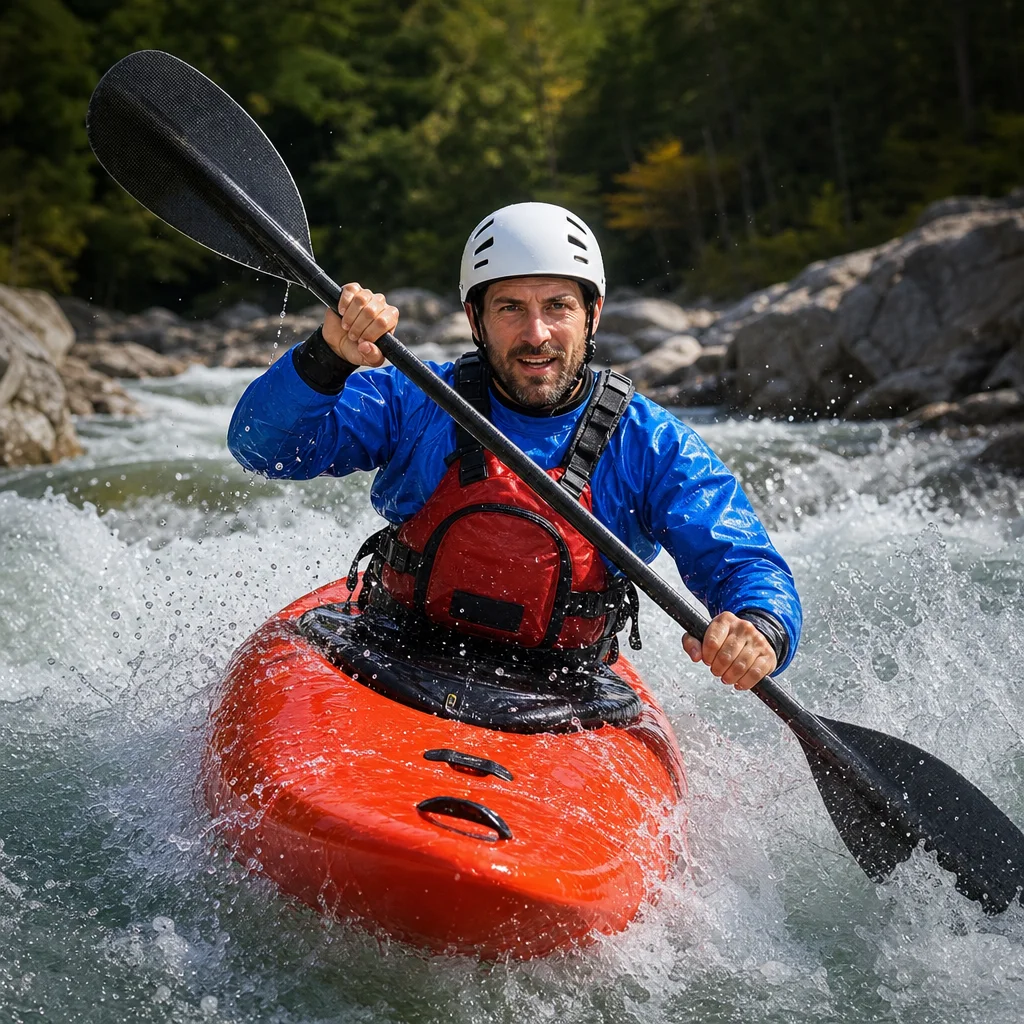
A motorboat wake can look manageable from a distance and still arrive at your kayak as a steep, moving wall of water. The most important choice isn't whether to paddle harder; it’s how you position the kayak before the wake reaches you.
For most recreational kayaks, the reliable approach is to slow down, keep the bow pointed toward the wake at a controlled angle, and cross one wave at a time. You’ll use less energy, reduce the chance of taking water over the bow, and avoid the expensive habit of solving every rough-water problem with more equipment.
Read the wake before you choose an angle
A wake is usually a series of waves rather than one isolated ridge. Look at its height, spacing, direction, and how much energy remains after it spreads across the water. A wake that appears small near the motorboat may be taller by the time it reaches you, especially in shallow water or near a seawall.
First, decide whether you need to cross it at all. If you have room, moving farther away from the boat’s track or waiting for the wake train to pass is often the lowest-risk and lowest-effort choice. You may spend a minute repositioning, but that is usually easier than recovering from a flooded cockpit or an unintended capsize.
If you must cross, avoid letting the wake strike your kayak broadside. A side-on impact can roll the boat toward the trough, particularly if you are carrying a high load or have stopped paddling completely.
The main options and their trade-offs
Cross at a moderate angle
Approaching the wake at roughly a 30- to 45-degree angle is a useful default for many recreational kayaks. The bow meets the wave progressively instead of hitting the full face straight on, while the kayak still moves across the wake without spending too long on its side.
This approach gives you room to adjust. If the first wave is larger than expected, you can reduce your forward speed, lean slightly into the wave, and keep paddling with short, controlled strokes.
The trade-off is that an angled crossing takes more distance. You’ll need to check for other traffic and make sure the angle doesn't carry you into another boat’s path.
Cross closer to perpendicular
A more direct crossing, near 60 to 90 degrees to the wake line, gets you through the wave train quickly. This can make sense when the wake is broad, traffic is changing position, or you have limited space.
The bow may meet the wave more abruptly, though. If the kayak climbs the face and drops into the trough, a strong burst of speed can drive the bow underwater. Keep your weight centered, maintain enough momentum to steer, and avoid sprinting at the wave.
Turn parallel to the wake
Turning parallel can feel smoother because the kayak travels along the wave rather than directly over it. It is also the approach most likely to create trouble if you lose control. A kayak running along a wake can surf, broach, or turn suddenly toward the trough.
Use this position only when you have the skill, space, and conditions to manage it. For many lake and coastal paddlers, a controlled crossing is simpler than trying to ride the wake.
Check your crossing space: Before turning toward a wake, confirm where the motorboat is going, look for following traffic, and allow enough room to avoid crossing directly in front of a moving vessel. Local navigation rules and required signaling equipment can differ, so check the current rules for the lake, harbor, or coastal waterway you’re using.
Step-by-step: crossing without burying the bow
1. Look behind you first
Before you turn toward the wake, check for another boat, personal watercraft, or a second wake. A turn that is safe in open water may put you across another vessel’s route in a busy channel.
If you’re paddling with others, keep the group together without forming a wide line across traffic. One kayak crossing at a time can make it easier for everyone to see the water and adjust.
2. Set the kayak at an angle
Turn the bow toward the approaching wake rather than presenting the side of the kayak. A modest angle is usually easier to control than either a perfectly broadside position or a dramatic, sharp turn.
Keep your torso facing the direction of travel and use your hips to allow the kayak to move beneath you. Avoid locking your upper body rigidly against every roll and pitch.
3. Reduce speed, but don’t stop completely
You want enough forward motion for the rudder, skeg, or paddle strokes to help you steer. You don't need maximum speed. Paddling hard at the face of a wake can force the bow into the water and leave you with less energy for the next wave.
Use short strokes near the kayak rather than long, frantic pulls. If the bow starts climbing, ease the power slightly. If the kayak begins turning away from the wake, use a corrective stroke while keeping the bow from becoming fully broadside.
4. Meet the first wave with a level, active posture
Keep your head and shoulders over the center of the kayak. Don't lean far forward to “help” the bow climb; that shifts weight toward the end you are trying to keep above the water.
As the kayak rises, keep your paddle ready for support. A low brace may help an experienced paddler regain balance, but bracing becomes less dependable if you reach too far away from the kayak or use the paddle as a substitute for good positioning.
5. Keep steering through the trough
The gap between waves can be more difficult than the crest. As the bow drops, maintain your chosen direction and prepare for the next wave. A kayak that turns sideways in the trough can be caught by the following wave before you have time to correct.
Once the last wave passes, continue looking for secondary waves. Large wakes can reflect from shorelines, rocks, docks, and seawalls, producing confused water from several directions.
Common reactions that make the crossing worse
Accelerating at the wake
More speed feels reassuring, but it can make the bow dive when it meets the wave. It also increases the distance the kayak may travel if you lose your line. Controlled momentum is more useful than maximum effort.
Stopping and drifting broadside
A completely stopped kayak has less steering authority and can roll sharply when the wake arrives. If you need to pause, keep the bow generally pointed toward the wave and be ready to make small corrective strokes.
Leaning far forward
Forward weight can push the bow down into the face of the wake. Keep your load balanced and your body centered. If the kayak is heavily loaded, expect it to respond more slowly and take waves differently than it does when empty.
Looking only at the largest wave
The first crest attracts your attention, but the following waves may arrive at a different angle. Scan beyond the immediate wave and keep checking for traffic while you cross.
Carrying gear that creates new problems
A high stack of loose equipment can raise the kayak’s center of gravity and make recovery harder. Extra accessories also add weight and clutter. Secure essential items low and inside the kayak where practical, and avoid adding gear as a substitute for practicing basic wake handling.
How to prepare without overspending
You don't need specialized wake-riding equipment for ordinary recreational crossings. More useful investments are skills and basic safety equipment that serve many conditions:
- A properly fitted, worn personal flotation device
- A paddle suitable for your kayak and paddling style
- Secured storage for phone, keys, and other essential items
- A reliable way to communicate or signal for help
- Practice in calm water with a partner before dealing with busy traffic
A spray skirt can help keep water out of a compatible sit-inside kayak, but it doesn't make rough water automatically safe. Learn how to release it and exit the kayak before using it in conditions where a capsize is possible. A sit-on-top kayak may drain differently, but it can still become difficult to control when waves break over the deck.
The most cost-efficient preparation is to practice turning, stopping, edging, bracing, and wet exits in manageable conditions. Skills are reusable; a collection of condition-specific accessories may not be.
When not to cross the wake
Choose distance or shelter instead when the wake is breaking heavily, visibility is poor, wind is pushing waves against the wake, or other boats leave you no clear route. You should also reconsider if you are tired, carrying an unstable load, or paddling a kayak you can't confidently control.
A large wake near a seawall, rocky shore, dock, or narrow channel can rebound and combine with the original wave. In those places, waiting or moving to calmer water is often safer than attempting a precise crossing.
A simple decision checklist
Before the wake reaches you, ask:
- Can I wait, turn away, or move farther from the boat’s track?
- Have I checked behind me and identified other traffic?
- Can I cross with the bow angled toward the wake?
- Is my speed controlled rather than forceful?
- Is my weight centered and my gear secured?
- Do I have room for the following waves and reflected water?
If several answers are no, create more distance or wait for better conditions. The goal isn't to make every wake feel easy. It is to keep the kayak pointed where you want it, conserve energy, and finish the crossing with control. After the wake passes, reassess the traffic and water before resuming your original route.