What River Bends Change About Current Speed and Boat Position
When a river turns, the quiet inside line can hide shallow water while the faster outside current may carry you toward hazards. I’ll explain how bends, eddies, and strainers affect boat position so you can choose and adjust your line earlier.
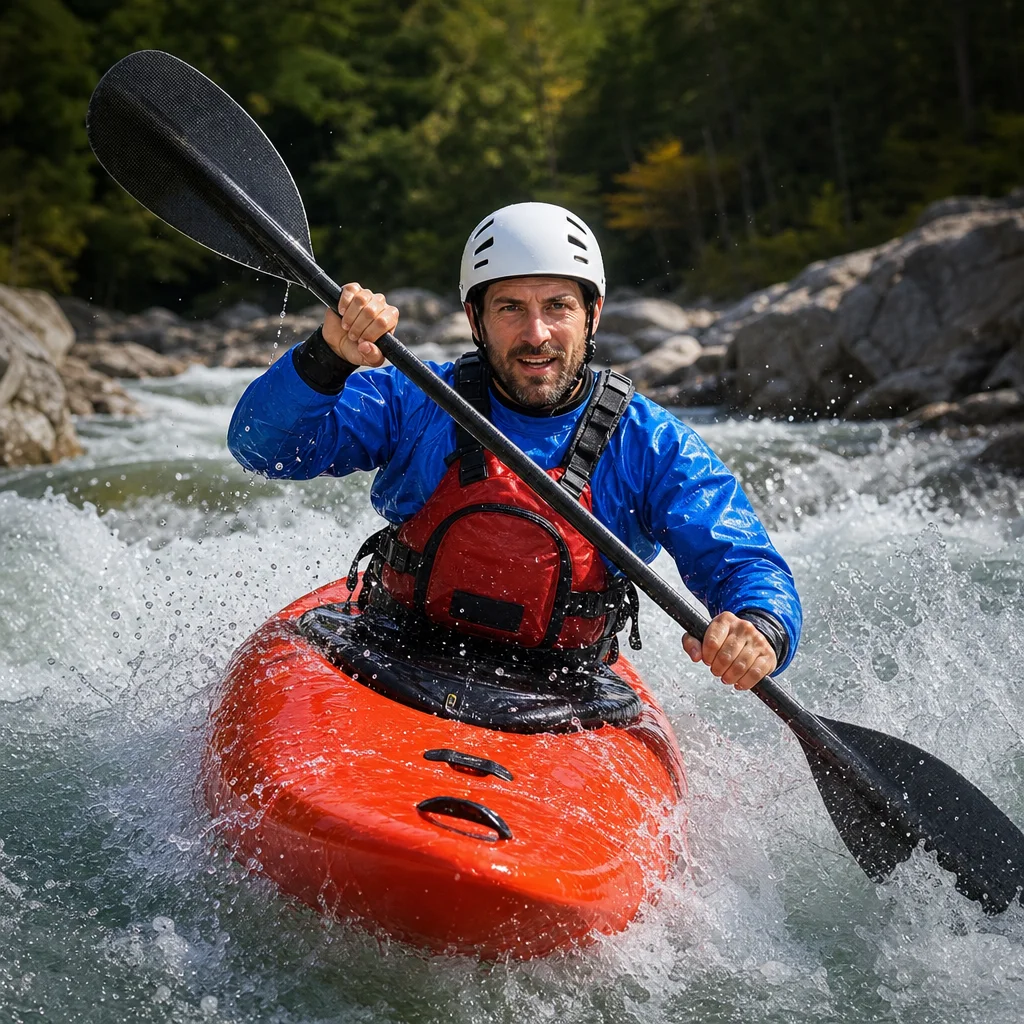
A bend can change your speed, angle, and escape options within a few boat lengths. The inside bank may look calm and inviting, while the outside bank often carries the strongest current toward an undercut bank or strainer. Neither side is automatically safe.
For an intermediate paddler, the useful question isn't simply “Which side is faster?” It’s “Where will the current take my boat, and what can I do if the turn develops differently than expected?”
How current moves around a bend
As water enters a bend, it tends to continue moving in its original direction. This momentum pushes the main flow toward the outside of the turn. The outside bank is commonly deeper, faster, and more erosive. The inside bank often collects gravel or sand, creating a shallow bar where the current slows.
That pattern is common, but it isn’t a rule you can trust without looking. Bedrock, fallen trees, tributaries, flood damage, artificial structures, and changing water levels can redirect the current. A seemingly gentle inside bend can contain a fast chute, while an outside bank may have a useful eddy or a wide, unobstructed channel.
Inside bend: slower doesn't always mean easier
The inside of a bend often has:
- Shallower water
- Deposited gravel or sand
- More bottom friction
- A weaker main current
- Eddies or small recirculating areas behind bars and obstacles
This can be a good place to reduce speed and regain control. It can also be a poor place to enter if the water is too shallow for your hull, the gravel bar ends abruptly, or the channel narrows and forces you back into the main flow.
An inside line may require more maneuvering around rocks. If you turn too sharply toward the bank, your bow can reach shallow water while your stern remains in the current. The current then pivots the boat or pushes the stern downstream, sometimes leaving you sideways across the flow.
Outside bend: faster water and more consequence
The outside of a bend commonly has:
- Deeper water
- A stronger downstream current
- An undercut or eroding bank
- More floating debris
- Less room to recover if the current pushes you toward shore
The strongest current may not be right against the bank. It may form a few boat lengths out, depending on the channel shape. That makes visual judgment important: staying away from the bank doesn't necessarily mean staying out of the current’s strongest part.
Outside bends deserve extra attention because a bank can look solid above water while being hollow below. If a kayak is pushed under an overhanging bank, the paddler can become trapped. The same is true of branches rooted in or leaning over the current.
Eddies and eddy lines at bends
An eddy is water moving upstream or circulating relative to the main downstream current. Eddies often form behind a point of land, a gravel bar, a large rock, or another obstruction. They are especially common on the inside of bends, but they can occur anywhere the current separates from the bank or an obstacle.
The boundary between the main current and an eddy is the eddy line. It may be smooth, irregular, or strong enough to tilt and spin a kayak. Crossing it at an angle is usually more controlled than approaching it broadside.
When entering an eddy, keep your boat pointed generally toward the area you want to enter and be ready for the current to rotate the hull. Avoid making a sudden, aggressive turn at the edge. A controlled sweep stroke, low brace when appropriate, or a few short corrective strokes can help you stay aligned.
When leaving an eddy, expect the main current to grab the bow or stern first. Set your angle before crossing the line rather than waiting until the kayak is already being turned. Keep your body relaxed and your head over the boat; stiffening your upper body often makes a sudden tilt harder to manage.
For any crossing between opposing flows, use a modest downstream lean rather than leaning upstream into the current. The exact angle depends on the strength and shape of the eddy line, so start with a small correction and adjust as the boat responds.
Strainers are a bend hazard, not just a tree hazard
A strainer is an obstruction that allows water to pass but can trap a person or boat. Fallen trees, brush piles, root wads, fencing, and partially submerged branches can all act as strainers.
They are particularly dangerous on outside bends because erosion and stronger current often bring trees into the channel there. The current may carry a kayak toward the branches even when the obstacle is easy to see. At higher water levels, a familiar tree can become more dangerous because additional flow runs beneath or through it.
Treat a strainer as an early-decision hazard. If you can see one ahead, move away from it while you still have room and current speed is manageable. Don't rely on turning at the last moment. If the safe route requires crossing the main current, begin that maneuver before the bend tightens.
If a capsize occurs near a strainer, prioritize getting away from the obstruction rather than holding onto the kayak. A person can become pinned against branches by the current. River-specific rescue practices vary with water level, boat type, and local conditions, so your group should agree on its response before launching.
Check the bend before you commit: Confirm the current level, recent flow changes, known hazards, and local access or navigation requirements for your river. A bend that is manageable at one water level may have a different channel, stronger eddy lines, or newly submerged strainers after high water.
Choosing a position before entering the turn
A good line starts before the bend, not at its midpoint. As you approach, look through the turn if possible. Identify the main current, the likely inside bar, hazards on the outside bank, and any downstream recovery area.
Then ask three questions:
- Where is the unobstructed channel? Look for the continuous tongue of moving water rather than judging only by surface speed.
- Where will the current place me? A line that begins safely may drift toward the outside as the bend tightens.
- What is my bailout? Know where you could eddy out, land, or wait if you lose your intended position.
Your position should match the hazard rather than follow a universal “inside” or “outside” rule. Consider these common situations:
When the outside bank is clear
If the outside line is deep, open, and free of strainers, it may provide the smoothest turn. The current can help carry the kayak around the bend, but you still need enough separation from the bank to avoid an undercut or submerged obstruction.
Enter with a controlled angle and maintain enough speed for steering authority. A kayak moving too slowly can be turned or pushed sideways by the current. Too much speed, however, reduces the time available to correct toward an eddy or safe landing.
When the outside bank is hazardous
If the outside has strainers, an undercut bank, or a sharp drop, avoid being drawn into the fastest water leading toward it. Move toward the safer part of the channel before the bend. This may mean using a ferry angle, edging slightly, or taking a slower inside line if there is adequate depth.
Don't wait until your bow points at the hazard. Your boat’s momentum and the current may already have used up most of the available turning space.
When the inside is shallow or cluttered
A slow inside line isn't automatically the best line if it ends in rocks, a narrow chute, or a difficult exit. Check whether you can maintain enough depth and whether the current will push your stern back into the main flow.
If the inside bar is safe but shallow, keep your strokes deliberate and avoid overcorrecting. Let the boat follow the curve while using small strokes to prevent the stern from swinging out.
Recovering when the turn goes wrong
If you find yourself drifting toward the outside hazard, focus first on boat orientation. A kayak that remains pointed generally downstream is easier to control than one that turns broadside. Use short corrective strokes and avoid frantic, repeated switching that can destabilize you.
If the current is taking you toward an eddy, decide whether to enter it cleanly or continue downstream. A half-committed turn across a strong eddy line can leave the boat sideways. If the eddy is the safer option, set your angle early and cross with enough momentum to get the hull through the seam.
If you can't avoid a strainer, make the safest available decision before contact. Don't attempt to climb onto downstream branches or place yourself between the kayak and the obstruction. If you capsize, separate from the strainer and follow your practiced river-swimming response. Your personal flotation device should remain secured and properly fitted.
After a near miss, move to an eddy or safe bank before analyzing what happened. Check for injury, reassess the group, and look downstream for additional hazards. The next bend may require a different line because your attention, confidence, or equipment has changed.
A simple bend routine
Use the same short routine until it becomes automatic:
- Look: Scan beyond the bend for current, hazards, and exits.
- Classify: Decide whether the inside or outside has the better combination of depth, space, and safety.
- Set up: Move early, while you still have room to cross the current.
- Turn: Maintain boat control with a clear angle and moderate speed.
- Adjust: Watch the bow, stern, and bank rather than relying on your initial plan.
- Recover: If the line deteriorates, choose an eddy or open downstream route before the decision becomes urgent.
A river bend is a moving feature, not a fixed obstacle. Read the flow, account for what lies beyond the visible turn, and treat the outside bank and any strainers with particular respect. Before your next run, study one bend from shore, identify its current tongue and eddy lines, and describe your intended line and bailout to your paddling partners.