How to Get Comfortable in a Kayak When You Feel Tippy
I’ll help you distinguish the normal movement of a kayak from genuine instability, then work through gradual exercises for relaxing your body, improving balance, and deciding when equipment, conditions, or instruction—not more bravery—needs to change.
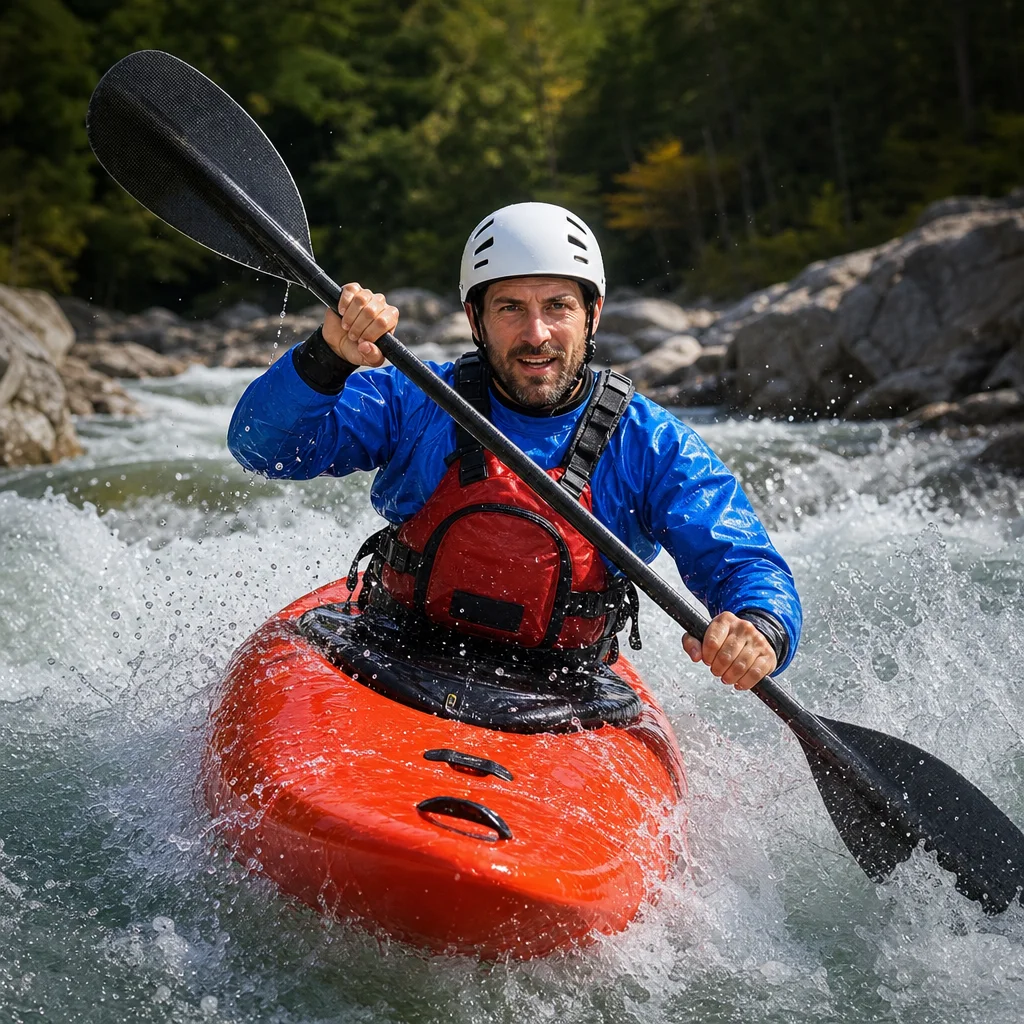
Feeling a kayak move beneath you can make every stroke seem risky. The instinctive response is usually to stiffen your legs, grip the paddle tightly, and lean away from the tilt—but those reactions can make the boat feel less stable.
Some movement is normal, especially in a narrow recreational kayak or on lightly rippled water. The goal isn’t to keep the kayak perfectly flat. It’s to learn which sensations are harmless, which ones require action, and how to stay relaxed enough to respond.
First, separate normal movement from real instability
A kayak is designed to move. When you shift your weight, look over your shoulder, paddle unevenly, or encounter a small wave, the hull may roll slightly and then settle. That gentle movement isn't necessarily a sign that you’re about to capsize.
Beginners often interpret every tilt as an emergency. Your body then reacts before you’ve had time to assess what happened. You may lock your knees against the inside of the cockpit, pull hard on one side of the paddle, or lean your upper body away from the boat. Each response can create another shift in balance.
Sensations that are often normal
You may be dealing with ordinary beginner discomfort when:
- The kayak rocks briefly but returns toward level without a strong corrective movement.
- You feel unstable mainly when getting in, getting out, turning, or looking behind you.
- The hull feels more active in wind or boat wake but remains predictable.
- You can keep your torso upright while the kayak moves slightly beneath you.
- The boat feels steadier when you stop gripping the paddle and loosen your lower body.
A kayak’s stability isn’t judged only by whether it feels motionless. A boat can feel lively but predictable, which is different from feeling difficult to control.
Signs that deserve attention
Treat the situation as a fit, equipment, skill, or conditions problem when:
- The kayak repeatedly leans sharply without settling.
- Water is coming over the side in calm conditions.
- You can’t sit centered because the seat, foot braces, or cockpit restrict your position.
- The boat feels unstable even when you’re relaxed and making small movements.
- Wind, current, waves, or boat traffic are beyond your current ability.
- You don’t know how to exit the kayak if it capsizes.
Confidence shouldn’t require ignoring those signs. Sometimes the right solution is a different boat, a calmer location, a lesson, or a return to shore.
Check your safety plan: Before practicing, confirm the forecast, water conditions, local access rules, and any required safety equipment for your launch area. Wear a properly fitted personal flotation device, and practice near shore with a capable partner or instructor rather than treating balance drills as a substitute for rescue skills.
Relax your body before trying to improve balance
A tense body makes a kayak feel more unpredictable. When you clamp your knees, tighten your abdomen, or grip the paddle shaft, your movements become abrupt. The boat responds to those abrupt movements, which can reinforce the feeling that it’s trying to tip.
Start with a stable position:
- Sit upright rather than leaning back or folding forward.
- Keep your shoulders low and your head centered over your hips.
- Rest your feet against the foot braces or the boat’s intended foot support.
- Keep your knees comfortably bent without pressing hard against the cockpit sides.
- Hold the paddle lightly enough that you can relax your fingers between strokes.
Your lower body should provide contact and control, not a rigid clamp. Your hips can move with the kayak while your upper body stays relatively calm.
Use breathing as a simple reset
When the kayak rocks, avoid holding your breath. Exhale slowly, lower your shoulders, and notice whether the boat settles. A longer exhale can interrupt the reflex to stiffen.
You can also pause your paddling briefly. Keep the paddle across the kayak or place the blades lightly on the water if you need support, then return to a relaxed upright position. The point is to regain control without making a frantic correction.
Progress through small, controlled exercises
Practice in shallow, protected water where you can comfortably stop. “Shallow” doesn’t make every situation safe: submerged rocks, weeds, cold water, current, and difficult exits still matter. Choose a location where a capsize would be manageable and where help is available.
1. Notice the kayak’s normal range of motion
With the kayak pointing straight and your paddle ready, sit quietly for a moment. Let your breathing settle. Then make very small movements with your hips while keeping your shoulders mostly over the centerline.
Move only far enough to notice the boat respond. Return to neutral after each movement. You’re learning how much motion is available before the kayak feels difficult to recover—not trying to reach its tipping point.
If you feel an abrupt drop, hear water entering, or lose confidence, stop the exercise. There’s no benefit in discovering the limit by capsizing unexpectedly.
2. Practice gentle weight shifts
Shift a small amount of weight from one seat bone to the other. Keep your head over the kayak and avoid leaning your whole torso dramatically. Let the hull roll slightly, then return to center.
Repeat on both sides. You may find that one direction feels less comfortable. That difference is useful information, but it isn’t a reason to force the weaker side. Use smaller movements until your body recognizes the response.
3. Add simple paddle support
Place one paddle blade flat on the water beside you and apply light downward pressure as the kayak moves. This is sometimes called a brace for support, but at this stage you’re practicing awareness rather than trying to stop a major capsize.
Keep your hands and elbows in a controlled position. Don’t reach far away from the boat or lean heavily onto the paddle. A sudden, extended reach can pull your upper body farther off balance.
Practice on each side, then return to normal paddling. The exercise should make small corrections feel familiar, not encourage you to depend on the paddle for every wobble.
4. Look around without twisting suddenly
Many beginners become unstable when they turn to look behind them. Instead of rotating only your neck or throwing your shoulders around, keep your torso tall and turn gradually through your chest and hips.
Take a few strokes, pause, and look slightly to one side. Return forward, then repeat. As this becomes comfortable, increase the turn a little. If you need to check behind you in real conditions, stop paddling first and make the movement deliberately.
5. Practice edging only after the basics feel easy
Edging means intentionally tilting the kayak slightly by shifting your lower body while keeping your upper body more upright. It helps you understand how the hull turns and responds, but it can feel too advanced when you’re already nervous.
Keep the angle very small and practice only in calm water with support nearby. Don’t progress to stronger edging, rougher conditions, or self-rescue practice alone. If your boat feels unstable during ordinary paddling, edging drills aren't the next fix; equipment and conditions need attention first.
Check whether the kayak fits you
Sometimes the problem isn’t a lack of balance. A poor fit can force you into a position that feels unstable or makes normal movements difficult.
Check the following:
- Seat: You should be able to sit upright without sliding or leaning to one side.
- Foot support: Your feet should have firm, comfortable contact without being jammed against the braces.
- Cockpit: In a sit-inside kayak, your legs should have enough room to move naturally, and you should be able to exit according to the boat’s design.
- Weight capacity: Your body weight, clothing, gear, and water carried in the boat should stay within the manufacturer’s stated capacity.
- Load distribution: Heavy items should be secured and distributed so the kayak isn’t noticeably bow-heavy, stern-heavy, or listing to one side.
A wider recreational kayak often feels more reassuring to a beginner, but width alone doesn’t determine stability. Hull shape, seating position, load, wind, and your body size all affect the experience. A boat that is stable for one paddler may feel awkward or restrictive for another.
Change one variable at a time
If you’re nervous, avoid testing your balance while also changing the boat, location, weather, clothing, and paddling technique. That makes it hard to tell what helped.
A better progression might look like this:
- Use the same familiar kayak in calm, protected water.
- Paddle for a short period while focusing on relaxed posture and breathing.
- Add one small balance exercise near shore.
- Finish while you still feel in control.
- Repeat on another day before adding distance, wind, waves, or current.
Short, successful sessions teach your nervous system that movement doesn’t automatically mean danger. A long session that ends in panic can make the next outing harder.
Know when instruction is the efficient choice
You don’t have to solve every stability problem by experimenting alone. A qualified instructor can identify whether your posture, boat fit, paddle handling, or expectations are causing the discomfort. They can also teach a controlled wet exit and basic rescue procedures appropriate to your kayak and local conditions.
A lesson is especially worthwhile if you’re using a sit-inside kayak, paddling cold or moving water, or feeling anxious about what would happen after a capsize. Practicing a wet exit in a controlled setting is very different from discovering that skill unexpectedly in deep water.
Confirm your next practice step: If you’re unsure whether a drill, boat, or location matches your ability, ask an experienced instructor or local paddling organization before progressing. Conditions, water temperature, rescue expectations, and required equipment vary by region and trip type.
A short decision checklist
Before your next outing, ask:
- Is the water and weather comfortably within my current ability?
- Is my PFD fitted correctly, and is my basic safety equipment ready?
- Can I sit centered with relaxed legs and a light paddle grip?
- Does the kayak remain predictable when I make small movements?
- Do I know how I would get out and signal for help if I capsize?
- Am I practicing with a partner or instructor who can assist?
If the answers are mostly yes, spend your next session on breathing, posture, and small weight shifts rather than dramatic balance tests. If several answers are no, improve the setup first. Comfort usually grows from repeated, manageable exposure—not from forcing yourself into conditions that feel beyond control.