Kayak Terms You Need to Know Before Renting a Boat
The widest kayak isn't always the safest choice, and the lightest one may not be the easiest to handle. I’ll translate the rental-counter vocabulary that helps you choose a suitable boat, fit your gear, and understand basic safety instructions.
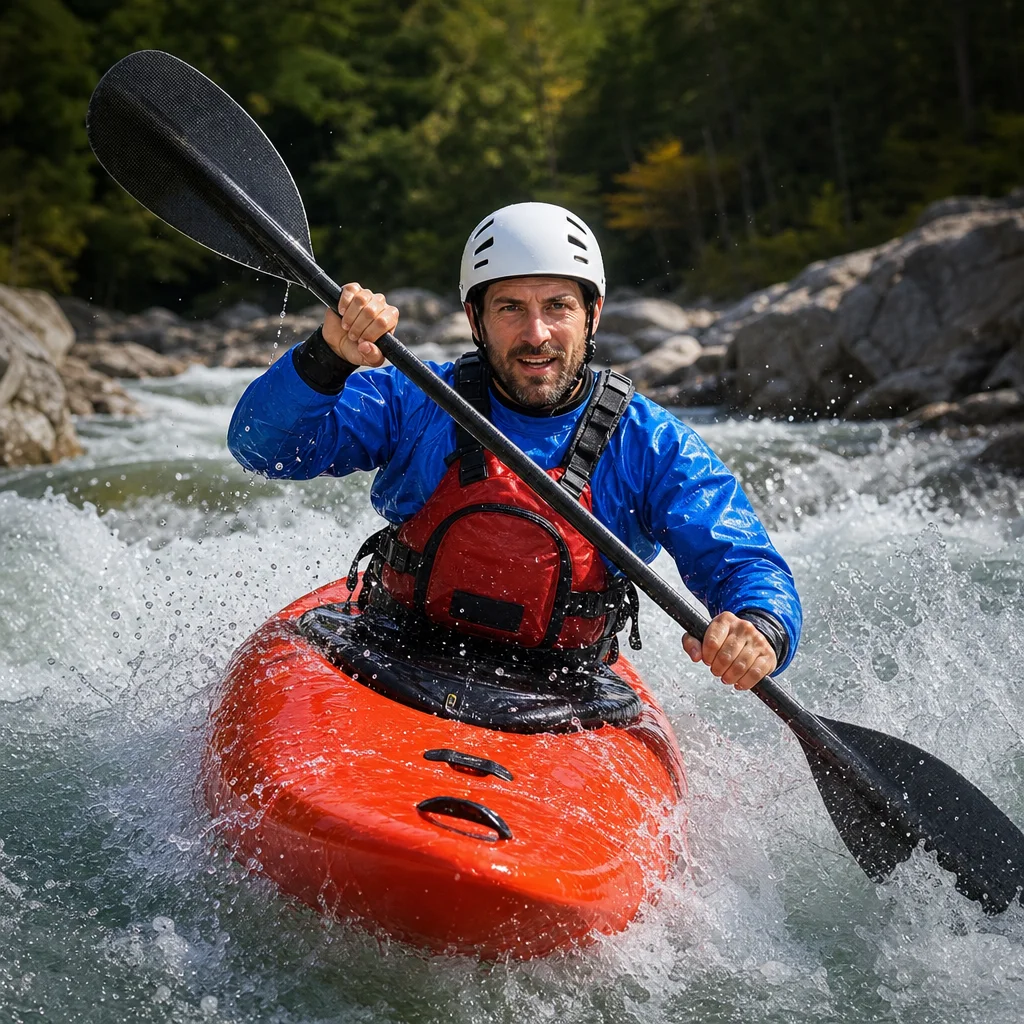
Choosing a kayak for the first time can feel like being handed a menu written in another language. The rental staff may ask whether you want a sit-inside or sit-on-top, mention a skeg or rudder, and point out the boat’s weight capacity—all before you’ve reached the water.
You don’t need to memorize every technical term. You do need to recognize the words that affect fit, stability, maneuverability, and safety. The following terms will help you ask better questions and avoid choosing a boat that doesn’t suit your body, experience, or planned route.
Start with the basic kayak types
Sit-on-top kayak
A sit-on-top kayak has an open seat molded into the top of the boat. Your legs and lower body remain outside the hull rather than inside a cockpit.
These kayaks are often straightforward for beginners because you can get on and off without lowering yourself into an enclosed space. They’re also commonly used for warm-weather recreation, calm water, swimming stops, and family outings.
The trade-off is that you should expect to get at least somewhat wet. A sit-on-top may also feel less protected from wind and cold water than a sit-inside kayak.
Sit-inside kayak
A sit-inside kayak has a cockpit opening where your legs extend into the hull. The cockpit may be spacious and open or relatively snug, depending on the design.
Sit-inside kayaks can offer more protection from wind and splashing. They may also provide a lower center of gravity, which can feel efficient and stable once you’re comfortable with the seating position.
For a first rental, make sure you can enter and exit without difficulty. You should never assume that being inside the kayak means you’re expected to perform a complicated roll. Ask the rental provider to explain the appropriate exit procedure for that specific boat.
Recreational kayak
A recreational kayak is generally designed for casual paddling on calm or sheltered water. It’s usually shorter, reasonably stable, and easier to turn than a long touring kayak.
This is often the sensible category for a first outing on a lake, slow river, or protected coastal area. “Recreational” doesn’t mean the kayak is suitable for every condition, though. Wind, waves, current, cold water, and boat traffic can change the risk quickly.
Tandem kayak
A tandem kayak is built for two paddlers. Some models have a third seating position or a center seat for solo use, but not all do.
Tandems can be useful when one person has more experience or when you want to share a boat. They also require coordination. The person in the front generally sets the paddling rhythm, while the person in the back has a greater influence on steering.
Ask whether the tandem is intended for two adults and whether the seating positions can be adjusted for your heights and combined weight.
Learn the parts that affect comfort and control
Cockpit
The cockpit is the opening in a sit-inside kayak. Its size and shape influence how easily you can enter, exit, move your legs, and reach the controls.
A large recreational cockpit usually makes entry and exit simpler. A smaller cockpit may help keep out more water when paired with a spray skirt, but it can feel restrictive.
Before launching, sit in the kayak on land if possible. You should be able to bend your knees comfortably, brace your feet, and exit without your legs getting trapped.
Footrests or foot braces
Footrests are adjustable supports inside the kayak where you place your feet. They give you a stable point to press against while paddling and help you maintain a balanced posture.
Set them so your knees are slightly bent and your feet feel supported without being jammed into place. If the kayak has adjustable foot braces, ask how the mechanism works before you push away from shore.
Your feet should never be wedged so tightly that you can’t remove them quickly.
Seat and backrest
The seat supports your lower body, while the backrest supports your back. Rental kayaks may have simple molded seats, padded seats, or adjustable systems.
A backrest should support you without forcing you to lean too far forward or recline so much that your strokes become weak. Don’t use the backrest as a substitute for good posture. Sit upright, keep your shoulders relaxed, and avoid gripping the paddle tightly.
Hull
The hull is the main body of the kayak—the part that sits in the water. Its shape affects stability, speed, turning, and how the boat responds to waves.
You don’t need to identify every hull design at the rental counter. It’s enough to ask how the kayak behaves in the conditions you expect. A boat that feels stable on flat water may feel very different in wind or waves.
Beam
Beam means the kayak’s width at its widest point. A wider kayak often feels more stable initially, while a narrower kayak may move through the water more efficiently.
Width is only one part of stability. Seat height, hull shape, your weight, and the water conditions all matter. Don’t choose solely by looking for the widest boat.
Length
Longer kayaks often hold a straight line more easily and can cover distance efficiently. Shorter kayaks are generally easier to turn and manage in confined areas.
For a short rental on a calm lake, maneuverability may matter more than speed. For a longer route with open stretches, tracking and comfort may become more important.
Tracking
Tracking describes how well a kayak continues in a straight line after you stop turning the paddle.
A kayak that tracks strongly can feel predictable on open water, but it may take more effort to turn. A kayak that turns easily may wander more and require frequent correction strokes. Neither behavior is automatically better; the useful choice depends on your route and experience.
Rocker
Rocker is the upward curve of the hull from the middle toward the bow and stern. More rocker generally makes a kayak easier to turn, while less rocker can help it travel in a straighter line.
Rental staff may not use this term with beginners, but it explains why two kayaks of similar length can handle differently.
Understand stability and steering terms
Primary and secondary stability
Primary stability is how steady a kayak feels when it’s sitting level on calm water. Secondary stability describes how it behaves when you lean it farther to one side.
A kayak can feel slightly loose at first but remain predictable when edged, or it can feel very solid when level and become less forgiving when leaned. As a first-time renter, focus on a boat that feels predictable and fits well rather than chasing a particular stability label.
Skeg
A skeg is a small fin that drops below the stern, or rear, of some kayaks. It helps the boat resist drifting sideways and can improve straight-line control in wind.
A skeg usually retracts or deploys through a control near the cockpit. Ask when to use it and how far it should be lowered. Don’t force the control if it sticks, and raise the skeg before entering shallow water.
Rudder
A rudder is a movable steering blade, usually located at the stern. Foot controls allow you to change its direction while paddling.
A rudder can help with steering and wind control, but it doesn’t replace good paddle strokes. Ask the rental provider to demonstrate the foot controls and explain how to lift the rudder before beaching or passing through shallow areas.
Paddle blade and shaft
The blade is the broad part of the paddle that enters the water. The shaft is the slimmer section you hold. A paddle may have two separate blades, and its feathering describes the angle between them.
For a basic rental, the important questions are whether the paddle is the right length for you and whether the blade orientation feels comfortable. Hold it with relaxed hands and ask for help if the paddle feels unusually heavy or long.
Know the safety and fit vocabulary
Personal flotation device, or PFD
A PFD is a wearable flotation device designed to help keep you afloat. It should fit snugly without restricting your breathing or arm movement.
Choose the correct size, fasten every closure, and check that it doesn’t ride up excessively when you lift your arms. A PFD isn't a substitute for staying within your ability level or paying attention to conditions.
Weight capacity
Weight capacity is the maximum combined load the kayak is designed to carry. That usually includes paddler weight, clothing, water, food, and other equipment—not just your body weight.
Stay within the stated capacity, and ask whether the rating applies to one paddler, two paddlers, or a particular seating arrangement. An overloaded kayak can sit lower in the water and become harder to control.
Spray skirt
A spray skirt is a cover that fits around the cockpit and your waist to keep water out of a sit-inside kayak. It’s more common in touring or rougher-water setups than in basic recreational rentals.
If you’re given one, learn how to release it. The grab loop should remain accessible so you can remove the skirt quickly if you need to exit.
Drain plug and scupper holes
A drain plug seals an opening used to empty water from some kayaks. Scupper holes are openings in many sit-on-top kayaks that allow water to drain away from the seating area.
Ask whether the drain plug should be installed before launching and where it is located. Never block drainage openings with loose gear unless the rental provider specifically explains the setup.
Confirm the local requirements: Before you launch, ask the rental provider which PFD, lighting, signaling, age, and route restrictions apply where you’re paddling. Regulations and rental policies vary by location and can change, so follow the current local instructions rather than relying on a general list.
Questions to ask at the rental counter
Use plain language if a term is unfamiliar. A good rental briefing should cover:
- Which kayak type suits your route and experience?
- What is the kayak’s weight capacity?
- How do you adjust the seat and footrests?
- How do you steer it, and does it have a rudder or skeg?
- What should you do if the kayak drifts, tips, or takes on water?
- How do you exit this particular kayak safely?
- Where should you keep your phone, keys, and other small items?
- What areas, weather conditions, or launch points should you avoid?
Before leaving shore, test the fit and make sure you can reach the paddle, controls, and any emergency equipment without twisting awkwardly. Look over the kayak for existing damage and report it so there’s no confusion when you return.
Your first-rental checklist
Choose a kayak that matches the water and route, not just the one that looks most comfortable on land. Confirm the weight capacity, adjust the footrests, fasten your PFD, and practice a few forward, reverse, and turning strokes close to shore.
If the boat’s behavior, the weather, or the instructions don’t make sense, pause and ask questions before going farther. Understanding a few rental terms won’t replace judgment, but it will help you recognize the equipment you’re using and make safer decisions from the start.