How to Help a Tired Paddling Partner Reach Shore
I’ll clarify how to choose between escorting, towing, rafting up, or calling for help when a tired paddling partner needs to reach shore safely.
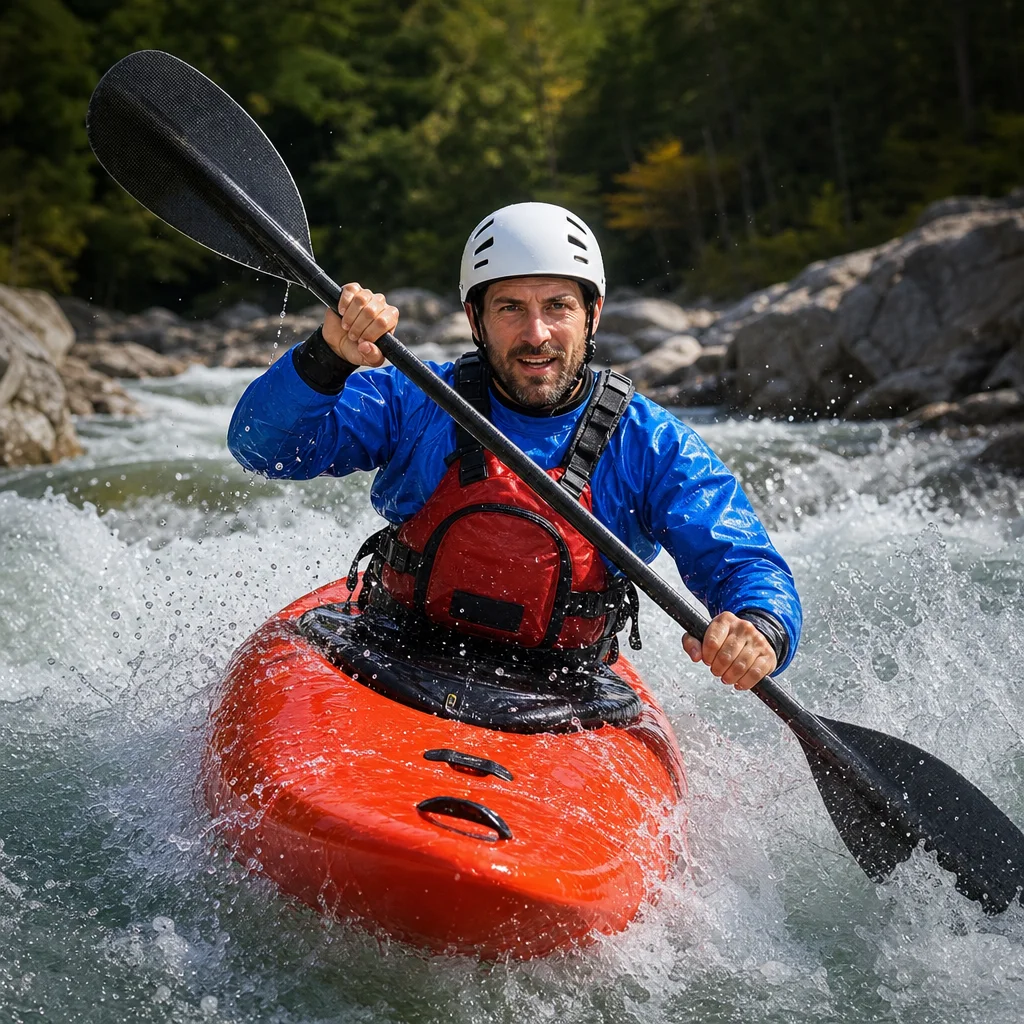
Fatigue can turn an ordinary paddle into a difficult decision. Your partner may still be able to control the kayak, but wind, current, cold, distance, or rising anxiety can quickly reduce that margin. The safest response is usually a calm, staged plan—not an improvised rescue that leaves both of you exhausted.
Your goal is to get the tired paddler to the nearest suitable shore while preserving communication, stability, and enough energy to handle the next problem.
Start with a quick situation check
Move close enough to communicate clearly, but avoid creating wake or contact that could destabilize either boat. Ask short, specific questions:
- Are you injured, cold, dizzy, confused, or short of breath?
- Can you keep your kayak upright and paddle slowly?
- Can you reach the shore you’re pointing toward?
- Is your kayak taking on water or damaged?
- Do you still have control of your paddle and essential gear?
Look beyond your partner’s answer. Slurred speech, unusual silence, poor coordination, repeated capsizing, uncontrolled shivering, or an inability to follow simple instructions suggests a more serious problem than ordinary fatigue.
Check the route to shore as well. The closest shoreline may have rocks, surf, steep banks, private property, thick vegetation, or a strong current along it. A slightly farther beach, cove, or gently sloping bank may be the safer landing.
Confirm your local emergency options: Before relying on a phone, VHF radio, or planned landing area, verify the emergency number, marine distress procedure, access points, and relevant boating requirements for the waterway you’re visiting. These details vary across North America, and official local guidance takes priority over a general paddling plan.
Choose the least complicated effective approach
There are four common options: let your partner paddle under escort, use a short tow, raft the kayaks together, or call for outside assistance. Each can work in the right conditions, but they have different trade-offs.
1. Escort the tired paddler
If your partner can steer and paddle gently, escorting is often the simplest and safest choice. Stay on the side that gives you the best view of hazards and keeps both boats away from traffic, rocks, and breaking waves. Set a slow pace and agree on a simple signal for “stop,” “help,” or “I’m okay.”
You can reduce the workload by helping with navigation and choosing the cleanest route. Encourage short, relaxed strokes rather than hard bursts. If the paddler is tense, suggest a brief pause with the paddle across the cockpit for balance—provided the water is calm enough and the kayak remains stable.
The main benefit is that both boats remain independent. Your partner can steer, brace, and exit if needed. The limitation is that fatigue may continue to worsen, especially in cold water, wind, or current. Set a clear reassessment point rather than assuming the paddler will make it all the way.
2. Use a short tow when the paddler can still assist
A short tow can help when your partner can remain upright and steer but no longer has enough strength to make useful forward progress. The paddled kayak should still contribute when possible. Even light steering and occasional strokes reduce the load on the towing boat.
Use a purpose-built tow system if you carry one, and follow its operating instructions. Keep the line controlled and clear of both paddlers, rudders, pedals, hands, and feet. A line in the water can snag on rocks, vegetation, fishing gear, or another boat. It can also create a sudden pull if the towed kayak catches an obstacle.
Before moving, tell your partner what you’re going to do and agree on a stop signal. Begin slowly in open water. Check that the towing kayak can steer, brake, and turn without being pulled off course. A heavily loaded kayak, strong wind, or current can make a tow far more demanding than it appears.
A tow isn't a substitute for a rescue service. If your partner can't keep the kayak upright, can't communicate reliably, or is becoming medically unwell, stop trying to solve the problem with a longer tow. Get help while you still have the ability to manage both boats safely.
3. Raft up only in suitable conditions
Rafting the kayaks together can let you share stability, communicate more easily, and make a short crossing or landing more controlled. It may be useful in calm, protected water when both paddlers understand the maneuver and there is no immediate threat from waves or traffic.
The trade-off is reduced maneuverability. Two kayaks tied or held together can turn poorly, catch wind, and respond unpredictably to waves. If one boat capsizes or shifts suddenly, the other paddler may be pulled off balance. Rafting is a poor choice in moving water, surf, narrow channels, or anywhere you need to turn quickly.
Don’t improvise a tight connection with a loose rope around a paddler, cockpit, or grab loop unless you understand how it will release. Keep any connection manageable and designed for the situation. If the boats become difficult to control, separate them in a deliberate, stable way rather than waiting for a sudden failure.
4. Call for outside help early
Call for help when the paddler is injured, confused, severely cold, panicking, unable to stay upright, separated from the kayak, or exposed to conditions you can’t safely manage. Also call early if reaching shore requires crossing open water, strong current, breaking waves, or a hazardous landing.
If you have a phone or marine radio, give rescuers useful information: your location, the number of people, the type and color of the kayaks, visible landmarks, the paddler’s condition, and the direction you’re moving. Follow the instructions you receive. Don’t leave the tired person alone to search for help unless doing so is clearly safer and you have a reliable way to communicate their location.
If immediate danger exists, prioritize flotation and visibility. Keep everyone wearing a properly fitted personal flotation device, stay with the kayaks when practical, and use a whistle, light, bright clothing, or other signaling equipment to attract attention.
Prepare for the landing, not just the trip to shore
A tired paddler may have enough energy to reach land but not enough to handle a difficult exit. Choose a landing site with room to approach, shallow water that matches the kayak’s stability and the paddler’s ability, and a place where you can secure the boats without being pushed back into danger.
Explain the landing before you arrive. Agree on who goes first, where to point the kayaks, and where to move after getting out. In small waves, approach mostly into the waves and keep control of the kayak through the final few feet. In current, avoid drifting broadside into obstacles. Don’t let a tired paddler stand suddenly in deep or moving water; loss of balance is common when legs have been inactive.
If the shore is rocky, muddy, steep, or affected by surf, reassess before committing. A landing that looks easy from offshore may require lifting a boat, scrambling over rocks, or walking through unstable shallows. You may be better off waiting in a protected position while arranging help or choosing another access point.
Once ashore, check your partner again. Move out of wind and cold, provide dry layers and appropriate food or water if they’re alert and able to swallow, and look for signs that warrant medical help. Don’t treat confusion, unusual drowsiness, severe shivering, or a worsening condition as ordinary post-paddle tiredness.
Avoid the common rescue mistakes
Don’t tow beyond your own capacity
A strong paddler can still become exhausted while towing into wind or current. If you can no longer steer, communicate, or keep your own kayak stable, the plan has become unsafe. A slower independent escort or an early request for help may be the better option.
Don’t pull a person by an arm or life jacket
A person in the water is difficult to move safely by hand, especially if they’re panicking or injured. Keep them supported and focused on staying with their flotation. Use practiced rescue techniques and appropriate equipment rather than relying on a forceful grab.
Don’t let the destination control the decision
The original take-out, campsite, or launch is only one option. Fatigue is a reason to shorten the trip, land early, or stop altogether. Continuing because you’re “almost there” can turn manageable fatigue into cold stress, a capsize, or a second exhausted paddler.
Don’t separate without a plan
If you must land, search for help, or move equipment, decide who stays with whom, where the group will regroup, and how you’ll communicate. A tired paddler shouldn't be left wondering whether to continue alone.
A simple decision sequence
Use this order when you need to act quickly:
- Stabilize: Keep both kayaks upright, keep everyone in a PFD, and move away from immediate hazards.
- Assess: Check for injury, cold stress, confusion, capsize, damage, and the paddler’s ability to steer.
- Select the nearest safe outcome: Choose a suitable shore, not merely the closest shoreline or planned destination.
- Use the least demanding assistance: Escort first if practical; tow or raft only when conditions and equipment support it.
- Escalate early: Contact outside help before fatigue, weather, darkness, or distance removes your options.
- Land deliberately: Brief the approach, control the final contact with shore, and reassess once ashore.
Practical next steps
Before your next outing, discuss what “I need help” sounds like in your group and practice stopping, communicating, and landing at an easy shoreline. Carry a reliable communication method, signaling equipment, and a tow system only if you know how to use it. Most importantly, treat fatigue as information: changing the plan early is usually easier than rescuing a paddler after the margin has disappeared.