How to Decide Whether to Paddle During an Air Quality Alert
When smoke, heat, or poor visibility reaches your launch site, the decision to paddle needs more than a quick glance at the sky. I’ll help you weigh air quality, exertion, health risks, and changing conditions before committing to the water.
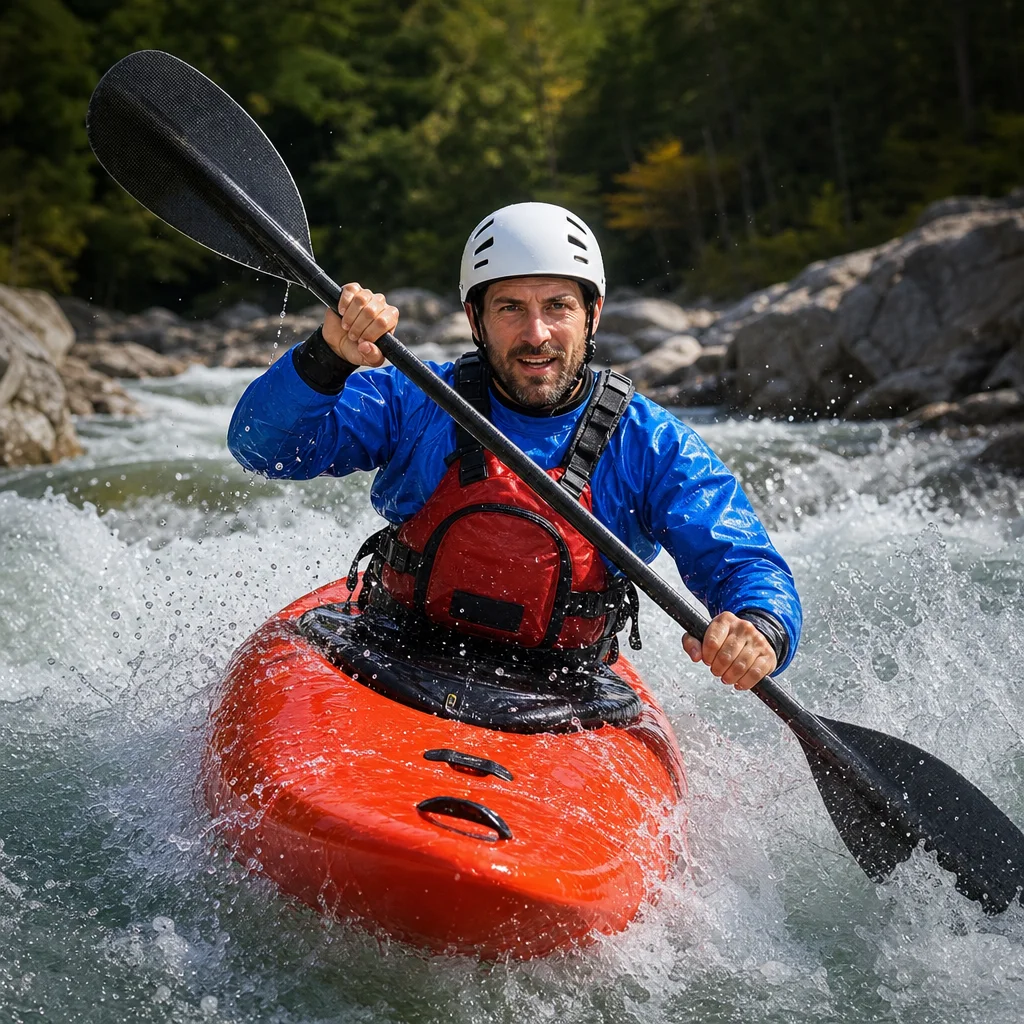
An air quality alert can turn a pleasant paddle into a difficult risk assessment. Smoke may be visible, barely noticeable, or drifting in and out as winds change. Heat and humidity can add another layer of strain, while poor visibility can make navigation and rescue harder.
The safest choice depends on more than the color of the sky. Before launching, consider the current air quality, the kind of paddling you’ll do, who is going, how quickly conditions may change, and whether you have a simple way to shorten or cancel the trip.
Start with the actual conditions at your launch site
Look up conditions for the specific area where you’ll put in, not just the nearest major city. Air quality can vary considerably across a region, especially near wildfire smoke, valleys, urban areas, and shifting wind patterns.
Check the current Air Quality Index (AQI), the pollutant involved, the forecast for the time you’ll be on the water, and any local public health or emergency alerts. Smoke from wildfires commonly contains fine particles, while ozone can be a concern on hot, sunny days. These pollutants can affect breathing and exercise tolerance in different ways.
Also check conditions along the route. A protected launch may have clearer air than an exposed shoreline, and a short paddle on a small lake is a different decision from a long downwind crossing with no easy exit.
Check the launch window: Before leaving, compare the current AQI and pollutant forecast with the expected heat, wind, and visibility for the entire time you’ll be paddling. Recheck them if the trip is several hours away.
Treat the AQI as a starting point, not a complete answer
The AQI gives you a useful common scale, but it doesn’t capture every factor that matters to a paddler. A moderate reading may still be a poor choice for someone with asthma, for a child, or for a strenuous workout in hot weather. A rapidly worsening smoke forecast may also matter more than a temporarily acceptable current reading.
As a general framework:
- Good: Air pollution poses little risk for most people, though unusual smoke or odor still deserves attention.
- Moderate: Most people can usually continue normal activities, but unusually sensitive people may need to reduce prolonged or strenuous exertion.
- Unhealthy for sensitive groups: People with asthma, heart or lung disease, older adults, children, pregnant people, and others advised by a clinician to limit exposure may need to reduce or avoid strenuous outdoor activity.
- Unhealthy or worse: Outdoor exertion becomes increasingly difficult to justify, particularly for a recreational trip that can be postponed.
These categories aren't a personal medical clearance. If you have a respiratory or cardiovascular condition, follow your clinician’s advice and any local health guidance rather than relying on a general paddling rule.
Match the trip’s exertion to the air quality
Paddling effort is easy to underestimate. A relaxed drift on sheltered water may involve little exertion, but fighting wind, current, waves, or a heavy boat can quickly raise your breathing rate. Rescue practice, racing, surf launches, and long crossings are especially demanding.
Ask yourself what the trip will require:
- Will you paddle continuously, or can you take frequent breaks?
- Are wind or current likely to make the return harder than the outbound leg?
- Does the route have beaches, docks, or access points where you can stop?
- Are you carrying extra equipment or paddling a loaded kayak?
- Can everyone in the group maintain a comfortable pace without pushing?
If the answer involves sustained hard effort, treat the air quality alert more seriously. A lower-effort alternative may be reasonable when a strenuous plan isn't: choose a short, sheltered route close to the launch, avoid drills or speed work, and keep the outing flexible. If smoke is heavy or the AQI is unhealthy, postponing is usually the better recreational decision.
Don't assume that being on the water makes smoke safer. Open water may provide exposure to windborne pollutants for the entire trip, and a breeze can increase paddling effort while moving smoke into the area.
Consider who is in the group
A group decision should account for the person most likely to be affected, not only the strongest paddler. Be especially cautious when the group includes:
- Children or older adults
- Anyone with asthma or another lung condition
- Anyone with heart disease or other cardiovascular concerns
- People who are pregnant
- People recovering from a respiratory illness
- Anyone who has previously developed symptoms during smoke exposure or poor air quality
Ask privately whether anyone has a prescribed rescue medication or an exposure plan, but don’t treat carrying medication as permission to proceed into conditions they’ve been told to avoid. A paddling group also needs to know how it will respond if someone begins coughing, wheezing, feeling unusually tired, dizzy, or short of breath.
New or unexplained breathing difficulty, chest pain, confusion, faintness, or severe symptoms require prompt medical attention. Move the person away from the exposure, call emergency services when appropriate, and follow their medical plan. Don’t continue paddling to “see if it improves.”
Account for heat and visibility separately
Air quality is only one part of the decision. Hot weather increases dehydration and heat illness risk, and smoke can make it harder to judge how uncomfortable conditions really are. A light breeze may feel pleasant while you’re near the launch but disappear on a broad section of water.
Check the heat index or other local heat guidance, water temperature, shade availability, and drinking-water needs. Keep the route short enough that you can return without racing the conditions. Heat, smoke, and hard paddling create a more demanding combination than any one of them alone.
Visibility deserves its own check. Haze can obscure shorelines, channels, landmarks, and approaching boats. If you can’t clearly identify your route or see enough to navigate safely, don’t launch. A compass, phone, or GPS may help with orientation, but electronic navigation can't remove collision, grounding, or rescue risks in poor visibility.
Watch for conditions that can change after launch
A forecast isn't a guarantee. Wildfire smoke can move with wind shifts, and ozone often changes through the day. Thunderstorms, gusts, and temperature changes can also alter a route that looked manageable at the dock.
Before launching, agree on specific stop conditions rather than relying on someone to make a difficult call later. Examples include:
- Smoke or haze becomes noticeably thicker
- The AQI or local alert worsens
- Anyone develops coughing, headache, wheezing, chest tightness, dizziness, or unusual fatigue
- Wind, waves, or current make the return substantially harder
- Visibility drops enough to obscure the route or other traffic
- Heat becomes difficult to manage despite slowing down and taking breaks
Turn around early when one of these conditions appears. A group that waits until everyone is exhausted has fewer safe options.
Don’t rely on a cloth mask on the water
A standard cloth face covering doesn't provide reliable protection from fine wildfire-smoke particles. Even a properly fitted particulate respirator is difficult to use during active paddling, may become uncomfortable with heat and exertion, and isn’t a substitute for avoiding exposure. It also doesn't solve heat, visibility, wind, or water-safety problems.
The most effective recreational control is to reduce exposure: postpone the outing, choose cleaner air, shorten the trip, or move to a lower-exertion activity indoors. Keep windows closed during smoky travel when practical, and avoid adding unnecessary exposure before or after the paddle.
Use a simple go, modify, or cancel decision
A three-level decision can keep the discussion practical.
Go with normal caution
This is reasonable only when the AQI and local alerts are acceptable, visibility is good, heat is manageable, and everyone is comfortable with the planned effort. Carry water, communication equipment, and the normal safety gear for the route. Continue checking conditions if the trip is long.
Modify the outing
Choose a shorter route, stay near an exit, reduce effort, avoid open-water crossings, and paddle during a time with better conditions. This option is most appropriate when conditions are marginal but stable and no one in the group has a health concern that makes exposure especially risky.
Cancel or postpone
Cancel when air quality is unhealthy, smoke is worsening, visibility is poor, heat is excessive, the route requires strenuous effort, or a vulnerable group member is uncomfortable proceeding. The recreational benefits of a paddle rarely justify pushing through a condition that could leave you struggling far from the launch.
A quick pre-launch checklist
Before you load the kayak, confirm:
- The current AQI and pollutant forecast for the launch and route
- Any local health, wildfire, heat, or emergency alerts
- Wind, waves, current, heat index, and visibility
- The group’s health needs and comfort level
- A route with realistic exit points
- A turnaround time and clear cancellation triggers
- Water, communication equipment, and required safety gear
If several factors are unfavorable, treat that combination as a strong reason to stay off the water. You can always choose a shorter or easier paddle another day; you can’t make a worsening exposure or remote rescue problem convenient after launching.
The best decision is usually the one that leaves room for changing conditions. Check the information close to departure, match the route to the least tolerant paddler, and choose a conservative plan whenever smoke, heat, exertion, or visibility begin stacking up.