How Wind Changes the Way Your Kayak Handles
Wind can turn a straightforward paddle into a route, trim, and effort problem, especially on open lakes and coastal water. I’ll explain how weathercocking, weather-vaning, exposed sections, and quartering wind fit together so you can adjust your plan with less guesswork.
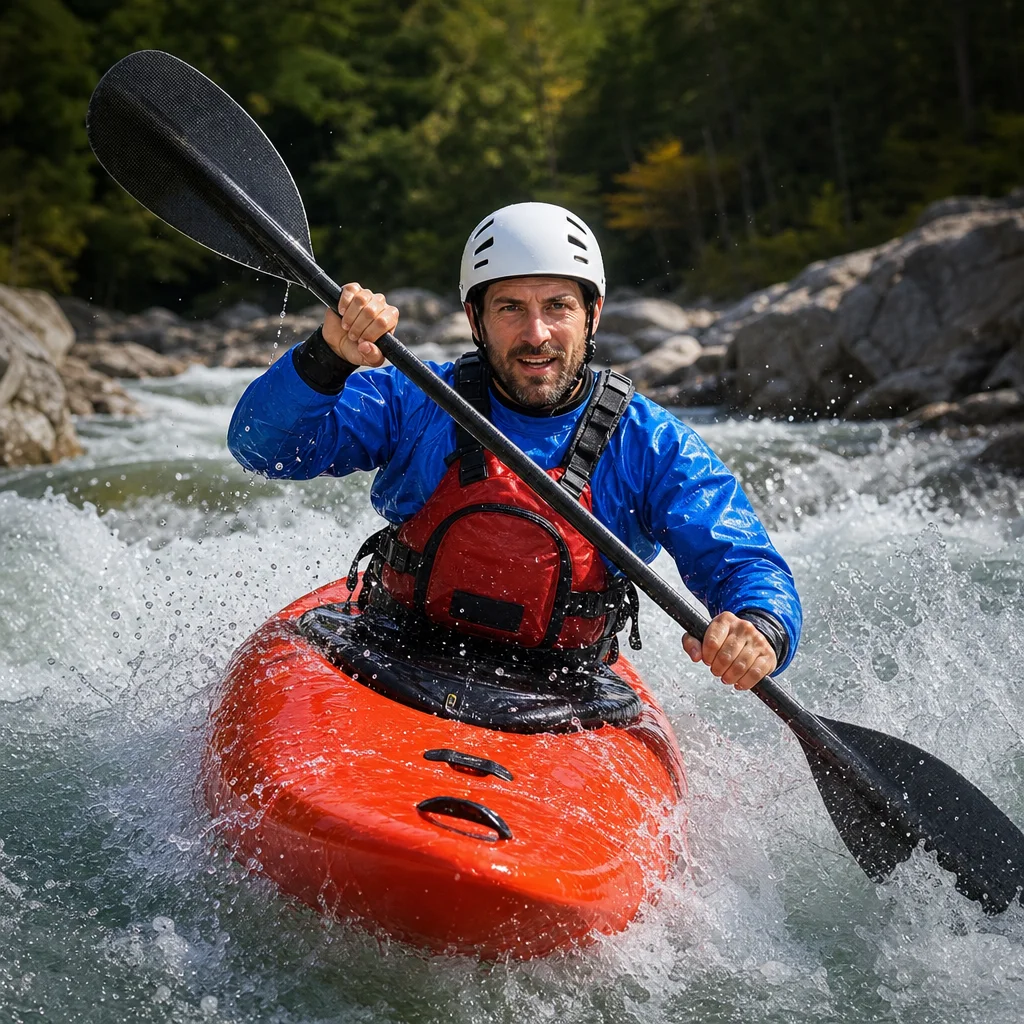
Wind rarely affects every part of a kayak trip in the same way. A sheltered launch may feel calm while an exposed crossing produces steady side force, and a light breeze behind you can still make steering awkward. The useful question isn’t simply “How strong is the wind?” It’s “What is the wind doing to my kayak, my route, and my ability to recover from a mistake?”
Understanding that relationship helps you decide when to change direction, reduce the length of an exposed section, or turn around before control becomes tiring.
Check the water before committing: Review the current marine or lake forecast, wind direction and gusts, small-craft advisories, and local access guidance for your launch and route. Conditions can change quickly near headlands, gaps, open crossings, and large bodies of water.
Why wind pushes a kayak around
A kayak isn't shaped like a symmetrical block. It has a bow, a stern, a cockpit, a hull, and often a deck that catches air. Wind applies pressure to these surfaces, but not always evenly.
The part of the kayak that presents the most exposed area to the wind tends to move downwind. Your paddle strokes and body position then have to counter that movement. The effect becomes more noticeable when:
- You leave a sheltered shoreline.
- The wind reaches the kayak from the side or rear quarter.
- Gusts are stronger than the average wind.
- You’re carrying a tall or bulky load on deck.
- The kayak is loaded unevenly.
- Waves and current reinforce the wind’s direction.
- You slow down, stop paddling, or drift while looking at a map.
The hull design matters, too. A long touring kayak, a short recreational kayak, and a sit-on-top kayak may respond differently in the same breeze. Rudders, skegs, chines, rocker, and the amount of hull in the water all influence how easily the kayak holds a course.
There’s no universal wind speed at which a kayak becomes unsafe. Your experience, boat, clothing, water temperature, distance from shore, and ability to land safely all matter. Treat wind as one part of the overall risk rather than as a number that makes the decision for you.
Weathercocking: when the bow turns into the wind
Weathercocking is the tendency for a kayak’s bow to turn toward the wind. You may notice that you keep correcting in one direction even though your intended route is straight.
For example, if the wind is coming from your right and the bow keeps turning right, you’re weathercocking. The wind is pushing the kayak’s exposed surfaces in a way that makes the bow seek the wind.
Weathercocking is common when the stern presents more windage than the bow, or when the kayak’s underwater shape allows the bow to track more strongly than the stern. It may also become more obvious when the kayak is lightly loaded at the stern or heavily loaded forward.
How to respond
Start with the least complicated correction:
- Keep a relaxed, active paddle rather than trying to force the bow around with one large stroke.
- Use small sweep strokes or brief forward strokes on the appropriate side to maintain your heading.
- Edge the kayak slightly, if you’re comfortable doing so and the conditions are mild.
- Reduce the angle of your crossing so you’re not fighting a direct side wind.
- Use a skeg or rudder only if you understand its operation and your kayak is designed for it.
Avoid leaning dramatically into the wind. A sudden or excessive lean can reduce stability, especially in waves. If you need so much corrective effort that you’re losing rhythm, the better decision may be to change the route or head toward shelter.
Weather-vaning: when the stern swings downwind
Weather-vaning is the opposite pattern: the stern tends to move downwind, causing the bow to point away from the wind. You may feel as if the kayak is trying to turn downwind rather than into the breeze.
The names can be confusing because the exact behavior depends on the boat, its trim, and the wind angle. In practical terms, watch what the kayak actually does. If the bow repeatedly moves away from the wind, you’re dealing with a weather-vaning tendency.
This can happen when the bow has more exposed surface, when the stern is heavily loaded, or when the kayak’s underwater profile gives the stern less resistance. A rudder can help some boats, while a skeg may help others by adding directional resistance near the stern. Neither device removes the need for good judgment.
If the stern swings downwind while you’re trying to travel across the wind, consider a slight change in heading instead of holding the original line at all costs. A diagonal route can require less corrective effort and give you more control.
Exposed sections are where the problem grows
Wind often feels manageable close to shore because trees, buildings, land contours, and small bays block or reduce it. The same wind can feel much stronger after you leave that protection.
An exposed section might be:
- A crossing between two points of land.
- The open side of a large lake.
- A route past a headland or around an island.
- A broad coastal inlet with little nearby shelter.
- A shoreline that changes from wooded to open and shallow.
The difficulty isn't only the distance. It’s the limited number of easy exits. If you become tired halfway across, turning toward the nearest shoreline may still leave you facing waves or a strong crosswind.
Before launching, identify where the route becomes exposed and how long you’ll be in open water. Ask whether you could comfortably return against the wind if conditions build. If the answer is no, shorten the trip, stay on the sheltered side, or choose a different launch.
Quartering wind: the angle that causes constant correction
A quartering wind comes from ahead and to one side or behind and to one side. It’s often more manageable than a direct beam wind, but it can create a persistent turning force and uneven waves.
A forward quartering wind may push the bow off course while you’re trying to make progress. You’ll probably need frequent corrections and may find that your strongest effort produces little forward distance.
A rear quartering wind can feel easier because it assists your movement, but it can also make the kayak yaw from side to side. Following waves may push the stern around, and a small steering error can become a larger turn. Keep your torso relaxed, maintain a stable cadence, and avoid gripping the paddle tightly.
Instead of aiming directly at the destination, point slightly into the wind and let your course progress diagonally. The exact angle will change as the shoreline, gusts, and waves change. This is called ferrying or crabbing in some paddling contexts: you aim across the force rather than at the final point.
Simple ways to adjust your route and effort
Choose shelter over the shortest line
A longer route close to shore may be easier and safer than a direct open-water crossing. Landforms can also give you places to pause, reassess, and land if needed.
Don't assume that staying close to shore always removes risk. Rocky coastlines, breaking waves, strainers, private property, and limited landing areas can create their own hazards. Look for practical landing options, not just visual shelter.
Travel with the wind at a manageable angle
A direct headwind demands steady effort. A direct tailwind may create steering problems. A modest diagonal angle often gives you a better balance of forward progress and control.
If you plan an out-and-back trip, remember that a tailwind on the way out can leave you facing the stronger effort on the return. Don’t paddle so far downwind that you’re relying on a favorable wind to get home.
Adjust your pace before you’re tired
Wind correction uses more energy than ordinary forward paddling. Keep your strokes smooth and avoid sprinting against every gust. Take breaks in sheltered areas rather than stopping in an exposed position where the kayak can turn broadside to waves.
If your breathing becomes labored, your strokes become rushed, or you’re repeatedly losing your heading, treat that as useful information. Reduce the route or turn back while you still have energy and control.
Check trim and loose gear
Keep heavier equipment low and centered, then secure it so it can’t shift. Excess gear on the deck increases windage and may make the kayak more difficult to control. A kayak that is bow-heavy or stern-heavy can respond differently to wind than it did during a calm-water test.
Make adjustments on shore when possible. Repacking a hatch or tightening deck lines is easier before you’re dealing with waves and gusts.
When to turn around
Turn around or seek shelter when the conditions exceed your ability to maintain control, not only when the kayak feels impossible to paddle. Warning signs include:
- You can’t hold a reasonable heading despite continuous correction.
- Gusts repeatedly turn the kayak broadside to waves.
- You’re too tired to make controlled strokes.
- The route ahead has no safe landing options.
- You’re farther from shelter than you can comfortably reach.
- Waves are breaking in places where you expected calmer water.
- Your group has separated or communication has become difficult.
If you capsize, cold water, wind, and distance from shore can turn a manageable mistake into an emergency. Wear appropriate flotation and clothing, carry a communication method suited to the area, and practice recovery skills in conditions you can handle before relying on them in stronger wind.
A practical wind decision checklist
Before launching, ask:
- Which sections of the route are exposed?
- What direction will the wind come from on the way out and on the return?
- Will waves, current, or tide reinforce the wind?
- Where can I land or take shelter?
- Can I maintain control if the gusts are stronger than the average forecast?
- Am I carrying unnecessary wind-catching gear?
- What is my clear turnaround point?
On the water, keep reassessing. Wind direction and strength can vary around points of land, and your kayak may handle differently as its trim changes or you become tired. A route that looked reasonable from the launch may no longer be the right route after you reach the first exposed section.
The goal isn’t to defeat the wind. It’s to work with its angle, limit exposure, preserve energy, and keep enough control for the conditions you’re actually in. For your next outing, study the route for shelter and exits, test how the kayak responds in a protected area, and set a turnaround point before the wind makes the decision for you.