How to Read a Wind Forecast for a Sheltered Lake
I’ll show you how to turn a lake wind forecast into a realistic paddling plan, so you don’t mistake a low average wind speed for calm conditions when gusts, direction, or open-water exposure tell a different story.
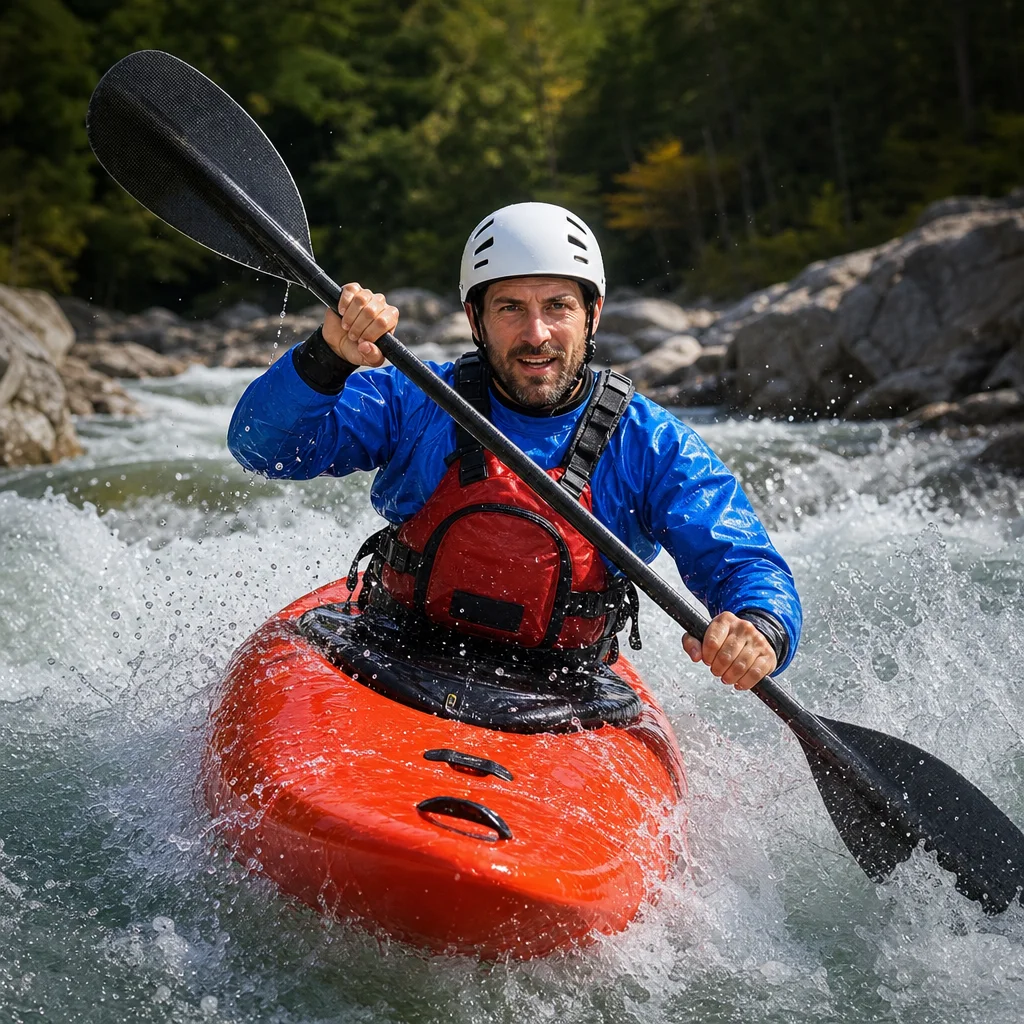
A sheltered lake can look calm on a forecast and still feel difficult from a recreational kayak. The common mistake is to focus on one number—usually the average wind speed—without considering gusts, wind direction, or how much open water the wind can cross.
Reading the forecast well means translating weather data into conditions you can manage. You’re looking for the likely effect on your launch, route, return trip, and ability to get off the water if conditions change.
Start with the four forecast details that matter
Average wind speed
Average or sustained wind speed describes the general strength of the wind over the forecast period. It gives you a baseline, but it doesn’t describe every lull and stronger push you’ll feel.
On a small lake, modest wind may produce only light ripples where trees, hills, or buildings block it. The same wind can feel much stronger after you paddle away from shore or round a point into an exposed section.
Treat average wind speed as the starting point rather than a complete answer. Your kayak type, paddling experience, water temperature, route, and access to shore all affect whether that wind is reasonable for you.
Gust speed
Gusts are brief increases above the sustained wind. They matter because a kayak responds to sudden force differently than it responds to steady pressure. A gust can push the bow off course, make a paddle stroke less effective, or catch a raised paddle blade.
The gap between sustained wind and gust speed is useful information. For example, a forecast of 8 mph with gusts to 12 mph suggests a different experience from 8 mph with gusts to 20 mph. The second forecast may include longer, sharper periods of correction and less predictable handling.
Gusts also tend to be more noticeable near shorelines, gaps in trees, and the downwind side of hills. Wind that feels gentle at the launch may become more forceful in an exposed part of the lake.
Wind direction
Wind direction is normally reported as the direction the wind comes from. A north wind comes from the north and moves toward the south. Confirm the convention used by your weather source before planning a route.
Direction helps you predict where the lake will be most exposed. If the wind blows across the length of the lake, it may build more noticeable waves than the same wind blowing across its narrower width. If it blows toward a long open shoreline, you may experience a stronger push and more developed waves before reaching the opposite bank.
Direction also determines the difficulty of your return. A route that feels easy with the wind behind you can become tiring when you turn back. For a beginner outing, it’s usually sensible to avoid making the downwind leg the longest or most remote part of the trip.
Fetch
Fetch is the uninterrupted distance over which wind can travel across open water. Longer fetch generally gives wind more opportunity to create waves and surface chop. A sheltered lake may have short fetch in one direction and much longer fetch in another.
Look at the lake’s shape rather than relying only on its size. A narrow cove, island, peninsula, or line of trees may break up waves. A broad central section can still be exposed, even if the lake is small by regional standards.
Fetch doesn’t determine conditions by itself. Wind strength, duration, water depth, shoreline shape, and the direction of the wind all contribute. Still, it’s one of the best ways to explain why two shores on the same lake can feel completely different.
Check the forecast before you launch: Review the latest wind speed, gusts, direction, and any lake or weather advisories on the day of your trip. Forecasts can change, and conditions at the launch may not represent the most exposed part of your planned route.
Translate the forecast into a route decision
A useful plan connects the forecast to specific parts of the outing. Ask four questions before loading the kayak:
- Which shoreline or section of the lake is most exposed to the forecast wind?
- Where will you find shelter if the conditions become uncomfortable?
- Can you return to the launch without making the hardest crossing at the end?
- What is your alternative if the wind is stronger or gustier than expected?
For a beginner, a sheltered route with frequent landing options is usually more useful than a longer route that depends on ideal conditions. Keep the first section close enough to shore that you can evaluate the actual wind and waves before committing to open water.
A simple route pattern is to paddle into the wind early, then return with the wind behind or across you. This can reduce the risk of discovering on the way back that you’re too tired to handle the most difficult conditions. Don’t treat this as a guarantee of safety, though: wind can shift, strengthen, or become difficult from a different angle near shore.
If the forecast shows variable direction, avoid building a route around one expected wind angle. Choose a compact area with several exit points instead.
Use wind speed as a range, not a permission slip
There’s no single wind speed that is safe for every kayaker. A wide recreational kayak on a calm, sheltered lake may feel manageable in conditions that overwhelm a narrower or less stable boat. A confident paddler may also have more options than someone still learning basic strokes and bracing.
Use these broad descriptions as planning prompts rather than strict limits:
- Light wind: You may notice small ripples and occasional steering corrections. This can be a good time to observe how your kayak responds, while still checking for gusts and exposed crossings.
- Moderate wind: Expect more active steering, a stronger effect on your course, and small waves in areas with useful fetch. A short test paddle near shore can tell you more than the forecast number alone.
- Stronger or gusty wind: The difference between sheltered and exposed water becomes more important. Beginners should consider postponing, shortening the trip, or choosing a more protected location rather than relying on effort to overcome the conditions.
These descriptions intentionally avoid pretending that a particular number works for everyone. Water temperature, air temperature, visibility, boat design, clothing, and rescue options can make a marginal forecast a poor choice.
Compare the forecast with what you see on the lake
Forecasts describe expected conditions over an area and time period. They can’t capture every effect of a tree line, cliff, building, bay, or passing shower. Before launching, look for practical signs:
- Are ripples moving consistently in one direction?
- Are gusts bending trees or producing sudden darker patches on the water?
- Do waves become noticeably larger beyond the sheltered launch area?
- Can you comfortably hold your kayak on course with relaxed strokes?
- Are clouds, rain, or temperature changes likely to alter the wind soon?
The first few minutes on the water are a test, not a commitment. Paddle along the protected shoreline and assess whether the conditions match your ability and equipment. If your strokes become hurried, your kayak repeatedly turns broadside, or you’re already thinking about how hard the return will be, turn back while you still have an easy option.
Don’t assume that a calm-looking launch proves the whole lake is calm. Sheltered coves can hide wind-driven conditions around the next point or across the main basin.
Account for time and changing conditions
Wind forecasts are time-specific. A lake may be calm in the morning and noticeably rougher later, or the wind may change direction as the day develops. Compare the forecast for your planned launch, the middle of the trip, and your expected return—not just the day’s headline conditions.
Give yourself a firm turnaround time. If the wind is forecast to build, return before the increase rather than waiting to see whether it happens. If conditions are already deteriorating, don’t extend the trip because the launch is still visible.
Also check whether the forecast is for the general area or the lake itself. A regional forecast may not reflect local terrain, and a weather app can display different wind models or update times. When sources disagree, plan around the more conservative interpretation, especially if you’re inexperienced or the water is cold.
A practical pre-launch checklist
Before heading out, confirm:
- The sustained wind and gust forecast for the full outing
- The direction the wind is expected to come from
- Which parts of the lake have the longest fetch
- Several sheltered alternatives and landing points
- A route that doesn’t leave the hardest crossing for the return
- The latest local advisories, closures, and boating requirements
- Appropriate clothing and flotation equipment for the current water temperature
- A plan to cancel if the conditions at the lake don’t match your expectations
The goal isn’t to find a forecast that guarantees flat water. It’s to understand where the wind will matter and make a route choice that leaves you room to change your mind.
Start with a short, sheltered test paddle, keep the exposed sections limited, and treat gusts and fetch as seriously as the average wind speed. If the forecast is changing quickly or the return looks harder than the outgoing trip, postponing is often the simplest decision.