How to Paddle a Kayak in a Crosswind Without Overcorrecting
I’ll clarify why a kayak wanders in a crosswind and show you how trim, posture, edging, and small corrective strokes work together. You’ll learn to hold a useful heading without fighting every gust or exhausting yourself with constant steering.
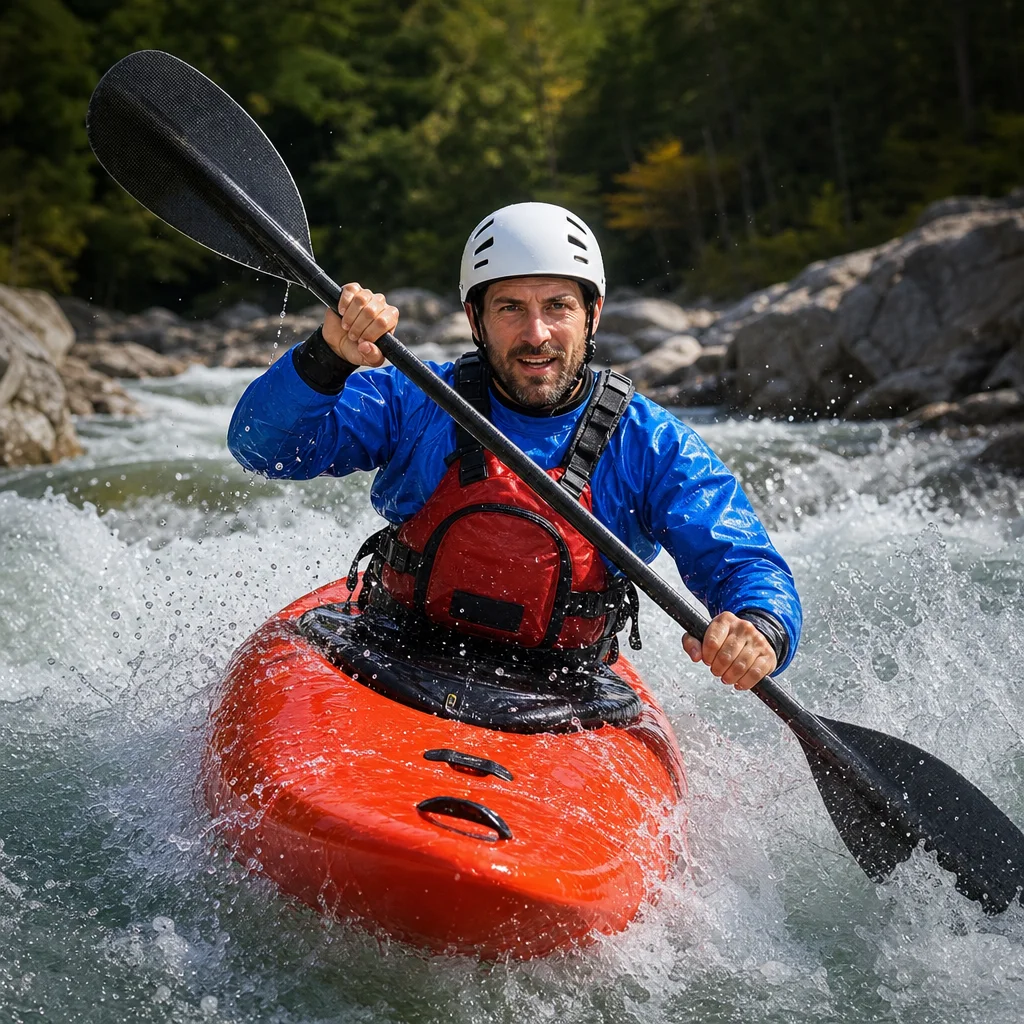
Crosswinds can make a steady kayak feel unpredictable. The bow may wander, the boat may lean into gusts, and repeated hard strokes can leave you zigzagging across the water instead of moving toward your destination.
The goal isn’t to keep the kayak perfectly straight at every moment. It’s to let the boat respond naturally while making small, deliberate corrections. With a balanced load, relaxed posture, and a modest angle into the wind, you can usually maintain a course with much less effort.
Understand What the Wind Is Doing
A crosswind pushes against the kayak’s sides and exposed deck. It can also turn the boat, especially when the bow and stern have different amounts of windage.
Many kayaks tend to turn their bow into the wind. This behavior is often called weathercocking. Other kayaks, particularly when loaded or trimmed differently, may turn away from the wind. The effect can change as the wind strengthens, your speed changes, or waves begin to affect the hull.
Start by noticing the direction of the wind rather than immediately trying to correct it. Look at ripples, floating leaves, flags, or nearby grass. Then observe whether your bow is gradually turning toward or away from the wind.
That observation determines your strategy. If the boat naturally turns into the wind, you may need occasional strokes to prevent the bow from climbing too far upwind. If it turns downwind, you’ll need to bring the bow back toward your intended line. In both cases, small corrections are more efficient than wrestling the kayak through every change in direction.
Set Up the Kayak Before You Leave
Paddling technique can’t fully compensate for poor trim. Before launching, distribute your gear so the kayak sits level and remains predictable.
Keep weight low and reasonably centered
Place dense items low in the hull and close to the kayak’s center. Secure them so they can’t shift when the boat tilts or you paddle through waves.
Avoid putting most of your weight far forward or far aft. An extreme bow- or stern-heavy load changes how much of the kayak is exposed to the wind and can make the boat harder to control. A slightly different trim may improve your particular kayak, but make changes gradually and test them in calm conditions first.
Keep loose items out of the cockpit and deck area. A bulky bag on the deck can add windage, while unsecured gear can become a hazard if you capsize.
Check your seating position
Sit upright with your hips centered in the seat. Don’t brace by locking your knees or gripping the cockpit with excessive force. A tense lower body makes it harder to edge the kayak smoothly and can leave you fatigued after a short crossing.
If your kayak has a skeg or rudder, understand its basic operation before relying on it in wind. Test it in mild conditions so you know how the boat responds to each adjustment.
Check the conditions before crossing: Review the current forecast, wind direction, gust strength, water temperature, and any local advisories before committing to an exposed section. Wear your properly fitted PFD and choose a route with a safe landing option if the wind becomes stronger than expected.
Use a Slight Windward Angle
Trying to point the bow exactly at your destination can encourage overcorrection. Instead, aim slightly into the wind and allow the kayak to travel diagonally across the water.
This is sometimes called paddling on a crab angle. Your bow may point a few degrees upwind while the kayak’s actual path over the water carries you toward your destination. The right angle depends on the wind, waves, current, hull shape, and your speed.
Choose a distant reference point on shore rather than staring only at the bow. Every few strokes, check whether that reference point is moving to the left or right in your view. A small change in your heading is usually enough to bring the track back where you want it.
Don’t expect the bow to remain fixed relative to the kayak. What matters is your overall track and whether you’re making steady progress without drifting into danger.
Improve Your Posture and Forward Stroke
Crosswind control begins with an efficient forward stroke. A well-connected stroke gives you speed and stability, while a tense or arm-heavy stroke makes every gust feel more disruptive.
Keep your torso facing the stroke
Rotate through your torso instead of reaching and pulling mainly with your arms. Keep the paddle close to the kayak and finish the stroke around your hip rather than dragging it far behind you.
A clean stroke helps the kayak maintain momentum. More speed generally gives the hull greater directional stability, although you should never paddle faster than you can comfortably control.
Relax your grip
Hold the paddle firmly enough to control it, but avoid squeezing the shaft. Relaxed hands and shoulders make it easier to make quick, modest corrections when a gust changes the boat’s angle.
Keep your eyes on the route, not continuously on the paddle blade. Looking down often causes you to react late and make larger corrections than necessary.
Keep your upper body upright
A gust can make you feel as though the kayak is about to tip. Resist the instinct to lean your entire upper body sharply away from the wind. That movement can make the boat less stable and can create a new problem when the next gust arrives.
Stay tall and let the kayak move slightly beneath you. Keep your head over your hips, maintain a relaxed connection with the boat, and use a controlled edge only when it helps the hull respond.
Make Small Corrective Strokes
When the bow begins to wander, use the shortest stroke that brings it back toward your desired angle. You don’t need to force the kayak several degrees past the correction.
Use a brief sweep when the bow needs to turn
A forward sweep makes a broad arc beside the kayak and helps turn the bow away from the side where you sweep. Use it gently and stop as soon as the bow begins to respond.
For example, if the bow is turning too far to the left, a short sweep on the left can help bring the bow back to the right. The exact response depends on your kayak, stroke position, and speed, so practice the movement in calm water.
A reverse sweep or short braking stroke can help when you’ve already gone too far and need to slow the turn. Keep these strokes controlled. A forceful stroke may correct the heading but also reduce forward speed, making the kayak more vulnerable to the next gust.
Add a few steering strokes instead of one hard stroke
You can also use a small stern rudder or steering stroke near the end of a forward stroke. This changes the kayak’s direction without requiring a dramatic sweep.
Use the correction on the side that turns the bow toward your intended line, then return to normal forward strokes. Think of steering as a brief adjustment, not a second type of forward stroke that you repeat continuously.
Correct early
The best time to correct is when you first notice the bow beginning to wander. If you wait until the kayak is far off course, you’ll need a harder stroke and may swing past your target.
A useful rhythm is to paddle normally, check your reference point, make one small correction if needed, and then resume your normal stroke. This is calmer and more efficient than steering after every paddle entry.
Use Edging Carefully
A small edge can change how the hull moves through the water and may help counter the kayak’s tendency to turn. The correct edge varies by design, so avoid assuming that every kayak responds the same way.
Practice edging in calm, shallow water first. Keep your head and torso relatively upright while allowing the kayak to tilt slightly beneath you. Avoid leaning so far that you need a sudden brace to recover.
Make one small edge and observe the result. If the boat turns in the direction you need, hold the edge briefly while maintaining a relaxed forward stroke. If it turns the wrong way, return the kayak level and use a different approach.
Edging should supplement good trim and measured strokes. It shouldn’t be a constant, tiring effort to hold the kayak at an exaggerated angle.
Avoid the Most Common Overcorrections
Don’t fight every gust
A gust may move the bow briefly without changing your overall route. If you immediately respond with a powerful sweep, you may create a larger heading change than the wind did.
Wait a moment when conditions allow. Watch whether the bow returns naturally or continues turning. Then make the smallest useful correction.
Don’t stare at the bow
The bow can appear to wander even while the kayak is tracking acceptably. Use a distant shoreline feature, buoy, or other safe reference to judge your actual course.
Avoid using a moving boat or a person as your only reference because their position may change independently of yours.
Don’t hold the paddle as a fixed rudder
Dragging a blade continuously beside the kayak feels reassuring but creates resistance and can lead to fatigue. It also makes it harder to maintain a smooth forward stroke.
Use a brief steering or sweep stroke, then return the blade to normal paddling.
Don’t depend on a skeg or rudder without practice
A skeg can reduce unwanted turning, while a rudder can help with steering. Neither replaces sound judgment or makes an exposed crossing automatically safe. Deploy or adjust these controls in small increments and notice how the kayak responds.
If the wind or waves are beyond your ability to manage, turn toward shelter or land while you still have a comfortable margin. The most effective correction is sometimes changing the plan.
A Simple Crosswind Routine
Use this sequence when entering a crosswind:
- Observe the wind. Identify its direction and notice whether the bow turns upwind or downwind.
- Choose a reference point. Pick a safe, distant feature near your intended destination.
- Set a modest windward angle. Let the kayak travel diagonally rather than forcing the bow to point directly at the destination.
- Paddle normally. Keep your torso upright, grip relaxed, and forward stroke connected.
- Correct early. Use a short sweep, steering stroke, or carefully tested edge when the track begins to change.
- Recheck your progress. Look at the reference point after several strokes instead of reacting to every small movement.
- Reassess the route. If gusts increase, waves build, or you lose control of your heading, move toward shelter or end the crossing.
The key is to manage the kayak’s average direction rather than trying to eliminate every moment of yaw. With practice, you’ll feel the difference between a temporary gust and a heading change that needs attention.
Practical Next Steps
Practice this skill on a sheltered body of water with light, manageable wind. Start with a short crossing between two obvious reference points and focus on making fewer, smaller corrections.
Experiment with your normal load, then make only one change at a time: a slightly different trim, a modest edge, or a brief sweep stroke. Notice how each adjustment affects the kayak’s track and your effort.
Before attempting a longer or more exposed route, make sure you can maintain control while looking around, adjusting your course, and stopping when needed. Efficient crosswind paddling comes from combining several small decisions—not from overpowering the wind with the paddle.