How to Paddle Straighter Without Fighting Your Kayak
I’ll show you how to stop overcorrecting a wandering kayak by improving stroke placement, torso rotation, paddle angle, cadence, and trim. You’ll learn to make smaller, earlier adjustments instead of fighting the boat with exhausting correction strokes.
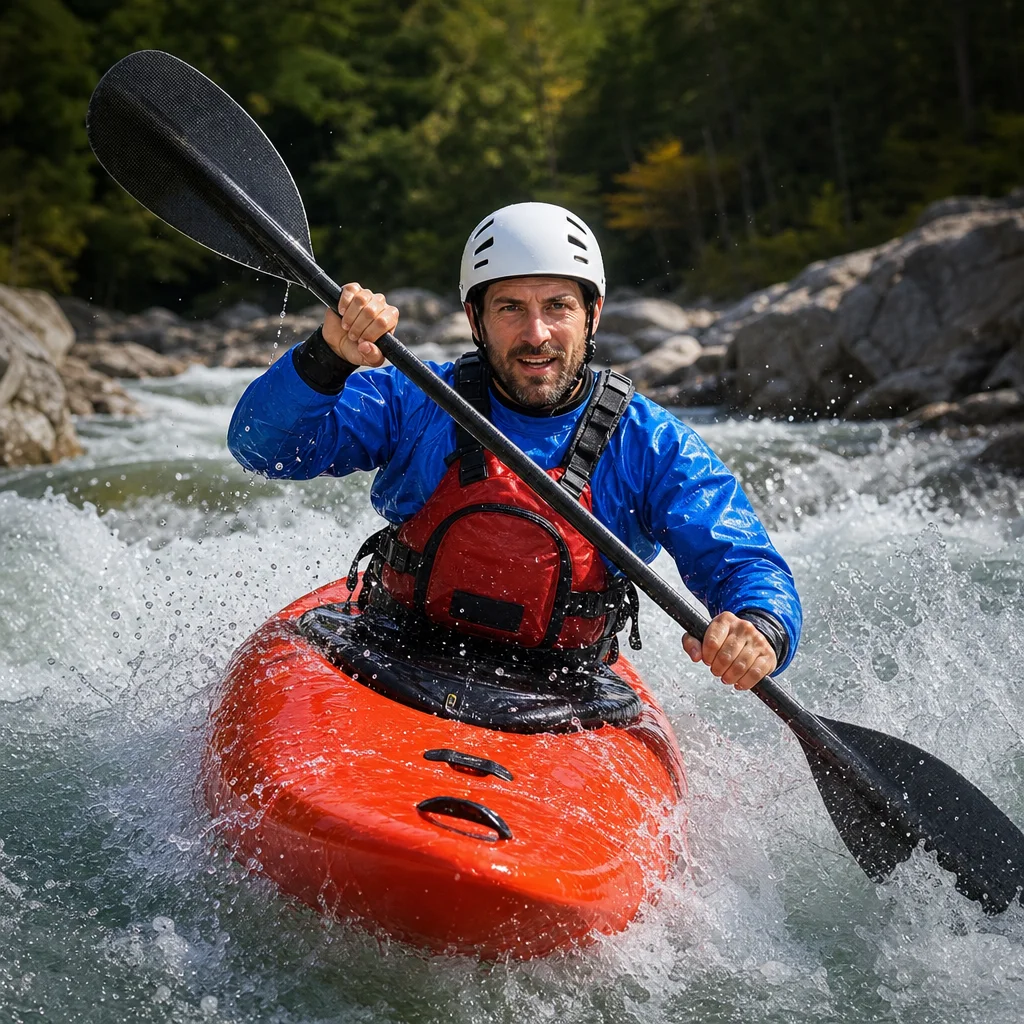
A kayak that wanders can make a simple paddle feel like constant work. Many beginners respond by pulling harder on one side, changing direction abruptly, or relying on repeated sweep strokes. Those reactions often create more yaw—the kayak’s tendency to turn away from its intended line—than they correct.
Straighter paddling comes from making the boat easier to control and using balanced strokes. Your goal isn’t to force the kayak into a perfectly rigid track. It’s to notice small changes early, keep your power centered, and correct with minimal disruption.
Start by checking the kayak’s trim
Trim describes how the kayak sits in the water from bow to stern. If one end is weighed down, the hull may respond differently to your strokes and become harder to keep on course.
A kayak that is heavily bow-loaded can feel reluctant to turn and may push through waves. One that is heavily stern-loaded can become more difficult to steer because the bow swings easily. Either condition can make you compensate with uneven strokes.
Distribute your gear evenly
Keep heavier items low and near the middle of the kayak whenever possible. Place essential equipment where it won’t shift, and avoid putting all your weight at one end of a storage compartment.
If you’re carrying a day’s gear, spread it between the available storage areas rather than creating a large imbalance. Loose equipment can also move during a trip, changing the trim after you’ve already started paddling.
Your own position matters, too. Sit upright with your hips centered in the seat. Leaning to one side changes how the hull meets the water and can make the kayak appear to veer even when your strokes are reasonably balanced.
Check your launch conditions: Before heading into current, wind, or boat traffic, confirm that your kayak is balanced, your essential gear is secured, and you have enough control to stop or turn without frantic strokes. Conditions can change faster than your technique can compensate for them.
Place the stroke close to the kayak
A common reason for wandering is placing the paddle too far away from the hull. A wide forward stroke acts partly like a turning stroke, especially when the blade travels in an arc away from the boat.
For a straighter forward stroke, enter the blade near your toes and close to the kayak’s side. Keep the shaft reasonably vertical from your viewpoint, rather than reaching far out and pulling diagonally across your body.
The blade should travel roughly parallel to the kayak. It doesn’t need to scrape the hull, but a compact path helps direct more of your effort into forward movement and less into turning.
Take the blade out near your hip. Continuing the stroke behind your body tends to pull the stern sideways and can start a turn. A shorter stroke often feels less powerful at first, but it gives you better control and makes the next stroke easier to place.
Avoid crossing the centerline
Crossing the paddle over the kayak’s centerline can produce an unintended steering effect. It also encourages you to twist your shoulders and arms into an awkward position.
Keep the right-hand stroke on the right side and the left-hand stroke on the left side. If you need to turn, use a deliberate sweep stroke rather than allowing ordinary forward strokes to become accidental sweeps.
Use torso rotation instead of arm pulling
Your arms should guide and finish the stroke, not provide all the power. Rotate your torso so your shoulders and upper body help move the paddle from the catch position to the exit.
At the start of a right-side stroke, rotate slightly so your left shoulder moves forward and your right shoulder moves back. As the stroke progresses, rotate toward the right. Reverse that pattern on the other side.
Torso rotation helps you make similar-length strokes on both sides. It also reduces the tendency to reach too far with one arm, collapse your posture, or pull harder with your dominant side.
Keep a relaxed grip. A tight grip makes it harder to feel the blade and encourages stiff, arm-driven strokes. Hold the shaft firmly enough for control, but let your wrists and shoulders remain comfortable.
Keep your posture stable
Sit tall with a relaxed chest and your feet supported by the foot braces or footwell. Light contact with your thighs can help you stay connected to the kayak without bracing rigidly.
Avoid leaning dramatically toward the side of each stroke. A small, natural rotation is useful; excessive side-to-side movement shifts your weight and can contribute to wandering.
Adjust your paddle angle
Paddle angle affects both efficiency and directional control. With a low-angle stroke, the shaft is more horizontal and the blade travels on a relatively shallow path. This can be comfortable for relaxed paddling, but the blade may move farther from the kayak if your technique is loose.
A somewhat more upright paddle angle keeps the stroke compact and places the blade closer to the hull. It can make it easier to maintain a straight line, particularly when you’re learning consistent blade placement.
You don’t need to hold the paddle perfectly vertical. Instead, look for a position that lets you catch the water near your toes, keep the blade close to the kayak, and exit near your hip without straining your shoulders.
If your paddle has adjustable feathering, change it in small steps and practice each setting in calm water. A new blade angle can affect wrist comfort and timing. The most helpful setting is the one that allows both sides to feel symmetrical, not necessarily the one another paddler prefers.
Choose a steady cadence
A slow cadence with long, forceful strokes can make a kayak wander more than a moderate cadence with shorter strokes. Each powerful stroke creates more turning force if it isn’t placed precisely.
Try a smooth rhythm with light to moderate power. Let the blade enter cleanly, pull through a compact path, exit near your hip, and transition without a pause. The kayak should glide between strokes rather than lurch forward and veer.
A steady cadence is especially useful in wind or mild current. You’ll have more frequent opportunities to make small corrections, and you won’t need to overcome as much momentum after the kayak starts turning.
Don’t chase every tiny movement
No kayak holds an absolutely perfect line in every condition. Small changes caused by wind, waves, current, and hull design are normal.
If the kayak is only drifting slightly, continue paddling with balanced strokes and observe whether it corrects itself. Overreacting to every movement can produce a zigzag pattern that is slower and more tiring than a gentle, gradual curve.
Correct early and lightly
When the bow begins to move off course, first check whether your next forward stroke can provide the correction. If the kayak is turning left, a slightly more deliberate stroke on the right may help bring the bow back. Keep the adjustment compact rather than pulling hard.
If a forward stroke isn’t enough, use a small sweep on the side opposite the direction you want the bow to move. A sweep stroke has a wider arc and creates more turning force, so it should be controlled and intentional.
Once the kayak is aligned, return to ordinary forward strokes. Continuing the sweep after the correction is complete can send you past your intended heading and create the need for another correction.
Use a rudder or skeg thoughtfully
Some kayaks include a rudder or retractable skeg. These systems can help manage wind and improve directional control, but they don’t replace balanced strokes, proper trim, or good posture.
A skeg can reduce the tendency of the stern to move sideways in certain wind conditions. A rudder can assist with steering, particularly when the kayak is moving, but excessive reliance may hide an uneven stroke or poor gear distribution.
Learn how your specific system works in calm, shallow conditions where you can focus on the boat’s response. Keep your hands available for paddling and avoid making adjustments that distract you from nearby hazards.
Practice on a simple heading
Choose a calm area with plenty of space and a visible point ahead, such as a shoreline feature or distant marker. Paddle toward it at a comfortable pace and focus on three things: blade entry near your toes, torso rotation, and exit near your hip.
After several strokes, pause and ask what the kayak is doing. Is it turning consistently to one side? Are your strokes different in length? Are you reaching farther on your weaker side? Change one factor at a time so you can identify what helps.
Next, deliberately make a small correction and then stop correcting. This teaches you to recognize when the kayak is back on course instead of continuing to steer out of habit.
Common mistakes that create wandering
- Pulling harder on the weak side: This usually creates an uneven rhythm and may make the kayak turn unpredictably.
- Taking strokes too far behind the hip: The blade pushes the stern sideways instead of moving the kayak cleanly forward.
- Reaching wide for more power: A wide catch acts like an unintended sweep stroke.
- Paddling mostly with the arms: Fatigue and inconsistent stroke length appear quickly.
- Carrying all gear at one end: Poor trim makes the hull harder to control.
- Correcting too late: A large correction is more disruptive than a small adjustment made early.
- Using a rudder to hide technique problems: Steering hardware can help, but it can’t compensate for every imbalance.
Practical next steps
On your next calm-water outing, begin with a quick trim check and then paddle at a moderate cadence toward a clear reference point. Keep your strokes close to the kayak, rotate your torso, and finish each stroke near your hip.
If the boat wanders, don’t immediately add power. First check your blade path, posture, and stroke length. Make one small correction, return to a balanced rhythm, and give the kayak time to respond. With practice, straighter paddling becomes less about fighting the hull and more about making quiet, timely adjustments.