How to Paddle Through Small Wind Waves Without Slowing to a Crawl
I’ll show you how to stop small wind waves from turning an easy paddle into a slow, tense slog. You’ll learn to avoid the common mistake of fighting each wave with a rigid posture and oversized strokes, while keeping your route and limits in view.
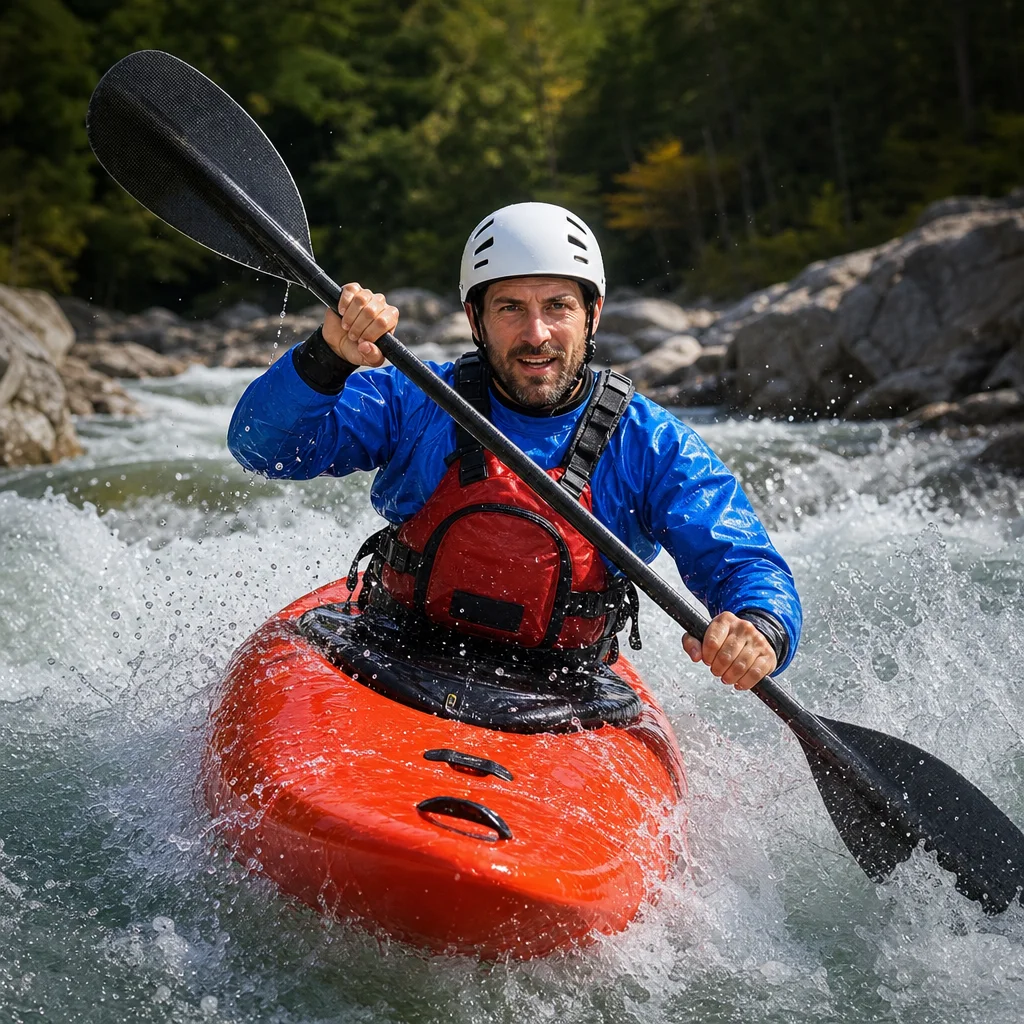
Small wind waves rarely stop a capable paddler outright. More often, they make the kayak yaw, lift and drop unpredictably, and feel less stable than expected. The common response is to tense up, shorten every stroke, and stare at the water immediately ahead. That usually wastes energy without giving you much more control.
A better approach is to let the kayak move through modest waves while you make small, deliberate adjustments. Your angle to the waves, stroke cadence, posture, and route all matter. The goal isn’t to force perfectly flat progress. It’s to keep a controlled rhythm and enough reserve to change course or turn back if the conditions build.
First, identify what the waves are doing
Small wind waves can feel very different depending on their direction and spacing. Before adjusting your technique, take a moment to read the pattern.
- Waves ahead of you: The bow climbs and drops repeatedly. Your speed may vary, but the kayak can continue forward efficiently if you keep a relaxed rhythm.
- Waves behind you: The kayak may accelerate down the face of a wave or begin to yaw. Steering and corrective strokes become more important.
- Waves from the side: You’ll feel more rocking and may need edging, a steady low brace position, or a slight change in heading.
- Waves at an angle: This is often manageable, but the combination of forward motion and side-to-side movement can make beginners tense quickly.
Look beyond the nearest wave. The larger pattern tells you more than one crest does. If waves are becoming taller, steeper, closer together, or harder to see over, the conditions may be changing faster than your technique can compensate for.
Check your conditions before committing: Review the current local wind, forecast, water temperature, launch restrictions, and any applicable boating requirements before heading out. Conditions on a lake or sheltered coast can change quickly, and a route that is comfortable near shore may be much more exposed farther out.
Choose an angle that keeps the kayak manageable
For many paddlers, meeting small waves at a modest angle—rather than taking them directly on the beam—offers a useful balance of stability and forward progress. A slight diagonal angle lets the bow rise over the wave while reducing the abrupt side-to-side motion you may feel when waves hit broadside.
You don’t need to hold one exact heading. If the waves are coming from your front-left, for example, you might point slightly into them rather than traveling perfectly straight toward a distant landmark. Make small course changes and watch how the kayak responds.
Avoid two common angle mistakes
Don’t point directly into every wave. Taking waves straight on can feel predictable, but it may also slow you sharply and cause the bow to slap into steeper faces. If the waves are mild, a slight diagonal can make the ride smoother.
Don’t run broadside just to preserve a straight route. A side-on position may be acceptable for a brief stretch in very small waves, but it increases the amount of rocking. If you feel yourself repeatedly bracing or gripping the paddle, change the angle or move toward more protected water.
Your best angle depends on the kayak, your skill, the wave spacing, and whether you’re traveling into or with the wind. Treat heading as a control choice, not a test of whether you can maintain a perfect line.
Keep the cadence steady instead of overpowering the waves
A steady cadence helps the kayak maintain momentum as it climbs and descends. When you slow dramatically at every crest, the next wave has more influence over your direction and balance. Smooth, moderate strokes usually work better than occasional powerful pulls.
Try these adjustments:
- Start with a comfortable forward stroke. Keep the stroke compact enough that you don’t have to reach excessively as the kayak moves.
- Maintain pressure through the wave. You don’t need to sprint, but avoid stopping completely at the base of a wave.
- Shorten the stroke slightly in confused water. A shorter stroke gives you quicker control and makes it easier to switch to a corrective stroke.
- Use both sides consistently. Excessive strokes on one side can make the kayak yaw just when you need a predictable heading.
- Correct early. A small sweep or stern correction is more efficient than waiting until the bow has turned sharply.
Power isn’t the same as control. Pulling harder can make the kayak surge, but it can also make you twist, lean, or lose your balance. Aim for even pressure and a repeatable rhythm.
Relax your posture without becoming passive
Tension is one of the main reasons small waves feel bigger than they are. A tight grip, locked elbows, and rigid torso make each bump travel directly through your body. Keep your knees and hips in contact with the kayak as designed, but let your lower body absorb some movement.
Use a balanced posture:
- Sit upright with your chest open rather than leaning far back.
- Keep your head level and look toward the route you want to take.
- Hold the paddle firmly enough for control, but don’t squeeze it continuously.
- Keep your elbows slightly bent so the paddle can move with you.
- Let your hips respond to gentle rolling instead of trying to freeze the kayak perfectly flat.
There’s an important distinction between relaxing and collapsing. If you slump, lean too far away from a wave, or throw your shoulders around to counter every movement, you can make the kayak less stable. Stay centered and allow small movements through your hips and torso.
Use a low brace only when you need support
A low brace can help you recover from a sudden lean, but it shouldn’t replace normal balance and forward paddling. Keep the power face of the blade positioned to press against the water, and use a brief, controlled motion rather than smashing the paddle down beside you.
If you find yourself bracing repeatedly, treat that as information. The waves may be too large for your current comfort level, your angle may be poor, or you may need to move closer to shore. A brace is a recovery tool, not proof that the route is still suitable.
Let the bow rise instead of driving it down
As a small wave approaches, keep your weight centered and allow the bow to climb. Avoid leaning aggressively forward to “punch” through every wave. That can drive the bow into the next face and create more spray, resistance, and pitching.
A centered kayak may ride over modest waves more cleanly. If the bow tends to bury or the kayak feels unusually wet and slow, check whether you’re leaning forward, carrying too much weight at the front, or facing the waves at an unnecessarily sharp angle.
When waves come from behind, avoid leaning far backward and looking over your shoulder continuously. Keep your weight balanced, use small steering corrections, and watch the wave pattern behind you without losing awareness of what lies ahead. If the kayak begins to yaw or surf unpredictably, turn slightly across the wave pattern or angle more toward the wind, depending on which option gives you better control.
Adjust your expectations about speed
Small waves can reduce your average speed even when your technique is sound. You’re spending energy climbing wave faces, correcting yaw, and managing balance. Trying to maintain your flat-water pace can lead to a harder grip, poor posture, and unnecessary fatigue.
Measure success by control rather than by a constant speed. A sustainable cadence that keeps you upright and alert is more useful than a fast pace that leaves no reserve. If you’re paddling with others, communicate about the slower conditions instead of quietly pushing to keep up.
Plan extra time when the wind is active, particularly on an unfamiliar route. A modest headwind on the way out can become a tiring tailwind or crosswind on the return. Save enough energy to handle the least comfortable part of the trip, not just the easy opening section.
Know when technique is no longer the main solution
Skillful paddling has limits. Turn toward shore, seek shelter, or end the outing when the conditions exceed your ability to stay relaxed and in control. Warning signs include:
- You’re repeatedly losing your intended heading.
- You need frequent braces to stay upright.
- You’re gripping the paddle tightly or holding your breath.
- Waves are breaking over the bow or hitting with increasing force.
- You can’t comfortably communicate with your group.
- Fatigue is affecting your balance or decision-making.
- The wind is pushing you away from your planned landing point.
Don’t wait for a capsize to confirm that the conditions are too challenging. A safer retreat is usually easier while you still have energy, visibility, and a clear route to shore.
If you’re paddling in cold water, remember that a swim can become a serious emergency even when the air feels mild. Wear equipment appropriate to the water and your trip, and make sure you know how you’ll stay with or re-enter the kayak if you capsize. Exact equipment and boating requirements vary by location and season, so check current local guidance rather than relying on a generic checklist.
A simple practice progression
Build confidence in controlled conditions instead of waiting for rough water to teach you. Start on a sheltered section where you can reach shore easily. Practice crossing small waves at a slight angle while maintaining a relaxed cadence. Then try a shallow diagonal heading, make gentle course corrections, and notice how your hips and torso respond.
Next, practice turning toward more protected water without stopping your forward stroke completely. The purpose is to make route changes feel routine. If you have a qualified instructor or experienced paddling partner, practice low-brace technique and assisted rescue skills under supervision.
Keep the waves small enough that you can focus on one adjustment at a time. Once you’re tense, tired, or repeatedly surprised by the water, the session has moved beyond productive practice.
Practical next steps
Before your next outing, choose a short route with easy landing options and check the wind direction as well as its expected strength. On the water, look past the nearest wave, set a slight angle when appropriate, and keep your strokes smooth and compact.
Stay centered, let the kayak move beneath you, and accept a modest drop in speed. If you need constant bracing or your route is becoming exposed, change the plan early. The most useful wave technique is the one that preserves control, energy, and a straightforward way back to shore.