How to Plan a Kayak Shuttle When You Have Only One Car
I’ll compare the most reliable one-car shuttle options—from out-and-back routes and bike relocations to local transport, rentals, and partner plans—so you can choose a point-to-point paddle setup that fits your route, equipment, budget, and backup capacity.
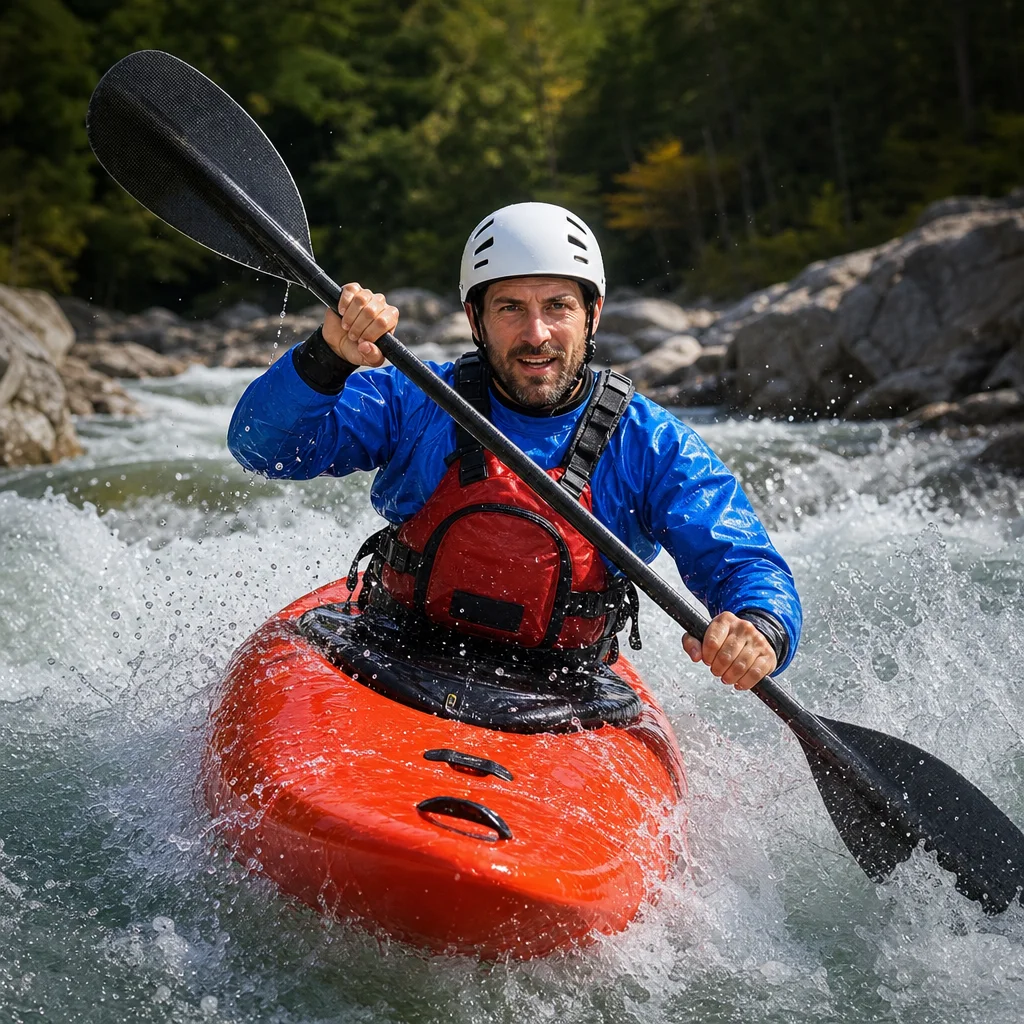
A point-to-point river trip can look simple on a map and become complicated as soon as you realize your vehicle is parked at the wrong end. With only one car, you still have several workable shuttle options, but each depends on timing, equipment, road conditions, and a plan for what happens when something changes.
The most reliable choice is usually the one with the fewest moving parts. Before committing to a shuttle, compare the route, the people involved, and the consequences of a delay—not just the apparent convenience.
Start with the route and the real shuttle problem
Write down four locations or points in your plan:
- Your launch point
- Your takeout point
- Where the car will be parked during the paddle
- How you and your kayak will move between those points
Then estimate the full ground distance, not just the distance between launch and takeout. A short river section can require a long drive if bridges are scarce or access roads are indirect.
Also consider whether your vehicle can safely reach both access points. Gravel roads, seasonal closures, low-water crossings, rough turnarounds, and limited parking can matter more than the mileage.
A dependable shuttle plan answers these questions before you leave:
- Who has the keys at each stage?
- How will the kayak travel between the vehicle and the water?
- What happens if the paddle takes longer than expected?
- What happens if the vehicle, bike, rental, or ride falls through?
- Can you still reach help from the launch and takeout areas?
Option 1: Choose an out-and-back route
An out-and-back trip removes the shuttle entirely. You launch from your car, paddle to a planned turnaround, and return to the same access point.
This is often the most reliable arrangement for a small group, especially when you’re unfamiliar with the river or have limited daylight. It avoids coordinating another driver and eliminates the risk of leaving a vehicle unattended at a remote takeout.
When an out-and-back works well
Choose this approach when:
- The waterway has a suitable turnaround point
- Current, wind, and boat traffic allow a controlled return
- You can set a conservative distance goal
- The access area is appropriate for parking before and after the trip
- The group includes paddlers with similar speed and endurance
Plan the distance around the return leg, not the first half of the paddle. A downstream section may feel easy while the upstream return becomes slow and tiring. Wind can create the same problem on a lake or wide river.
An out-and-back route also gives you a simple early-exit option: if weather, fatigue, or water conditions worsen, you can turn around before committing to a distant takeout.
Reliability concerns
The main failure point is overestimating how far you can comfortably return. Build in time and energy for the final stretch. Mark a turnaround point that leaves enough margin for loading boats, dealing with minor problems, and getting off the water before conditions deteriorate.
Option 2: Use a bike shuttle
A bike shuttle can work when the launch and takeout are connected by a reasonably safe, rideable road. One person drives to the takeout, secures a bicycle there, and returns with the car to the launch. After the paddle, that person rides back to retrieve the vehicle.
Another arrangement is to carry or transport the bike to the launch, paddle to the takeout, and ride back after loading the kayak. The exact sequence depends on whether the bicycle can be carried with your vehicle and whether the route is suitable for riding.
Check the bike route, not just the driving route
A road that feels short by car may be unsuitable by bicycle because of:
- High-speed traffic or narrow shoulders
- Steep grades
- Unpaved or rough surfaces
- Tunnels, bridges, or restricted sections
- Poor visibility near the access points
- Heat, cold, rain, or darkness after the paddle
Use a route that leaves room for a loaded kayak and paddling gear. If the road is busy or has no safe shoulder, the bike shuttle may create more risk than it removes.
Secure the bicycle at the takeout in a way that won’t damage it or invite easy theft. A lock, visible location, and confirmation that the bike is still there can make the return leg much less uncertain. Consider carrying basic repair supplies and a light if the ride could extend toward dusk.
Build in a bike failure plan
A flat tire, dropped chain, or exhausted paddler can stop the return ride. Leave someone with the ability to provide a ride, or identify a dependable pickup option before launching. If no realistic backup exists, choose an out-and-back route or another shuttle method.
Option 3: Arrange local transport
A local outfitter, shuttle operator, taxi, rideshare driver, or community transportation service may be able to move you between access points. Availability varies widely, particularly in rural areas and outside the main paddling season.
Contact the provider before the trip and explain exactly what you need. Ask whether they can transport paddlers, boats, and all associated gear. Some vehicles may not have room for a kayak, while others may require you to provide your own roof or trailer solution.
Confirm:
- Pickup and drop-off locations
- The number and type of boats
- The required reservation window
- Total cost and payment method
- What happens if you arrive late
- Whether a phone signal is available at both access points
- Cancellation terms for bad weather or changed water conditions
A transport provider may be more reliable than an informal favor, but only if the arrangement is specific. “Meet us at the takeout” isn't enough when the access road has multiple parking areas or a weak signal.
Confirm the shuttle before launch: Recheck the provider’s hours, pickup instructions, boat capacity, payment requirements, and cancellation policy shortly before your trip. Regulations, access conditions, and seasonal services can change, so verify current details with the operator and the relevant land manager.
Option 4: Rent a vehicle or use a second vehicle temporarily
A short-term rental can solve the shuttle problem if the rental company permits the intended use and the vehicle can carry your equipment. You may use the rental as the shuttle vehicle, leave it at the takeout, and drive your own car to the launch—or reverse that arrangement.
This method can be dependable, but kayak transport is the critical detail. Confirm whether the vehicle has suitable roof rails, whether a rack can be installed safely, and whether the rental agreement allows exterior cargo. Don't assume that a vehicle advertised as an SUV is ready to carry a kayak.
A local outfitter may also rent a vehicle, trailer, or rack system specifically for river access. Ask about insurance, damage responsibility, parking, and after-hours returns. The cheapest rental isn't necessarily the lowest-risk option if the equipment is unfamiliar or the return process is inflexible.
Option 5: Coordinate with a paddling partner
A partner shuttle is often the simplest solution when two vehicles and two drivers are available. Leave one vehicle at the takeout, drive the other to the launch, and arrange the return after the paddle.
Make the plan explicit rather than relying on assumptions. Decide:
- Which vehicle stays at the takeout
- Who carries the keys
- Where each vehicle is parked
- How boats and people are loaded
- What time you’ll contact each other
- What happens if one group is delayed
If partners are arriving separately, exchange vehicle descriptions, parking details, and an emergency contact. A written message is useful when cell service is inconsistent.
For a group of paddlers, consider whether the vehicles have enough space for every boat and person. Overloading a roof rack or squeezing wet gear into a passenger compartment can create a problem during the return drive.
Make the plan reliable over time
A shuttle plan should survive ordinary delays and small equipment problems. Reliability comes from reducing dependencies and checking the parts that commonly fail.
Use a written shuttle sheet
Record the route, access names, map pins, parking locations, contact numbers, vehicle details, and expected timing. Include the river section, planned takeout, and a latest reasonable check-in time.
Share the information with someone who isn't on the water. They should know when to expect an update and what to do if you miss it. Avoid treating a missed check-in as automatic proof of an emergency, but establish a sensible escalation plan in advance.
Test the equipment before trip day
If the plan involves a roof rack, trailer, bike, phone mount, lock, or rented vehicle, test it before the trip. Check that:
- The kayak can be loaded without unsafe lifting
- Straps and tie-down points are in good condition
- The rack fits the vehicle correctly
- The bike can carry the rider and any necessary supplies
- Lights and reflective gear work if the return may be late
- Navigation information is available offline
Don't make the first loading attempt in a dark parking lot after a long paddle. A few minutes of practice can reveal an incompatible rack or a missing strap before it affects the trip.
Keep a backup that is actually usable
A backup plan should be specific enough to use. “We’ll call someone” is weak if nobody has agreed to help or knows where to go. Better backups include a confirmed local shuttle number, a partner who can provide pickup, an out-and-back route you can switch to, or a safe place to wait while transport is arranged.
Don't leave a vehicle at an access point without considering parking rules, valuables, weather exposure, and the possibility of a delayed return. Follow posted requirements and current instructions from the land manager or access operator.
Choose the option with the fewest weak links
For many beginner and intermediate paddlers, the choices rank roughly like this:
- Most simple: Out-and-back route
- Most flexible with a safe road: Bike shuttle
- Most convenient when available: Local transport
- Most independent: Rental vehicle or partner vehicle
- Most dependent on coordination: Informal favors
That ranking can change with the route. A bike shuttle may be excellent on a quiet, flat road and poor on a narrow highway. A professional shuttle may be ideal during operating season and unavailable on a weekday in the off-season.
Before choosing, score each option for safety, equipment compatibility, cost, timing, and backup capacity. Pick the plan that remains workable if the paddle runs an hour late, the weather changes, or one small piece of equipment fails.
Final pre-launch checklist
- Confirm launch and takeout access
- Check current road, parking, and waterway information
- Verify the shuttle provider or partner arrangement
- Confirm the vehicle can carry the kayak and gear
- Secure keys, locks, straps, and navigation information
- Share the itinerary and check-in time
- Set a turnaround or latest-finish time
- Identify a realistic backup pickup option
- Reconsider the route if the shuttle depends on unsafe riding, uncertain service, or a fragile chain of favors
With one car, you don’t need an elaborate system. You need a route that matches your energy, a transport method that fits your equipment, and enough redundancy to handle an ordinary delay. If the shuttle feels complicated before you launch, simplify the route or choose an out-and-back trip.