Kayaking on a Large Lake: How to Plan Around Open-Water Exposure
The shortest route isn't always the simplest, and the closest launch isn't always the safest. I’ll show you how to compare exposure, shore access, communication, and bailout options before committing to a large-lake route.
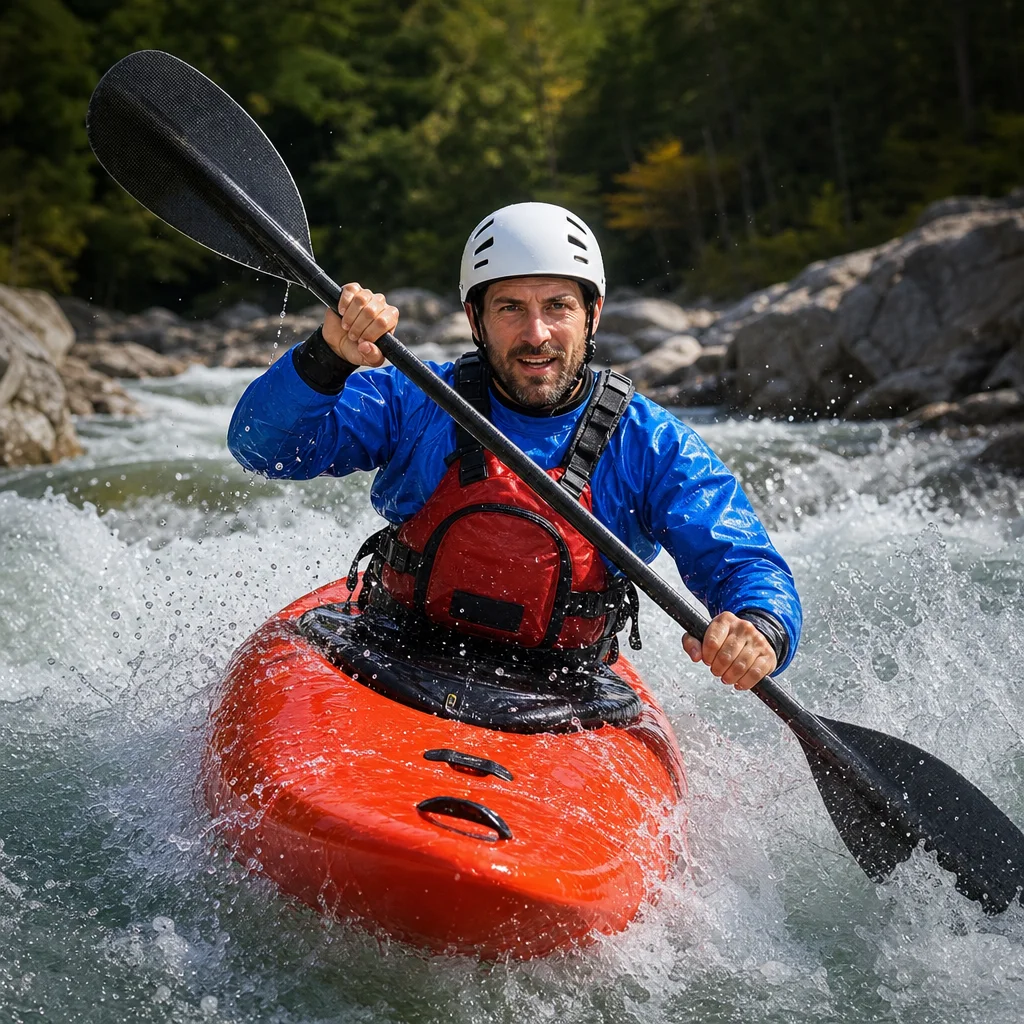
Large lakes can look deceptively manageable from shore. A route that appears to cross a modest section of open water may leave you exposed to wind, waves, boat traffic, and limited landing options for much longer than expected.
The most efficient plan isn't necessarily the one with the fewest miles. It’s the route that gives you useful alternatives when conditions change. Before launching, compare the water you intend to cross with the places you can safely reach, the forecast you’re likely to encounter, and the resources you’ll need if the trip takes longer than planned.
Start with exposure, not distance
A large-lake route should be evaluated by how far you’ll be from practical shelter, not simply by its total mileage. A three-mile shoreline route with frequent landing areas may involve less risk than a one-mile crossing with no realistic way to get off the water.
Look at each section and ask:
- How far will you be from shore?
- Is the nearest shore reachable in the conditions you expect?
- Does that shore have a usable landing area?
- What happens if the wind shifts against you?
- Can you turn around without making the problem worse?
Open-water exposure increases when you travel diagonally away from shore, cross broad bays, or follow a route with few protected inlets. Even if your kayak remains stable, a long period of wind-driven waves can increase fatigue and make recovery more difficult.
For many intermediate paddlers, a shoreline route with occasional open-water sections is a better use of time than a direct crossing. It may add distance, but it preserves more options and reduces the consequences of a small navigational or weather mistake.
Choose a route with useful bailout points
A bailout point is more than a spot shown on a map. It should be somewhere you can reasonably land, get organized, and decide what to do next.
Potential bailout points include:
- Public beaches or maintained launch areas
- Boat ramps that allow nonmotorized access
- Parks with shoreline access
- Sheltered coves with a low, manageable landing
- Marinas or campgrounds where access is permitted
- A prearranged pickup location
Avoid treating every visible piece of shoreline as an emergency exit. Large lakes often have steep banks, dense vegetation, private property, rocks, mud, or heavy boat traffic near shore. A landing that looks possible from a distance may be unsafe or unavailable.
Mark bailout points before the trip and rank them. Your first choice might be a public launch with road access. Your second might be a sheltered beach. A third may be an emergency-only landing that requires a longer walk or a phone call. This hierarchy helps you make a decision early instead of waiting until you’re exhausted.
Confirm your landing options: Check current park access, launch rules, closures, parking requirements, and private-property boundaries before you rely on a shoreline location. Access conditions and local regulations can change seasonally.
Use shoreline shape to manage wind exposure
Wind direction matters, but the shape of the lake matters too. A long, open fetch gives wind more distance over which to build waves. A narrow arm, protected bay, or shoreline with frequent bends may reduce exposure even when the general wind direction is unchanged.
When planning, identify the sections where the wind has the longest unobstructed path across the water. These are often the most demanding parts of the route. Plan to cross them when you’re freshest, rather than placing them at the end of a long day.
A route can also feel different in each direction. A moderate tailwind may help you cover distance, but returning against it can be slow and tiring. A headwind early in the trip may be less convenient, yet it can leave you with a more manageable return if the forecast holds.
Don’t assume that paddling close to shore eliminates wind risk. Wind can funnel along bluffs, accelerate around points, or create confused waves where different sections of water meet. Leave enough room to maneuver, but don’t add unnecessary distance from shelter simply to follow a scenic line.
Build a forecast plan instead of checking one number
A single wind-speed figure doesn’t describe the whole paddling environment. Review the forecast trend, direction, gusts, precipitation, temperature, and timing. Also consider whether the forecast applies to the part of the lake you’ll actually use; conditions near a sheltered launch may differ considerably from those in the middle of a broad basin.
Useful questions include:
- Is the wind expected to increase during the trip?
- Will its direction create a headwind on the return leg?
- Are gusts substantially higher than the average wind?
- Could thunderstorms or rapidly changing weather affect the route?
- Will low visibility make navigation or signaling harder?
- Is the water temperature cold enough that a capsize has serious consequences?
Use conservative turnaround points. For example, you might decide to return if the wind reaches a certain level, if waves become uncomfortable, or if you’re no longer making reasonable progress. The exact threshold depends on your kayak, skills, equipment, and conditions. The important part is deciding before fatigue and sunk-cost thinking influence you.
Check conditions for your launch window: Review the latest marine or lake forecast, storm alerts, water temperature information, and local advisories shortly before departure. Treat a worsening trend as a reason to shorten or postpone the route, not as a detail to work around.
Make communication work away from cell service
Cell coverage on large lakes can be inconsistent. Your phone may show service at the launch and lose it once you round a point or move into a low area. Keep it protected in a waterproof case, but don’t make it your only communication method.
Before leaving, tell a reliable person:
- Where you’re launching
- Your planned route and direction
- Your expected return time
- Your bailout locations
- The number and type of kayaks in the group
- What action to take if you miss your check-in
Use a specific check-in time rather than saying you’ll return “in the afternoon.” Include a reasonable delay for paddling, loading, and changing conditions. If you’re late, your contact should know when to try reaching you and when to contact local emergency services.
For remote sections or trips beyond dependable cell coverage, consider a communication device designed for off-grid use. Satellite messengers and emergency beacons have different functions, subscription requirements, and operating limitations. Learn how your device works before the trip, keep it charged, and carry it where you can reach it while wearing your PFD.
A whistle, light, and other signaling equipment remain useful even when you carry electronics. A phone with a dead battery isn't a communication plan; it’s an expensive rectangle.
Plan the return before you enjoy the outbound leg
Many paddlers calculate the outward route carefully and treat the return as automatic. On a large lake, that can be the most expensive assumption in the plan.
Estimate how long the return will take against the likely wind and waves. Leave enough daylight and energy to handle a slower pace. If your route includes a crossing, decide whether you’ll return along the same line or use a more sheltered alternative.
You can also reduce resource demands by planning a route with multiple exit points rather than packing for an unnecessarily remote expedition. Carry enough food, water, clothing, and emergency equipment for delays, but avoid letting extra gear substitute for route discipline. A shorter, better-supported outing often provides more useful training than a longer trip that leaves no margin.
If you’re paddling with a group, agree on the turnaround process. Decide whether the group stays together, how you’ll respond if someone becomes fatigued, and which person makes the final call to shorten the trip. These decisions are easier on shore than in deteriorating conditions.
Account for boat traffic and navigation
Large lakes may support fishing boats, ferries, sailing vessels, personal watercraft, and commercial traffic. Stay visible, avoid blind corners near channels, and learn the local navigation pattern before launching. A route that is quiet early in the morning may become busy later.
Carry a map that remains usable if your phone fails. Mark the launch, bailout points, major channels, restricted areas, prominent landmarks, and your intended turnaround locations. Don’t rely exclusively on distant landmarks; haze and changing light can make them difficult to identify.
If you cross a broad section of water, note the shoreline features on the far side before departing. Knowing what the destination should look like helps you recognize drift and avoid paddling farther than planned.
A cost-conscious planning checklist
Before you commit to the route, confirm that you can answer these questions:
- Where is the longest open-water section?
- What is my sheltered alternative if wind increases?
- Which landing points are legal and practical?
- How will I communicate if cell service fails?
- Who knows my route and check-in time?
- What is my turnaround trigger?
- Can I finish with enough daylight, energy, and water remaining?
- What conditions would make me cancel at the launch?
If you can’t answer several of them, change the route rather than simply adding equipment. More gear can improve your margin, but it doesn’t create a landing area, remove a storm, or make private shoreline accessible.
Practical next steps
For your next large-lake outing, sketch two routes: the direct route and the more sheltered route with additional bailout points. Compare them by open-water exposure, forecast sensitivity, access, travel time, and the effort required if you need to exit early.
Then choose a turnaround point and a cancellation rule before you launch. The best plan gives you several reasonable ways to shorten the day. That flexibility is what makes open-water paddling more comfortable, more efficient, and easier to manage when the lake doesn’t match the picture you had from shore.