How to Use Shoreline Features to Maintain Your Position
I’ll show you how to use points, bays, reeds, and protected pockets to hold a safer kayak position—without making the common mistake of treating every shoreline feature as automatic shelter.
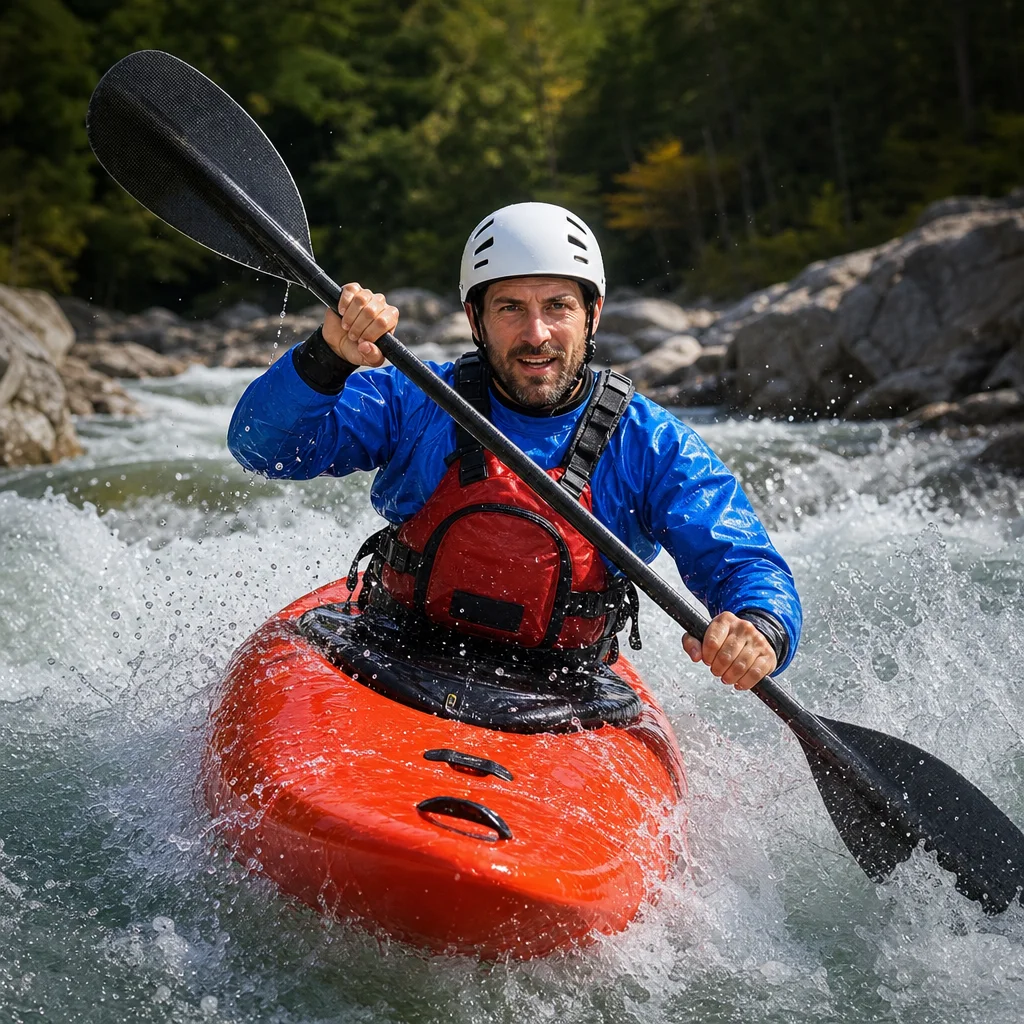
When wind or current starts moving your kayak, your first instinct may be to correct with stronger, more frequent strokes. That can work briefly, but it also uses energy and attention. A better approach is to read the shoreline and let nearby landforms reduce the forces acting on your boat.
Points, bays, reed beds, coves, and protected pockets can help you maintain position with fewer corrective strokes. They don’t stop wind or current completely, and they can create hazards of their own, so the goal isn’t to hug the shoreline blindly. The goal is to choose a useful feature, approach it with room to maneuver, and use its effects deliberately.
How shorelines change wind and current
Water conditions are rarely uniform across an entire shore. A headland may divide wind exposure between two sides. A bay may be calmer near its back while the entrance still experiences wind-driven flow. Reeds or low vegetation may reduce surface chop, while a narrow channel nearby accelerates current.
Your kayak responds to several forces at once:
- Wind pushes on your body, paddle, and kayak, often turning the bow or stern.
- Current moves the water beneath you and can carry the kayak along even when the surface looks calm.
- Waves may reflect from hard banks, combine in narrow spaces, or become steeper in shallow water.
- Your momentum continues after you stop paddling, especially when turning or crossing an exposed area.
A shoreline feature is useful when it reduces one or more of these forces enough to make your position easier to control. It may not create still water. Even a modest reduction in wind can make a noticeable difference when you’re trying to rest, check a map, adjust clothing, or prepare for a crossing.
Read the feature before you use it
Before moving toward a point or sheltered pocket, pause and observe what the water is doing. Look for differences in surface texture, floating debris, ripples, wave direction, and the movement of nearby boats or vegetation.
A useful feature often has a gradual transition between exposed and protected water. That gives you space to adjust your heading and speed. A poor feature may have an abrupt edge, breaking waves, submerged rocks, overhanging branches, or a narrow exit.
Ask yourself:
- What force am I trying to reduce: wind, current, waves, or all three?
- Where is the water visibly calmer?
- If conditions worsen, which direction can I leave safely?
- Is there enough depth and clearance to turn around?
- Will the feature trap me against a bank, reeds, rocks, or surf?
You don’t need to identify every underwater detail to make a good decision. You do need to avoid committing to a pocket that has no practical escape route.
Check your escape route: Before settling behind a shoreline feature, confirm that you can paddle back into open water or reach a suitable landing area without passing through breaking waves, branches, rocks, or a strong current line.
Use points and headlands to manage exposure
A point or headland extends into the water and changes how wind and current reach the shoreline. The side facing the wind may be rough and exposed, while the opposite side can provide a partial lee—a zone with reduced wind exposure.
If you’re approaching a point in wind, avoid rounding it too closely at first. Stay far enough out to see the water on the other side and to keep room for a controlled turn. Once you understand the conditions, you can move closer to the protected side if the depth, waves, and hazards allow.
Approach the protected side gradually
A common mistake is to sprint directly toward a headland, then make a sharp turn around it. That leaves little room to recover if the wind catches the kayak or the current pushes you toward the point.
Instead:
- Approach on a diagonal rather than straight at the shoreline.
- Reduce speed before reaching the exposed corner.
- Keep the bow pointed slightly into the force that is moving you.
- Round the point with enough distance to turn or retreat.
- Reassess the water before committing to the sheltered side.
The protected side may be calmer, but it can also contain reflected waves or confused water where two flows meet. If the surface becomes irregular near the point, widen your turn rather than forcing the kayak through the roughest patch.
Use bays and coves for temporary shelter
A bay can reduce wind exposure because its sides block some of the fetch—the distance over which wind has pushed across open water. The back of the bay is often calmer than the entrance, making it useful for a short rest or a controlled adjustment.
However, a bay isn’t automatically safe. Wind may funnel into a narrow opening, and current may concentrate near the entrance or along one side. A shallow backwater can also become difficult to leave if you drift too close to soft mud, dense vegetation, or a bank exposed to incoming waves.
Use a bay as a place to reduce workload, not as a permanent guarantee of calm. Keep track of how you entered and leave yourself room to turn. If the wind is increasing, don’t wait until the bay becomes your only comfortable option before heading back toward your intended route.
Position on the sheltered side, not the hazard side
When resting in a bay, choose a location that gives you protection without pinning the kayak against shore. Staying slightly offshore usually leaves more room to turn and lets you respond if the wind direction shifts.
If you need to stop completely, point the kayak into the most manageable force rather than allowing it to drift sideways into the bank. A boat broadside to wind or waves is more likely to slide, weathercock, or become difficult to control.
Work with reeds and vegetation carefully
Reed beds, marsh edges, and low vegetation can dampen small waves and reduce wind near the surface. They may be useful for taking a short break or moving along a protected edge, especially when open water is uncomfortable.
Treat vegetation as a buffer, not a handrail. Reeds can catch your paddle, wrap around a rudder or skeg, conceal shallow water, and make a quick exit difficult. Some banks also contain soft sediment that can grab a paddle blade or make a landing unstable.
Keep enough distance to turn the kayak without pushing into the vegetation. If you need to cross a narrow opening, maintain a controlled speed and look beyond it before entering. Don’t rely on a reed bed to stop a drift if current is carrying you toward a larger obstruction.
Find protected pockets along a larger shore
Even a long, exposed shoreline often contains small areas of reduced force. Look for indentations, small coves, wind-shadowed corners, clusters of shoreline plants, or sections where the bank changes direction.
These pockets are especially useful when you need to:
- Take a short hydration or clothing break.
- Check your route or adjust a deck bag.
- Regain a comfortable paddling rhythm.
- Wait briefly for another member of your group.
- Reduce fatigue before crossing exposed water.
Use them before you’re exhausted. If you wait until your strokes are already becoming ineffective, you may have difficulty reaching the pocket with control. A short stop in partial shelter can preserve energy for the next exposed section.
Maintain position with fewer corrective strokes
Once you’re in a useful area, you still need to manage the kayak. Shoreline shelter reduces the force; it doesn’t steer the boat for you.
Start by choosing a reference point on shore, such as a tree, rock, dock, or bend in the bank. Watch whether that reference moves forward, backward, or sideways relative to your kayak. This helps you distinguish between turning and drifting.
Then use small adjustments:
- Apply a light forward stroke on the side opposite the direction you want the bow to turn.
- Use a brief sweep stroke to bring the bow around rather than several forceful corrections.
- Let the kayak glide between strokes when your heading is acceptable.
- Keep your torso relaxed so you don’t overreact to small movements.
- Recheck your reference point after each adjustment.
If the bow keeps turning into the wind, a slight angle into the wind may be easier to maintain than trying to hold the kayak perfectly parallel to shore. If current is moving you along the bank, you may need to point slightly upstream to keep your ground position.
The correct angle depends on the kayak, your paddling position, and the strength and direction of the forces. Don’t chase a precise heading. Aim for a stable position that leaves you room to change course.
Avoid the lee-shore trap
The calm side of a shoreline can become dangerous when it is also the downwind shore. Wind may push you steadily toward land, rocks, cliffs, docks, or breaking waves. The water can look comfortable while your distance from shore disappears.
This is one of the most important trade-offs in using shoreline shelter: less chop may mean less warning that you’re being set toward an obstacle.
Keep checking your distance from shore and your ability to turn away. If you’re drifting downwind, don’t wait until you’re close to the bank. Angle away early, use deliberate strokes, and move toward water where you have more maneuvering room. If you can’t make progress safely, look for a suitable landing area rather than continuing toward a hazardous section.
Match the feature to your goal
Different shoreline features solve different problems:
| Feature | Useful for | Main caution |
|---|---|---|
| Point or headland | Reducing exposure on the protected side | Rough water and strong flow near the corner |
| Bay or cove | Resting and reducing wave energy | Wind funneling, shallow water, limited exits |
| Reed bed or marsh edge | Damping small waves near shore | Entanglement, hidden shallows, difficult escape |
| Small indentation | Brief pause or route adjustment | May provide only a narrow pocket of shelter |
| Sheltered shoreline bend | Holding a more comfortable heading | Wind direction may shift around the bend |
Think of these as temporary tools within a route, not substitutes for choosing suitable conditions. A feature that helps on the way out may be less helpful on the return if the wind or current changes.
Practice in manageable conditions
You can develop this skill without waiting for difficult weather. On a calm outing, observe how your kayak behaves near an open shoreline, then compare it with a bay or vegetation-lined edge. Stop paddling briefly and note how quickly the boat drifts or turns.
Practice approaching a point at a shallow angle, pausing before the corner, and backing away if the water looks unsettled. Try holding a reference point with small strokes instead of constant paddling. These exercises build useful judgment without requiring you to enter conditions beyond your ability.
For every outing, keep the basic sequence simple:
- Identify the force moving your kayak.
- Find a shoreline feature that may reduce it.
- Approach with distance and an exit route.
- Use small strokes to maintain a workable heading.
- Keep monitoring drift, depth, obstacles, and changing conditions.
Shoreline features are most valuable when they reduce your workload while preserving choices. Use them to pause, reposition, and manage exposure—but keep enough distance and awareness to leave before shelter turns into confinement.