What Kayak Safety Equipment Is Required on Your Waterway
I’ll compare the U.S. and Canadian approaches to kayak safety equipment, explain which requirements commonly vary by waterway, and show you how to verify rules before launching.
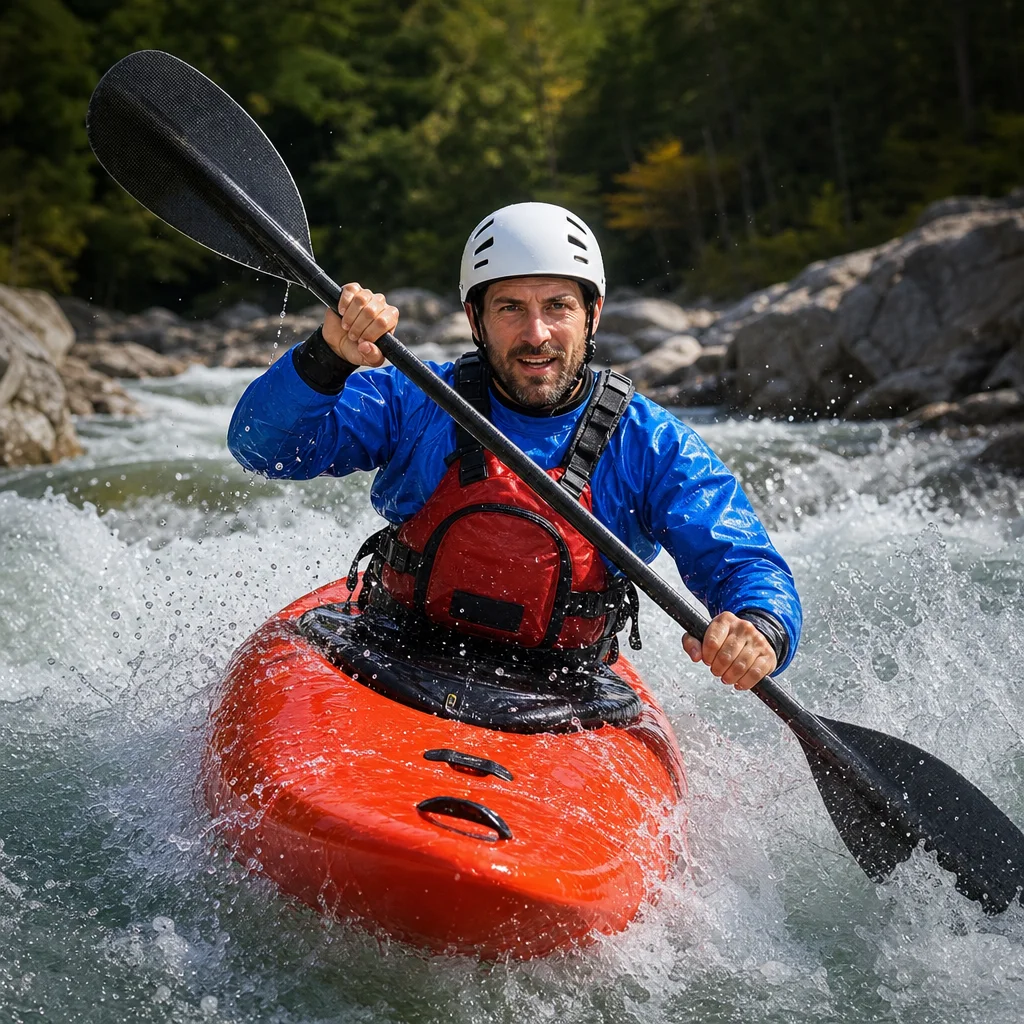
If you’re buying your first kayak, the equipment list can be confusing because “required” doesn’t mean the same thing everywhere. Federal rules, state or provincial laws, park regulations, vessel length, operating hours, and local conditions can all affect what you must carry.
The safest approach is to separate three questions:
- What equipment is legally required?
- What equipment is required only in certain conditions?
- What equipment is sensible to carry even when the law doesn’t specifically demand it?
The exact answer depends on your waterway, but the framework below will help you check the right sources and avoid common gaps.
Start with the rules that apply to your launch site
A kayak may be subject to more than one layer of regulation. In the United States, that can include U.S. Coast Guard requirements, state boating laws, county or municipal rules, and restrictions for a particular lake, river, reservoir, or national park. In Canada, federal requirements may be supplemented by provincial, territorial, municipal, conservation authority, or park rules.
The rules can also change based on whether you’re paddling on:
- Inland lakes and rivers
- Coastal waters or tidal rivers
- Navigable commercial waterways
- Restricted or controlled areas
- Water managed by a park or private organization
- An international border or shared waterway
A kayak that is exempt from registration in one state or province may need registration in another. A lighting rule that applies after sunset may not cover dawn, fog, heavy rain, or other periods of restricted visibility in the same way.
Check your launch site’s current requirements: Look up the boating authority for the state, province, territory, or park where you’ll put in, then confirm the rules for kayak length, registration status, operating hours, and local restrictions. Keep the official page or regulation handy when requirements are unclear.
Personal flotation devices are the basic requirement
Every person in a kayak should have a properly sized, approved personal flotation device, commonly called a PFD. In the United States, this generally means a U.S. Coast Guard-approved wearable PFD that is in good condition and readily accessible. In Canada, the required flotation equipment must meet the applicable Transport Canada standards and be suitable for the person using it.
A PFD is only useful if it fits and can be worn when conditions become difficult. Check that it:
- Fits the wearer’s weight and chest size
- Is approved for the country and activity where it will be used
- Has intact straps, buckles, fabric, and flotation material
- Is free of serious mold, tears, chemical damage, or excessive wear
- Can be put on correctly without confusion
Some waterways require PFDs to be worn, not merely carried. Children, personal watercraft users, and paddlers in specified conditions may be covered by additional rules. Even where wearing a PFD isn't universally mandated for every adult, wearing it is the most dependable way to reduce the consequences of a capsize.
Inflatable PFDs deserve extra attention. They may have restrictions involving the wearer’s age, swimming ability, operating conditions, or whether the device is approved for the activity. They also require regular inspection and, in many designs, manual inflation. A standard inherently buoyant PFD is often simpler for casual paddling and more forgiving if you unexpectedly enter the water.
A sound-producing device is commonly required
A whistle or another approved sound-producing device is one of the simplest pieces of equipment to carry. It can help you attract attention, signal another vessel, or communicate when wind, distance, darkness, or river noise makes your voice ineffective.
In the United States, federal navigation rules generally require recreational vessels below a specified length threshold to carry an efficient sound-producing device. States and local authorities may impose additional requirements. In Canada, small pleasure craft rules also address sound-signaling equipment, with the exact obligation depending on the craft and operating circumstances.
Attach the whistle to your PFD or keep it immediately accessible. A whistle buried in a dry bag isn't much help during a capsize. Choose a model designed for marine use, test it occasionally, and avoid relying on your voice as your only means of signaling.
Lighting requirements depend on time and visibility
A kayak used in darkness or during restricted visibility may need lights even if it is legal to operate without them during the day. The required arrangement can depend on whether the kayak is being paddled, anchored, or treated under a particular category of vessel.
For many small, human-powered craft, the practical rule is to carry a bright white light or flashlight that can be shown in time to avoid a collision. Some waterways may require a specific navigation-light configuration instead. A headlamp can help you see your deck and find equipment, but it may not replace the light required for your kayak to be seen by other vessels.
Before a nighttime trip, check:
- Whether the law covers sunset-to-sunrise operation or all periods of reduced visibility
- Whether a handheld light is acceptable or a mounted light is required
- Whether the waterway prohibits nighttime paddling
- Whether a separate light is needed when anchored or stopped
- Whether the light remains usable after immersion
Carry spare batteries or a charged backup light in a waterproof container. Test the light from the perspective of another boater rather than assuming that a small glow on your deck will be visible at a safe distance.
Registration and identification are separate from safety gear
Registration rules often surprise new kayak owners. Some jurisdictions exempt nonmotorized kayaks from registration, while others require registration based on length, use, ownership documentation, or the presence of a motor. A kayak with a small electric or gas motor may be treated differently from a paddle-only kayak.
Registration may involve a decal, certificate, identification number, title, or proof of purchase. The required display location can also vary. If you transport the kayak across state or provincial lines, the place where it is principally used may matter more than where you bought it.
Registration isn't a substitute for safety equipment. Conversely, carrying safety equipment doesn't eliminate a registration obligation. Check the official boating or transportation authority for the jurisdiction where you will use the kayak, especially after adding a motor or purchasing a used boat.
Canadian equipment lists can be more specific by craft and conditions
Canadian requirements are often organized around the type and size of pleasure craft, the number of people aboard, and the conditions of operation. In addition to flotation and sound-signaling equipment, the applicable equipment list may address items such as:
- A buoyant heaving line
- A bailer or manual bilge pump
- A watertight flashlight for operation in darkness or restricted visibility
- Navigation lights in circumstances where they are required
- Other equipment based on vessel size and operating conditions
Don't assume that a list for a canoe, a kayak, and a larger human-powered vessel is identical. Transport Canada’s official safety equipment guidance and the Small Vessel Regulations provide the more dependable way to identify the list for your craft.
A heaving line is useful beyond compliance. It can help you assist another paddler, stabilize a boat at shore, or recover equipment. A compact bailer or pump is also worthwhile if your kayak can take on water and doesn't have a sealed, self-bailing design.
U.S. equipment lists also change with vessel details
U.S. Coast Guard requirements provide a federal baseline, but state law can be more restrictive. The relevant details may include the kayak’s length, whether it has an installed motor, the waters where it is operated, and whether it is used during daylight or at night.
Many paddlers should expect to confirm at least these categories:
- One approved wearable PFD for each person
- A sound-producing device, such as a whistle, where required
- Lights or a signaling light for nighttime or restricted-visibility operation
- Registration or documented exemption, where applicable
- Any state-specific equipment or display requirements
The U.S. Coast Guard’s recreational boating safety resources and your state boating agency are better sources than a generic gear list. A retail product page may explain what an item does, but it usually can't tell you whether that item satisfies the law on your particular waterway.
Recommended equipment that may not be legally required
Legal minimums aren't a complete safety kit. A short, calm paddle close to shore may call for less equipment than a remote crossing, but changing conditions can turn a simple outing into a rescue problem.
Consider carrying:
- A communication device in a waterproof case
- A small first-aid kit
- Drinking water and weather-appropriate clothing
- A paddle leash only when its use won’t create an entanglement hazard
- A spare paddle on longer or remote trips
- A bilge pump or compact bailer
- A tow line or rescue line if you have practiced using it
- Sun protection and food for the expected duration
- A knife or cutting tool stored safely and accessibly
- A waterproof map, compass, or charged navigation device
A cellphone is useful but has limitations. It may have no service, may lose power, and may not be easy to operate after a capsize. On remote or cold-water trips, choose communication and emergency equipment according to the consequences of being delayed rather than the convenience of the launch.
Common mistakes to avoid
Treating a neighboring jurisdiction’s rules as your own
Rules for the lake across the state line may not apply to your launch site. Verify the authority that manages the water you will actually use.
Keeping required equipment inaccessible
A PFD in a hatch doesn't help during an unexpected capsize, and a whistle attached to a loose bag may drift away. Wear or secure essential equipment where you can reach it immediately.
Assuming daytime conditions will continue
A trip that begins before sunset can finish in darkness. Fog, storms, and heavy rain can also create restricted visibility. Carry the appropriate light before you need it.
Confusing approval with suitability
An approved item still needs to fit the user, remain serviceable, and match the operating conditions. Check labels, expiration dates where relevant, inflation mechanisms, and physical condition.
Relying on a generic online checklist
Online lists often omit local registration rules, park restrictions, seasonal closures, or requirements for motorized kayaks. Use them as prompts, not as the final authority.
A simple pre-launch check
Before each outing, confirm the following:
- You know which state, province, territory, or park rules apply.
- Each paddler has the correct, serviceable PFD.
- Your whistle or other sound signal is immediately reachable.
- You have the required light for the planned hours and visibility.
- Registration, decals, and identification requirements are satisfied or clearly exempt.
- Your communication method is charged, protected, and appropriate for the distance from help.
- Weather, water temperature, closures, and seasonal restrictions support the planned trip.
Rules establish the minimum, but thoughtful preparation accounts for what can happen after the launch. Check the current requirements for your waterway, carry the equipment you may need before help arrives, and keep essential items attached to you or secured where you can reach them.