What to Do When Your Kayak Foot Brace Breaks on the Water
A broken foot brace can affect balance, steering, and your ability to paddle efficiently. I’ll explain how the brace, your body position, and your return plan fit together so you can stabilize the kayak, choose a sensible temporary fix, and decide when to get help.
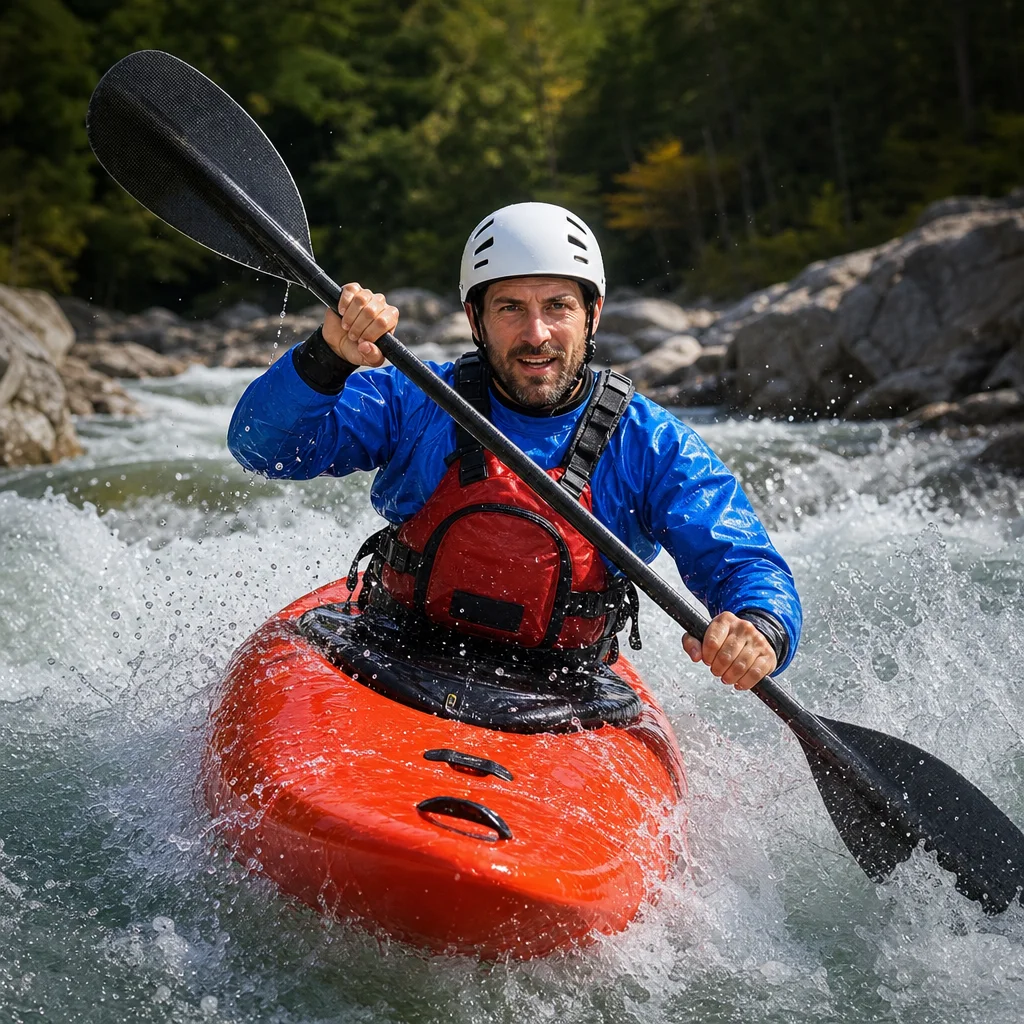
A foot brace failure can feel more serious than it first appears. Your feet help support your hips, keep your knees in position, and give your torso a stable platform for each stroke. When one brace or both braces fail, you may lose control of the kayak even if the hull itself is undamaged.
The safest response is usually not to repair the brace perfectly on the water. First, make the kayak stable and prevent the problem from becoming a capsize or entanglement. Then decide whether a simple temporary support is appropriate or whether you should head back, land nearby, or request assistance.
Stabilize yourself before troubleshooting
Stop paddling and bring the kayak under control. Keep your paddle across the cockpit or in both hands, with the blades resting lightly on the water if you need extra support. Avoid reaching suddenly toward the broken brace, especially in moving water.
Check your position:
- Keep your torso centered over the kayak.
- Keep your knees and legs relaxed rather than braced against loose hardware.
- Keep both feet away from broken metal, sharp edges, cords, and dangling straps.
- Confirm that your personal flotation device is secured and positioned correctly.
- Look for immediate hazards such as boat traffic, rocks, strainers, surf, or strong current.
If the kayak is stable, drift or paddle toward the safest nearby position while you assess the damage. That might be a quiet shoreline, a beach, an eddy, or a protected area—not necessarily your original launch point.
Check your assistance plan: If you may need help, confirm the appropriate local emergency number, marine assistance channel, and access point for your area before relying on a phone or signal device. Local coverage and water-rescue procedures vary.
Identify what actually broke
“Foot brace” can refer to several parts. Knowing which part failed helps you choose a safer response.
The footboard or pedal assembly moved
Some kayaks use adjustable foot pedals attached to rails. Others use a molded footwell or a broad footboard. If the whole assembly has slid forward, backward, or sideways but remains attached, you may be able to continue with reduced pressure while keeping your feet in a neutral position.
Don't force the assembly back into place while seated in rough water. A small adjustment can become a larger failure if a rail, bolt, or retaining pin is already damaged.
A bolt, pin, or adjustment mechanism came loose
A missing pin or loose bolt can leave a brace hanging in the cockpit. Don't leave loose hardware where it can catch your foot. If you can safely remove the loose piece and store it in a pocket or small container, do so. Avoid reaching into the bow or under the deck while the kayak is moving.
The rail, cable, or mounting point broke
A cracked rail, torn cable, or damaged mounting point is more than an adjustment problem. The remaining structure may not tolerate normal leg pressure. Treat the brace as unavailable unless you have a secure, low-stress way to support your feet.
The brace is present but has a sharp or entangling failure
A broken metal edge, exposed screw, split plastic panel, or loose cable can injure you or trap your foot during a capsize. Move your feet clear and don't improvise by wrapping cord around the damaged part if the cord could loop around your ankle.
Decide whether you can continue
A foot brace failure is more manageable in calm, shallow, protected water than in wind, waves, current, or cold water. Consider the whole situation rather than the broken part alone.
You may be able to make a controlled return if:
- The kayak remains stable without strong foot pressure.
- You can steer and stop using relaxed strokes.
- You are close to a safe landing point.
- Conditions are calm enough that a loss of lower-body support is unlikely to cause a capsize.
- You have a reliable way to communicate if the situation changes.
Return or request assistance instead of pressing on if:
- You are in open water, surf, strong current, heavy wind, or worsening weather.
- You can't keep the kayak pointed where you want it to go.
- Your feet or legs are becoming numb, cramped, or trapped.
- The kayak has taken on water or another part of the boat is damaged.
- You are far from shore, alone, inexperienced, or unsure of your ability to re-enter after a capsize.
- You can't maintain a stable position without pushing hard against the failed brace.
If the brace failure has made the kayak difficult to control, distance matters. The closest safe exit is often a better destination than the planned takeout.
Use a temporary support only when it is secure
A temporary fix should reduce movement without creating a new hazard. It doesn't need to restore the kayak to normal performance; it only needs to help you remain stable during a short, controlled return.
Move your feet to a safe contact point
If the cockpit has molded foot rests, a solid bulkhead, or an intact footboard, place both feet there with light, even pressure. Keep your knees slightly bent. Don't lock your legs straight or push forcefully against a surface that may not be designed to bear your weight.
You can also paddle with less torso rotation and shorter strokes. This reduces the need for a firm connection between your feet and the kayak, although it may make steering and efficiency worse.
Use a soft, non-looping support
A spare piece of closed-cell foam, a folded jacket, or another soft item may fill a gap between your feet and a solid surface. The support should stay in place through friction and compression rather than being tied around your ankles or wrapped through the cockpit.
Test it with gentle pressure. If it slides toward the pedals, rudder cables, or your legs, remove it. A bulky object that interferes with your feet can be more dangerous than having no brace at all.
Avoid improvised bindings
Don't tie your feet to the kayak, bind your ankles together, or use loose cord where it can form a loop. A foot brace should provide support while allowing you to exit the cockpit. Any temporary solution that could hold your legs in place during a capsize should be rejected.
Avoid placing a hard object directly against your shins or ankles. It can become a pressure point, cause injury, or shift unexpectedly as the kayak moves.
Paddle back with reduced demands
Once you have a stable position, choose the simplest route to safety. Stay in protected water when possible, keep an eye on changing conditions, and avoid crossing exposed areas just to follow your original route.
Use smooth, moderate strokes. Strong acceleration, aggressive edging, and rapid corrective strokes all depend on a stable connection with the kayak. If you need to turn, slow down before the turn and use conservative sweep or reverse strokes rather than forcing the boat around.
If the kayak has a rudder or skeg, use it only if the control lines and pedals remain safe. A damaged foot-pedal system can affect rudder control, and a loose cable may catch your foot. If you can't operate the system without reaching into the damaged area, leave it alone and steer with the paddle.
Tell anyone in your group what happened. If you are alone and have communication equipment, notify your contact or support service if your return is delayed. Keep the device accessible rather than stowed under gear.
If you capsize after the failure
Your normal capsize plan still applies, but the broken brace may make re-entry or cockpit control harder. Keep hold of your paddle and kayak if conditions allow, and avoid putting your feet into the damaged brace area. If you can't safely re-enter, stay with the kayak and signal for help rather than exhausting yourself with repeated attempts.
A sit-on-top kayak may let you climb back aboard without a foot brace, but your ability to remount depends on the boat, water temperature, conditions, and your training. A sit-inside kayak presents additional concerns because loose brace parts can obstruct your legs or exit path.
Reassess before remounting: Check for sharp hardware, loose lines, traffic, current, and a clear exit path. If the damaged brace could catch your legs, don't put your feet back into that area while attempting a recovery.
Inspect and repair the kayak before the next trip
Once ashore, remove temporary materials and inspect the entire foot-brace system. Look for cracked plastic, bent rails, missing fasteners, pulled-out mounting points, damaged rudder cables, and stress marks around the attachment area.
Use the kayak manufacturer’s parts information or service instructions to identify the correct replacement hardware. A bolt that appears to fit may have the wrong diameter, length, thread, or corrosion resistance. Don't substitute a fastener that prevents the pedal or rail from moving as designed.
After repair, test the brace on land. Apply gradual pressure with your feet, adjust both sides, and check that the assembly stays locked. If the brace is connected to a rudder, confirm that the pedals move the rudder correctly and that the cables don't rub or snag.
Practical next steps
Before your next outing:
- Learn how your foot braces attach and adjust.
- Carry a small repair kit suited to your kayak, including compatible spare hardware if practical.
- Keep a soft foam pad or similar non-looping support available for minor emergencies.
- Practice paddling briefly with light foot pressure so a brace failure is less surprising.
- Check the forecast, route, landing options, and communication plan.
- Replace or professionally repair any brace that has a cracked mount, sharp damage, or uncertain structural support.
A broken foot brace doesn't always require an immediate rescue, but it does change the kayak’s handling and your margin for error. Stabilize first, avoid entangling fixes, reduce the demands of the return trip, and choose assistance whenever conditions exceed your ability to control the boat safely.