How to Choose a Safe Turnaround Point on a River
A tempting bend isn't always a safe place to turn back, while an easy-looking bank may be difficult to reach. I’ll show you how to weigh current, fatigue, hazards, and exit options before committing to more river.
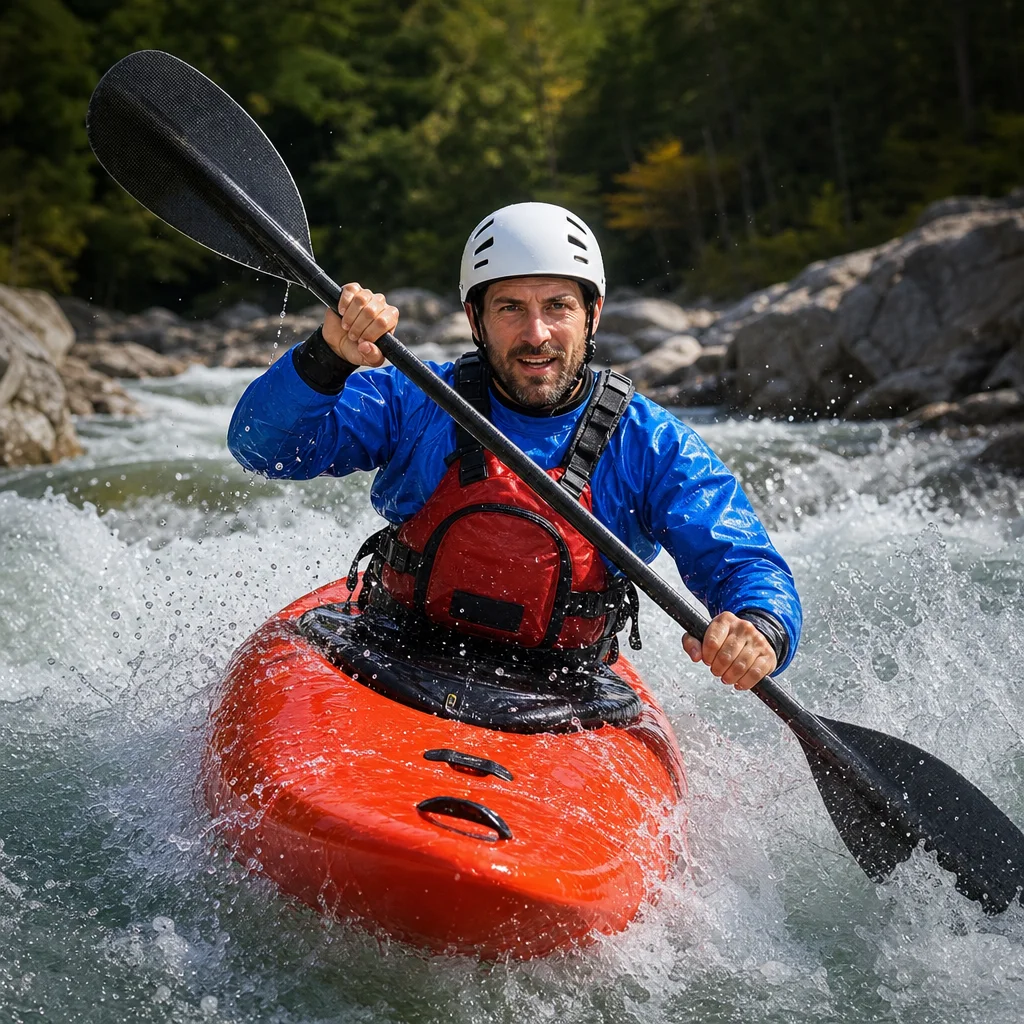
A safe turnaround point is more than a place where you can pause. On moving water, you need enough room to slow down, choose an exit, and regain control without drifting toward a hazard. The best decision is usually made before you feel pressured to make it.
A turnaround point might be a calm eddy where you can regroup, an accessible bank where you can land, or a planned location where you decide whether to continue or return. Your choice depends on the river, your skills, your group, and what lies downstream.
Start by Defining What “Turn Around” Means
Before choosing a location, clarify the action you’re planning. Turning around can mean:
- Paddling back upstream to the launch
- Landing and carrying around a difficult section
- Taking out at a planned access point
- Stopping the trip before conditions become more demanding
- Regrouping briefly before continuing downstream
These options have different risks. A calm eddy may be suitable for regrouping but not for an easy return upstream. A riverbank may look reachable but have steep mud, private property, thick vegetation, or a strong current pushing along the shore.
If you’re deciding whether to continue, don’t wait until the river forces the decision. Choose a point where you still have time, energy, and room to maneuver.
Look for a Real Exit, Not Just Slow Water
The most useful turnaround areas combine manageable current with a practical way out of the channel. Look for several of these features together:
- A broad, calm eddy with a clear entrance and exit
- A gently sloping bank or known landing area
- A shoreline free of strainers, undercut banks, fences, and heavy brush
- Enough downstream visibility to identify hazards before approaching
- Room for every paddler in the group to stop without blocking others
- A route for carrying the kayak if continuing on the water is unwise
Slow-moving water alone isn't enough. An eddy behind a rock may be calm once you’re inside, but entering it can require an angled crossing through current. A narrow pocket along a steep bank may stop your kayak while leaving you unable to climb out safely.
As you approach a possible stopping area, look at it from upstream. Ask where the current will take you if you miss the entrance. Then identify where you would end up if you entered the eddy too early, too late, or with less speed than expected.
Evaluate the Current Before You Commit
Current changes the difficulty of every decision. It affects how quickly you reach a hazard, how much effort it takes to ferry across the river, and whether you can return to a previous location.
Watch the surface for clues:
- V-shaped tongues often indicate faster water or a route between obstacles.
- Smooth, dark patches may show deeper water or a change in current speed.
- Foam lines can outline the edge of an eddy.
- Boils, boils lines, and irregular surface texture can indicate submerged features.
- Water piling up against an obstruction may signal a hazard that needs wide clearance.
A turnaround point is more useful when you can approach it from the slower side of the river. If reaching it requires a long crossing through fast current, it may not be a suitable choice for a tired paddler or a group with mixed experience.
Consider the return route as carefully as the approach. Turning upstream in moving water can be physically demanding. You may need to ferry across current rather than paddle directly against it, and a route that was easy downstream may be much harder in the opposite direction.
Account for Fatigue Earlier Than You Think
Fatigue affects more than strength. It can reduce balance, attention, timing, and the ability to make a clean brace or ferry. A turnaround point that seems reasonable at the start of a trip may be a poor choice after several hours of paddling.
Use practical warning signs:
- Your stroke has become short, uneven, or rushed.
- You’re missing eddy entrances that you would normally make.
- You’re having trouble keeping your kayak pointed where you want it.
- You’re cold, overheated, thirsty, or unable to eat comfortably.
- You’re relying on a stronger paddler to make every decision.
- You’re becoming reluctant to stop because landing feels inconvenient.
When these signs appear, choose the first genuinely manageable exit rather than searching for a perfect one. Continuing to a more attractive landing may expose you to faster current, more complex rapids, or a shoreline with fewer options.
The strongest paddler in a group shouldn’t be the only person capable of reaching the turnaround point. Select a location that the least confident paddler can approach with appropriate support and space.
Compare the Main Turnaround Options
Different stopping strategies involve different trade-offs.
Returning from an eddy
A large eddy can provide a controlled place to stop, communicate, and decide what comes next. It may be the best option when you’re near the limit of your comfort but still have good visibility and energy.
The trade-off is that an eddy isn't automatically a route back upstream. Its circulation may push you toward a rock, across the eddy line, or into faster water. Exit deliberately, and avoid crossing the main current without a clear plan.
Landing on a bank
A gently sloping, unobstructed bank can give you a stable place to rest, inspect equipment, or carry around a difficult section. It’s particularly useful when the river ahead is uncertain and you need to make a decision on land.
The trade-off is access. Banks can be slippery, unstable, privately owned, or blocked by fallen trees. Don’t assume that a visible shoreline is a legal or safe landing. A landing is only a reliable turnaround point if you can approach it, get out, and relaunch or carry on without climbing through avoidable hazards.
Continuing to a planned takeout
A known takeout can simplify navigation because you’ve already considered its access, distance, and logistics. It may be more efficient than repeatedly stopping to reconsider.
The trade-off is commitment. If conditions deteriorate before you reach it, the planned takeout may be too far away. Treat it as one option, not permission to ignore fatigue, rising water, worsening weather, or a change in river conditions.
Stopping before a difficult feature
Stopping well upstream of a rapid, low-head dam, portage, or complex bend gives you time to scout and organize. This is usually safer than trying to decide in the approach channel.
The trade-off is that the area may not be a convenient landing. If you can’t safely reach shore, use a calm-water position with adequate space rather than waiting until the feature is close.
Identify Hazards That Make a Point Unreliable
Avoid choosing a turnaround point near hazards that can trap, pin, or separate paddlers. Common examples include:
- Strainers and sweepers along the bank
- Undercut banks, especially on the outside of bends
- Low-head dams and other river-wide obstructions
- Fences, cables, bridges, and fishing lines
- Steep or collapsing banks
- Narrow channels with strong current
- Blind bends where you can’t see approaching traffic or hazards
- Rapids that leave no calm water before the next feature
Give yourself more distance than feels necessary. A paddler who capsizes, misses an eddy, or needs help can travel surprisingly far before the group regains control.
If a possible stopping area is downstream of a hazard, it may not be a true fallback. A turnaround plan should include what you’ll do if someone misses the first exit. If the next safe option is far away, stop earlier.
Check Your River Access Plan: Before launching, confirm current access information, land-use restrictions, takeout availability, and any local rules for the river section. Conditions, closures, hazards, and regulations can change, so use current information from land managers or local authorities rather than relying only on an old map or guidebook.
Use a Simple Decision Process
When you reach a potential turnaround area, pause long enough to answer five questions:
- Can I enter the slower water without a rushed maneuver?
- If I miss the entrance, is the downstream route still manageable?
- Can I and the rest of the group reach shore or remain safely in control?
- Is there a clear way to return, portage, or take out?
- Do I have enough energy and daylight for the option I’m considering?
If one answer is uncertain, choose an earlier stopping point or land in a known safe area. Uncertainty is a reason to reduce commitment, not a reason to gather more speed and hope the next opening works out.
For groups, set the decision before entering the current. The lead paddler can identify the feature, while the sweep paddler confirms that everyone has enough space. Use clear signals, and avoid having multiple boats cross into an eddy at once when the entrance is narrow.
Plan Turnaround Points Before the Trip
Review the river map, access information, and route description before you launch. Mark likely stopping areas, but treat them as possibilities rather than guarantees. Water level, recent storms, fallen trees, seasonal vegetation, and construction can change how a landing looks.
Also estimate the effort required to return. A short downstream distance may take much longer upstream, particularly for a loaded recreational kayak or a group with limited river experience. Leave room for scouting, breaks, navigation errors, and an unplanned carry around an obstruction.
The safest turnaround decision is usually the one made while the river still offers choices. Pick a location with calm water, a usable exit, a visible downstream route, and enough margin for fatigue or a missed maneuver. If the river is asking you to make a rushed decision, you’ve probably waited too long—use the next controllable option and make the trip less ambitious if necessary.