How to Paddle a Kayak Through Floating Logs and Branches
I’ll clarify how to assess floating logs, branches, and strainers before you commit to a passage. You’ll learn how to choose a safer line, avoid entanglement and pinning, and recognize when turning around is the smartest move.
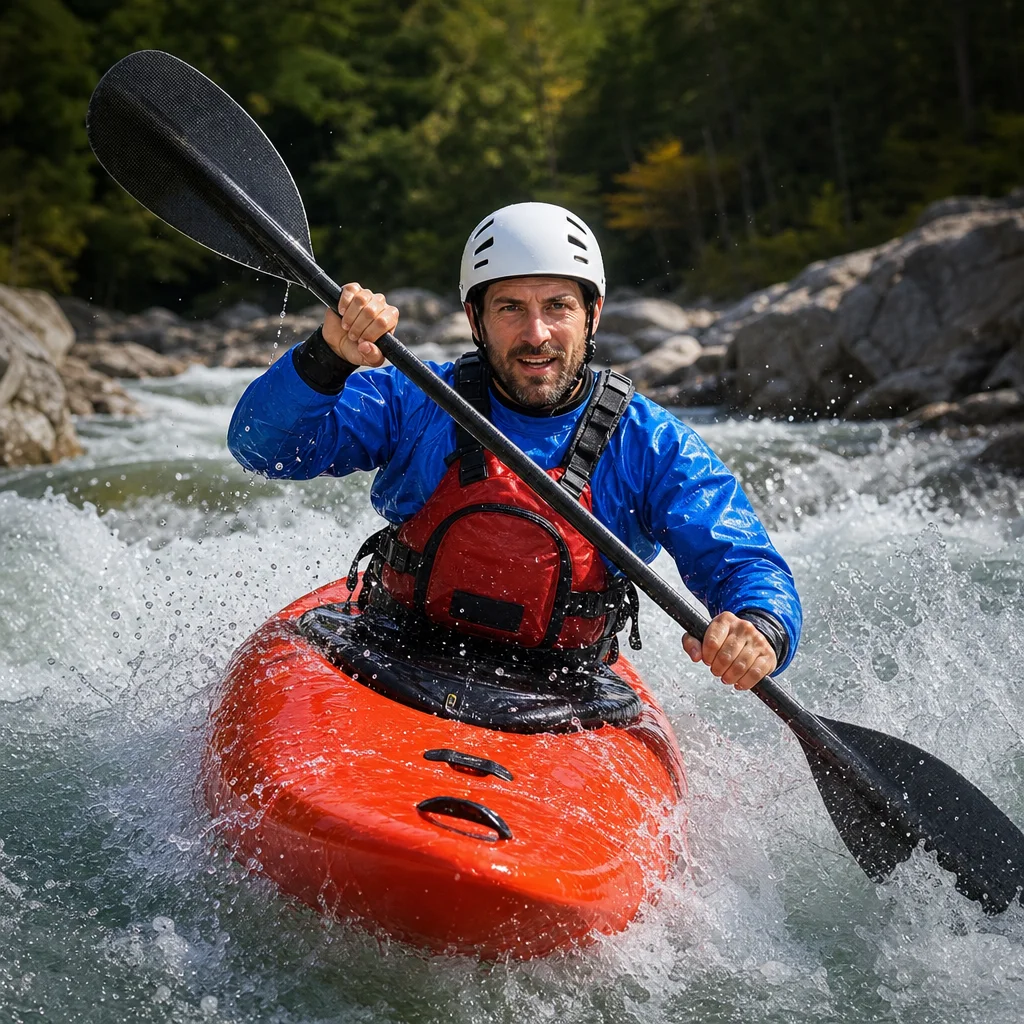
Floating logs and branches can turn an ordinary paddle into a serious hazard, especially when current pushes you toward them faster than you can change course. The safest approach isn’t to “power through” every gap. It’s to recognize how the obstruction is moving, identify where the current is strongest, and decide early whether the passage is worth attempting.
Understand the hazard in front of you
A floating branch may look harmless because it is small or moving slowly. The danger comes from how it interacts with current, your kayak, and the surrounding shoreline.
Strainers and partially submerged branches
A strainer is an obstruction—often a fallen tree, brush pile, or tangled branches—that lets water pass but can catch a person or kayak. Water may flow through the gaps while solid material blocks your body or boat.
Strainers are especially dangerous because the current can press you into them. Once your kayak is caught, the force of the water may make it difficult to paddle away or climb free. A branch that appears passable from upstream may also hide additional limbs below the surface.
Floating logs and unstable debris
A log can roll when your bow, stern, or paddle touches it. A partially submerged log may also be difficult to see in glare, waves, or murky water. Avoid assuming that a visible end marks the full obstruction; submerged portions can extend farther than expected.
Loose branches can snag a paddle, catch around your deck lines, or turn sideways across your cockpit. Several small branches together can create a hazard more serious than one large, obvious log.
Pinning against a fixed object
If current pushes your kayak sideways against a log, rock, bridge support, or bank feature, the boat can become pinned. Water pressure may force the kayak to wrap around the obstacle or fill with water. This is one reason to avoid approaching an obstruction broadside when you still have room to maneuver.
The same principle applies to trees extending from the bank. A “sweeper” may reach over the water and catch your upper body, paddle, or boat. Ducking under a low branch at the last second can also be risky if the current is carrying you toward more branches or a fixed object behind it.
Read the current before choosing a line
Start looking for obstructions well before you reach them. Keep your head up between strokes, and scan around bends, behind waves, and near the downstream side of islands or fallen trees.
Ask four questions:
- Is the object moving, fixed, or partly anchored?
- Where is the current taking me if I do nothing?
- What happens downstream if I miss the opening?
- Do I have enough space to turn, slow down, or stop?
The safest route is often not the biggest visible gap. It is the line that gives you the most room to correct an error and the least severe consequence if you fail to make the turn.
Look for slack water, an unobstructed bank, or an eddy where you can pause and reassess. On a river, the inside of a bend may have slower water, but it can also collect debris or contain shallow hazards. On a lake, wind and waves can move logs toward shore or push your kayak onto a branch field. Conditions change, so reassess rather than relying on a line that was clear several minutes earlier.
Check your local waterway guidance: Before paddling a river, reservoir, or managed lake, verify current closures, flow conditions, navigation restrictions, and known obstruction hazards with the relevant local authority or park manager. These details change by location and season.
Choose the safest response early
You generally have three choices: pass, wait, or turn back. Make the decision while you still have distance and momentum to act on it.
Pass only through a clearly open route
A passage may be reasonable when the opening is wide enough for your kayak and paddle, the current is manageable, and you can see what lies immediately beyond it. You should also have a clear exit line if the kayak yaws or the log moves.
Avoid relying on a narrow gap that requires perfect timing. Keep your bow pointed toward the open water rather than directly at the branch or log. Use small, controlled strokes to maintain alignment, and keep enough speed for steering without charging into the obstruction.
If the gap is downstream of a bend, wave train, or blind corner, treat it as unconfirmed until you can see the approach clearly. A second obstruction may be hidden behind the first.
Wait in a safe position
If debris is moving toward you, move out of its path rather than trying to catch or push it. Enter slack water or an eddy if one is available, keeping clear of the downstream side of the obstruction.
On a lake, point the bow into the waves while you wait, provided that doing so doesn’t move you toward the debris or a shoreline hazard. Watch how the wind and current move the object before selecting a new line.
Turn around before the route closes
Turning back is the correct decision when the only opening is narrow, the current is fast, the landing options are poor, or you can’t see what is downstream. It’s also the right choice when debris has created a continuous barrier from bank to bank.
If you need to land and portage, approach a suitable shoreline well upstream of the obstruction. Don’t wait until the current has already carried you alongside the logs. Confirm that the landing is accessible and that you can re-enter without immediately drifting into the hazard.
If you decide to paddle past a log or branch
Set up early, keep your movements deliberate, and preserve room to maneuver.
Approach at a controlled angle
A slight angle can help the bow deflect away from a floating log instead of striking it squarely. Avoid approaching fast enough to climb onto the log or drive the bow underneath an overhanging branch.
Keep your torso balanced and your paddle ready for corrective strokes. Don’t lean far over the side to push a branch away; that can make the kayak unstable and place your upper body closer to the hazard.
Keep your hands and paddle clear
Branches can grab a paddle blade or pull it across your body. If a branch contacts the paddle, let the paddle move rather than trying to wedge it firmly against the obstacle. Avoid wrapping a paddle leash around your body or allowing loose gear to trail outside the kayak, particularly in moving water.
Secure essential equipment inside the kayak or in properly closed deck storage. Loose straps, fishing line, and dangling accessories can create entanglement points.
Maintain an escape route
After passing the first log, don’t immediately relax. Sterns, submerged limbs, and additional branches may be downstream. Continue scanning until you are well clear and have reached water where you can stop safely.
If the kayak touches an obstacle and begins to turn unexpectedly, focus first on moving toward open water with controlled strokes. Avoid grabbing a branch unless you have no safer alternative; a fixed object can pull you off balance or trap your hand.
What to do if the kayak contacts the obstruction
Your response depends on whether the kayak is still floating freely or has become trapped.
If the boat merely bumps a floating branch, stay centered, keep your head up, and paddle away from open water. Check that your paddle, hands, and clothing are clear before making a stronger stroke.
If the kayak is caught against a fixed object, don’t stand up or place a foot on the bottom. Foot entrapment is a serious risk in moving water. If you can move the kayak away without reaching into a dangerous tangle, do so. Otherwise, call for help and follow the rescue plan appropriate to your group, location, and training.
If you end up in the water, keep your personal flotation device on. In current, a defensive position with your feet pointed downstream can help you avoid immediate foot entrapment while you look for a safe route to shore. Once clear of the obstruction, move toward shore or another safe recovery point when you can do so without swimming back into the hazard.
Don't attempt to climb onto a log in moving water unless your training and the situation specifically require it. A log may roll, branches may be hidden beneath the surface, and the current can pin you against it.
Prevent problems before you launch
Preparation reduces the number of difficult decisions you have to make on the water.
- Wear a properly fitted, approved personal flotation device.
- Carry communication equipment in waterproof protection, where you can reach it if separated from the kayak.
- Paddle with a partner when conditions or remoteness increase the consequences of a mistake.
- Review the route for bends, portages, dams, flood debris, and known strainers.
- Practice forward, reverse, sweep, and draw strokes in open water.
- Practice turning and stopping before you need those skills near an obstruction.
- Keep your deck clear of loose lines and accessories that can snag.
- Leave extra distance from shorelines with overhanging trees, especially in current or wind.
A short skills session in calm water can make a major difference. Practice turning the kayak with sweep strokes, moving sideways with draw strokes, and reversing away from a line you no longer trust. The goal isn't to make every passage possible; it’s to make the safer option easier to execute.
A simple decision checklist
Before committing to a gap, confirm that:
- You can see the full route through and beyond the obstruction.
- The current isn't carrying you directly into a strainer or fixed object.
- The opening is wide enough to leave room for correction.
- You have a safe alternative if the log moves or your turn fails.
- You can keep your hands, paddle, and loose equipment clear.
- Everyone in your group understands the line and the stop signal.
If several answers are uncertain, turn around or land and portage. Floating logs and branches don’t reward hesitation close to the hazard. The most useful skill is recognizing the problem early enough that you still have choices.