How to Respond When Your Kayak Drifts Toward a Low-Head Dam
I’ll explain how to recognize a low-head dam early, choose the safest escape route, and respond when current is carrying your kayak toward it. You’ll also learn why prevention, upstream scouting, and leaving the river well before the dam matter so much.
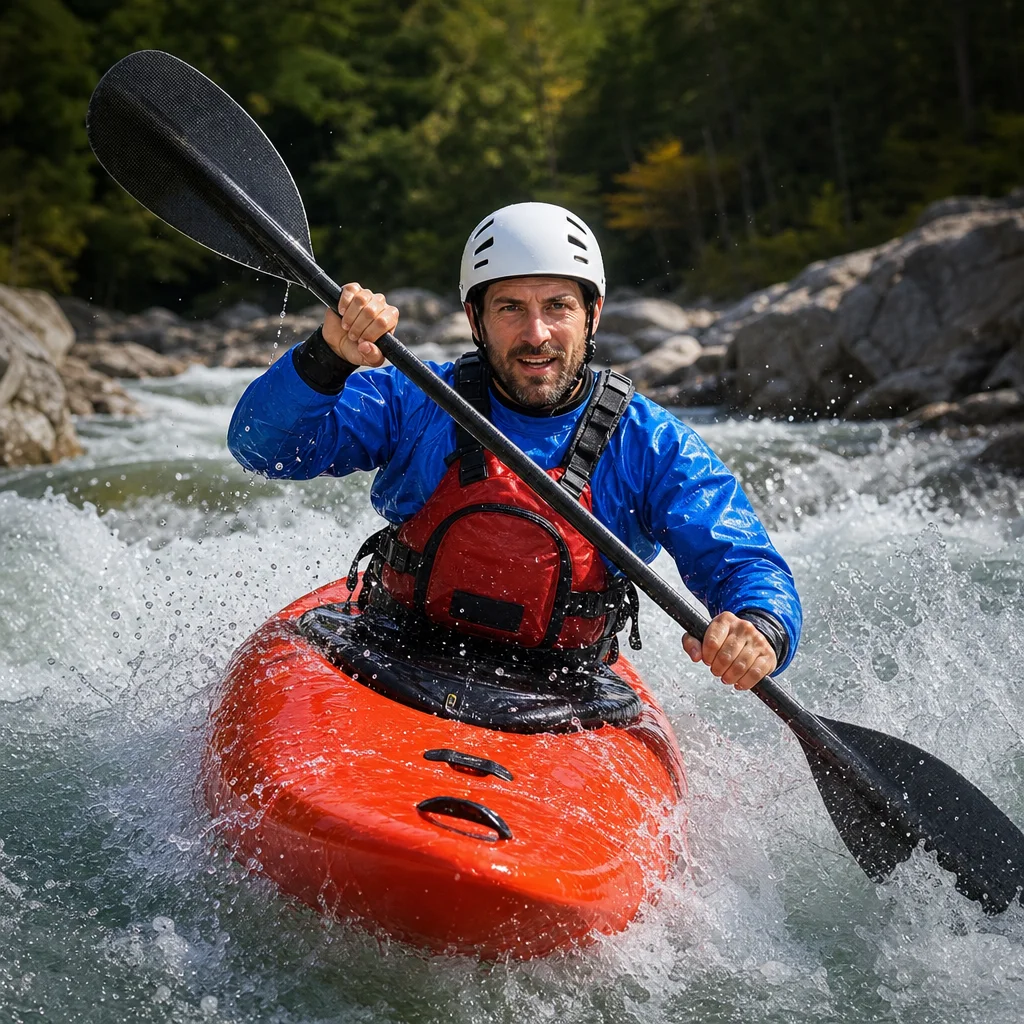
A low-head dam may look like a small drop across the river, but the water flowing over it can create a powerful hydraulic that holds boats and swimmers in recirculating current. The danger is easy to underestimate because the structure is often low, quiet from a distance, and difficult to see until you’re already close.
If your kayak begins drifting toward one, your priority isn't to inspect the dam, rescue your boat, or find the perfect maneuver. Your priority is to reach the bank and get out of the water as far upstream as possible.
Recognize the hazard early
Low-head dams, sometimes called “drowning machines,” can span the full width of a river. Water passes over the crest and drops into a turbulent area below. Depending on the dam, water level, flow, and riverbed, that area may contain strong recirculating current, boils, rollers, and submerged obstacles.
Watch for warning signs while you still have plenty of distance:
- A straight, artificial-looking line across the river
- A smooth horizon or slight drop that interrupts the normal river view
- Water spilling evenly across the channel
- A band of foam, turbulence, or repeating waves below a flat section
- A sudden roar that becomes louder as you travel downstream
- Warning buoys, signs, fencing, cables, or portage markers
- A rapid that appears unusually uniform across the entire river
Don't assume a dam is safe because it is short, familiar, or passable in another season. Higher or lower water can change the location and strength of the hydraulic. Debris can also make a normally recognizable feature harder to read.
Prevention starts before you launch
The safest response is to avoid entering the reach above the dam without a clear plan. Check a current river map, local paddling information, and land or waterway management notices before your trip. A map may show the dam, but it may not show every warning line, informal portage, private shoreline, or current access restriction.
Plan where you will leave the river upstream. A portage isn't useful if the bank is too steep, fenced, privately controlled, thick with vegetation, or separated from a road by a long carry. Identify more than one possible exit when conditions or group abilities are uncertain.
On the water, keep enough distance from the dam to turn toward shore without relying on a last-second sprint. Stay alert when approaching bends, wooded banks, or wide sections where the structure may be hidden from view. A strong downstream current can close the distance faster than it appears to from the cockpit.
Wear a properly fitted personal flotation device, keep your spray skirt release accessible, and make sure everyone in the group knows the plan if someone spots a hazard. A whistle or other signaling device can help you alert nearby paddlers, but it doesn't replace an early escape to shore.
Check the river before you commit: Confirm the dam’s location, current water conditions, marked warnings, and legal access or portage options before launching. Local river levels and restrictions can change, so use current information rather than relying only on an old trip report.
If you first notice the dam at a distance
Act immediately. Tell the group, point out the hazard, and stop moving downstream. If you have room to maneuver, turn the kayak toward the nearest reachable bank and paddle with purpose.
Your goal is usually a bank upstream of the dam, not a particular landing spot. Choose the side that gives you the shortest practical route to safety, considering current, rocks, strainers, steep banks, and private property. Don't make a long crossing simply because one bank has a better-looking beach if the current is carrying you toward the structure.
A useful sequence is:
- Stay in control of the kayak. Keep your torso balanced and avoid sudden movements that could cause a capsize.
- Angle toward shore. Point the bow toward the bank rather than drifting straight downstream.
- Paddle continuously. Use strong forward strokes on the side that helps move you toward shore, adding sweep strokes as needed to maintain your angle.
- Signal the group. If you are paddling with others, make sure the last paddler knows to turn around too.
- Land well upstream. Move the kayak completely out of the current and walk it farther from the water if necessary.
If the current is strong, edging the kayak slightly toward the bank can help you hold a ferry angle, but don't lean so far that you risk capsizing. Keep looking at your escape route rather than staring at the dam.
Avoid deploying an anchor in moving water. A line or anchor can snag, pull the kayak sideways, or create an entanglement hazard. Don't tie yourself to the kayak, a tree, or a shoreline object while trying to stop the drift.
If the kayak is already being carried downstream
At this point, simplify the decision. Get to the nearest safe bank as quickly as possible. Don't spend time trying to recover loose gear, use a complicated maneuver, or paddle toward the dam to see whether a route exists.
If the kayak is broadside to the current, use a controlled sweep or draw stroke to turn the bow toward shore. Keep your weight centered and avoid aggressive edging in turbulent water. If you can't make the bank directly, continue working toward the closest reachable shoreline rather than attempting to cross the full river.
If you are paddling with a group, the strongest paddler shouldn't chase a drifting kayak toward the dam. Once someone reaches shore, the group can assess from a safe location and call for help if needed. A kayak can be replaced; a rescue attempt in the hydraulic can create another victim.
If landing requires passing a dangerous tree, debris pile, or steep undercut bank, choose the least hazardous available option and keep moving toward shore. Don't trade one obvious hazard for a less visible one without considering the current and your ability to exit.
If you capsize above the dam
Try to remain upstream of the kayak and keep yourself away from its bow, stern, and perimeter lines. If you can regain contact without being pulled into another hazard, hold onto the kayak. A capsized kayak is easier for rescuers to see than a swimmer, but don't let the boat pull you into strainers or toward the dam.
If you are swimming in current, keep your feet pointed downstream, your head above water, and your body on your back. Use your arms to angle toward the bank. This position helps you see obstacles and reduces the chance of catching a foot on the riverbed.
Don't stand up in moving water, even when it looks shallow. Your foot can become trapped between rocks, and the current can force your body downstream. Swim aggressively toward shore when you have a clear route, and leave the kayak if holding it prevents you from reaching safety or escaping an entanglement.
Don't attach yourself to the kayak with a leash or tether while running moving water. If your spray skirt traps you, pull the release handle, push the skirt away, and exit the cockpit. Practice this response in controlled conditions before you need it in current.
What to do if someone goes over the dam
Don't enter the hydraulic to attempt an in-water rescue. Don't paddle into the boil, throw a line from a kayak positioned near the crest, or follow the person downstream without a coordinated plan. These actions can put you in the same recirculating current.
From a safe upstream or shore position, call emergency services and give clear information: the dam’s name or location, the river, the nearest access point, the number of people involved, and the direction of travel. If you have a throw bag and know how to use it, deploy it only from a stable, safe position with enough distance from the edge. Keep yourself secured on shore and avoid wrapping a rope around your hand or body.
If the person has passed through the hydraulic and is downstream, continue directing rescuers to the best access point. Don't assume the danger has ended; strainers, rocks, cold water, and fast current may still be present.
Why leaving early matters
A paddler above a dam still has choices: turning, ferrying, landing, carrying the kayak, or walking away from the river. Near the crest, those choices disappear quickly. The current may prevent a turn, and the water below can overpower a person wearing flotation gear.
That is why “I’ll paddle hard when I get close” isn't a reliable plan. Paddling effort is useful only while you still have maneuvering room. A short portage upstream is inconvenient; attempting to pass a low-head dam can become an emergency with very little warning.
Practical next steps
Before your next river trip:
- Mark dams and other mandatory portages on your route plan.
- Identify a realistic upstream exit on both sides of the river when possible.
- Check current conditions and local warnings shortly before launch.
- Practice turning, ferry angles, wet exits, and swimming toward shore.
- Brief your group on who will call for help and where to regroup.
- Treat every low-head dam as a carry-around hazard unless local authorities clearly identify a safe passage route.
When your kayak starts drifting toward a low-head dam, recognize the hazard, point toward the nearest safe bank, paddle early, and leave the river well upstream. Once you are close enough to see the hydraulic clearly, you have already waited too long.