How to Plan a Kayak Outing When One Paddler Is Much Faster
I’ll clarify how to plan a kayak outing when speed differences are significant, from choosing a route and setting regroup points to handling communication, weather, and early-turnaround decisions without making either paddler feel held back.
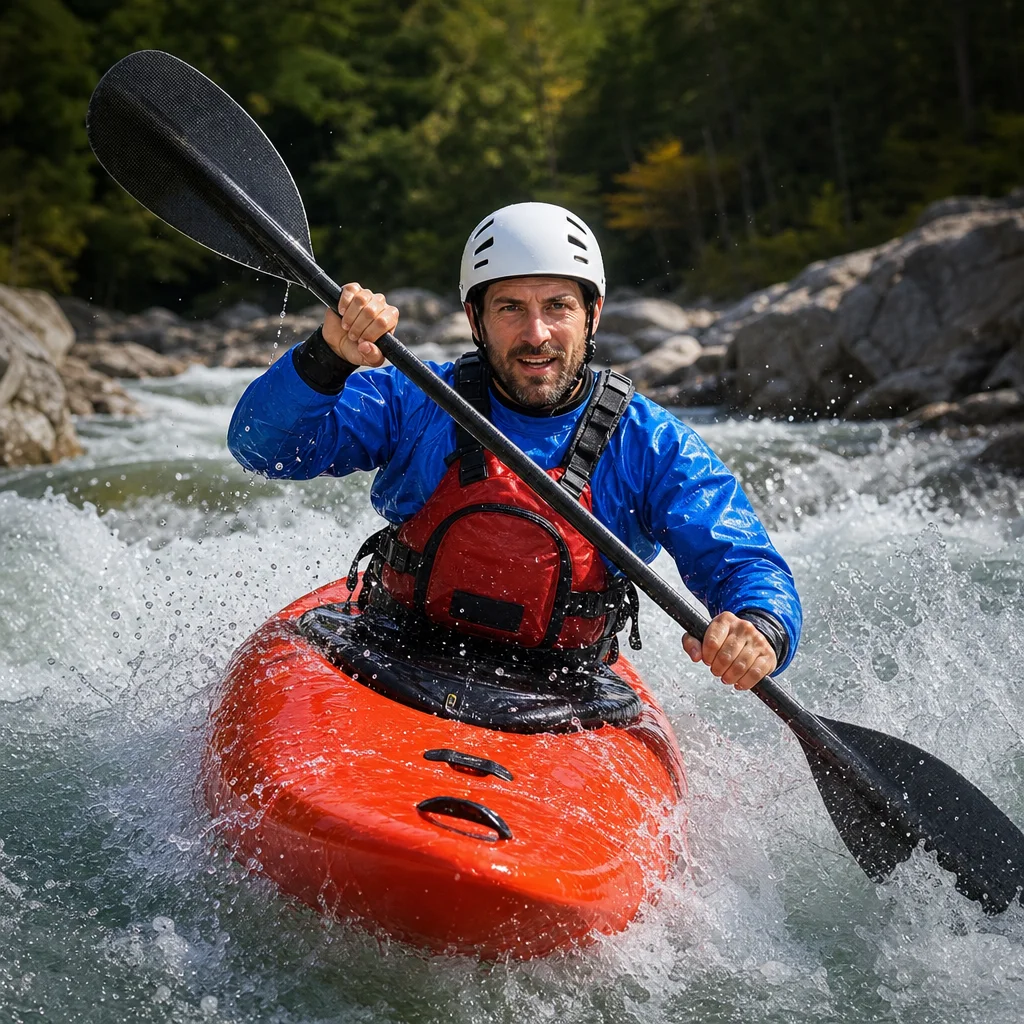
A fast paddler and a slower paddler can enjoy the same outing, but only if the plan accounts for the difference from the beginning. Problems usually start when the faster person treats the trip as a continuous effort and the slower person is expected to chase them all day.
A better approach is to plan around contact, regrouping, and clear limits. That lets the faster paddler move comfortably while keeping the group connected and giving everyone an honest way to shorten or change the trip.
Start With the Group’s Realistic Pace
Plan from the slower paddler’s sustainable pace, not the faster paddler’s best speed. The relevant question isn't how quickly someone can paddle for a few minutes. It’s how comfortably each person can travel for the full outing while handling wind, boat wakes, turns, and breaks.
Before choosing a route, discuss:
- How long each person can paddle continuously
- Whether either paddler is new to the kayak, launch site, or conditions
- How comfortable each person is in wind, current, cold water, and boat traffic
- Whether the goal is exercise, sightseeing, fishing, photography, or simply relaxing
- How much time is available for breaks and unexpected delays
A useful planning estimate is to use the slower paddler’s normal moving pace and then add time for launching, landing, breaks, navigation, and regrouping. If the route only works when everything goes smoothly, it’s too ambitious for a mixed-speed group.
Separate Moving Time From Total Trip Time
A route described as a two-hour paddle may require considerably more than two hours from arrival to return. Launch preparation, a difficult shoreline, a short rest, or a wind shift can change the schedule quickly.
For a first outing together, choose a route where turning around is easy. A short loop, an out-and-back shoreline, or a route with several landing options is more forgiving than a long crossing or a one-way trip that depends on a pickup at a fixed time.
Choose a Route That Tolerates Separation
Speed differences are easier to manage when the route has frequent visual landmarks and predictable places to stop. A broad, sheltered lake with obvious coves may be simpler than a narrow river with bends, strainers, private shorelines, or fast current—even if the river appears shorter on a map.
Look for a route with:
- Sheltered sections where a paddler can wait without drifting into danger
- Clear landmarks such as docks, bridges, islands, or marked access points
- Several safe places to land or pause
- Minimal exposure to open-water wind and boat traffic
- A straightforward return option if someone becomes tired
- Reliable access for an early exit
Avoid planning the first mixed-speed trip around a long open-water crossing. A faster paddler can disappear over the horizon quickly, and a slower paddler may not be able to turn back safely once conditions change. Keeping the group near shore doesn't remove all risk, but it generally creates more options.
Check the route before launch: Confirm current weather, wind, water levels, closures, access restrictions, navigation hazards, and local life-jacket or boating requirements for the specific waterway. Conditions and rules vary across North America and can change during the season.
Set the Group’s Spacing Rules
“Stay together” is too vague to be useful. Agree on what together means before entering the water.
For many groups, a practical rule is that the faster paddler stays close enough to maintain frequent visual contact and doesn't continue beyond the next agreed landmark. The slower paddler shouldn't be expected to sprint to keep up. If the faster paddler reaches the landmark first, they wait in a location that is visible and safe rather than paddling out of sight around the next bend.
You can also establish a maximum separation by time rather than distance. For example, the faster paddler might wait after a few minutes or at the next landmark, depending on the route. A time-based rule is easier to apply when the shoreline has irregular turns or the waterway lacks accurate distance markers.
The waiting paddler should point the kayak in a stable direction, stay clear of boat channels, and avoid stopping in the middle of a current or narrow passage. If the area is exposed or uncomfortable, the group should use a nearby sheltered stopping point instead of forcing a stationary wait.
Use a Lead-and-Sweep Arrangement Carefully
A lead-and-sweep system can work when there are at least three paddlers. One person leads, the slower paddler stays in the middle, and another paddler remains behind as the sweep. The leader should still pause at planned checkpoints; the sweep isn't a substitute for communication or route limits.
With only two paddlers, one person can't safely serve as both scout and backup. The faster paddler should avoid getting so far ahead that the slower paddler is left without immediate support. On a challenging route, choosing a shorter outing or adding a suitably skilled third paddler may be wiser than relying on a phone or verbal calls across open water.
Plan Regroup Points Before You Launch
Mark specific regroup points on a map or describe them clearly at the launch. Good points include a prominent island tip, a public landing, a wide cove, or a bridge that both paddlers can identify.
At each point, decide:
- Who will wait and where they will wait
- How long the group will pause
- What happens if visual contact is lost
- Whether the group continues, turns around, or lands together
Use fewer, more meaningful checkpoints rather than trying to stop at every small feature. A checkpoint should divide the route into manageable sections and provide a chance to reassess energy, weather, and spacing.
Don't make the faster paddler circle continuously while waiting. Circling wastes energy and can make a tired paddler feel pressured. A calm, visible holding position near shore is usually better, provided the location is safe for stopping.
Establish Simple Communication Habits
Agree on signals that work over distance and wind. A raised paddle can mean “stop” or “wait,” while pointing can indicate a direction or hazard, but both paddlers need to attach the same meaning to each signal.
Carry a communication method suited to the route. A phone in a waterproof case may help near reliable coverage, but it shouldn't be the only plan on remote or exposed water. A whistle, map, and appropriate signaling equipment can provide useful backup. Keep communication tools accessible while seated in the kayak, not buried under a hatch cover.
Use a short check-in at every regroup point:
- Is everyone comfortable continuing?
- Has anyone become cold, tired, seasick, or uneasy?
- Has the wind, current, or boat traffic changed?
- Is the original turnaround time still realistic?
Make it acceptable to say, “I’d like to turn around.” A plan that treats an early return as failure encourages people to hide fatigue or discomfort.
Set a Route Limit and a Turnaround Time
A mixed-speed group needs a limit that is independent of motivation. Choose a maximum distance, farthest point, or turnaround time before launch. The limit should account for the slower paddler’s return effort, not just the distance from the launch.
On an out-and-back route, turning around at the planned time is often safer than waiting until someone feels exhausted. Wind or current that was helpful on the way out may make the return harder. A short route can become demanding if the conditions shift.
If the faster paddler wants more distance, separate that goal from the shared outing. They can take an additional solo session later, or the group can land together and end the trip while the faster paddler exercises elsewhere. The shared route shouldn't quietly become a training session for one person.
Build in an Early-Exit Decision
Choose the conditions that will trigger a change of plan. Examples include worsening wind, reduced visibility, rising waves, unexpected current, equipment trouble, or a paddler falling substantially behind the agreed spacing.
You don't need to predict the exact danger threshold. The useful part is agreeing that either paddler can call for a landing, regroup, or return without debate on the water. If the safer landing isn't at the original launch, know in advance how you will get boats and people back.
Handle the Common Edge Cases
The Faster Paddler Wants to Explore Ahead
Set a firm boundary around where that is allowed. Exploring ahead only makes sense when the faster paddler can remain within reliable visual or communication range and the route has no confusing branches or hazards. Otherwise, it becomes a separate trip rather than a variation of the group plan.
The Slower Paddler Is Improving Quickly
You can adjust the spacing during the trip, but don't turn the outing into an unannounced test. Start conservatively, then lengthen the distance between checkpoints only if both paddlers remain comfortable and conditions are stable.
One Kayak Is Less Efficient
Boat design, load, windage, seat position, and paddling technique can create as much difference as fitness. Before blaming pace, check whether one kayak is heavily loaded, poorly adjusted, or difficult to control. Moving gear, improving posture, or correcting a basic stroke issue may reduce the gap.
The Faster Paddler Is Also the Less Experienced One
Speed doesn't equal judgment. A fast paddler who is unfamiliar with navigation, rescue skills, or local hazards shouldn't automatically lead. Assign route and safety responsibilities based on competence for the conditions, not on who reaches the next point first.
A Simple Pre-Launch Checklist
Before launching, confirm:
- The route, distance, and planned turnaround time
- Regroup landmarks and maximum spacing
- Communication signals and backup communication method
- Weather, water conditions, access points, and possible hazards
- Who carries the map, first-aid supplies, signaling gear, and repair items
- What will cause the group to shorten or end the outing
- How an early landing or separate return would work
The best mixed-speed kayak outing isn't one where everyone travels at exactly the same pace. It is one where the faster paddler has room to move, the slower paddler doesn't feel chased, and both people know how the group will stay connected.
For your next trip, choose a forgiving route, mark two or three regroup points, agree on a turnaround limit, and say the spacing rules out loud before launch. Those few decisions prevent most speed-related friction—and leave more attention for enjoying the water.