How to Recover When Your Kayak Spins During a Pivot Turn
I’ll show you how to stop a kayak that spins too far during a pivot turn by correcting edge, torso rotation, timing, and blade placement before overcorrection creates a second problem.
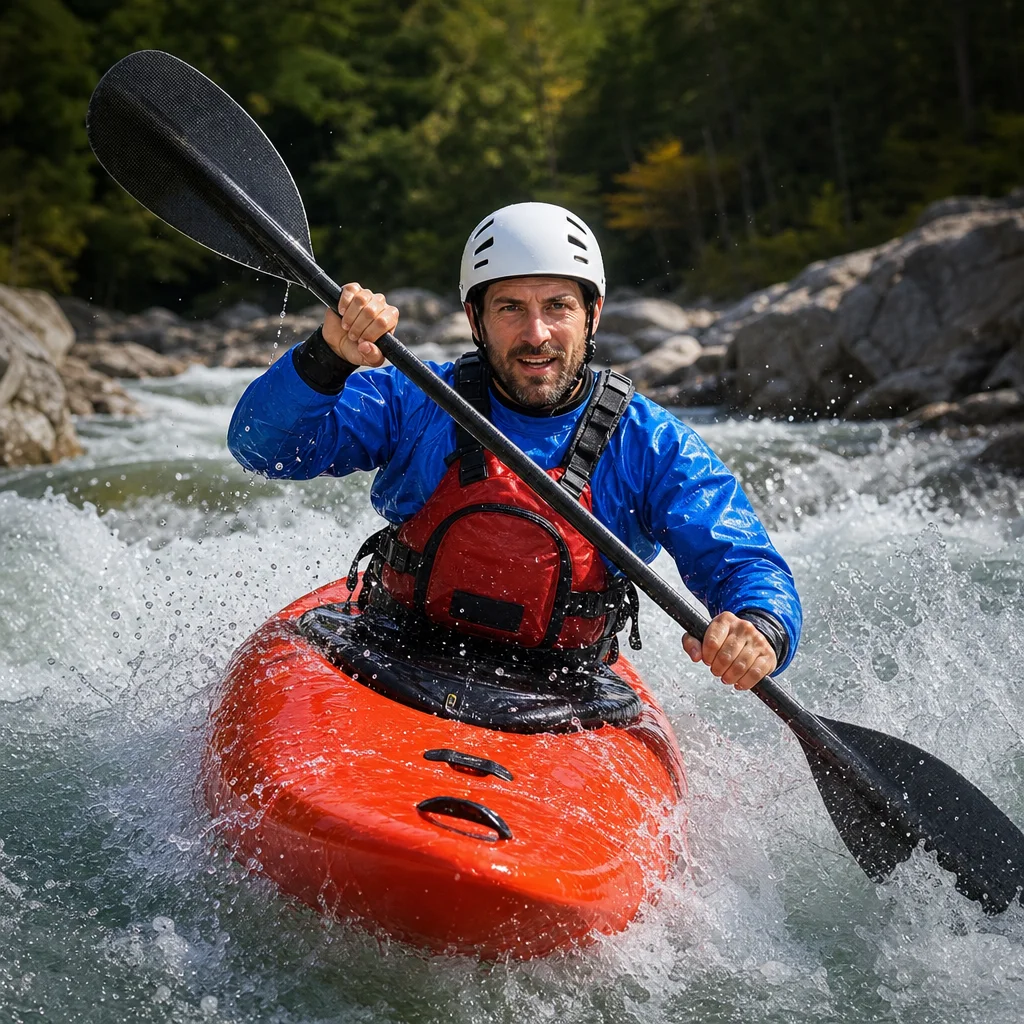
A pivot turn can feel controlled until the kayak rotates farther than you intended. The usual reaction is to add a hard stroke on the opposite side, but that can increase the spin, unsettle your balance, or leave your paddle too far from a useful position.
The better approach is to recover in stages: stabilize the kayak, stop the turning force, identify what caused the excess rotation, and then rebuild control with small strokes. Once you understand which input is driving the spin, recovery becomes much less dramatic.
First, stop making the turn tighter
When the kayak begins spinning, your first job isn't to force it immediately onto a new heading. Your first job is to remove the inputs that are still causing rotation.
Flatten the kayak gradually
If you’re using a strong turning edge, reduce it toward a neutral position. Don’t suddenly throw your weight to the opposite side. A quick, large weight shift can create a second instability while the kayak is already moving unpredictably.
Keep your head and upper body centered over the kayak. Let your hips make the smaller adjustment. Your torso should stay relaxed enough for the kayak to settle beneath you rather than following every movement of the hull.
If the kayak is leaning toward the turn, easing that edge usually reduces the turn’s bite. This is especially important in a responsive boat, where a modest edge can produce a large change in direction.
Take the active blade out of the water
A sweep stroke continues to turn the kayak while the blade is in the water. If you keep sweeping after the bow has reached the intended direction, the boat may continue rotating even though you’ve already decided to stop.
Finish the stroke cleanly and recover the blade close to the boat. Avoid dragging the paddle behind you as an unplanned rudder. A trailing blade can keep the kayak turning and may pull your shoulders into a position that makes bracing harder.
If you’re uncertain which stroke is active, pause both blades in a balanced position and let the kayak’s movement become easier to read. A brief pause is often more useful than a hurried correction.
Diagnose why the kayak spun
Excess rotation generally comes from a combination of edge, stroke timing, torso movement, and blade placement. Watch for the pattern rather than blaming one input automatically.
Excessive edging
A strong edge shortens the effective waterline on one side and helps the kayak turn. That is useful during a pivot turn, but too much edge can make the boat carve more aggressively than expected.
You may be using more edge than the turn requires if:
- The kayak tightens its arc as soon as you lean it.
- The bow swings quickly while the stern feels planted.
- Flattening the kayak noticeably reduces the rotation.
- You need a large counterstroke to finish even a modest turn.
For the next attempt, use a smaller edge and add more rotation only if the kayak responds too slowly. Smaller inputs are easier to increase than excessive inputs are to undo.
Late or poorly timed strokes
A pivot turn depends on timing. If you continue the sweep after the kayak has already reached the desired heading, the stroke is no longer helping you enter the turn; it’s carrying you past it.
The same problem occurs when you start a new sweep before the previous stroke has finished. The two strokes can blend into one long turning force, making the kayak feel as if it has no clear stopping point.
Try to separate the phases:
- Set the edge.
- Place the blade.
- Sweep with your torso rather than only your arms.
- End the stroke when the bow approaches the new heading.
- Recenter the kayak and paddle before deciding on the next stroke.
The exact stopping point depends on the kayak’s hull, speed, wind, and water conditions. Use the boat’s response instead of trying to memorize one fixed paddle angle or stroke length.
Too much torso rotation
Torso rotation gives a sweep stroke power, but rotation that continues after the blade exits can pull your shoulders and hips out of alignment with the kayak. You may then add another stroke simply because your body is still facing the old turn.
As you recover, bring your torso back to a neutral position while keeping your head quiet. Your eyes can look toward the direction you want to travel, but avoid twisting aggressively to chase the new heading.
During practice, notice whether your hips and shoulders are rotating together. If your shoulders turn sharply while the kayak remains edged, the boat may continue responding after the paddle stroke appears finished.
Blade placement too far from the kayak
A sweep that begins very wide has more turning leverage, but it can also pull your upper body outward and make the stroke difficult to stop smoothly. A blade that is placed too far behind you may act more like a stern rudder and keep the kayak rotating.
For a controlled recovery, place the blade where you can keep your elbows and shoulders in a strong, comfortable position. Don’t reach so far that you lose connection with the kayak or lean your chest away from the hull.
Blade depth matters as well. A deep, heavily loaded blade can produce a sudden response. A shallower, smoother stroke is often easier to regulate while you’re regaining control.
A simple recovery sequence
Use this sequence when the kayak is spinning but you still have reliable balance and paddle control.
1. Look where you want to stabilize
Choose a broad reference point rather than staring at the bow. Looking at a shoreline feature, buoy, or open-water heading can help you recognize whether the boat is still rotating and reduce the tendency to make frantic blade movements.
Keep checking your surroundings. A kayak that is turning unexpectedly can drift toward other paddlers, rocks, docks, or shallow water while you’re focused on technique.
2. Neutralize the edge
Ease the kayak toward level without snapping your body upright. Keep your knees and hips connected to the boat, and maintain a relaxed but active posture.
If the kayak is leaning away from the turn and feels unstable, don’t force it farther upright with your upper body. Use a controlled hip adjustment and keep the paddle ready for support.
3. Stop the turning stroke
Recover the blade, or use a light, controlled stroke that interrupts the rotation without creating a new hard turn. The goal is to reduce angular motion, not to win a contest against it.
A gentle forward stroke can help when the kayak has slowed and you want to replace spinning with forward travel. Forward motion generally makes the boat easier to steer and balance than remaining nearly stationary.
4. Regain a useful heading
Once the rotation has slowed, make a small corrective stroke on the side that brings the bow toward your intended direction. Keep the stroke shorter than the one that caused the problem.
If you overshoot again, repeat the flatten-and-pause process instead of adding progressively harder corrections. Several small adjustments are usually easier to control than one forceful counterturn.
5. Resume forward paddling
After the kayak is pointed close enough to your intended course, take two or three relaxed forward strokes. This stabilizes your direction and gives you a clearer sense of how much turning momentum remains.
Don’t immediately attempt another pivot turn. First confirm that the kayak is tracking, your posture is centered, and your paddle is back in a comfortable working position.
Practice the recovery deliberately: Work on this in calm, open water with a properly fitted personal flotation device and enough room to turn. If the kayak becomes unstable, prioritize balance and a supported low brace or wet exit appropriate to your training over completing the maneuver.
What not to do when the spin starts
Don’t countersteer with a huge stroke
A large reverse sweep or aggressive pry may stop the spin, but it can also create a rapid change in direction and load the paddle unexpectedly. Use a stroke you can control with your torso upright and your blade within a strong range of motion.
Don’t lean farther into the turn
Some paddlers lean more because they believe the kayak needs additional edge to finish the maneuver. If the boat is already rotating too quickly, that adds the input causing the problem.
Don’t lean far away from the turn
A dramatic counter-lean can make the kayak feel as if it will catch an edge. Keep your head over the hull and make the correction through your hips and paddle support rather than throwing your shoulders sideways.
Don’t keep watching the paddle
Looking down at the blade makes it harder to maintain balance and awareness of traffic. Keep your visual reference ahead and to the side, where you can see both your intended heading and nearby hazards.
Make the next pivot turn easier to control
Practice the turn below full effort. Use a gentle edge, a moderate sweep, and a clear stopping point. Finish the stroke before the kayak reaches the exact heading you want, because the hull may continue rotating briefly after the blade exits.
Then repeat the turn in the opposite direction. Differences in wind, current, your stronger paddling side, and the kayak’s hull response can make one direction feel much easier than the other.
It also helps to practice each component separately:
- Hold a mild edge while paddling forward and notice how the kayak responds.
- Sweep with the kayak mostly level, then compare that response with a small edge.
- Practice ending the sweep early and allowing the hull to finish turning.
- Add short forward strokes immediately after the turn to replace rotation with travel.
If the kayak spins only in one direction, check whether you’re applying different edge pressure, torso rotation, or stroke width on that side. If it spins in both directions, focus first on ending the sweep and reducing the edge.
A quick troubleshooting checklist
When a pivot turn runs away from you, ask:
- Was the kayak edged more than the turn required?
- Did the sweep continue after the bow reached the desired heading?
- Did your torso keep rotating after the blade exited?
- Was the blade placed unusually far from the kayak or behind your hip?
- Did you try to correct with a stroke larger than the original problem?
- Could wind or current have added rotation that wasn’t caused by your technique?
Start by correcting the most obvious factor, then retest with a smaller input. Changing several elements at once can make it difficult to tell what improved the turn.
A spinning kayak is usually asking for less force, not more. Level the boat, recover the paddle, slow the rotation, and rebuild forward motion with measured strokes. With deliberate practice, you’ll learn to recognize the excess edge or late sweep early enough that recovery becomes a normal part of the turn rather than an emergency correction.