How to Use a Sweep Stroke Without Leaning Too Far
A sweep stroke works best when torso rotation, paddle placement, boat edging, and recovery stay coordinated. I’ll show you how to create a smooth turn while keeping your balance and avoiding the exaggerated lean that makes beginners feel unstable.
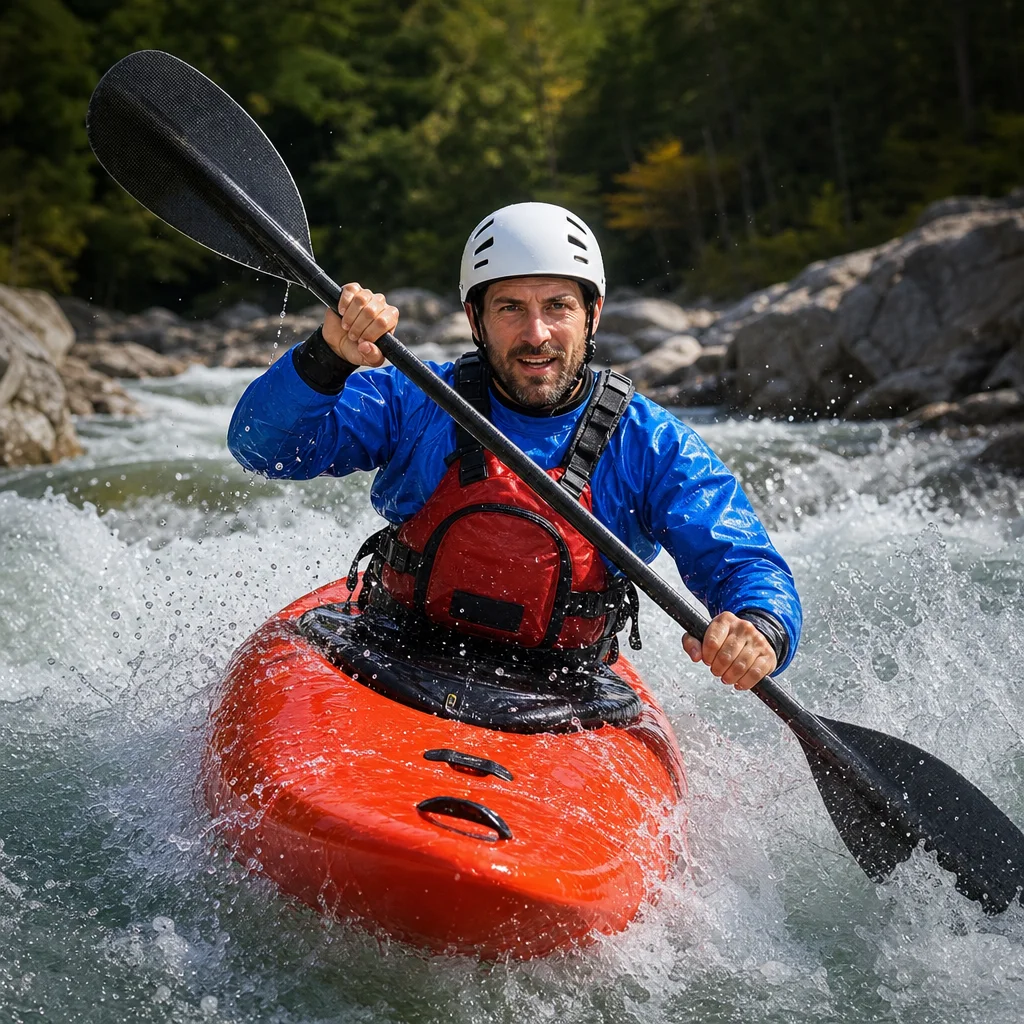
A sweep stroke can turn your kayak efficiently, but it’s easy to make the stroke feel risky by reaching too far, twisting only with your arms, or leaning your body instead of edging the boat. The goal isn't a dramatic sweep. It’s a controlled combination of paddle movement, torso rotation, and modest boat movement.
Understand what the sweep stroke does
A sweep stroke moves the kayak’s bow away from the side where the paddle is traveling. To turn left, you’ll generally use a forward sweep on your right side. To turn right, use a forward sweep on your left side.
The paddle blade follows a broad arc beside the kayak. Water pressure against the blade creates turning force, while your torso rotation and lower-body connection help you control that force.
A sweep isn’t a substitute for pointing the boat in the right direction before you start. If you wait until the kayak is already moving quickly toward an obstacle, you may need a stronger correction than a beginner-friendly sweep can provide. Practice the stroke in open, calm water so you can learn how much turning it creates at different speeds.
Choose a calm practice area: Before working on sweep strokes, check the forecast, wind, water conditions, and local access or safety requirements. Wear a properly fitted personal flotation device, and practice where you have enough space to recover without drifting into hazards.
Set up your body before the stroke
Good setup prevents most overleaning problems.
Keep your posture tall
Sit upright with your head over your hips. Your shoulders can rotate, but your upper body shouldn’t collapse toward the water. Looking in the direction of the turn can help your torso rotate naturally, but don’t crane your neck or throw your head to the side.
Keep your knees lightly engaged beneath the kayak’s thigh braces or deck contact points, if your kayak has them. Your feet should rest comfortably against the foot pegs. This gives you a stable connection without requiring you to grip the kayak aggressively.
Rotate from your torso
Instead of pulling the paddle with your arms, turn your chest toward the side where you’ll place the blade. For a right-side sweep, rotate your torso to the right before the blade enters the water.
Your arms still move, but they mainly position and support the paddle. Your larger torso muscles should provide much of the movement. If your arms do all the work, you’ll tend to reach too far, tire quickly, and lose control of your posture.
Start with a comfortable reach
Place the blade in the water near your toes or slightly ahead of them. You don’t need to plant it far forward. Excessive reach makes it harder to keep your shoulders and head centered over the kayak.
A shorter sweep is often more useful than a huge one. You can repeat a controlled stroke if the kayak needs more turning.
Place the paddle correctly
Hold the paddle with relaxed hands and a grip that allows your wrists to stay fairly neutral. The active blade should enter the water fully, but avoid stabbing it downward. A clean, quiet entry gives you better control than a forceful one.
Keep the shaft at a comfortable angle across your body. Your top hand should guide the shaft while your lower hand and forearm help maintain the blade’s position. The exact hand position varies with paddle length and style, so focus on keeping the blade fully engaged without straining your shoulders.
For a right-side forward sweep:
- Rotate your torso to the right.
- Reach the right blade forward near your toes.
- Place the blade in the water with the working face positioned to push water outward.
- Sweep the blade in a wide arc toward your hip and then behind you.
- Let your torso rotate with the stroke instead of pulling only with your arms.
The left-side version uses the same sequence in reverse.
Keep the sweep wide but not extreme
The paddle should travel away from the kayak in an arc, but “wide” doesn’t mean “far away.” If the blade moves too far from the boat, the stroke may feel powerful but become difficult to control. It can also pull your shoulders and head toward the water.
Imagine drawing a smooth curve beside the kayak. The blade stays connected to the water as it travels from near your toes toward your hip. Avoid chopping at the surface or making a series of disconnected mini-strokes.
Your stroke length will depend on your kayak, speed, paddle, and the amount of turning you need. For a gentle course correction, use a shorter arc. For a tighter turn at low speed, use a fuller sweep while keeping your body centered.
Use a small boat lean, not a body lean
Boat edging and body leaning are different.
A slight edge can help the kayak turn by changing how the hull sits in the water. For a basic forward sweep, beginners commonly find it easier to edge the kayak slightly away from the direction of the turn while keeping their torso upright. For example, during a right-side sweep to turn left, you may edge the kayak slightly to the right.
The amount should be modest. You’re tilting the boat beneath you, not bending your whole body over the side. Keep your head and shoulders relatively centered above the kayak. If your head moves far outside the boat, your balance becomes less forgiving.
Start with no deliberate edge on flat, calm water. Once the basic sweep feels predictable, experiment with a small edge and compare the result. The correct amount depends on the kayak’s hull shape and stability, so avoid copying an aggressive lean from another paddler without understanding how your boat responds.
Finish and recover smoothly
The sweep should finish near your hip or slightly behind it, depending on how much turning you need. Once the kayak begins to point in the desired direction, stop applying strong turning pressure.
To recover, slice the blade out of the water or bring it forward in a controlled manner. Don’t lift a heavy, water-loaded blade abruptly. A sudden recovery can pull your shoulders off-center and create the very instability you’re trying to avoid.
After the blade exits, return to a neutral paddling position. Check your heading before taking another stroke. Beginners often continue sweeping after the kayak has already turned, then have to correct in the opposite direction.
At low speeds, you may combine a forward sweep on one side with a regular forward stroke on the other. This can help you turn while continuing to move ahead, rather than rotating in place.
Common mistakes that cause overleaning
Reaching too far forward
An exaggerated reach shifts your weight and encourages you to collapse toward the paddle side. Start closer to your toes and increase the reach only if you can stay balanced and relaxed.
Pulling with the lower arm
A hard pull with the lower arm often turns the stroke into a shoulder exercise. Rotate your torso and allow the paddle to follow the rotation. Keep your grip light enough that you can adjust the blade without fighting it.
Looking down at the blade
Watching the blade may seem helpful, but it commonly drops your head and rounds your back. Look toward the open water or the path you want the kayak to follow instead.
Holding the blade too long
The farther behind your hip the blade travels, the more likely it is to affect your balance and slow the boat. End the power phase when the turn is developing, then recover.
Confusing boat edge with body lean
If your whole torso tilts, return to a neutral position and practice again without edging. Establish control first. A small, deliberate boat edge is useful; an uncontrolled body lean is a recovery problem waiting to happen.
Practice the stroke in stages
Start by paddling slowly in a clear area. Take one short sweep and observe how far the kayak turns. Return to neutral, then repeat on the other side.
Next, try the stroke with the kayak nearly stopped. A sweep from near the toes to the hip should rotate the boat without requiring a forceful pull. Then practice while moving forward at an easy pace. Notice that the kayak may arc rather than spin, and that the amount of turning changes with speed.
You can also practice a “dry” torso rotation without placing the blade in the water. Rotate toward the intended sweep side while keeping your head centered. This helps you recognize the difference between rotating your torso and leaning your body.
If possible, practice with an experienced paddler or qualified instructor who can observe your posture from shore or another boat. Stop if you feel shoulder pain, repeated loss of balance, or a need to brace forcefully after each stroke.
A simple sweep-stroke checklist
Before each stroke, ask yourself:
- Am I sitting tall with my head centered?
- Have I rotated my torso toward the paddle side?
- Is the blade entering near my toes rather than far ahead?
- Can I sweep with relaxed arms?
- Am I edging the boat slightly, rather than leaning my body?
- Is the kayak already turning enough for me to recover?
A controlled sweep stroke should feel connected and predictable. Begin with modest reach, smooth torso rotation, and little or no boat edge. As your balance and boat awareness improve, experiment with small adjustments instead of trying to force a sharper turn.
For your next practice session, spend a few minutes making gentle turns in both directions. Focus on keeping your head over the kayak, ending the stroke near your hip, and returning to neutral before the next stroke. Those habits make the sweep more effective while leaving you with more balance and more time to respond when conditions become less forgiving.