When to Use a Draw Stroke Instead of a Sweep Stroke
A draw stroke brings your kayak toward the paddle, while a sweep turns it away from that side; I’ll show you how to choose between them using simple shoreline and boat-to-boat examples.
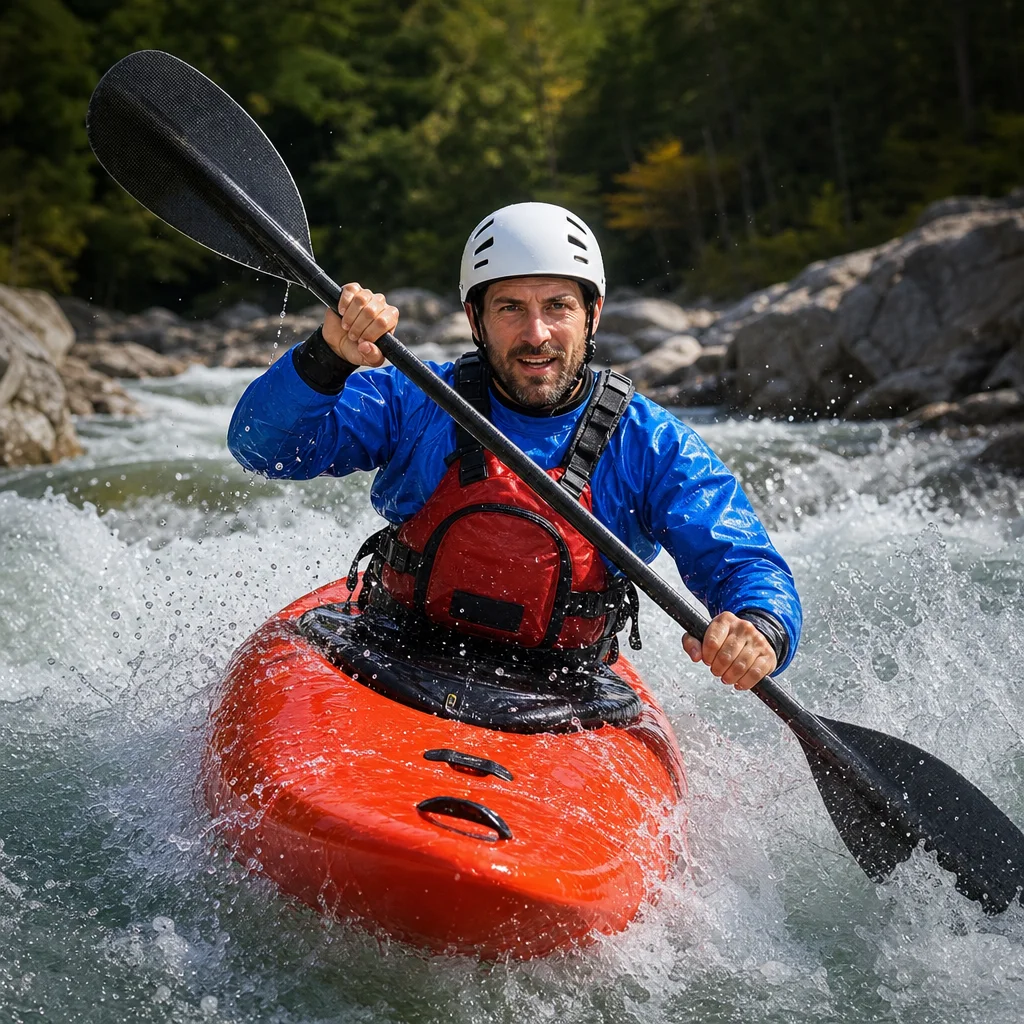
When your kayak needs to move around an obstacle or line up with another boat, reaching for any turning stroke can create more work than necessary. The key question is whether you need to move the kayak sideways or change its direction.
A draw stroke pulls the kayak toward your paddle. A sweep stroke turns the kayak by pushing the bow away from the paddle side. They can both change your position on the water, but they solve different problems.
Choosing the right stroke helps you make smaller corrections, maintain a steadier rhythm, and avoid repeated forceful paddling. That matters not only for control on one outing, but also for keeping your shoulders, paddle, and kayak handling habits in good shape over time.
The basic difference
Use a draw stroke to move toward the paddle
A draw stroke is mainly a sideways movement. Place the paddle blade out to the side, reach away from the kayak, and pull the blade toward your hip. The kayak moves toward the paddle.
For example, if your paddle is on the right side and you perform a standard draw, the kayak moves right. The bow may turn slightly as a side effect, but turning isn't the main purpose.
Keep the blade relatively vertical and use torso rotation rather than pulling only with your lower arm. Stop the stroke near your hip instead of dragging the blade behind you. A controlled exit helps prevent the draw from becoming an unintended sweep or stern-draw stroke.
Use a sweep stroke to turn the bow
A sweep stroke is mainly a turning movement. Start the blade near your feet, then make a wide arc out and away from the kayak toward the stern. On the right side, a forward sweep generally turns the bow to the left. On the left side, it turns the bow to the right.
The farther the blade travels from the kayak, the more leverage it has to rotate the hull. You can use a shorter sweep for a small correction or a longer arc for a more deliberate turn.
A sweep does move water sideways, but that sideways movement is being used to rotate the kayak. It isn't the efficient choice when your goal is to slide alongside a shoreline, dock, or another paddler.
A simple decision rule
Ask yourself: Where should the bow point, and where should the whole kayak go?
- If the bow points correctly but the kayak is too far from or too close to something, use a draw stroke.
- If the kayak is in the right general position but the bow points the wrong way, use a sweep stroke.
- If you need both movements, use them in sequence rather than forcing one stroke to do both jobs.
For instance, imagine approaching a narrow gap along a shoreline. If your bow is already aimed through the gap but your kayak is drifting too far from the opening, a draw toward the opening is appropriate. If the kayak is beside the opening but the bow points along the shore instead of through it, start with a sweep to turn the bow.
Shoreline examples
Moving closer to a bank without turning away
Suppose you are paddling parallel to a shoreline and want to move closer to inspect a landing spot. Your bow already points in the direction you want to travel. A draw stroke on the shoreline side brings the kayak toward the bank while preserving that general heading.
A sweep would rotate the bow away from the paddle side. You might then need extra forward strokes or a sweep on the opposite side to regain your course. That isn't wrong, but it is an inefficient response to a sideways-positioning problem.
Use a modest draw, check your distance, and repeat if needed. Several small corrections are usually easier to control than one powerful pull.
Turning away from a shoreline
Now imagine that your bow is angled toward the bank and you need to redirect into open water. A sweep on the appropriate side can rotate the bow away from the shoreline. Once the kayak is aimed safely away, return to forward strokes.
A draw alone isn't the best primary tool here. It may shift the kayak, but it doesn't provide the same clear change in heading. If space is limited, a sweep can be shortened and performed with more care so you don't swing the stern into the bank or another obstacle.
Correcting a gradual drift
If wind or current is nudging the kayak sideways while your bow remains on course, a draw can bring the hull back toward your intended line. Keep the correction small and reassess after each stroke.
If the drift has also changed your heading, combine a sweep with a draw or use alternating corrective strokes. The important point is to identify whether the main error is position, direction, or both.
Check your space before correcting: Before using a wide sweep near shore, rocks, docks, or other paddlers, look behind and beside you. A shorter stroke or a controlled draw may give you the needed correction with less risk of contact.
Boat-to-boat examples
Pulling alongside another kayak
If you are approaching another kayak and want to come alongside it, a draw stroke is usually the more direct choice. Keep your bow pointed toward the area beside the other boat, then draw toward the open space next to it as you close the final distance.
This helps you avoid repeatedly turning the bow back and forth. It also gives you better control over the gap between the boats. Use gentle pressure, because a strong draw can bring your kayak in faster than expected.
When boats are close, communicate before reaching across or moving into another paddler's space. Keep paddle blades and hands clear of the other kayak, and avoid bracing against someone else's boat unless you have agreed on the maneuver.
Moving away after a conversation
If you are positioned beside another paddler and want the bow to point away from the group, use a sweep to rotate. Once you have a clear heading, take forward strokes to create separation.
A draw is useful if you are already facing the right direction but need to slide away from the other kayak. In that case, draw toward the open water rather than turning into another boat or paddler.
Matching a moving partner
When paddling alongside a partner, small draws can help maintain lateral spacing without disrupting your heading. This is especially useful when you are traveling in a straight line and only need to move a few inches or feet toward the other boat.
Use a sweep when you need to change the direction of travel to follow the partner's new line. Trying to steer every adjustment with sweeps can produce a wandering course and unnecessary acceleration and braking.
How to make each stroke more reliable
Good stroke choice is only part of the solution. Technique determines whether the movement is predictable.
Keep the movement connected to your torso
Rotate your torso toward the paddle rather than reaching and pulling with the arm alone. Your shoulders and arms should guide the paddle, while your torso and core provide much of the rotation.
This makes both strokes easier to repeat. It also reduces the temptation to compensate for poor positioning with a sudden, forceful tug.
Control the blade angle
A draw blade that is too flat may skim across the surface instead of pulling the kayak toward it. A blade that is too deeply buried can catch abruptly and overload your joints or paddle shaft.
For a sweep, maintain a clean arc and avoid stabbing the blade into the water. The stroke should build pressure smoothly rather than catch all at once.
Use the smallest effective stroke
Large strokes are useful when you need a large change, but they aren't automatically better. Near a shoreline or another boat, a short draw or partial sweep is easier to stop and less likely to create a second problem.
Efficient corrections also help preserve your equipment. Smooth loading places less sudden stress on the paddle and reduces the chance of striking a hull, dock, or submerged object.
Common mistakes to avoid
Using a sweep for every correction
A sweep is familiar because it clearly turns the kayak, but it can make a simple sideways adjustment unnecessarily complicated. If your heading is already correct, start by considering a draw.
Expecting a draw to turn the kayak cleanly
A draw can cause some yaw, especially if the blade travels too far behind your hip. That doesn't make it a substitute for a sweep. Keep the draw near the hip when you want primarily sideways movement.
Pulling harder instead of repositioning
If the kayak isn't responding, check your blade angle, body position, and stroke path before adding force. A better-positioned blade usually improves control more than a harder pull.
Forgetting the stern
When you use a sweep to turn near another boat or shoreline, the bow may clear an obstacle while the stern swings toward it. Look around the full length of the kayak and allow room for the hull to rotate.
Practical next steps
On calm, open water, practice this simple sequence:
- Paddle forward and use a small draw to move several inches toward one side without deliberately changing your heading.
- Reset your course, then use a forward sweep to turn the bow away from that side.
- Approach a partner or visible landmark and decide whether you need to move beside it or point toward it. Choose the draw for the first task and the sweep for the second.
- Repeat each movement with less force, aiming for smooth and predictable results.
Remember the short version: draw to move toward the paddle; sweep to turn away from the paddle side. Once that distinction becomes automatic, your corrections become quieter, more efficient, and easier to maintain throughout a full outing.