How to Hold a Kayak Paddle Without Gripping Too Tightly
I’ll explain where your hands should sit, how a relaxed grip improves control, and how paddle feathering affects comfort. You’ll also learn to recognize tension-related fatigue early so your technique—and your paddle-handling habits—stay reliable over time.
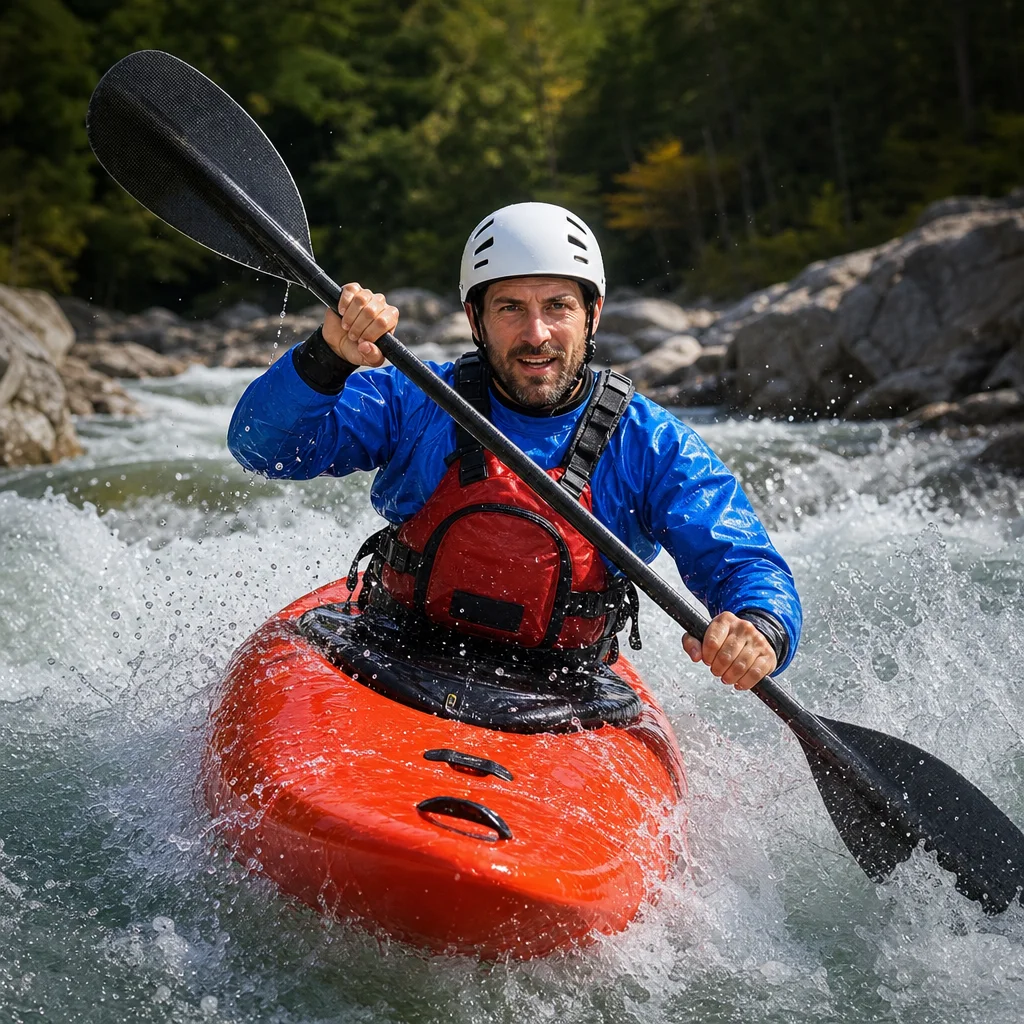
Why a relaxed paddle grip matters
Many beginners hold a kayak paddle as if they’re trying not to drop it. That instinct is understandable, especially in moving water, but a tight grip limits the small adjustments that help you steer and maintain a steady stroke.
Your hands should guide the paddle rather than squeeze it. A relaxed hold reduces forearm fatigue, keeps your shoulders and wrists more comfortable, and makes it easier to change direction without fighting the paddle. It also helps you notice when your stroke is becoming uneven before discomfort turns into a larger technique problem.
The goal isn’t to hold the paddle loosely enough that it can slide away. You want a secure, responsive grip that uses the fingers and thumb for control while keeping unnecessary tension out of your hands, wrists, and arms.
Set your hand placement first
Start by holding the paddle horizontally in front of you. Place both hands on the shaft with your elbows bent comfortably and your hands a little wider than shoulder width. Exact placement varies with paddle length, your torso width, and the stroke you’re using, but your hands shouldn’t be crowded close to the center or stretched excessively far apart.
A useful starting position is to keep your forearms roughly parallel with the paddle shaft when the blade is in a normal catch position. This gives you leverage without forcing your shoulders to work too hard.
Check these points before you begin paddling:
- Your hands are placed at similar distances from the center of the shaft.
- Your wrists are mostly straight rather than sharply bent.
- Your elbows have a slight bend and aren’t locked.
- Your shoulders remain low instead of creeping toward your ears.
- You can rotate the paddle with your fingers without clenching your palms.
If one hand sits much closer to the center than the other, the paddle may feel unbalanced. You might then compensate by squeezing harder, which creates more fatigue and can make your strokes inconsistent.
Use a light, controlled grip
Wrap your fingers around the shaft, then rest your thumb naturally against it. Your fingers should provide most of the contact, while your palm stays soft. Avoid pressing the paddle deep into the center of your palm or making a rigid fist around it.
Imagine holding a bird that needs to stay secure but not be crushed. That familiar coaching image can help you find the right amount of pressure: firm enough to maintain contact, light enough that your knuckles and forearms stay relaxed.
During the stroke, the hand on the pulling side usually acts as the control hand. It helps direct the shaft and maintain the blade’s angle. The opposite hand can stay more relaxed and allow the shaft to turn through the fingers as your torso rotates.
You don’t need to release the paddle completely. Instead, reduce pressure slightly and let the shaft move naturally as your wrists and forearms adjust. Your hands should work together rather than both trying to lock the paddle in place.
A simple pressure check
While sitting still in calm water, hold the paddle in your normal position and deliberately squeeze it tightly for a moment. Notice the tension in your hands, forearms, and shoulders. Then relax your grip until the paddle is still secure but your fingers are no longer straining.
That second feeling is closer to your working grip. Recheck it every few minutes while paddling, because tension often returns when you concentrate, encounter wind, or feel uncertain about your balance.
Understand paddle feathering
Feathering is the angle between the two paddle blades. When the blades are offset from each other, the paddle is feathered. When they line up in the same plane, it has little or no feathering.
A feathered paddle can reduce the wind resistance on the blade that is moving through the air during a stroke. However, it also requires your wrists and hands to rotate the shaft as you switch sides. The best feather angle depends on your paddle, stroke technique, wrist comfort, and conditions.
For beginners, a modest feather angle is often easier to manage than an extreme one. What matters most is that you can keep your wrists comfortable and repeat the same blade orientation consistently. If the angle feels awkward, forcing yourself to maintain it can lead to the very gripping tension you’re trying to avoid.
If your paddle has an adjustable ferrule, learn how its buttons, locking mechanism, or markings work before you launch. Make sure the shaft is fully secured after changing the angle. An incompletely locked ferrule can shift while you paddle, interrupting your stroke and encouraging you to grip more tightly.
Check your paddle setup: Before heading out, confirm that the shaft is locked, the blade angle is the one you intend to use, and both hands can reach their normal positions without bending your wrists sharply.
Let your wrists and torso share the work
A tight grip is often a symptom of using only your arms. If your hands and forearms are doing all the work, they’ll brace against the paddle to create power. A more sustainable stroke starts with torso rotation and uses the larger muscles of your back and core.
Keep your upper body tall and rotate your torso as the blade moves through the water. Your arms should connect that rotation to the paddle rather than pull independently from the shoulders. This reduces the need to squeeze the shaft for extra force.
Your wrists should stay fairly neutral. Don’t bend them sharply to force the blade into the water or to correct every small change in direction. Adjust the paddle angle through coordinated movement of your hands, forearms, and torso.
A useful practice is to paddle slowly and focus on a quiet upper body. If the shaft knocks against your hands, your shoulders tense, or your stroke becomes jerky, reduce the effort and rebuild the movement at a slower pace.
Recognize signs of excessive tension
Your grip is probably too tight if you notice any of these signs:
- White or numb fingertips
- Deep marks from the shaft across your palms
- Aching forearms during an otherwise easy paddle
- Sore wrists after a short outing
- Raised shoulders or clenched teeth
- Difficulty rotating the paddle smoothly
- A tendency to lose control when you try to relax
- Needing frequent breaks because your hands tire first
Pain, persistent numbness, or weakness isn’t something to paddle through. Stop when you can do so safely, rest, and address the cause before continuing. Repeated discomfort may come from more than grip pressure, including poor hand placement, an unsuitable paddle, or an underlying wrist or arm problem.
Practice a relaxed grip without losing control
Try these drills in calm, shallow water or another low-consequence setting where you can pay attention to technique.
Paddle with lighter finger contact
Hold the shaft securely with your thumb and first two fingers, while allowing the remaining fingers to rest with less pressure. Paddle slowly for several strokes, then return to your normal hold. This teaches you that control doesn’t require a fully clenched hand.
Pause and reset
Every few minutes, pause your stroke for one or two seconds. Drop your shoulders, open and close your fingers, straighten your wrists, and reset your hand placement. Then resume at an easy pace.
Slow the recovery
The recovery phase is when the blade returns through the air for the next stroke. Slow it down and notice whether you’re squeezing the shaft as the blade moves. Let the paddle rotate smoothly rather than forcing it into position with your wrists.
Use short technique intervals
Instead of trying to maintain perfect form for an entire trip, paddle for five minutes with a relaxed-grip focus. Rest or switch attention to another skill, then repeat. Short intervals make it easier to identify tension before fatigue changes your movement.
Troubleshoot common problems
“The paddle feels like it will slip.”
Check whether your hands are wet, your shaft is unusually smooth, or your hand placement is too narrow. Correct those factors first. If you still feel insecure, use slightly more finger pressure rather than clenching your entire palm and forearm.
“My wrists hurt with a feathered paddle.”
Try a smaller feather angle, a different hand position, or a more neutral wrist alignment. Don’t force a setting simply because another paddler prefers it. Comfort and repeatable control are more useful than copying someone else’s setup.
“I loosen my grip and lose the blade angle.”
You may be relaxing the wrong muscles. Keep your fingers in contact with the shaft and maintain control with the hand directing the stroke, while allowing the opposite hand to stay lighter. Slow down until the movement becomes predictable.
“My forearms fatigue quickly.”
Reduce stroke effort and check whether your elbows are locked or your shoulders are raised. Add more torso rotation and take regular technique resets. A paddle that is too heavy or poorly matched to your size can also increase fatigue.
Practical next steps
On your next outing, begin in calm water and take a minute to set your hand placement. Choose a feather angle that lets you keep your wrists comfortable, then paddle slowly while checking your shoulders, fingers, and forearms.
Use enough pressure to keep the paddle secure, but no more than the stroke requires. If tension returns, pause, shake out your hands, and rebuild the movement with torso rotation. Over time, this habit will make your strokes more comfortable and help you catch equipment or technique problems before they shorten a good day on the water.