How to Choose a Kayak for Narrow, Twist-Filled Rivers
Tight bends, overhanging branches, and limited landing spots make kayak choice on small rivers less straightforward than it looks. I’ll help you weigh maneuverability, rocker, stability, length, and storage so you can choose a boat that fits your usual water.
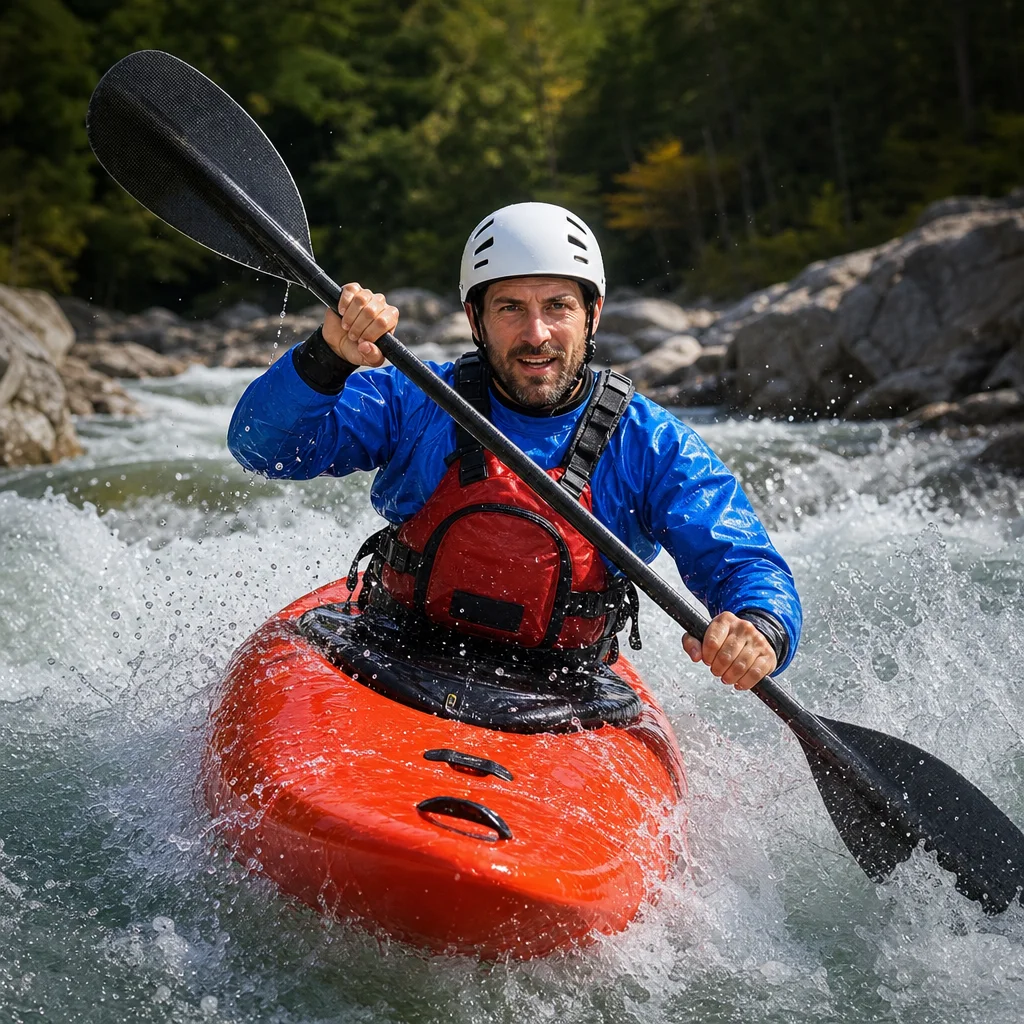
Small rivers with frequent bends reward a kayak that responds quickly, but maximum maneuverability isn’t the only goal. You still need enough stability for uneven current, enough room for essential gear, and a hull that tracks predictably between turns.
The best choice depends on the character of your local rivers and how you paddle them. A short, highly rockered kayak may turn easily but feel slow and cramped on open stretches. A longer recreational kayak may carry more comfortably but require more effort when a bend arrives suddenly.
Start with the River, Not the Kayak
Before comparing specifications, describe the water you actually use. “Narrow river” can mean a calm stream with occasional branches, a shallow winding river with gravel bars, or a moving channel with rocks and technical turns. Those settings call for different compromises.
Consider these conditions:
- Width: How much room do you usually have to turn or correct your line?
- Bends: Are the turns gradual, or do they arrive in quick succession?
- Current: Is the water mostly slow, or does current push you toward the outside of each bend?
- Obstacles: Do you regularly encounter strainers, fallen trees, rocks, or low branches?
- Open sections: Does the river include longer stretches where efficient tracking matters?
- Launches and landings: Will you carry the kayak far, or can you launch close to the water?
A kayak for a calm, twisty stream can prioritize convenience and easy turning. A kayak for moving water needs more attention to control, edging, and recovery. If obstacles or current are significant, maneuverability alone doesn’t make a boat suitable; the paddler’s skill and the kayak’s intended use matter just as much.
Check Your River’s Real Conditions: Before buying, look at the sections you’ll paddle in person or consult reliable local information about access, water level, current, hazards, and permitted launches. Conditions can change enough to make a comfortable boat choice unsuitable on a particular day.
How Length Changes the Trade-Off
Length is one of the simplest ways to compare kayaks, but it’s easy to treat it as a rule: short boats turn, long boats go straight. That’s generally useful, but hull shape, rocker, width, and paddler technique also affect handling.
Short kayaks: easier turning and transport
A shorter kayak usually takes less effort to rotate around a bend. It’s also easier to maneuver at a small launch, carry through brush, and store at home. For tight, slow rivers, those advantages can outweigh reduced speed.
The trade-offs are equally important. Short boats often have less space for camping or bulky equipment, and some feel less efficient when you paddle for several miles without interruption. They can also be more affected by waves or current, depending on their width and hull design.
A short kayak is a sensible direction when your trips are day outings, your river has frequent turns, and you value easy handling over speed.
Longer kayaks: efficiency and capacity
A longer kayak generally holds a straighter course and covers open water efficiently. It may offer more legroom, storage, and a smoother glide between bends. That can make a difference if your narrow river eventually opens into a lake or broad channel.
The cost is turning effort. A long kayak may need more sweep strokes, edging, or forward planning to make a tight turn. If the bow enters a bend before you’ve set up your turn, the boat can feel reluctant to follow the channel.
Longer doesn’t automatically mean unsuitable. A relatively long kayak with pronounced rocker can turn better than a shorter, straight-tracking boat. Look at length alongside rocker rather than making the decision from the measurement alone.
Rocker Is Often the Key Handling Feature
Rocker is the upward curve of the hull from the middle toward the bow and stern. More rocker keeps less of the hull in the water during a turn, making the kayak easier to pivot. Less rocker places more hull length in the water, which usually supports tracking and glide.
For twist-filled rivers, moderate rocker is often a useful middle ground. It gives you enough maneuverability for bends without making every straight section feel like a series of corrections.
More rocker
Choose more rocker when:
- Turns are tight and frequent.
- You need to avoid obstacles quickly.
- You’re comfortable using sweep strokes and edging.
- You don’t mind giving up some straight-line efficiency.
A strongly rockered boat can be enjoyable in technical water, but it may feel lively to a beginner. It can also wander more when you stop paddling, especially in current or wind.
Less rocker
Less rocker makes sense when the river has long straight sections, your trips cover greater distances, or you want a calmer tracking feel. The kayak may still turn well if it’s short or has a responsive hull, but you’ll need to set up turns earlier.
If possible, test the boat with a few forward strokes followed by a sweep stroke on both sides. Notice whether it begins turning promptly and whether it stops turning when you want it to. A kayak that pivots easily but continues sliding sideways can be less useful than one that turns slightly more slowly but responds predictably.
Stability: Choose Predictability Over Maximum Width
Beginners often look for the widest kayak available because it seems like the safest choice. Width does contribute to initial stability, but a very wide boat can be slow to turn, awkward to paddle, and difficult to fit through narrow passages.
For small rivers, aim for stability that lets you relax without making the kayak cumbersome. You should be able to sit upright, look around, reach your paddle comfortably, and make ordinary strokes without feeling that every movement threatens a capsize.
Initial and secondary stability
Initial stability is the steady feeling you notice when the kayak is level. A boat with strong initial stability feels reassuring when you first sit down.
Secondary stability describes how the kayak behaves as it leans farther. A kayak with useful secondary stability can feel less rigid at first but offer support when edged during a turn.
A slightly responsive kayak may be a better long-term choice if you want to improve your strokes and learn controlled edging. However, don’t choose a boat that leaves you tense or unable to make a confident recovery. Comfort and skill development are connected: a paddler who feels secure is more likely to practice effective technique.
For calm, sheltered water, a recreational kayak with a broad, stable hull may be appropriate. For faster current, frequent obstacles, or deliberate edging practice, consider a design intended for more active maneuvering rather than relying on a wide flat hull alone.
Storage Matters More Than You Expect
Small-river trips often involve short outings, but you still need room for water, clothing layers, safety equipment, food, and a way to secure important items. Storage should be judged by both capacity and accessibility.
Sit-in storage
A sit-in kayak with enclosed compartments can keep gear protected from splashes and distribute weight along the hull. Hatches are useful for longer outings, but opening sizes and internal access vary. A narrow hatch may technically provide storage while making it difficult to pack practical items.
A cockpit also gives you a lower, more connected seating position. That can help with control, although it requires comfort with entering, exiting, and handling a boat that may take on water.
Sit-on-top storage
Sit-on-top kayaks are generally easy to enter and exit, which can be useful on warm, calm water or when you prefer an open layout. Their deck storage is convenient for frequently used items, but exposed gear needs reliable attachment and protection from splashes.
They can also be wider and heavier than comparable sit-in boats. Check whether the added width will make tight turns or narrow launches inconvenient.
Whatever style you choose, don’t fill every compartment. Extra weight reduces freeboard and can make a kayak slower to turn or harder to control. Pack the essentials low and centered, and secure anything that could drift away if you capsize.
Match the Kayak to Your Transport and Storage
A kayak that handles perfectly but is difficult to move may not get used often. Measure your storage space before shopping, including the path through doors, stairs, and gates. Then consider how you’ll carry the boat from the vehicle to the launch.
Length and weight both matter, but balance matters too. A slightly heavier kayak with comfortable carry handles may be easier to manage than a lighter one that feels awkward. If you paddle alone, think about whether you can lift and load it without twisting or straining.
Inflatable and folding kayaks can solve transport and storage problems, but they introduce different compromises. They may be convenient for apartments or limited vehicle space, while setup time, tracking, durability, and performance around branches or rocks deserve careful consideration.
A Simple Way to Narrow Your Choices
Use this order when comparing boats:
- Remove unsuitable designs. Eliminate kayaks that aren’t intended for the water conditions or skill level you’ll encounter.
- Set a practical length range. Favor compact handling if the river is consistently tight; allow more length if open sections and distance are common.
- Compare rocker and hull response. Look for a boat that turns promptly without feeling unpredictable.
- Check stability in the seat. You should feel secure enough to paddle, look behind you, and make corrective strokes.
- Inspect storage and load limits. Make sure the kayak can carry your actual gear without becoming sluggish or overloaded.
- Test transport and storage. Confirm that you can carry, load, unload, and store it realistically.
If two kayaks seem equally suitable, choose the one that makes your weakest task easier. For example, pick the more maneuverable boat if turning is your main concern, or the more efficient boat if you regularly paddle long connecting stretches.
Practical Next Steps
Write down the river conditions you encounter most often, including typical trip distance, current, obstacles, and launch access. Use that list to set priorities rather than starting with a favorite brand or a single specification.
Then test as many suitable kayaks as you can. Practice forward strokes, sweep strokes, stopping, reversing, and gentle edging. The right boat should give you enough maneuverability for tight bends, enough stability to stay relaxed, and enough capacity for the gear you actually carry—not an idealized version of your trip.