Low-Angle Versus High-Angle Paddling for Recreational Kayaks
A common challenge is choosing between a relaxed, sweeping stroke and a shorter, more vertical one without tiring too quickly. I’ll explain how angle changes reach, cadence, efficiency, and fatigue so you can match your technique to your recreational kayak and outing.
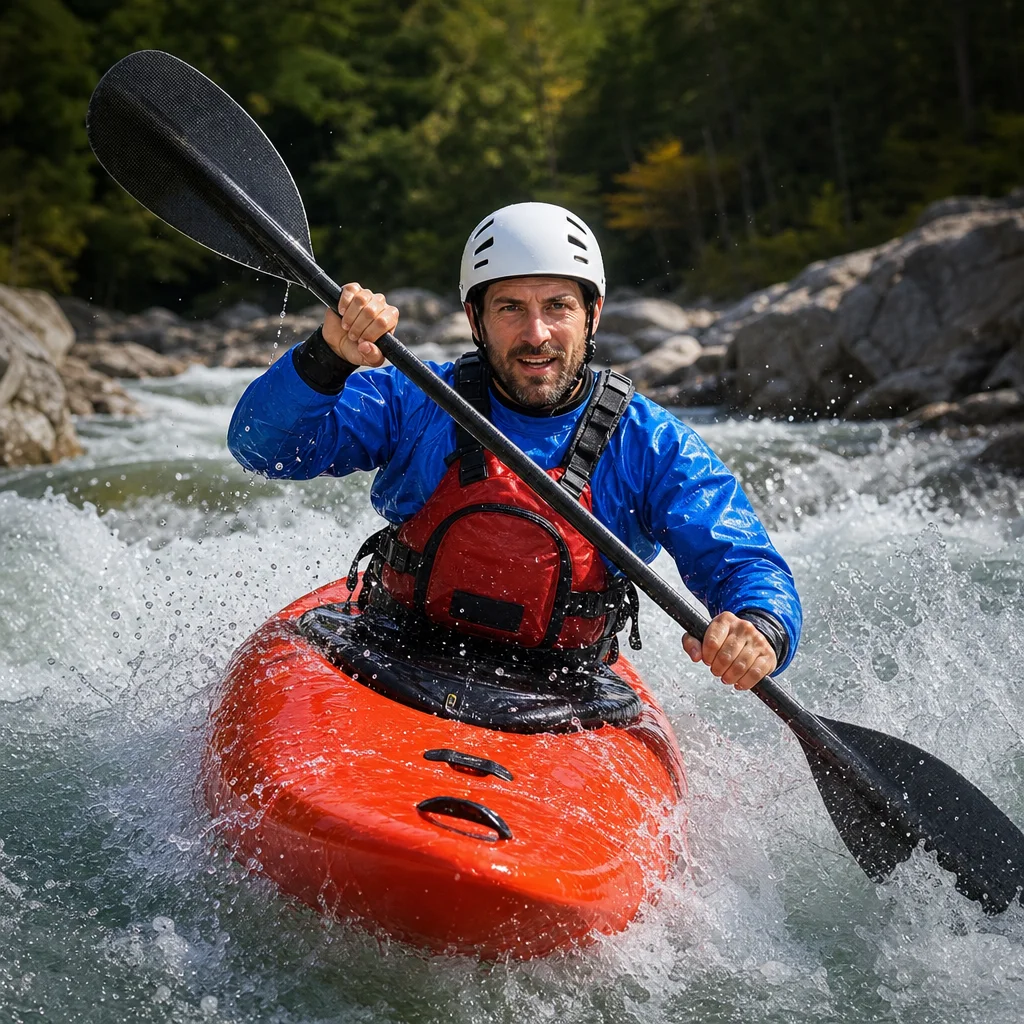
Choosing between low-angle and high-angle paddling isn’t about finding one universally correct stroke. The better choice depends on how far you want to travel, how quickly you need to respond, your kayak’s width and stability, and how your body handles repeated movement.
For most recreational paddlers, low-angle paddling offers a comfortable starting point. High-angle paddling can provide more power and control, but it usually demands better technique and a higher work rate. Understanding the trade-offs helps you choose a sustainable style rather than copying the stroke that looks fastest.
What “paddle angle” means
Paddle angle describes the position of the shaft and blade during the active part of a stroke.
With low-angle paddling, the shaft stays relatively low and more nearly horizontal as the blade enters the water. Your hands remain around chest or shoulder height, and the blade travels in a longer arc beside the kayak.
With high-angle paddling, the shaft becomes more vertical. Your upper hand rises closer to face or eye level while the active blade enters nearer to your feet and stays closer to the kayak. The stroke is shorter, more direct, and usually quicker.
These are useful categories rather than rigid measurements. Your angle changes with your posture, paddle length, boat width, stroke phase, and the conditions on the water.
Low-angle paddling: relaxed reach and steady movement
Low-angle paddling is commonly associated with recreational touring because it supports a moderate cadence and a relatively relaxed body position. You reach forward, rotate your torso, place the blade, and draw it back in a smooth path before beginning the stroke on the other side.
The main advantages
- Lower cadence: You can take fewer strokes per minute while maintaining steady forward movement.
- Longer reach: The blade travels farther along the kayak, which can make each stroke feel productive.
- Reduced upper-body urgency: The movement is generally less abrupt, especially when you keep your grip relaxed.
- Comfort on longer outings: A controlled rhythm can be easier to sustain when you’re paddling for an hour or more.
- Good fit for open recreational kayaks: The lower hand and wider stroke path often feel natural in boats with generous width.
Low angle doesn’t mean “arms only.” You still benefit from torso rotation and a solid connection through your feet. If you simply pull with your arms, the stroke may feel weak and your shoulders may tire even though the angle is low.
The limitations
A low-angle stroke can be less responsive when you need immediate acceleration, a sharp change of direction, or strong forward drive against wind or current. The longer arc also places the blade farther from the hull, so it may be less effective for quick corrective strokes.
Low-angle paddling can become inefficient if you reach too far, lean toward the blade, or let the paddle sweep away from the boat. A wide, loose stroke may feel easy but waste energy by moving the kayak sideways instead of forward.
High-angle paddling: direct power and quick response
High-angle paddling uses a more upright shaft and a shorter power phase. Your top hand stays higher, your lower hand works closer to the side of the kayak, and the blade enters near your feet before exiting around your hip.
The stroke should still be smooth. High angle doesn't mean stabbing the blade into the water or muscling every stroke with your shoulders.
The main advantages
- Higher cadence: You can take more strokes in the same amount of time.
- Direct power: The blade stays close to the kayak, helping convert effort into forward drive.
- Quick acceleration: A shorter power stroke can help when starting, passing through wind, or responding to boat traffic and waves.
- Better maneuvering access: The more upright position can make draws, braces, and corrective strokes easier to initiate.
- Useful in demanding conditions: When you need more frequent adjustments, high-angle mechanics can provide faster control.
High-angle paddling often suits narrower, more performance-oriented kayaks, but boat type doesn’t determine your technique by itself. A recreational kayak can be paddled with a higher angle when the situation calls for it.
The limitations
The higher cadence can increase fatigue, particularly if you use your arms instead of rotating your torso. Repeatedly lifting the top hand high and pulling hard with the lower arm can overload your shoulders, elbows, or wrists.
High angle can also feel cramped in a wide recreational kayak. If the cockpit is broad or the paddle is too short for your boat, you may have to reach awkwardly or strike the hull. The result isn't necessarily more power; it may simply be more effort.
Reach, cadence, and efficiency compared
The key difference is how each style distributes work across the stroke cycle.
A low-angle stroke usually gives you more reach and a longer path through the water. That can support a slower rhythm, but the blade may spend more time away from the kayak’s most effective power zone. It works well when the goal is consistent travel with manageable effort.
A high-angle stroke shortens the path but increases the number of strokes. The blade stays closer to the hull, and the quicker cycle makes it easier to produce immediate drive. This can be efficient when you need acceleration or frequent steering adjustments, but the faster rhythm costs more if your technique is tense.
Neither style automatically uses less energy. Efficiency depends on several connected factors:
- Whether the blade is fully planted before you pull
- How much torso rotation contributes to the stroke
- Whether the blade exits around your hip instead of traveling too far back
- Whether your paddle is appropriate for your kayak and body size
- Whether the boat is moving with, against, or across wind and current
- How relaxed your hands, shoulders, and face remain
A sustainable stroke is usually more efficient than a forceful one, even when it looks less powerful from shore.
Check your conditions before choosing your effort: Wind, waves, current, boat traffic, water temperature, and your planned distance can change how much control and reserve energy you need. Choose a stroke you can maintain while still leaving capacity to maneuver and return safely.
How fatigue changes the decision
Fatigue is one of the clearest reasons to adjust your angle. If your shoulders are rising, your grip is tightening, or you’re losing torso rotation, a high-angle stroke may be asking for more intensity than you can sustain. Lowering the angle and slowing the cadence can give you a useful reset.
The reverse can also be true. If a low-angle stroke feels like a long, loose sweep that barely moves the kayak, a slightly higher angle may improve connection and reduce wasted motion. You don’t need to switch completely. Raising the angle a little and shortening the stroke can make the boat respond without turning the outing into a sprint.
Pain is different from ordinary exertion. Persistent shoulder, wrist, elbow, or back pain is a reason to stop and reassess your technique, equipment, posture, and conditions rather than simply changing angles and continuing.
Match the style to the situation
Choose a lower angle when you’re touring
A lower angle is often a sensible choice for calm-water cruising, sightseeing, fishing approaches, and longer recreational trips. It supports a steady rhythm and leaves room to vary your pace without constantly working at high intensity.
Focus on a relaxed grip, controlled torso rotation, and a clean exit near your hip. Keep the blade fully engaged during the power phase, but avoid reaching so far that you lose balance or twist your lower back.
Raise the angle when you need control or acceleration
A higher angle can help when leaving shore, crossing a short exposed section, turning quickly, or keeping the kayak moving through a headwind. Use it as a tool, not as a requirement to paddle hard for the entire trip.
Keep your top hand moving forward rather than lifting sharply upward. Drive the stroke with torso rotation and your feet against the footrests or interior supports. The goal is a compact, connected stroke—not a series of shoulder pulls.
Use a blended approach
Most paddlers benefit from changing angle during an outing. You might begin with a few higher-angle strokes to move away from shore, settle into a lower-angle rhythm for the main crossing, and raise the angle again for a turn or a choppy section.
This blended approach also helps you manage fatigue. Changing cadence and muscle emphasis can be more useful than trying to maintain one technically pure style from launch to landing.
A simple way to find your sustainable angle
Try this progression in calm, open water where you have room to maneuver:
- Paddle for several minutes with a relaxed low-angle stroke.
- Notice your cadence, breathing, grip, and how easily the kayak holds its direction.
- Raise the angle slightly and shorten the stroke without increasing force.
- Compare the boat’s acceleration, tracking, and your physical effort.
- Return to the style that feels sustainable, then use the other style for short bursts.
Ask yourself three questions: Can you keep your shoulders relaxed? Can you maintain control if the wind changes? Can you continue at that effort for the planned duration and still have energy for the return?
If the answer is no, adjust the angle, cadence, stroke length, or pace. Also consider whether the paddle is too long, too heavy, or poorly matched to your kayak. Technique and equipment work together; changing only one may not solve the problem.
Practical takeaway
Start with a comfortable low-angle stroke for ordinary recreational touring, then raise the angle when you need quicker acceleration, closer control, or stronger maneuvering. Use torso rotation in both styles, keep the blade’s power phase compact, and treat fatigue as feedback.
Before your next outing, practice both angles in calm conditions. Find the lowest-effort stroke that moves your kayak effectively, and keep the higher-angle version available for short, purposeful changes in pace or direction.