How to Keep a Kayak Comfortable During a Long Downstream Float
I’ll help you avoid treating a long downstream float like passive relaxation by showing how posture, leg position, hydration, sun protection, rest stops, and current management work together to keep your kayak comfortable.
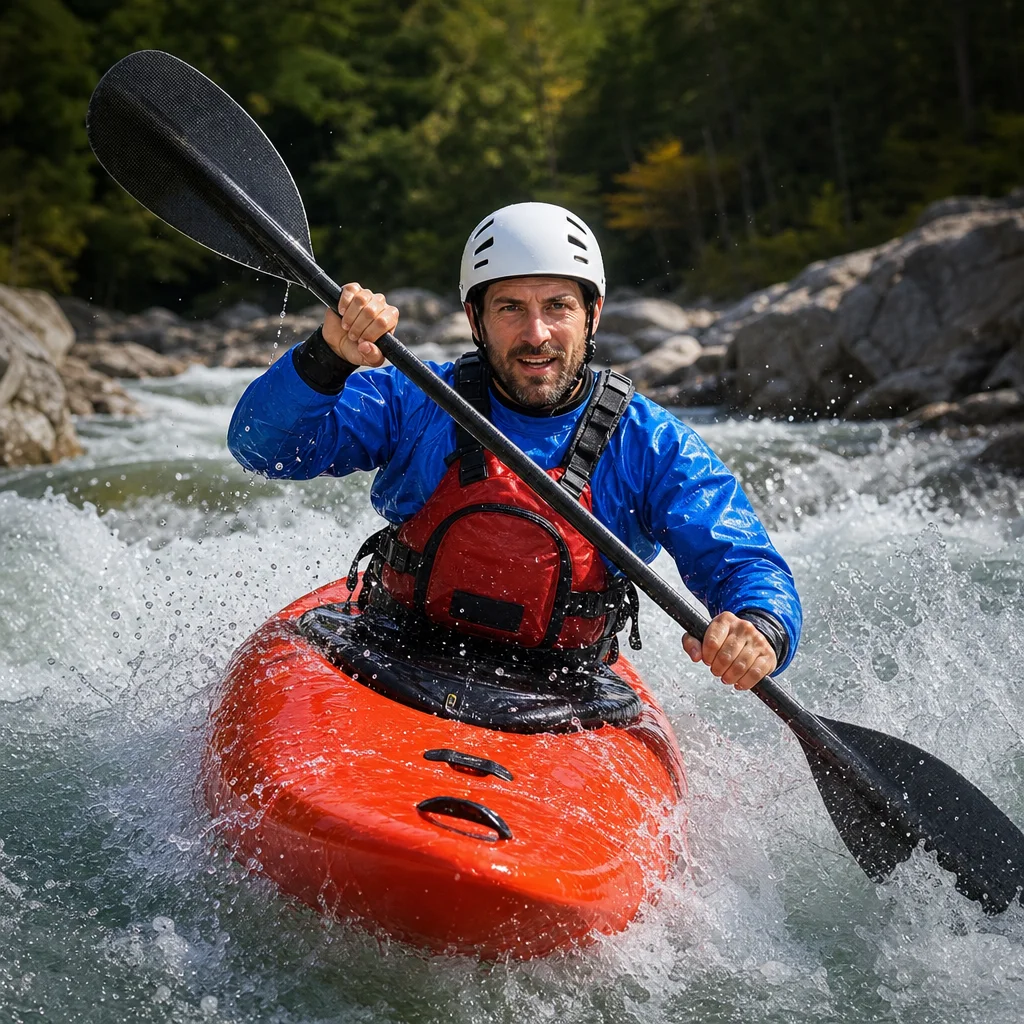
A long downstream float can look easy on paper: the current does most of the traveling, so you may expect to sit back and enjoy the scenery. The problem is that hours of small steering corrections, limited movement, direct sun, and an awkward seat can leave you more tired than a shorter active paddle.
Comfort comes from managing several small decisions before discomfort becomes a problem. Set up your kayak properly, change position regularly, drink before you feel thirsty, and treat steering as real physical work rather than something the current handles for you.
Set up your kayak for support, not stiffness
Your seat should support an upright, relaxed posture. Avoid leaning far back unless your kayak’s design specifically requires it. A reclined position can feel comfortable for a few minutes, but it often makes it harder to rotate your torso, see downstream hazards, and use your legs for stability.
Keep your back supported without forcing it into a rigid position. Your shoulders should stay relaxed, and your elbows should have a slight bend when you hold the paddle. If you need to reach forward with locked elbows, your foot position or seating distance may be wrong.
A thin seat pad can help if the kayak’s seat pan creates pressure points. Avoid adding thick, soft padding without checking how it changes your stability and center of gravity. Too much padding can raise you higher in the boat and may make the kayak feel less predictable.
Before launching, sit in the kayak for several minutes and notice where pressure builds. Pay attention to your lower back, the backs of your thighs, and the sides of your hips. These early warning signs are easier to solve on shore than halfway through a float.
Use your legs to share the work
Many beginners think of their legs as passengers in a kayak. During a long float, that can contribute to numbness, stiffness, and a tired lower back. Your feet, knees, and thighs should provide light contact with the kayak so your body stays supported without gripping constantly.
Your feet should rest against the foot braces or the kayak’s designated foot support. Keep your knees slightly bent rather than pressing them hard upward or locking them straight. In a sit-inside kayak, your thighs may rest lightly against the thigh braces. In a sit-on-top kayak, your legs can usually move more freely, but they still benefit from a relaxed bend and occasional changes in position.
The goal is contact, not pressure. If you brace your knees or feet continuously, your hip flexors and thighs may become surprisingly fatigued. If your legs have no contact at all, you may compensate by tightening your lower back or gripping the paddle.
Every 15 to 30 minutes, make a small adjustment if conditions allow. Move your toes, relax one knee, shift your heels slightly, or change which part of your thighs is carrying contact. Small movements are more useful than waiting until your legs are completely numb.
Don't force a stretch while the kayak is moving through current or near obstacles. If you need a larger change in position, choose a calm location or stop on shore.
Paddle enough to stay in control
A downstream float isn't the same as being carried passively. You still need to steer around bends, avoid hazards, maintain a safe position in the channel, and control the kayak when the current changes.
Small corrective strokes are usually more comfortable than waiting until the kayak points far off course. Use relaxed strokes close to the boat for minor adjustments. Excessive sweeping strokes, frantic corrections, or repeatedly paddling against the current can tire your shoulders and wrists.
Think about steering efficiency:
- Look downstream early so you can choose a line before you need a hard correction.
- Use torso rotation when possible instead of moving only your arms.
- Keep your grip relaxed and avoid squeezing the paddle shaft continuously.
- Let the kayak glide briefly between corrections when the route is clear.
- Use a controlled angle to the current rather than fighting every sideways movement.
Current management can also create mental fatigue. You may not notice how much concentration you are using until you stop. A calm-looking section can still require frequent adjustments around eddies, wakes, sweepers, rocks, shallow areas, or changing channels.
If your shoulders start to ache, that may indicate more than a paddle problem. It can mean you are steering too late, gripping too tightly, or trying to hold a position the current doesn't support. A short rest in a safe area can be more effective than pushing through.
Check the day’s river conditions: Before launching, confirm current levels, flow direction, hazards, closures, access restrictions, weather, and any required equipment or permits for your specific river section. Conditions and local rules can change, especially after rain, during high-water periods, or across managed waterways.
Hydrate before comfort starts to decline
Paddling in warm weather can make you lose fluid even when you don't feel sweaty. Wind over the water can also mask how hot you are. Waiting until you feel thirsty may leave you trying to catch up later, particularly on a remote stretch where the next rest stop isn't convenient.
Carry water where you can reach it without twisting or leaning dangerously. A bottle secured near the cockpit or a hydration system arranged for easy access can reduce the temptation to skip drinking. Take small, regular sips rather than waiting for a long break.
Your hydration plan should account for the whole outing, including time spent getting to the launch, taking breaks, and dealing with delays. Bring more than the minimum you expect to consume when access points are limited. Don't rely on river water as a drinking source unless it has been treated appropriately for that location.
Food can matter on a long float, too. Simple, easy-to-eat snacks can help maintain energy, but store them so you can reach them without rummaging while moving. Keep wrappers and food secured from wind and water.
Treat sun protection as part of comfort
Sun exposure is one of the easiest ways for a comfortable float to turn into an exhausting one. Water reflects light, and a kayak often leaves your legs, hands, neck, and face exposed for hours.
Wear clothing that covers more skin without restricting movement. Lightweight, quick-drying layers, a brimmed hat that stays secure, and sunglasses with a retaining strap can all help. Apply water-resistant sunscreen to exposed skin and reapply according to the product directions, particularly after swimming, sweating, or wiping your face.
Protect the backs of your hands and the tops of your feet if they are exposed. These areas are easy to forget and can become uncomfortable before the rest of your body feels overheated.
Sun protection shouldn't interfere with your ability to see the water or handle your paddle. Secure loose straps, hats, and clothing so they don't catch on branches or obscure your vision.
Plan rest stops before you need one
The best rest stop isn't necessarily the closest piece of shoreline. Look for a location with a safe approach, stable footing, protection from current, and enough room to get in and out without blocking other paddlers. Avoid assuming that every attractive bank is suitable for landing.
Use rest stops to do more than sit down. Check your posture, drink, eat, adjust clothing, inspect your feet and hands, and release tension in your hips and shoulders. If your kayak has a drain plug, hatch, or deck fittings that need attention, this is a better time to check them than while floating through a busy section.
Rest before you are exhausted. Once your reactions slow and your posture collapses, a short break may not fully restore your control. On a long trip, several brief stops are often easier on your body than one extended stop after discomfort has accumulated.
If you can't safely land, slow down in a calm area when possible and make small posture adjustments from the seat. Don't stand up in a kayak unless you are in a place and craft where doing so is known to be safe. Sudden weight shifts can cause a capsize.
Choose comfort over an unrealistic schedule
A downstream route can still take longer than expected because of wind, low water, congestion, portages, scouting, or repeated stops. Building your plan around an optimistic travel time encourages you to skip water, food, and rest.
Use the slowest realistic section of the route when estimating your day. Leave room for changing conditions and for the fact that steering, landing, and launching all take energy. If the float includes a shuttle, confirm how and when you will reach the takeout rather than assuming the current will carry you there on schedule.
Comfort also depends on the kayak itself. A boat that tracks strongly may require fewer corrections but can be harder to turn. A shorter, more maneuverable kayak may respond easily but demand more frequent steering. Neither choice is automatically better; match the boat to the river and your ability to control it without constant strain.
A simple comfort check for the next float
Before launching, confirm that you can answer yes to these questions:
- Can you reach your water without an awkward twist?
- Do your feet and legs have relaxed, supportive contact?
- Can you make small steering corrections without gripping tightly?
- Are your exposed skin, eyes, and hands protected from the sun?
- Do you know where the safe rest and takeout points are?
- Have you allowed time for slower water, delays, and breaks?
During the float, use discomfort as information rather than a challenge to ignore. Adjust early, drink regularly, and stop when you can do so safely. A downstream trip is more enjoyable when the current reduces your workload without convincing you that you have no workload at all.