How to Reduce Splashing When Paddling Into a Headwind
Headwinds make splashing worse when wind, chop, and an inefficient stroke work together. I’ll show you how to adjust blade entry, cadence, torso position, and angle so you can stay drier while using your energy more effectively.
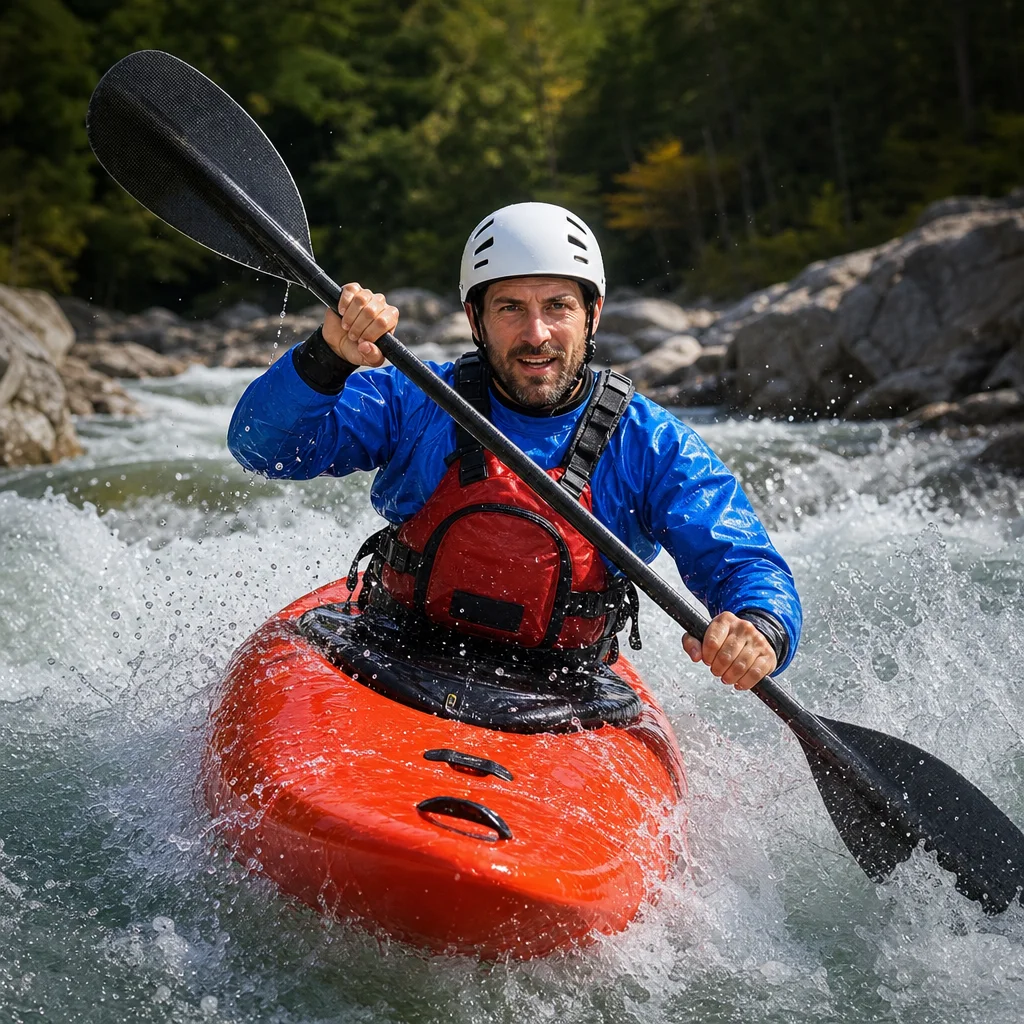
Wind-driven chop can turn an ordinary forward stroke into a wet, tiring effort. If your blade enters too aggressively, travels too far from the kayak, or exits with a sharp flick, the wind can throw water straight into the cockpit.
The goal isn’t to eliminate every drop. Some splash is unavoidable in rougher conditions. Instead, you want a stroke that catches the water cleanly, keeps the blade close to the kayak, and maintains steady forward motion without forcing every stroke.
Start by identifying where the splash comes from
Before changing your entire technique, pay attention to the timing and direction of the spray. Different problems call for different adjustments.
- Splash at the catch: The blade is entering too forcefully, too far ahead, or at an awkward angle.
- Water thrown toward your chest: The blade may be entering on the windward side, or the shaft and upper hand are too high.
- Splash beside your hip: The stroke is traveling too far back or the blade is exiting with too much upward lift.
- Spray from the kayak’s bow: The boat is dropping into short waves, or the bow is being pushed across the chop.
- Water from the opposite blade: Wind may be catching the raised blade during the recovery.
Watch one side at a time. A headwind often makes you focus so much on moving forward that you stop noticing which part of the stroke is creating the spray.
Check your margin before refining technique: If the wind and chop are strong enough to affect your balance, visibility, or ability to turn back, treat the conditions as a safety decision rather than a stroke-efficiency problem. Stay within your skills and use local conditions guidance where appropriate.
Soften the blade entry
A common mistake is stabbing the blade into the water at the beginning of each stroke. That can feel powerful, but it creates a sudden burst of resistance. The blade may scoop water upward, and the abrupt load can make the kayak yaw or slow down between strokes.
Instead, place the blade into the water smoothly. Reach forward with your torso rotation, but let your lower hand and forearm guide the blade down rather than driving it hard from the shoulder.
Think of the entry as placing the blade into the water, not punching it. The blade should become fully engaged near the front of the stroke without a loud slap. A quieter entry usually indicates less wasted movement.
Keep the blade relatively close to the kayak. Reaching far away from the hull can increase your leverage, but it also makes the stroke more vulnerable to wind and chop. It may pull the bow sideways and force you to make additional corrective strokes.
Avoid burying the blade too deeply
A blade that goes well below the surface creates unnecessary resistance. You may feel a strong load through the shaft, but more resistance doesn’t automatically mean more forward speed.
Use enough depth to keep the working face of the blade covered. If the shaft is sinking noticeably or your stroke feels heavy immediately after entry, reduce the depth and let the blade move more smoothly through the water.
Use a shorter, steadier stroke
When paddlers meet a headwind, they often slow their cadence and pull harder. That approach can make each stroke splashier and can leave the kayak losing speed between strokes.
A slightly shorter stroke with a consistent rhythm is usually easier to control. Start the power phase near your feet rather than reaching far forward, and exit around your hip or just behind it. The exact position depends on your kayak and technique, but you generally don’t need to pull the blade far behind your body.
A long stroke can cause several problems:
- The blade spends more time in disturbed water behind you.
- Your torso may unwind too far, making the next recovery awkward.
- The kayak can veer away from your intended line.
- The blade may rise toward the surface during the exit and throw water.
Keep the boat moving with regular strokes instead of trying to win back speed with occasional hard pulls. This helps reduce fatigue and makes it easier to respond when a wave hits at an angle.
Adjust your torso position without leaning into the wind
Your torso position affects both balance and splash. If you collapse forward, you may drive the blade steeply into the water. If you lean too far back, you reduce your ability to rotate and may make the bow ride higher than necessary.
Sit tall with a relaxed, stable posture. Keep your shoulders over your hips and allow your torso to rotate toward each stroke. Your head should remain relatively level, and your eyes should look ahead rather than down at the blade.
In headwind and chop, avoid leaning dramatically into the wind. That can make the kayak feel less stable and can encourage you to brace with the paddle instead of maintaining a controlled forward stroke. Use a modest edge only if you already understand how your kayak responds and can recover it confidently.
Your lower body should help stabilize the kayak without gripping excessively. Light contact with the foot braces and thigh supports can keep you connected to the boat. A rigid, tense posture makes it harder to absorb uneven water and often leads to jerky paddle movements.
Control the blade angle during entry and recovery
Blade angle is one of the most useful adjustments for reducing splash. A fully open, aggressive angle can catch a lot of water and produce strong resistance. In turbulent conditions, that extra resistance may work against smooth forward motion.
Try a more neutral blade orientation as the blade enters. Place it cleanly, engage the water, and keep the working face stable through the power phase. Avoid twisting the blade suddenly just before it enters; that movement can scoop water toward you.
The recovery also matters. As the blade leaves the water, use a small amount of feathering or a controlled wrist adjustment if that’s part of your normal technique. The goal is to present the returning blade edge-on or at a low angle to the wind, rather than holding a broad face where the wind can catch it.
Don’t force a major feathering change while you’re already struggling with balance. A small, familiar adjustment is more useful than a dramatic change that makes the paddle feel unpredictable.
Keep the recovery low and compact
Wind can grab the blade during the recovery, especially when you lift it high beside your face or shoulder. The blade then acts like a small sail, pulling your upper body off balance and dropping water into the kayak.
Recover with relaxed hands and a relatively low path. Move the paddle forward without swinging the blade in a wide arc. Keep the upper hand controlled and avoid lifting it much higher than necessary.
A compact recovery has three benefits:
- It reduces the time the blade is exposed to the wind.
- It lowers the chance of catching water on the back of the blade.
- It helps you begin the next stroke without a rushed reach.
If the wind is coming from one side, you may need to pay extra attention to the blade on that side. The windward blade is the one most likely to be pushed around during recovery.
Match your effort to the waves
Not every splash comes from poor paddle technique. In short, steep chop, the bow may rise and fall enough to send water toward you even when your stroke is sound.
When a wave approaches, keep the kayak pointed generally into the wind and waves rather than allowing the bow to swing broadside. Make small steering corrections early. Large corrective strokes can create more splash and may destabilize the kayak.
Maintain a flexible posture as the boat moves over the water. Let your hips and legs respond to the kayak’s motion while keeping your upper body available for controlled strokes. Avoid stiffening your arms to hold the paddle in place.
If the waves are breaking over the bow or you’re repeatedly losing your line, reduce the problem instead of simply paddling harder. Turn toward a more sheltered route, shorten the crossing, or return while you still have a comfortable reserve of energy.
Correct common splash-making mistakes
Pulling harder with the arms
Arm-dominant paddling often produces a steep entry, tense shoulders, and a rushed exit. Use torso rotation and leg drive to share the work. Your arms should connect the paddle to your body rather than doing all the pulling.
Reaching too far forward
An exaggerated reach can put the blade beyond your stable base and make the catch splashy. Reach through controlled torso rotation, then place the blade closer to the kayak’s bow.
Leaving the blade in too long
Continuing the stroke well behind your hip creates drag and can turn the kayak. Exit while the blade is still moving effectively, then begin the recovery smoothly.
Holding the paddle too tightly
A tight grip makes it difficult to feather or control the blade in gusts. Hold the shaft firmly enough to guide it, but keep your hands and forearms relaxed.
Trying to stay completely dry
Chasing zero splash can make you hesitant and stiff. A relaxed, efficient stroke is more valuable than a perfectly dry one, particularly when conditions are unsettled.
Practice the changes in manageable conditions
Work on one adjustment at a time in calm water first. Begin with a quiet blade entry, then add a shorter stroke and lower recovery. Once those movements feel natural, practice with a mild headwind where you still have plenty of room and energy to turn around.
Use a simple comparison: paddle for several minutes with your usual stroke, then repeat with a softer entry and earlier exit. Notice your cadence, shoulder tension, boat tracking, and how much water reaches the cockpit. You don’t need precise measurements to identify a clear improvement.
Before heading into stronger wind, make sure you can slow down, turn, brace, and return to shore without depending on one perfect stroke. Comfort comes from having options when the wind changes direction or the chop becomes less predictable.
Practical next steps
On your next outing, focus on this sequence:
- Place the blade quietly and close to the kayak.
- Keep the stroke slightly shorter and maintain a steady cadence.
- Rotate your torso while sitting tall and relaxed.
- Keep the recovery low and present the blade edge-on to the wind.
- Exit near your hip instead of pulling far behind you.
- If splashing continues, check the waves, boat angle, and wind before blaming your technique.
These small changes won’t remove the wind, but they can reduce wasted effort and keep more water outside the cockpit. In a headwind, smooth and repeatable usually beats forceful and hurried.