Reading River Current Before You Launch
I’ll help you read a river from shore before launching, recognize current speed, eddies, strainers, bends, and crossing options, and build a safer plan when a calm-looking surface hides moving water or limited recovery choices.
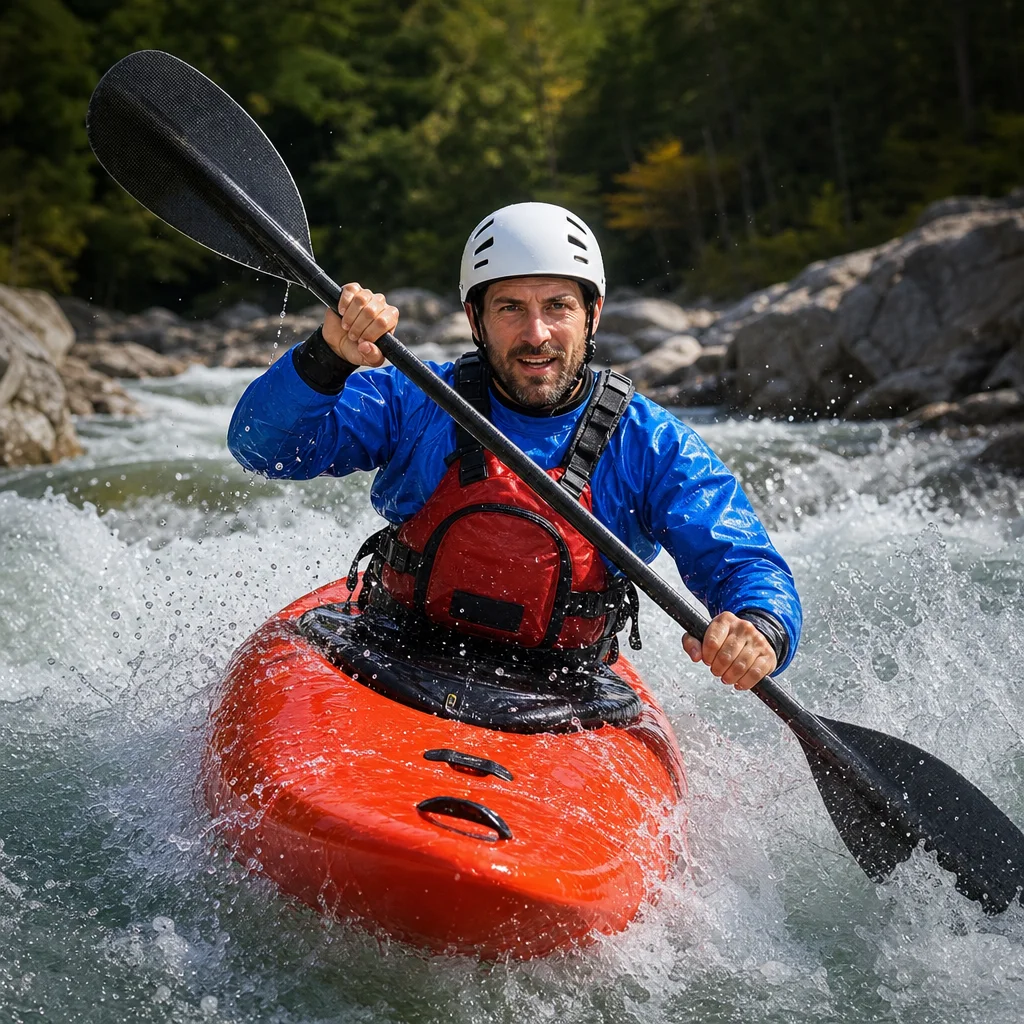
A river can look nearly flat from the launch while moving quickly underneath. For beginners, the most useful pre-launch skill is learning to predict where the water will carry you—and where it could trap, pin, or separate you from your kayak.
Reading current isn’t about memorizing every river feature. It’s about slowing down before you launch, identifying hazards and recovery options, and choosing a route that matches your skills, equipment, and the day’s conditions.
Start with the whole river, not just the launch
Before carrying your kayak to the water, spend a few minutes looking downstream. Current is easier to understand from shore than from the middle of a channel, where your attention will be divided between paddling, steering, and avoiding obstacles.
Look for:
- The fastest-moving line of water
- Changes in surface texture
- Foam, leaves, or sticks traveling at different speeds
- Exposed rocks, logs, and partially submerged branches
- Inside and outside bends
- Places where water splits around islands or obstacles
- Calm areas where water appears to move back upstream
- Possible landing areas downstream
A calm surface doesn’t necessarily mean slow current. Deep, smooth water may be moving quickly, while shallow water over rocks may look much more active. Use floating objects as clues, but remember that small debris can move differently from the main current depending on depth and wind.
Walk a short distance along the bank if the route is unfamiliar. This can reveal hazards hidden by the launch site and help you identify where you could exit if the trip goes wrong.
Check today’s river picture: Before launching, confirm the current water level, recent weather, flow information, access conditions, and any local advisories for that specific river section. A route that was manageable on a previous visit can change after rain, snowmelt, flooding, fallen trees, or construction.
Estimate current speed without getting in
You don’t need a precise measurement to make a useful decision. You need to determine whether the river’s movement is slow enough for you to control your kayak and whether you have enough room to respond to hazards.
Choose a visible object such as a leaf or small piece of foam. Watch how long it takes to travel between two fixed points along the bank. A short distance covered quickly indicates stronger current. Compare several objects in different parts of the river because the speed near shore may be very different from the speed in the main channel.
You can also watch surface features:
- Smooth, fast-moving water: Often indicates a deeper or more uniform current. It may look easy but can carry you toward downstream hazards quickly.
- Ripples and small standing waves: These commonly form over shallow rocks or changes in riverbed shape. They can indicate faster water, but not every ripple is dangerous by itself.
- Foam lines: Foam can trace the boundary between different current directions or show where water is circulating.
- Patches of smooth water beside rough water: These often mark an eddy or the edge of the main current.
Avoid treating a visual estimate as a guarantee. Current speed can change around bends, narrow passages, islands, bridge supports, and submerged rocks. Water that feels manageable in one section can become much stronger a short distance downstream.
Find the main current and its edges
The main current is the portion of the river carrying water downstream most consistently. It may be in the center, along one bank, or around one side of an island. Its path often changes as the river bends.
The edge of the current is especially important for beginners. This is where faster downstream water meets slower water near the bank, an island, a rock, or an obstruction. The boundary may appear as a line of foam, a change in ripples, or a small difference in water level and texture.
Crossing this boundary can make your kayak turn unexpectedly. The bow may enter faster water while the stern remains in slower water, causing the boat to pivot. That movement is normal, but it can surprise you if you approach the edge sideways or without enough momentum.
When you need to move across current, point the kayak somewhat upstream rather than directly across. The exact angle depends on the strength of the current and the kayak, so start with a conservative crossing in a wide, unobstructed area. Keep paddling and look toward your intended landing point instead of staring at the water immediately beside you.
Recognize eddies and eddy lines
An eddy is an area where water circulates, often behind an obstruction or along the inside of a bend. Some eddies move gently; others can be strong enough to turn a kayak abruptly.
From shore, an eddy may look like:
- Water moving upstream near the bank
- Foam circling in place
- A smooth patch behind a rock, island, or large log
- A visible line separating downstream and upstream-moving water
That separating line is the eddy line. It may be subtle on a slow river and sharply defined on a faster one. Crossing it can produce a sudden change in direction, similar to crossing the edge of the main current.
For a beginner, a gentle eddy can be useful because it may provide a calmer place to pause or reach shore. However, don’t assume every quiet-looking pocket is a safe resting area. Check what lies immediately downstream and whether the current would push you into a rock, tree, or narrow channel if you missed the exit.
If you do enter an eddy, keep your kayak controlled and expect the boat to turn. Practice in mild conditions with plenty of open space, ideally under instruction, before relying on eddies as part of a route plan.
Treat strainers as do-not-enter hazards
A strainer is an obstruction that allows water to pass through but can catch a person or kayak. Common examples include fallen trees, branches, brush, fences, and dense vegetation along the channel.
Strainers are dangerous because current can press you against them while water continues flowing through the gaps. Even a branch that looks small from shore may be connected to a larger submerged tree or may block a route completely at higher water.
Look for branches that extend into the channel, debris piles, and trees lying across or just below the surface. Pay particular attention to the outside of bends, where current commonly pushes floating debris toward the bank.
If you see a strainer downstream, don’t wait until you’re close to decide what to do. Move away early while you still have open water and control. If the route doesn't provide a clear, safe way around it, land and portage if that option is available. Never plan to squeeze through a narrow opening beside or beneath a tree.
Read bends before choosing a route
On a bend, current often moves faster along the outside bank and slower along the inside bank. The outside bank may be steeper, undercut, or lined with trees. The inside bank may have a gravel bar or shallow water, but it can also contain exposed rocks and changing channels.
From shore, identify the outside and inside of each significant bend. Ask:
- Where is the fastest water likely to be?
- What hazards are on that side of the river?
- Is there a clear downstream view before the bend?
- Where could you safely stop or land if your route changes?
A bend that blocks your view deserves extra caution. If you can’t see what lies beyond it, avoid entering close to the outside bank or committing to a fast line without a way to stop. Stay where you have time and space to respond, and consider scouting farther downstream from shore when practical.
Choose crossing points for recovery, not convenience
A crossing point is safer when it is wide, unobstructed, and followed by enough open water to correct your course. Avoid crossing above strainers, fences, bridge supports, narrow channels, or any hazard that would leave little room for error.
Look for a route with:
- Good visibility upstream and downstream
- Moderate current rather than a concentrated chute
- No trees or debris immediately downstream
- A reachable bank on either side
- Enough width to ferry across without being pushed into an obstacle
- A backup landing area if you miss your intended line
Don't choose a crossing simply because it looks shortest. A narrow section can concentrate current and reduce your reaction time. A wider section may require more paddling but give you a better chance to correct, stop, or swim away from trouble if necessary.
If you can't clearly explain how you would recover after missing the crossing, choose a different route or don’t launch that section.
Build a simple recovery plan before launching
Reading current is most useful when it changes your plan. Before entering the water, identify your first landing option, the next safe exit, and the hazards you must avoid between them.
Keep the plan simple:
- Launch only where you have stable footing and room to organize your gear.
- Paddle a short distance in an open area to confirm how the kayak responds.
- Keep your bow pointed where you want to go, especially near current boundaries.
- Stay well away from strainers and other entrapment hazards.
- If the river becomes faster, narrower, or less visible than expected, land before the problem grows.
- Wear a properly fitted personal flotation device and carry communication and emergency equipment appropriate for the trip.
A capsize plan should also be realistic. In moving water, remaining with your kayak and reaching a safe shore may be part of the response, but the correct action depends on the river, hazards, water temperature, and your training. Beginners should develop these skills with qualified instruction rather than testing them for the first time beside an obstacle.
A practical decision before you launch
You’re ready to reconsider the launch if you can’t identify the main current, see what lies around the next bend, find a safe landing option, or explain how you’ll avoid a visible strainer. Those aren’t minor uncertainties; they’re signs that the route may exceed your current ability or that conditions have changed.
Start with a section where the current is easy to observe, the banks are accessible, and the downstream view is open. Watch how floating objects move, trace the current’s edges, and note where water circulates. Then choose the route that leaves you the most time, space, and recovery options—not necessarily the route that looks most direct.