How to Set a Comfortable Cadence for a Recreational Paddle
A steady cadence can conserve energy, while chasing speed can make a recreational paddle harder than it needs to be. I’ll show you how to use breathing, effort, boat speed, and terrain to find a rhythm you can maintain comfortably.
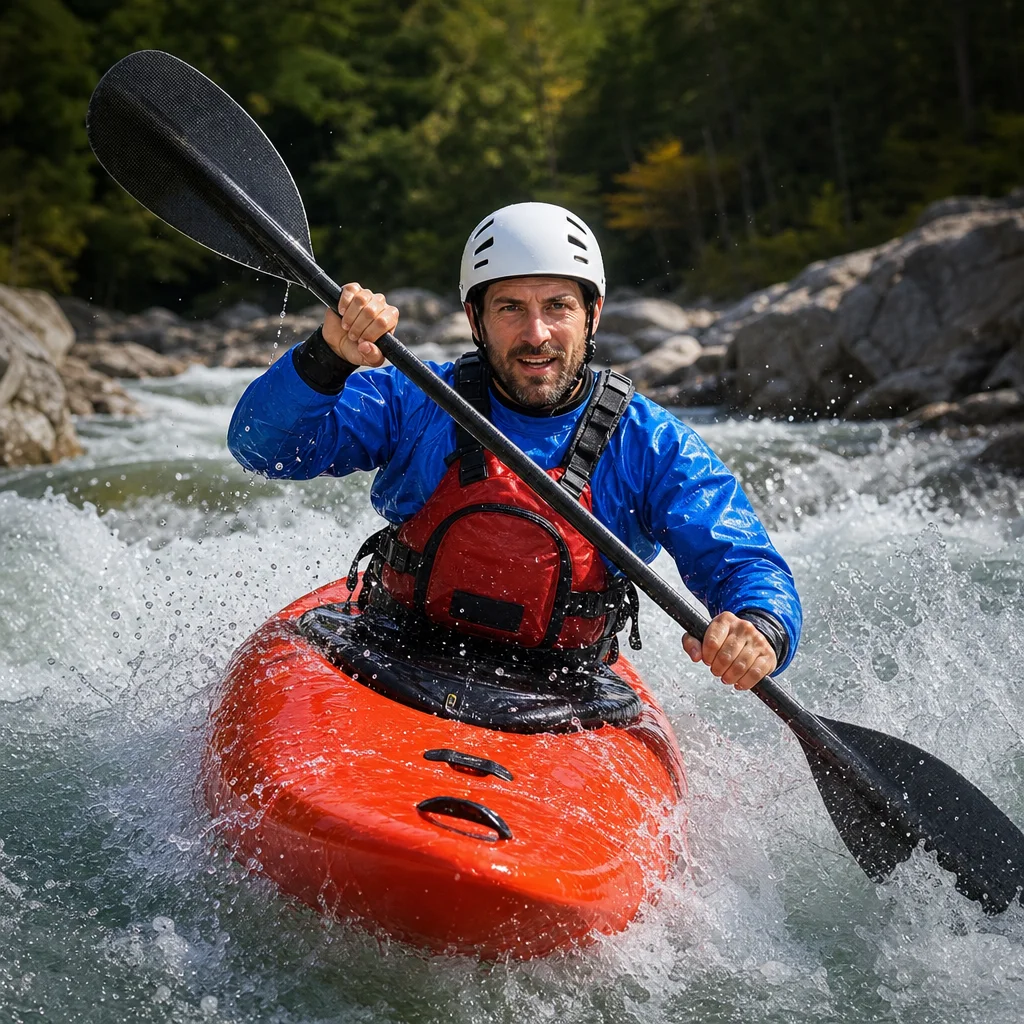
The fastest stroke rate is rarely the most comfortable one. For a recreational paddle, a useful cadence is the rhythm that moves your kayak efficiently without leaving you breathless, tense, or unable to enjoy the surroundings.
Cadence isn’t a fixed number that every paddler should copy. It changes with your kayak, paddle, fitness, wind, current, water conditions, and the distance you plan to cover. Instead of trying to match a racing pace, learn to recognize a sustainable rhythm and adjust it before fatigue forces you to stop.
What cadence means on the water
Cadence is the rate at which you complete paddle strokes, usually counted as strokes per minute. You can count each blade entry, or count complete left-and-right cycles. Either method works as long as you use it consistently.
For casual paddling, the number itself matters less than the pattern behind it. A comfortable cadence usually has these qualities:
- Your breathing stays controlled.
- Your grip remains light.
- Your shoulders and neck stay relaxed.
- Your strokes feel connected rather than hurried.
- You can speak a short sentence without gasping.
- You finish a moderate stretch feeling that you could continue.
A slow cadence isn’t automatically efficient, and a fast cadence isn’t automatically powerful. If you take long pauses between strong strokes, you may lose momentum and need more effort to bring the kayak back up to speed. If you paddle too quickly, you may create unnecessary splash, strain, and fatigue.
The goal is a repeatable rhythm that fits the conditions and the outing.
Start with breathing, not the stopwatch
Breathing is one of the simplest ways to judge whether your cadence is sustainable. Begin at an easy pace and notice how your breath matches your strokes.
You might inhale during one side of the stroke and exhale during the next, or use several strokes for each breath cycle. There’s no single pattern you have to follow. The useful test is whether your breathing stays smooth instead of becoming shallow or frantic.
Try this progression:
- Paddle easily for several minutes.
- Notice whether you can breathe through your nose, mouth, or both without strain.
- Increase your cadence slightly for about a minute.
- Return to the original rhythm and compare how your breathing feels.
- Choose the faster pace only if you can maintain relaxed breathing afterward.
If your breathing remains elevated long after you slow down, your previous pace was probably too demanding for the conditions or distance. A comfortable cadence should feel controlled early in the trip, not merely tolerable for the first few minutes.
Breathing can also reveal tension. A clenched jaw, raised shoulders, or breath-holding often appears before obvious arm fatigue. Relax your hands, lower your shoulders, and let the kayak glide briefly between strokes while you reset.
Use perceived effort to find your sustainable pace
Perceived effort is your personal estimate of how hard you’re working. You don’t need a fitness watch or a precise scale to use it.
For a relaxed recreational paddle, aim for an effort that feels easy to moderate. You should be working enough to keep the kayak moving, but not so hard that every stroke demands concentration. On a simple ten-point scale, many beginners will find a sustainable cruising rhythm somewhere around the middle rather than near the top. The exact number is less important than the feeling.
Ask yourself three questions every so often:
- Could I maintain this effort for another several minutes?
- Am I using my torso and legs, or mostly pulling with my arms?
- Would a small change in wind or current make this pace difficult to hold?
If the answer to the first question is no, reduce your cadence or shorten your stroke slightly. If your arms are tiring while your breathing feels easy, review your technique. You may be gripping too tightly, bending your elbows excessively, or pulling past a comfortable position instead of rotating your torso.
A useful cadence should leave room for small changes. If you’re already working near your limit on calm water, you have little reserve for a headwind, a turn, or a tired paddling partner.
Let the kayak’s speed guide your rhythm
A kayak needs energy to accelerate, but once it is moving, it can glide between strokes. This is why a comfortable cadence often includes a quiet moment after each stroke rather than constant, rushed movement.
Pay attention to how the boat responds. If the kayak surges forward and slows dramatically after every stroke, you may be taking strokes that are too forceful or leaving too much time between them. If the kayak moves smoothly but you feel rushed, reduce the power of each stroke while keeping a steady rhythm.
Try a simple experiment on calm water:
- Paddle for a short stretch with firm, deliberate strokes.
- Rest briefly and notice how quickly the kayak loses speed.
- Repeat with lighter strokes at a slightly quicker rhythm.
- Compare which approach feels smoother and easier to sustain.
The better option is usually the one that keeps the kayak moving with less variation in speed. You aren’t trying to eliminate glide. You’re trying to avoid repeatedly stopping the boat and then having to accelerate it again.
Your kayak also affects the answer. A long touring kayak may carry momentum well, while a shorter recreational kayak may respond more quickly to each stroke but lose speed sooner. A heavily loaded boat, a wide hull, or a rougher surface can change how much effort is needed. Use the boat’s response as feedback rather than trying to force a preset rhythm.
Adjust cadence for terrain and conditions
The most comfortable cadence on flat, sheltered water may be wrong for wind, current, waves, or a narrow winding route.
On calm, flat water
Use a moderate rhythm with enough glide to avoid unnecessary effort. This is the best setting for learning how breathing, boat speed, and stroke smoothness work together.
Into a headwind or current
A slightly quicker, lighter cadence can help you maintain forward motion without relying on a few powerful strokes. Keep your strokes compact and controlled. Large, forceful strokes may feel productive briefly but can drain your arms quickly.
If you’re making little progress despite increasing effort, reassess the route rather than simply paddling harder. A short pause, a change in angle, or moving closer to sheltered water may be more useful than trying to overpower the conditions.
With a tailwind or following current
You may be able to reduce effort and let the kayak travel. Keep enough control to steer and respond to changing water, but don’t assume that a faster ground speed means you should increase your cadence. The water may be doing some of the work.
In waves or boat wake
Prioritize stability and control over a perfect rhythm. Shorter strokes and a slightly faster cadence can help you maintain balance and keep the kayak oriented as the surface changes. If the water becomes uncomfortable, slow down, turn toward a safer angle when appropriate, or move toward calmer conditions.
Check the water before settling into rhythm: Conditions can change during a paddle. Before committing to a pace, consider wind, current, waves, your route back, and whether you have enough energy to handle a less comfortable section.
On winding or narrow water
Cadence may need to change constantly. Shorten your strokes near turns and avoid trying to preserve the same speed through every bend. A slower approach can make steering easier and reduce the need for corrective strokes.
Count strokes occasionally, not constantly
Counting can help you notice patterns, but it can also distract you from the water and your technique. Use it as a short exercise rather than a permanent task.
Count your strokes for thirty seconds at an easy pace, then repeat after a brief increase in effort. Compare how your breathing, posture, and boat speed change. You can also count strokes over a known stretch of water, but remember that wind and current make distance comparisons unreliable.
If you use a watch or phone to estimate speed, treat the reading as information rather than a target. Speed over the bottom can rise with a favorable current or fall into a headwind even when your effort stays the same. Your sustainable cadence should be based on effort and control as well as speed.
Common cadence mistakes
Starting too fast
Excitement at the launch often leads to a high cadence that feels easy for the first few minutes. The cost appears later as tired arms, heavy breathing, or a difficult return trip. Begin more slowly than you think you need, then increase gradually if you still feel fresh.
Taking powerful strokes with a tight grip
A tight grip transfers tension into your forearms and shoulders. Hold the paddle firmly enough to control it, but allow the fingers to stay relatively relaxed. Let the larger muscles of your torso contribute instead of trying to generate every stroke with your arms.
Chasing a faster paddler
A stronger or more experienced paddler may have a different kayak, technique, or fitness level. Matching their cadence can turn a pleasant trip into an exhausting one. Set a pace that keeps the group together without making the least comfortable paddler work continuously near their limit.
Ignoring the return trip
A pace that works with a favorable wind may not work when you turn around. Before increasing your cadence, consider whether you’re spending energy you may need later. Recreational paddling is usually more enjoyable when the hardest section is planned rather than discovered by surprise.
A simple cadence practice session
On your next calm-water outing, try three short intervals:
- Easy rhythm: Paddle at a pace that allows relaxed breathing and conversation.
- Moderate rhythm: Increase your cadence slightly while keeping the paddle strokes smooth and your grip light.
- Sustainable choice: Return to the pace you believe you could maintain for the rest of the planned outing.
After each interval, note your breathing, shoulder tension, perceived effort, and how smoothly the kayak moves. Over time, you’ll develop a better sense of your personal cruising rhythm without needing to calculate every stroke.
Practical next steps
Start your next paddle at an intentionally easy cadence for the first several minutes. Then use four checks—breathing, perceived effort, boat speed, and conditions—to decide whether to maintain, slightly increase, or reduce your rhythm.
A comfortable cadence is flexible. It may be slower when you’re sightseeing, quicker into a light headwind, and interrupted when you’re turning or managing waves. Choose the rhythm that preserves control and energy for the whole outing, not just the first stretch.