How to Stop a Kayak Without Losing Control
I’ll clarify when to use a reverse stroke, a corrective stroke, or simple edge control to slow a kayak, so you can stop with less yaw, fewer surprises, and better control of your paddle and body position.
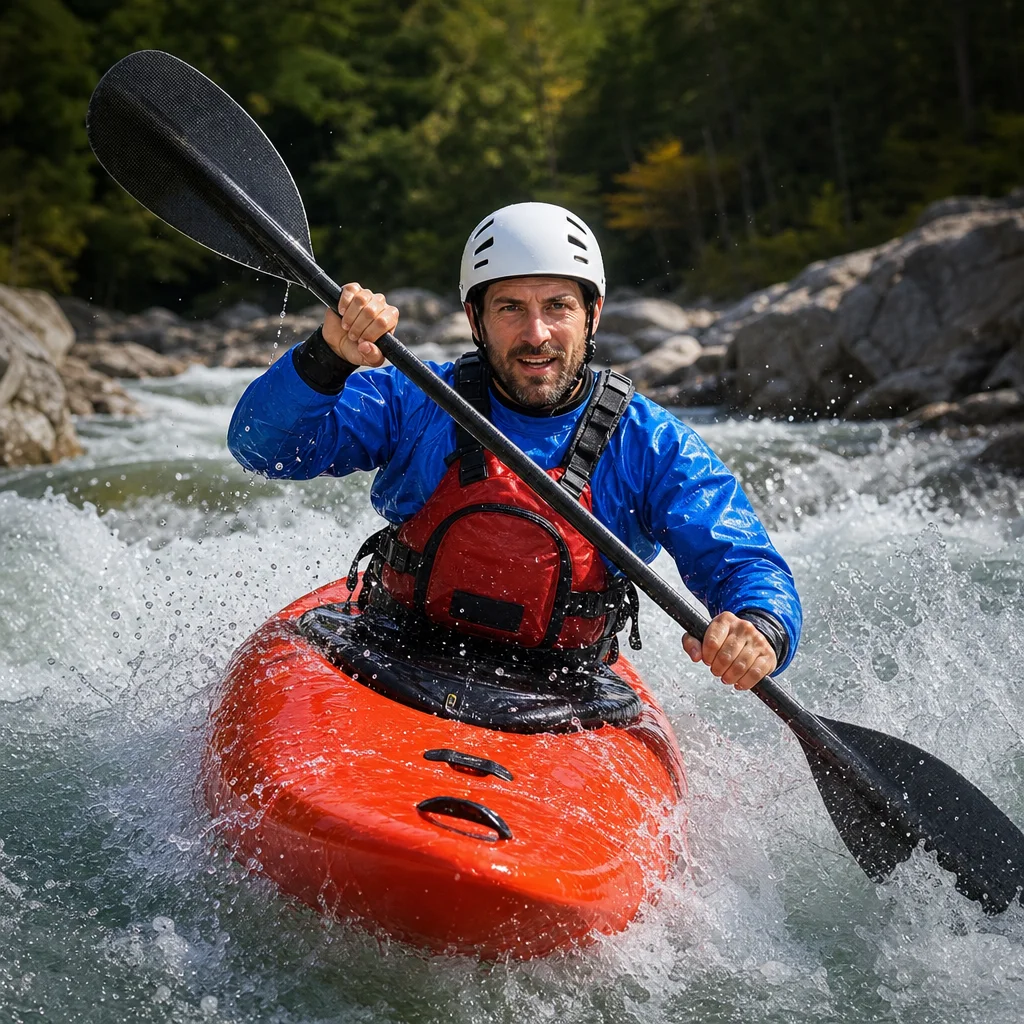
When a kayak is moving, stopping isn't as simple as dragging the paddle in the water. A strong, sudden reverse stroke can slow you quickly but may turn the boat, especially if your stroke is uneven. Leaning hard or reaching for support can create a second problem: an unstable kayak just when you need control most.
The reliable approach is to slow the boat progressively while keeping your torso balanced, your paddle connected to the water, and your eyes on what you’re approaching. The best stopping method depends on your speed, direction, and how much turning room you have.
Understand what makes a kayak stop
A kayak continues moving because its hull has momentum. Your paddle can reduce that momentum by pushing water forward, but the force is rarely applied perfectly along the kayak’s centerline. Any difference between the two sides can also make the kayak turn.
That is why stopping and steering are connected. A stroke on the right side may slow the kayak while encouraging the bow to move left; a stroke on the left may produce the opposite effect. The faster you’re traveling, the more noticeable this trade-off becomes.
Your first goal should be to reduce speed without making a sudden change in direction. Once the kayak is moving slowly, you can use a final corrective stroke or draw stroke to line up with your destination.
The controlled reverse stroke
The reverse stroke is the main tool for slowing a kayak that is moving forward. It works best when you use short, deliberate strokes rather than trying to stop with one powerful pull.
How to perform it
- Sit tall with your shoulders relaxed and your feet providing light contact with the foot braces or bulkhead.
- Rotate your torso to place the paddle blade near your hip on one side.
- Put the blade in the water fully, close to the hull.
- Push the blade forward through the water toward your feet and then slightly ahead of you.
- Recover the blade, switch sides, and repeat.
The exact hand movement will vary with your paddle technique, but the important action is pushing water toward the bow while the kayak is traveling toward it. Keep the blade relatively close to the hull. A blade placed far out to the side creates more turning force and can pull your shoulders into an awkward position.
Start with a moderate stroke. If you need more braking, increase the number of strokes before increasing their force. Several even strokes usually give you better directional control than one aggressive stroke on a single side.
When it is the best choice
Use reverse strokes when you need to slow quickly in a fairly straight line, such as when approaching a dock, another boat, or a shoreline. They’re also useful when a forward stroke or glide has left you with more speed than you intended.
The trade-off is that reverse strokes can make the kayak wander. If the bow begins to swing, use a small forward or sweep correction on the appropriate side rather than continuing to apply harder reverse strokes indiscriminately.
Use a forward stroke to prevent overcorrection
A common mistake is treating every stopping situation as an emergency brake. If you have plenty of room, you may get a more controlled result by stopping your forward paddling and allowing the kayak to glide, then using light reverse strokes as your speed drops.
This method takes more distance, but it preserves a smoother path. It is especially useful in open water when there is no immediate obstacle and you want to avoid unnecessary yaw.
To stop from a glide:
- Stop adding power with your forward stroke.
- Keep your paddle ready rather than laying it across the cockpit.
- Watch the kayak’s heading and the distance to the object or landing area.
- Add short reverse strokes as needed.
- Finish with a small corrective stroke once the kayak is nearly stopped.
The trade-off is obvious: gliding is gentle but requires planning. It shouldn't replace active braking when you’re close to a hazard, in moving water, or in a crowded area.
Add corrective strokes instead of fighting the turn
If your kayak turns while you brake, don’t automatically use more reverse power. First identify the direction of the turn, then make a small correction.
A forward stroke on one side can help bring the bow around. A sweep stroke can create more turning force, but it also changes your direction more noticeably. A draw stroke can move the kayak sideways when you need to adjust your position near a dock or another kayak, though it isn't usually the first choice for stopping forward motion.
Keep corrections short and controlled. You’re trying to restore your heading, not make a complete turn. Once the kayak points where you want it to go, return to balanced reverse strokes or allow the remaining momentum to fade.
A simple practice pattern
In calm, open water, paddle forward at a moderate speed. Stop your forward stroke and let the kayak glide for a moment. Then take one reverse stroke on each side. Notice whether the boat slows straight or begins to turn.
Repeat the exercise with two or three reverse strokes per side. Try to match the length and power of each stroke. This develops a feel for how much braking you can apply before the kayak starts to wander.
Leave enough space around you for the kayak to turn. Avoid practicing close to swimmers, rocks, docks, or other boats.
Keep your body position quiet and balanced
Your body position matters as much as the paddle stroke. When people feel the kayak slow suddenly, they may lean backward, stiffen their arms, or reach toward the water. Those reactions can reduce stability and make the kayak less predictable.
Instead, keep your torso upright and centered over the kayak. Maintain light contact with your thighs and feet without clamping down. Rotate from your torso as you paddle, and keep your head above the center of the boat.
You generally don’t need to lean the kayak aggressively to stop. A small, natural edge may help with a correction, but a large lean while braking increases the chance of an unintended turn or capsize. If you’re still developing balance, practice stopping with the kayak as level as possible.
Check your stopping room: Before practicing or using a braking technique, make sure you have enough open space for the kayak to slow, turn slightly, or drift with wind and current. In moving water, account for the water’s direction rather than judging distance from the bottom alone.
What not to do when you need to stop
Don’t plant the paddle blade suddenly
Dropping a blade into the water at a steep angle can create a strong, abrupt force. It may stop part of the kayak while the rest continues moving, causing a sharp turn or pulling your upper body off balance.
Enter the blade smoothly and keep your grip firm but not rigid. Your lower hand should guide the stroke rather than locking your elbows and shoulders.
Don’t grab a dock to brake
Reaching for a dock, rock, or another kayak while you still have forward speed can twist your body and destabilize the boat. It also puts strain on your shoulder and the object you’re grabbing.
Slow first with your paddle. When you’re close enough to make contact safely, use a gentle, controlled touch or a suitable landing technique. A dock isn't a substitute for braking distance.
Don’t rely on a rudder as a brake
A rudder or skeg helps manage tracking and wind effects, but it isn't a primary stopping device. A rudder can help you maintain direction while you use paddle strokes to slow down. It won’t remove the kayak’s momentum by itself.
Avoid making large rudder adjustments at the same time as a forceful reverse stroke until you understand how your kayak responds. Multiple strong inputs can make the boat harder to predict.
Don’t use a low brace as your normal stop
A low brace is a recovery skill for supporting yourself when the kayak is close to capsizing. It isn't a routine braking method. Using it unnecessarily can place your paddle and shoulders in a poor position, especially if you’re moving quickly or bracing with poor technique.
Learn bracing separately with qualified instruction or in controlled conditions. For normal stopping, use reverse strokes and balanced posture.
Choose the technique for the situation
Your available stopping distance should determine how assertively you brake.
- Plenty of open water: Stop paddling, glide briefly, then use light reverse strokes.
- Approaching a dock or shoreline: Begin braking early and use even reverse strokes, followed by small corrections.
- Need to avoid an object: Turn away first if necessary, then reduce speed once you have a clear path. Stopping in a straight line may not be the safest response.
- Wind or current is present: Keep paddling enough to maintain control of your heading, and judge your stopping point over the moving water rather than the shoreline.
- You’re traveling fast: Start with moderate reverse strokes and build braking gradually. A sudden, powerful stroke is more likely to create a sharp turn.
If you’re uncertain whether you can stop in time, don’t wait for the last moment. Reduce speed earlier and create more room. Distance is one of the simplest forms of kayak control.
A short stopping sequence to practice
Use this sequence in calm conditions:
- Paddle forward at a comfortable, moderate speed.
- Stop your forward strokes while keeping your paddle ready.
- Stay upright and look toward the direction you want the kayak to travel.
- Apply one short reverse stroke on each side.
- Check whether the kayak is slowing straight or turning.
- Add another matched pair of reverse strokes if needed.
- Correct the heading with a small forward, sweep, or draw stroke.
- Relax your grip as the kayak comes to a stop.
Practice at different speeds, but leave plenty of room for a turn. The goal isn't to stop as abruptly as possible. It is to learn how much distance and paddle force your kayak needs while remaining stable and pointed in a useful direction.
Practical next steps
Start by practicing controlled stops on flat, unobstructed water. Work on even reverse strokes, a quiet upright posture, and small heading corrections before adding wind, current, or tighter spaces.
As your confidence improves, repeat the exercise near—but not immediately beside—a safe landing area. Learn the stopping distance of your particular kayak and paddling style. When you can slow down without leaning, grabbing, or making a sudden turn, you’ll have a dependable skill for docks, busy launch areas, and unexpected situations on the water.