How to Ferry-Glide Across a Slow River Current
I’ll compare shallow and steeper ferry angles, then explain how edging and stroke adjustments help you cross a slow current with less downstream drift, better control, and a cleaner arrival at the opposite bank.
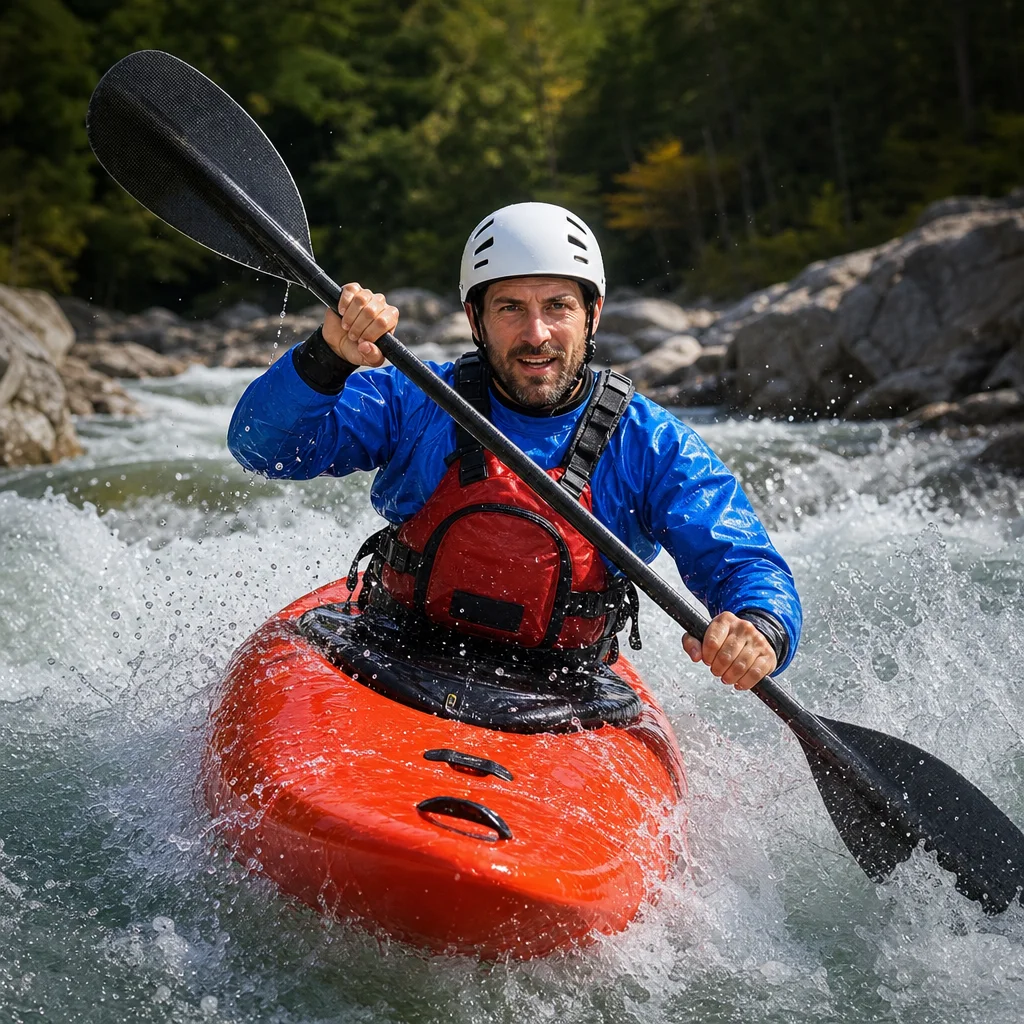
A ferry glide lets you cross a current without simply pointing the kayak downstream and allowing the river to carry you. The technique is straightforward in a slow, manageable current, but small changes in angle, edging, and stroke timing make a noticeable difference.
The goal is to aim partly upstream while paddling across the river. Your kayak’s movement through the water works against the current, producing a diagonal path toward the opposite bank.
Choose the right ferry angle
Start by thinking about two directions:
- The current’s direction: downstream
- Your intended travel direction: across the river
Point the bow upstream, usually at roughly a 30- to 45-degree angle from the bank. The exact angle depends on the current and how much lateral movement you need.
A shallow angle, with the bow only slightly upstream, moves you across efficiently in a weak current. It also creates less resistance, so you may make better progress toward the far bank.
A steeper angle gives you more time and space to react, but it also directs more of your paddling effort upstream. In a stronger section, that can leave you moving very slowly across the river or even slipping backward.
For a slow current, begin with a moderate angle rather than turning dramatically upstream. You can increase the angle if the bow is being pushed downstream faster than you can correct.
Set up before entering the current
The easiest place to begin is from the edge of the river, where the current is weakest. Avoid launching directly into the fastest part of the flow while you are still organizing your position.
Before you move, establish these basics:
- Keep your torso upright and your head centered over the kayak.
- Hold the paddle in a normal forward-paddling position.
- Look toward the landing area rather than staring at the bow.
- Identify where you will exit the current on the opposite bank.
- Leave enough room downstream for a controlled correction.
Your ferry target should be a specific point, not simply “the other side.” A gap between two visible shoreline features works well. Choosing a target helps you notice whether you are drifting too far downstream or approaching too high on the bank.
If the bank is lined with branches, rocks, fishing lines, or other hazards, choose a more open landing area. Reaching the opposite side isn't enough if the final few yards put you into an obstacle.
Check the crossing first: Before practicing, confirm the current, water level, weather, water temperature, access rules, and downstream hazards for that specific river section. A slow-looking surface can still hide strainers, submerged rocks, cold water, or a faster channel.
Use a slight downstream edge
When current flows against the side of your kayak, the upstream edge can catch water and make the boat lean or turn unexpectedly. To reduce that risk, use a slight downstream edge: raise the upstream side of the kayak a little while keeping your torso upright.
Don't lean your whole body dramatically downstream. Instead, relax one hip and apply a modest amount of pressure through the downstream knee or thigh. Your upper body should remain balanced over the boat.
The amount of edge should be small in a slow current. Too much edging can make the kayak feel unstable, reduce your effective hull contact, and cause the boat to turn more than you intend.
Think of the edge as a correction tool, not a permanent extreme position:
- Use a mild downstream edge while the current is pushing against the kayak.
- Return closer to level if the boat starts turning or wobbling.
- Increase the edge briefly if the upstream side begins catching water.
- Keep your head and shoulders level even as the kayak tilts slightly.
A sit-in kayak with a defined chine may respond quickly to edging. A wide recreational kayak may require more subtle pressure and may feel less directional. Adjust gradually rather than assuming the same edge will work in every boat.
Start the ferry glide
From the calm edge, point the bow upstream at your selected angle. Take a few smooth forward strokes on the side that helps maintain your line. Avoid making the first strokes hard and rushed; a sudden burst can rotate the kayak before you have established the ferry angle.
As the bow enters the current, keep looking at the target. The current will begin pushing the kayak downstream, while your forward strokes create movement through the water. If the boat’s upstream angle is correct, that combination carries you diagonally across the river.
Your first priority is maintaining the angle. Your second is adjusting the speed.
If the bow turns too far upstream, you may spend your effort climbing the current instead of crossing. If the bow swings downstream, the current can accelerate your drift and make the landing approach steeper.
Use small corrective strokes rather than waiting for a large problem to develop.
Adjust the angle with sweep and draw strokes
Forward strokes provide most of the movement, but directional strokes help you keep the ferry line.
When the bow turns too far upstream
A kayak that points too high into the current may stop making useful lateral progress. Use a light sweep stroke on the side that brings the bow back toward the crossing direction. Keep the stroke controlled and return promptly to forward strokes.
You can also reduce your upstream angle by allowing a little more forward momentum. Avoid overcorrecting into a downstream-facing position.
When the bow turns downstream
A downstream turn usually deserves an early correction. A controlled draw stroke can pull the bow back toward the upstream side, depending on your kayak’s position and the side of the correction. A short sweep on the opposite side may also help.
Keep the paddle in the water long enough to guide the boat, but don't brace forcefully unless you have practiced that response. Large, abrupt strokes can make the kayak oscillate from one angle to the other.
When the kayak is crossing too slowly
First, check the angle. You may be pointing too far upstream. If the angle is reasonable, add smooth forward strokes rather than frantic power strokes.
A faster boat speed gives you more control over the ferry path, but speed alone can't overcome a poor angle. If the current is stronger than expected, move toward shore and reassess instead of continuing farther into the channel.
When the kayak is drifting too far downstream
You can either increase the upstream angle slightly or add controlled forward power. The better choice depends on the available space.
If you have plenty of room downstream, make a small angle adjustment and watch the result for several seconds. If a hazard or eddy line is approaching, prioritize turning toward a safe shoreline or open water rather than preserving the original crossing plan.
Keep the paddle strokes simple
A common mistake is trying to paddle directly toward the opposite bank while ignoring the current. That often produces a downstream-facing boat and a diagonal drift that is difficult to control.
Instead, use a repeatable rhythm:
- Point the bow slightly upstream.
- Apply smooth forward strokes.
- Watch the target and the boat’s angle.
- Make one small sweep or draw correction.
- Resume forward strokes.
On a slow current, you may not need a correction on every stroke. Constantly switching sides or adding unnecessary braces can make your line less stable.
If you need to maintain the bow’s direction while paddling mostly on one side, use torso rotation and small strokes rather than reaching too far. Overreaching can pull your shoulders outside the kayak and make an unexpected capsize more likely.
Plan the landing, not just the crossing
The current usually pushes you downstream as you cross, so your landing point may need to be upstream of the place directly opposite your launch point. Choose that offset before starting.
As you approach the far bank, reduce your ferry angle gradually and prepare to enter slower water. The current near shore may behave differently from the current in midstream. It can weaken, reverse around an eddy, or push along the bank.
If you arrive too low, don't force the kayak into an obstructed shoreline. Continue toward the clearest safe landing area or use a controlled turn into calmer water. If you arrive too high, reduce your upstream effort and turn toward the bank while keeping enough control to avoid approaching sideways into an obstacle.
Once the bow reaches calm water, use normal forward strokes or a gentle draw to settle alongside the bank. Keep paddling until the boat is stable; stopping suddenly while the current is still acting on the stern can rotate the kayak.
Practice in stages
Build the skill in a location where you have room to make mistakes and an easy route back to shore.
Stage 1: Cross a very weak current
Practice maintaining a modest upstream angle while traveling a short distance. Concentrate on keeping your torso upright and making small corrections.
Stage 2: Use a visible target
Choose a shoreline feature and compare your actual landing point with your intended one. This teaches you how much the current moves your kayak downstream.
Stage 3: Repeat from both sides
Ferrying to the right and left may feel different because your correction strokes and dominant side change. Practice both directions instead of relying on one comfortable setup.
Stage 4: Add a controlled abort
Turn toward the nearest safe shore before you reach the middle of the channel. Knowing how to stop the exercise is part of the exercise.
Avoid practicing near low-head dams, bridge pilings, strainers, strong eddy lines, steep banks, or areas where a swim would be difficult. Wear a properly fitted personal flotation device, and practice with a partner when conditions or remoteness increase the consequences of a mistake.
Common mistakes to prevent
Pointing straight across the river
The current will push the kayak downstream, often more than expected. Start with the bow angled upstream.
Using too much upstream angle
A steep angle can turn the crossing into an upstream climb. Begin moderately and adjust based on your actual path.
Leaning the whole body downstream
The kayak may need a slight downstream edge, but your head and torso should stay centered. Excessive body lean reduces stability.
Waiting too long to correct
Small corrections are easier than dramatic recoveries. Watch your angle and position continuously.
Focusing only on the bow
Look at the target, nearby hazards, and the water ahead. Your peripheral vision can help you notice unexpected drift.
Practical next steps
On your next suitable outing, choose a short crossing with calm banks and a clear target. Start with a moderate upstream angle, use a slight downstream edge, and paddle smoothly enough to observe the kayak’s response.
After each attempt, ask three questions: Did the bow hold its angle? Did I land farther downstream than planned? Did my edging improve or reduce control? Those answers will help you refine the ferry glide without adding unnecessary force or complexity.