How to Turn a Recreational Kayak in a Narrow River
I’ll compare sweep strokes, reverse strokes, edging, and boat positioning so you can turn a recreational kayak smoothly in a narrow river without constantly bumping the banks.
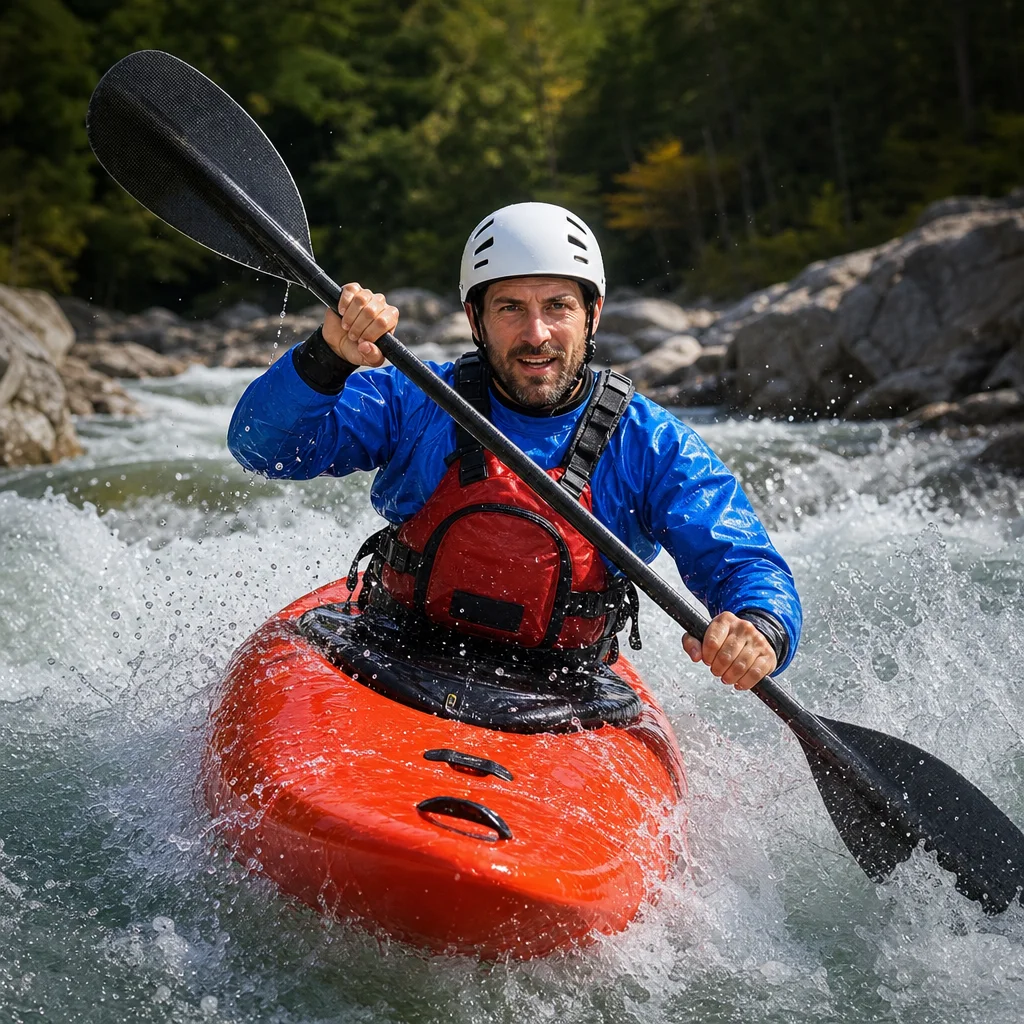
A narrow river leaves little room to correct a turn. If you wait until the bow is already pointed at the bank, even a strong paddle stroke may only soften the impact. The smoother approach is to start early, combine the right stroke with a modest edge, and use the river’s available space deliberately.
The best technique depends on whether you need a gradual bend, a tight pivot, or a quick correction. A forward sweep changes your heading while maintaining momentum, a reverse sweep helps pivot or slow the boat, and careful positioning gives every stroke more room to work.
Check the river before practicing
Water level, fallen trees, strainers, slippery banks, boat traffic, and local access rules can change. Before working on turning drills, choose a slow, open section with clear exits and confirm that your personal flotation device is properly fitted.
Set up the turn before you reach the bend
Look through the turn rather than at the patch of water immediately in front of your bow. Your kayak follows your torso and paddle movements more effectively when you decide on a path early.
On a gentle bend, begin your turn several boat lengths before the bank becomes a problem. Start near the side that gives you the widest usable arc, while leaving enough clearance from branches, rocks, fishing lines, and shallow edges. You don't need to hug either bank to make progress.
Keep your speed moderate. Too little momentum makes the kayak sluggish and difficult to steer. Too much speed reduces the time available for corrections and carries you farther toward the outside of the bend. A relaxed, steady pace gives you the most control.
Your basic sequence is:
- Look toward the open part of the turn.
- Position the kayak before the bend tightens.
- Use a forward sweep for a gradual change of direction.
- Add a reverse sweep or braking stroke if the bow is still moving too far outward.
- Straighten the kayak with a normal forward stroke once you are aligned with the new channel.
Use the forward sweep for a gradual turn
A forward sweep is usually the most useful turning stroke in a narrow river because it changes direction without stopping the kayak.
To turn left:
- Rotate your torso to the right and place the blade near your right toes.
- Keep the blade fully engaged in the water.
- Sweep it in a broad arc away from the kayak, finishing near your right hip or behind it.
- Rotate your torso through the stroke instead of pulling mainly with your arms.
- Return the blade quietly and prepare for another stroke if needed.
The same movement on the left side turns the kayak to the right. The paddle acts away from the side you want the bow to move toward, creating a turning force around the kayak.
Keep the sweep broad but controlled. A short, forceful pull near your hip tends to move the stern without giving you as much useful directional change. A wide arc from near the toes toward the stern is easier to feel and repeat.
Keep the kayak moving toward the exit
A common beginner mistake is to stare at the bank and keep sweeping until the bow points away from it. By then, the kayak may be aimed too sharply across the river.
As soon as the bow is pointed along your intended line, stop sweeping and take normal forward strokes. If you continue applying turning force after the kayak is aligned, you create a second problem that requires another correction.
Think of the sweep as a steering adjustment, not a permanent paddle position. Apply it, assess the new heading, and then return to forward paddling.
Use reverse sweeps when you need a tighter pivot
A reverse sweep turns the kayak while reducing or reversing forward motion. It is useful when a bend tightens unexpectedly, when you need to avoid a bank, or when a forward sweep has carried the bow too far.
To turn left with a reverse sweep, place the blade on the left side near your hip. Rotate your torso toward the stern, place the blade behind you, and sweep it forward toward your toes. This pulls the stern to the right and brings the bow to the left. Reverse the sides to turn right.
Use your legs and torso to help rotate the boat. Avoid leaning far backward or twisting only through your shoulders. A controlled reverse sweep should feel like a deliberate pivot, not a frantic attempt to stop.
Combine a forward sweep and reverse sweep
For a sharper turn, use strokes on opposite sides:
- Apply a forward sweep on the side opposite the direction you want to turn.
- Follow with a reverse sweep on the side toward the direction of the turn.
- As the kayak pivots, stop both turning strokes and resume forward paddling.
For example, to make a tight left turn, use a right-side forward sweep followed by a left-side reverse sweep. The first stroke moves the bow left while preserving some momentum; the second helps bring the stern around.
This combination is more effective than taking repeated sweeps on one side when space is limited. It also helps you avoid drifting through the full width of the river.
Add a modest inside edge
Edging means tilting the kayak slightly by shifting your weight, rather than leaning your upper body far away from the boat. On many recreational kayaks, a small edge toward the inside of the turn can help the hull follow a curved path.
To turn left, gently raise your right knee or shift a little weight toward your left side. Keep your chest and head relatively upright over the kayak. Your hips make the adjustment; your head shouldn't flop toward the water.
The effect depends on the kayak. A wide recreational hull may respond subtly, while a narrower or more rockered kayak may carve more noticeably. Start with a very small edge in calm, shallow-risk water and observe how your boat reacts.
Don't force an edge when the kayak is loaded unevenly, the water is turbulent, or the bank is close. A large lean reduces your margin for error and can make a recovery harder. The paddle strokes should provide most of the turning control; edging is a refinement.
Position the kayak to make the turn easier
Boat positioning often matters more than paddle strength. If you enter a bend from the wrong side, you may run out of room before your stroke has time to work.
Enter from the side that gives you room
For a left-hand bend, you may have more room by approaching from the right side of the channel, then sweeping left toward the exit. For a right-hand bend, the opposite setup often works. This is a general starting point, not a rule: shallow water, vegetation, rocks, and the shape of the current may make another line safer.
Avoid cutting so close to the inside bank that your paddle catches bottom or the hull scrapes. A little distance gives you room to use a full stroke and correct your heading.
Account for current, even on a slow river
A slow river can still move the kayak sideways or rotate it while you are focused on the bend. The outside of a curve may have more flow, while the inside may be shallow or nearly slack, but these patterns vary with water level and obstructions.
Watch floating leaves or small pieces of harmless debris to see how the surface is moving. If the current is pushing you toward the outside bank, begin the turn earlier and use a controlled angle rather than waiting until the bow is beside the bank.
When crossing from one side of the channel to the other, point the bow slightly into the current instead of directly at your destination. This ferry angle lets the current carry you across without turning the kayak broadside as quickly.
Leave an escape route
Don't choose a turning line that depends on perfect execution. Leave enough room to straighten the kayak, stop, or paddle away from the bank if your first stroke is ineffective.
A narrow gap between a branch and the bank may look tempting, but it gives you no useful correction space. Choose the wider, clearer route whenever the river offers one.
Adjust for common turning problems
The bow keeps running wide
You may be starting the turn too late or carrying too much speed. Begin the forward sweep earlier, reduce your pace before the bend, and look toward the exit. A short reverse sweep can check the turn if the bow continues outward.
The kayak spins but makes little progress
You are probably using too much turning force and not enough forward momentum. After one or two sweep strokes, return to forward strokes. You can also make the sweep slightly narrower and finish sooner.
The stern hits the inside bank
This usually means the bow turned before the boat had cleared the bend. Enter a little farther from the inside bank, or use a smaller initial sweep. Remember that the kayak pivots around a point near its center; the stern follows a different arc from the bow.
The kayak feels hard to turn
Check whether you are paddling in shallow water, carrying heavy gear, or allowing the bow to catch weeds. A fully loaded recreational kayak sits lower and may respond more slowly. Clear the paddle blade completely before switching sides, and use torso rotation rather than trying to overpower the stroke with your arms.
You lose sight of the river ahead
Don't make a tight turn while looking only over one shoulder. Pause the turn if necessary, straighten the kayak, and reposition where you can see the channel. On a blind bend, reduce speed and assume that another paddler, obstacle, or shallow patch may be out of view.
Practice the sequence in open water
Before practicing beside a bank, place a visible but harmless target in open, calm water. Paddle toward it, then use one forward sweep to pass on a chosen side. Repeat with a reverse sweep, and finally combine both strokes for a tighter turn.
Practice on both sides. Many paddlers develop a reliable turn on their dominant side and then struggle when a bend requires the opposite movement. Keep the drills slow enough to notice when the bow begins changing direction, when the stern follows, and how much edge your kayak actually needs.
Once the movements feel familiar, practice around a broad bend with plenty of open water. Add a gentle current only after you can control the kayak without relying on the bank as a reference.
A simple decision checklist
Before turning in a narrow river, ask yourself:
- Where is the clear exit from the bend?
- Which side gives me the most room to start the turn?
- Is the current pushing the kayak toward or away from that line?
- Do I need a gradual forward sweep or a tighter reverse-assisted pivot?
- Am I moving slowly enough to correct without stopping completely?
- Do I have an escape route if the turn takes longer than expected?
Start early, use the forward sweep for most gradual turns, and reserve reverse sweeps for braking and tighter pivots. Keep your edge small, position the kayak with the whole channel in mind, and straighten as soon as you reach your intended line. Those habits will keep you away from the banks more reliably than simply paddling harder.