How to Use a Back Ferry to Slow Your Drift in Current
A back ferry gives you more control than frantic corrective strokes when current carries you toward shore. I explain how to set the angle, use reverse strokes, and practice the maneuver while keeping eddies, obstacles, and changing river conditions in mind.
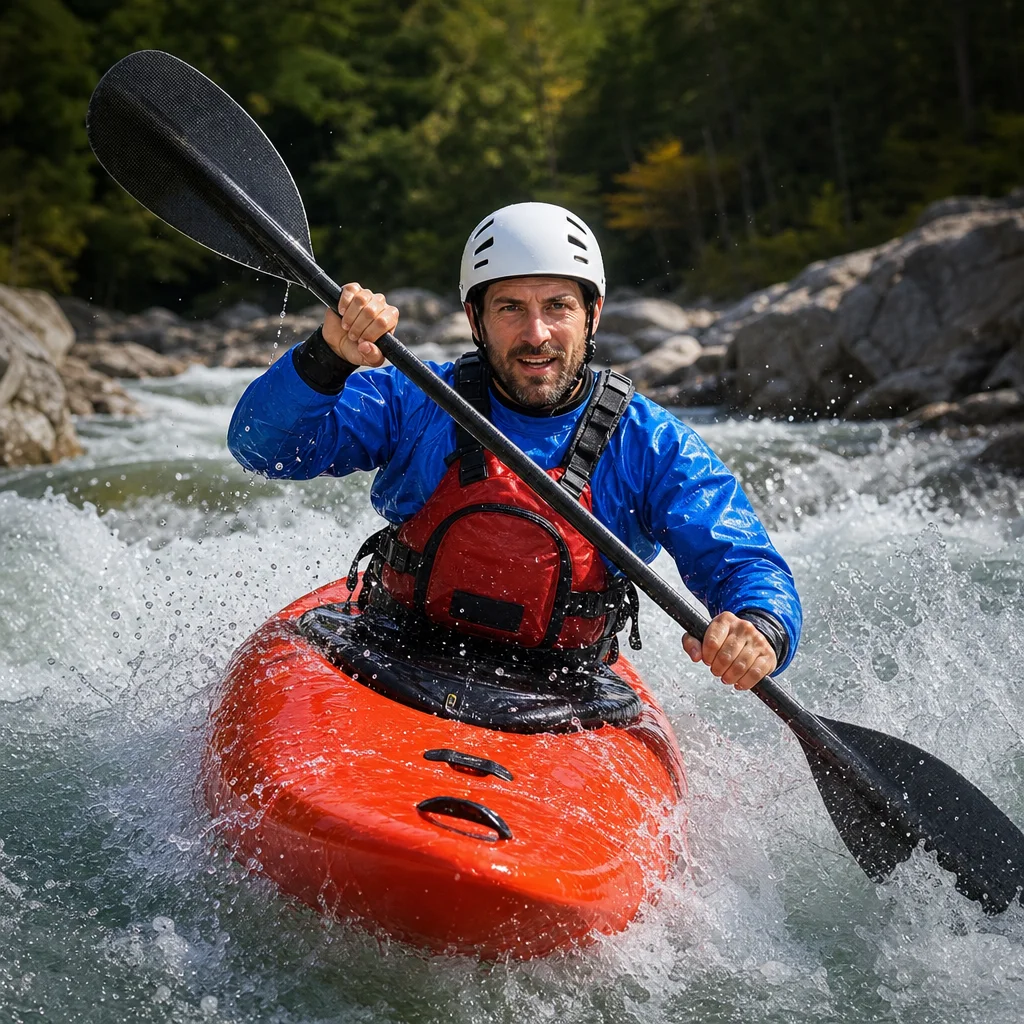
When current is pushing you toward shore, your first instinct may be to paddle harder or turn directly into the bank. A controlled back ferry is usually more useful: it lets you slow your downstream movement, adjust your position, and approach the edge of the river with fewer rushed strokes.
The maneuver combines an upstream-facing boat angle with reverse paddling. The current continues to move downstream, while your paddle strokes help create an upstream and sideways component. Used well, this gives you time to choose where you want to go instead of reacting after the current has already carried you too far.
What a back ferry does
In a standard forward ferry, you face generally upstream and use forward strokes to move across current while resisting its downstream push. In a back ferry, you reverse the arrangement: your bow points generally downstream, and you use reverse strokes to move the kayak backward while the current pushes against it.
That combination can produce a controlled diagonal path across the current. Depending on your angle and stroke power, you can:
- Slow your downstream drift
- Move toward or away from shore
- Hold a position briefly near an eddy or shoreline
- Approach a landing with more control
- Keep your bow pointed downstream while looking toward the space below you
A back ferry doesn’t stop the current. It balances some of its force with your paddling. If the current is stronger than your boat speed and angle can handle, you’ll still move downstream. The goal is controlled movement, not an absolute standstill.
Set up before the current takes over
Look downstream before starting. Identify rocks, strainers, low branches, undercut banks, swimmers, boats, and any eddyline or obstacle you might cross. Decide where you want to end up and leave yourself room to correct.
The most useful setup is usually in relatively smooth current upstream of the shoreline or landing area. Don’t wait until your kayak is already at the edge, sideways to the current, or pointing at an obstacle. A back ferry requires room for the boat to turn and for your first strokes to take effect.
Keep your torso relaxed and your knees lightly engaged with the kayak. Sit tall rather than leaning far backward. A strong backward lean can make the bow rise, reduce control, and make it harder to see downstream hazards.
How to perform a back ferry
1. Point the bow downstream
Turn so the bow points downstream at a modest angle rather than directly with the current. The exact angle depends on the river’s speed, the width of the crossing, and how much sideways movement you need.
A small angle gives you more downstream movement and less time crossing. A larger angle can help you move more across the river, but it also exposes the kayak to more current pressure and may require stronger strokes.
If you’re working near shore, start with a conservative angle. You can increase it as you understand how the current is affecting your kayak.
2. Begin with controlled reverse strokes
Reach back for a reverse stroke on the side toward which you want the stern to move. Rotate your torso, place the blade near your hip, and push the water forward alongside the boat. Keep the stroke compact and connected to your torso instead of pulling only with your arms.
Your kayak will move backward relative to its heading. At the same time, current will push the boat downstream. The combined forces create the ferrying path.
Use a steady cadence instead of frantic, deep strokes. Shorter reverse strokes make it easier to feel the boat’s movement and adjust the angle before you travel too far.
3. Watch the boat’s path, not just the shoreline
Look downstream and across the current, checking both your intended landing area and the hazards below you. Your bow may be pointed downstream while your kayak moves diagonally, so the shoreline can make your path look different from what you expect.
Notice three things:
- Is the kayak moving too quickly downstream?
- Are you crossing toward the intended side?
- Is the bow angle becoming too shallow or too steep?
If the boat is drifting too far downstream, increase your reverse-stroke effort briefly or adjust the angle so more of your backward motion works against the current. If you’re crossing too aggressively, reduce stroke power or bring the bow closer to pointing downstream.
4. Make small steering corrections
A back ferry isn't a single stroke repeated without adjustment. Use gentle sweep or rudder strokes when you need to change the bow angle. Keep corrections deliberate. A large, abrupt stroke can turn the boat broadside to the current, which may produce a sudden tilt or push.
If the boat begins turning more than you want, stop trying to overpower the turn. Relax your grip, brace your posture, and use a small corrective stroke on the appropriate side. Keeping the kayak angled to the flow is generally more manageable than allowing it to sit broadside.
5. Finish before reaching the edge
As you approach shore, reduce your angle and stroke power early. You want to arrive with enough control to enter an eddy, reach a calm landing spot, or turn parallel to shore without being pushed onto it.
Don’t use a back ferry to force the kayak into a shallow, rocky bank. If the water becomes too shallow or turbulent, straighten the boat as appropriate and use the safest available combination of strokes to land or move away.
Check the river before practicing: Confirm current conditions, water levels, access restrictions, closures, and local hazards for the specific Southeastern or western river you plan to paddle. A familiar route can behave differently after rain, snowmelt, releases, or shifting debris, and local safety guidance takes priority over a general technique description.
How to use it near shore
A back ferry is especially helpful when you need to manage position near an eddy or shoreline without rushing directly toward land. Start upstream of the point where you want to stop. Point the bow downstream and slightly toward the area you want to reach, then use reverse strokes to control how quickly you approach it.
The current may carry you downstream faster as you near the bank, particularly where the main flow narrows or bends. Keep checking the space below you. If the current is drawing you toward a hazardous bank, don’t continue the maneuver simply because you started it. Paddle away from the hazard or move into a known calm area while you still have room.
Be cautious around eddy lines. Water near an eddy can change direction and speed over a short distance. Crossing the line at an angle with a stable posture is usually more predictable than approaching it broadside. Keep your weight centered and be ready for the kayak to rotate as it enters different water.
Common mistakes that reduce control
Pointing too far upstream
If you turn the bow upstream while trying to back ferry, your reverse strokes may move the kayak downstream relative to its heading, adding to the current rather than resisting it. Recheck the basic setup: bow generally downstream, reverse motion toward the stern.
Using only your arms
Arm-only strokes fatigue quickly and often make the boat yaw from side to side. Rotate your torso, keep the paddle close to the kayak, and use moderate pressure that you can repeat.
Waiting until the last moment
A back ferry needs space. Starting beside the bank, immediately above a rock, or just before an eddyline leaves little room for learning what the current is doing. Begin earlier and use small adjustments.
Turning broadside to the current
A broadside kayak can be pushed sharply and may lean unexpectedly. If you feel the current pressing against the side of the boat, make a controlled steering correction and keep your posture centered. Avoid sudden, panicked movements.
Focusing only on the destination
A landing spot isn't safe merely because it is close. Check the current immediately upstream and downstream, the condition of the bank, submerged rocks, branches, and the route you’ll take after reaching shore.
Practice in a low-consequence setting
Practice first in slow, unobstructed current with a clear downstream escape route. Begin with short movements rather than trying to cross the whole river. Have a paddling partner nearby, wear appropriate safety equipment, and choose conditions that match your skills.
Start by pointing the bow downstream and using light reverse strokes. Notice whether the kayak moves mostly downstream, sideways, or diagonally. Change one factor at a time: angle, stroke power, or stroke timing. This makes the effect of each adjustment easier to understand.
Next, practice holding a position relative to a visible feature such as a calm shoreline marker. The aim isn't perfect stillness. Try to keep your drift slow enough that you can make decisions and correct your path.
Once that feels predictable, practice entering and leaving an eddy with plenty of space. Stop the exercise if the water becomes confusing or the boat angle gets away from you. Resetting upstream is part of good practice, not a failure.
A simple decision checklist
Before using a back ferry near shore, ask yourself:
- Do I have a clear route downstream if the maneuver doesn’t work?
- Is the water slow enough for my current skill and boat control?
- Can I see the hazards below and around my intended path?
- Am I starting far enough upstream to make gradual corrections?
- Is my bow generally downstream and my posture centered?
- Do I know where I’ll go after reaching the shoreline or eddy?
If the answer to any of these is no, create more distance, move to calmer water, or choose a simpler route.
A back ferry works best as a measured way to manage current, not as a last-second rescue stroke. Set the angle early, paddle with controlled reverse strokes, watch your downstream space, and make small corrections. With practice, you can use it to slow your drift and approach shore with considerably more time and choice.