What to Do When Your Kayak Keeps Drifting Sideways
I’ll help you identify why your kayak keeps sliding sideways and correct the problem without immediately buying new equipment. You’ll learn how to separate wind, current, trim, technique, and hull issues so you can recover control safely.
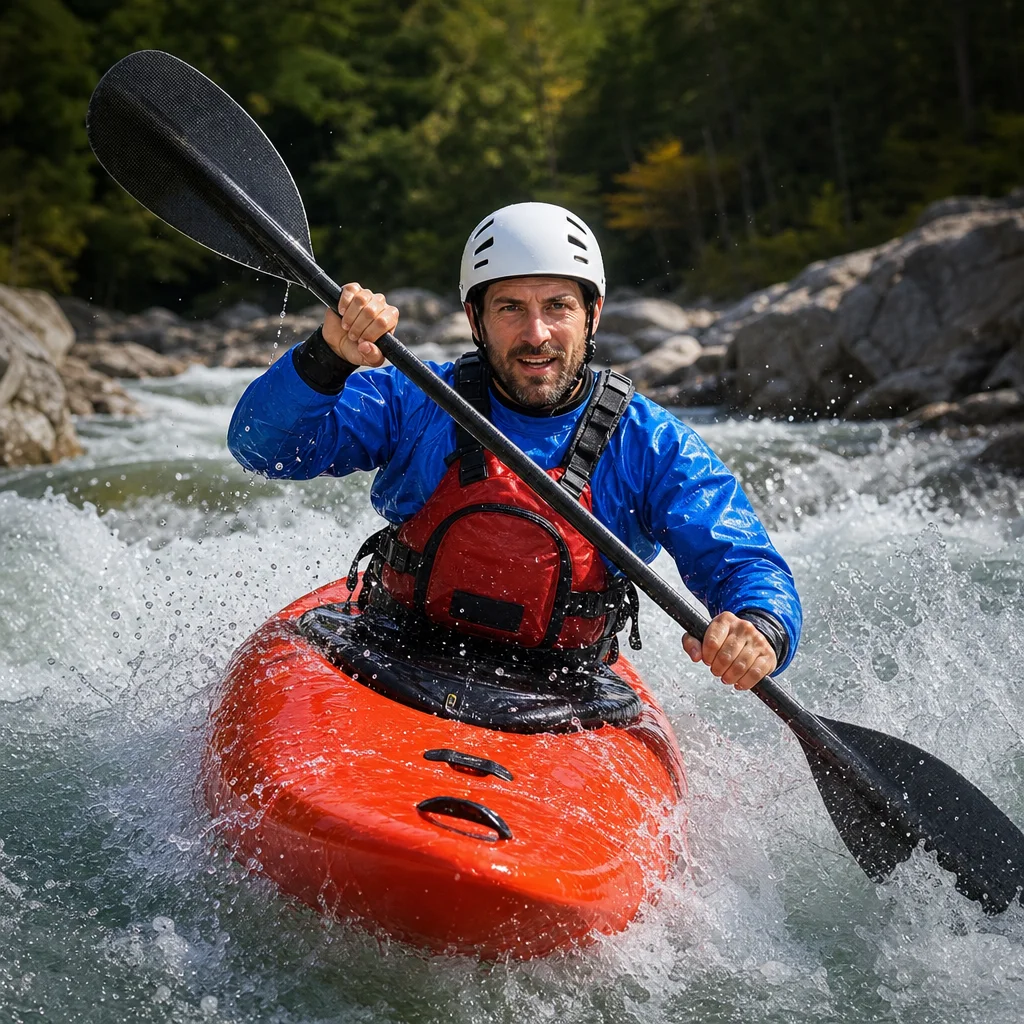
Start by identifying what is pushing you
A kayak that drifts sideways is usually responding to wind, current, or an uneven distribution of weight. It may also be turning slightly while moving forward, which can feel like a sideways slide when you’re focused on staying on course.
Before changing your technique, stop paddling hard for a moment and observe the boat. Note which direction the bow points, which way the kayak moves over the bottom, and whether the problem changes when you turn 90 degrees to the wind or current. If you’re on moving water, compare your movement with a fixed reference such as a shoreline feature, buoy, or bridge support.
The correction depends on the cause. Fighting every sideways movement with stronger strokes can waste energy and make the kayak less stable.
Wind: check for weathercocking and leecocking
Wind often causes a kayak to turn rather than move directly sideways. If the bow repeatedly swings into the wind, the kayak is weathercocking. If the bow swings away from the wind, it’s leecocking. Either effect can leave you traveling diagonally or struggling to hold a line.
The kayak’s exposed surface area matters. A high seat, loose clothing, a large paddle blade, a dry bag, or an empty open cockpit can all give the wind more to push against. A loaded kayak may behave differently because the added weight lowers the boat and changes its balance.
Try these corrections:
- Keep your paddle strokes smooth instead of pulling harder on only one side.
- Use a small sweep stroke on the side toward which the bow is turning.
- Keep your torso rotated and your stroke close to the kayak so you don’t create unnecessary yaw.
- Angle the bow slightly into the wind rather than trying to maintain a perfectly straight heading.
- Reduce exposed loose gear and secure dry bags low and close to the center of the kayak.
In a sit-inside kayak, a skeg can reduce weathercocking by adding tracking surface near the stern. Deploy it gradually rather than all at once, then reassess the boat’s response. Too much skeg may make turning difficult and can be unhelpful when you need to maneuver around obstacles.
Current: separate sideways movement from a ferry angle
On a river, a kayak can point upstream while moving diagonally across the current. That isn’t necessarily a problem. It’s a ferry angle: you’re deliberately aiming slightly upstream so the current carries you toward the opposite bank or another target.
If you want to cross moving water, don’t aim directly at the destination. Point upstream at an angle and maintain enough forward speed to keep the kayak responsive. The stronger the current, the more angle and control you may need. If you stop paddling, the current can quickly turn or carry you downstream.
A current running from one side can also make the kayak appear to drift sideways even when the bow is pointed correctly. Use shoreline references to judge your actual path. A rudder may help you maintain the desired angle, but it doesn’t remove the current or replace the need to understand where the water is carrying you.
If the current is faster than you can comfortably control, move toward calm water or the bank rather than continuing the crossing. Avoid trying to correct a difficult ferry with frantic strokes.
Check the water before crossing: Conditions, access rules, required safety equipment, and local hazards can vary by location and change with water level, weather, or season. Check current local guidance and choose a route that matches your skill and available rescue options.
Inspect the load and correct the trim
Uneven loading is one of the easiest causes to overlook. A heavy cooler, camping container, fishing crate, or water-filled dry bag can force one end or one side of the kayak deeper into the water. The hull then produces different resistance on each side, making the kayak turn or slide off course.
Start with a simple check. Is the bow or stern noticeably low? Is one side sitting deeper? Can you feel yourself leaning toward one hip? Move heavy equipment closer to the kayak’s center and keep it low. Distribute weight from side to side, and avoid placing everything behind the seat.
A slightly lower stern can sometimes improve tracking, but there is no universal trim that works for every kayak. The correct position depends on the hull, load, wind, and water conditions. Make small changes and test the result rather than shifting all your equipment at once.
Never compensate for a badly loaded kayak by leaning dramatically to one side. A large lean can reduce stability and make a capsize more likely, especially when you’re reaching for gear or paddling in waves.
Use the rudder as a control, not a permanent fix
A rudder can help you hold a heading when wind or current is pushing the stern or bow off line. Use it with light, deliberate adjustments. Pressing one foot forward usually turns the kayak in that direction, but the exact control arrangement varies by model.
A common mistake is to drop the rudder fully and hold it at a strong angle while continuing to paddle hard. This creates drag and can make the kayak feel sluggish. Start with a small correction, keep the rudder mostly aligned with the hull, and adjust only as needed.
The rudder works best when the kayak is moving. It can't correct a stationary kayak in the same way an outboard motor could, and it won’t solve poor trim, a damaged hull, or an unsafe crossing.
Check the rudder system if the pedals feel uneven or the boat turns when the rudder appears centered. Look for a loose cable, damaged blade, bent control hardware, or a rudder that doesn’t fully retract. Don’t reach behind you on the water to troubleshoot a jammed system. Move to a safe place first.
Look at your paddle technique
A paddle stroke can make the kayak turn every time it pushes water. If your strokes are much stronger on one side, or if you pull the blade far away from the hull, the boat will yaw. A low-angle recreational stroke is often more forgiving, but it still needs to be reasonably even.
Focus on these fundamentals:
- Rotate your torso instead of relying only on your arms.
- Enter the blade near your feet and remove it around your hip.
- Keep the shaft at a comfortable angle and avoid reaching excessively forward.
- Match the length and pressure of your strokes on both sides.
- Use a light corrective stroke rather than a series of powerful emergency pulls.
A paddle that is too long, too heavy, or poorly suited to your boat can make control more tiring, but equipment isn't the first thing to replace. Practice paddling in calm water and observe whether the kayak tracks normally when someone else uses it. If it does, technique or loading is more likely than a hull problem.
Check for hull damage and water inside the kayak
A damaged hull can cause persistent tracking problems. Look along the keel and chines for dents, deep scratches, warping, cracks, or areas that no longer look symmetrical. On a sit-inside kayak, check for water in the compartments or hull. A flooded hatch can add substantial weight to one end.
Plastic kayaks can develop oil-canning, where a section of the hull is pushed inward and remains distorted. Some dents improve with careful, model-appropriate warming, but excessive heat can permanently damage the plastic. Composite kayaks need different repair methods, particularly when there are cracks or delamination.
Don't continue on open water if the hull is taking on water, the rudder is loose, or a structural crack is visible. Land the kayak and follow the manufacturer’s repair guidance or consult a qualified repair shop. A small cosmetic scratch is different from damage that changes the hull’s shape or watertightness.
A quick troubleshooting sequence
When the kayak begins drifting, work through the causes in a consistent order:
- Pause and observe: Identify the wind direction, current direction, and your actual path.
- Reduce speed briefly: See whether the kayak turns or slides when you stop applying strong strokes.
- Check your posture: Sit centered, keep your weight balanced, and avoid a constant side lean.
- Adjust the load: Move heavy items toward the center and keep them low.
- Use a small correction: Try a controlled sweep stroke, rudder adjustment, or skeg adjustment if fitted.
- Inspect later: Once ashore, check the rudder, hull, hatches, and gear placement.
If the kayak behaves normally in calm water but not in wind or current, the issue is probably environmental or related to trim. If it pulls consistently in calm conditions with a balanced load, inspect the boat and controls before your next trip.
Practical next steps
Test one change at a time in calm, shallow water where you have room to maneuver. First paddle with your normal load, then reposition the heaviest items and compare the result. Practice sweep strokes and gentle rudder corrections before you need them in moving water.
If sideways drift appears suddenly, becomes severe, or occurs alongside water entering the kayak, stop troubleshooting while afloat and head for a safe landing. Once the basic causes are ruled out, equipment changes such as a rudder, skeg, or different paddle may help—but they should address a demonstrated need, not substitute for balanced loading and controlled strokes.