Why Your Kayak Turns When You Stop Paddling
Common difficulty: your kayak tracks straight under power but veers as soon as you coast. I’ll help you separate normal hull behavior from trim, wind, current, stroke, and maintenance problems worth correcting.
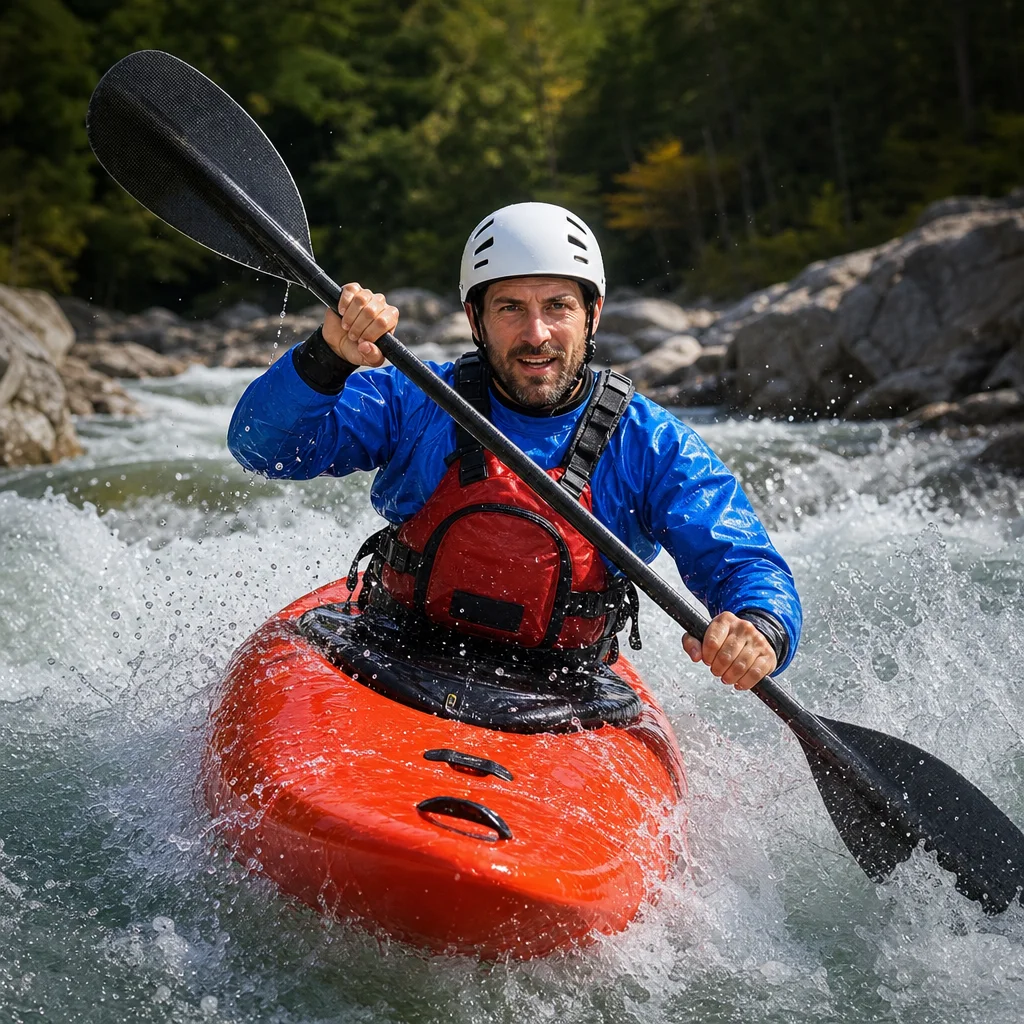
When a kayak turns as soon as you stop paddling, it’s easy to assume something is wrong with the hull. Sometimes the cause is a damaged or misaligned part, but more often the boat is responding normally to uneven loading, wind, current, hull design, or the momentum left by your last stroke.
The useful question isn't simply, “Why does it turn?” It’s, “Does it always turn the same way under similar conditions?” A consistent pattern helps you identify the cause and decide whether you need a technique adjustment, a trim change, or an inspection.
Test the Pattern Safely
Compare your kayak in calm, sheltered water with your personal flotation device secured and enough room to correct course. Avoid diagnosing handling problems in moving water, strong wind, or boat traffic.
What happens when you stop paddling
A kayak rarely stops moving immediately when you stop paddling. It continues gliding with the momentum created by your previous strokes. If the bow is pointing slightly off course, the hull will keep traveling in that direction until water resistance, your next stroke, or a steering system changes it.
Your last stroke can also leave the kayak with a small amount of turning momentum. A forward stroke on the right side tends to push the bow left, while a stroke on the left tends to push it right. If you stop after a stronger stroke on one side, the boat may continue turning even though your paddle is no longer in the water.
That brief turn is usually normal. A kayak that steadily arcs to one side every time you coast deserves closer attention.
The most common causes of veering
Uneven weight distribution
A kayak’s trim is its balance from bow to stern. If too much weight is concentrated toward one end, the boat sits lower there and moves differently through the water. Gear behind your seat, a heavy dry bag in the bow, or a water-filled compartment can all affect how the kayak tracks.
Side-to-side balance matters as well. A loaded bag tucked against one side, a paddle float stored unevenly, or your own posture leaning slightly can make one rail sit deeper than the other.
Start with a simple check:
- Remove loose gear that isn’t needed for the test.
- Center the remaining load from side to side.
- Keep heavier items low and close to the kayak’s middle.
- Sit upright with your hips centered in the seat.
- Repeat the same glide test in calm water.
If the turning becomes less pronounced, the kayak probably wasn’t defective. Its load or your seating position was changing the waterline.
Wind pushing the bow or stern
Wind can make a straight-tracking kayak turn as soon as you stop providing corrective strokes. The effect depends on the kayak’s shape, your body, the amount of gear onboard, and the direction of the wind.
A kayak that turns its bow away from the wind is often called weathercocking. A kayak that turns its bow toward the wind is sometimes described as lee cocking. Neither behavior is automatically a sign of damage. The important point is that the wind is applying unequal force to the part of the kayak above the water.
You may notice that the direction changes when you turn around on the same stretch of water. That’s a useful clue. If the kayak consistently turns relative to the wind rather than relative to the shoreline, wind is likely a major factor.
A rudder or skeg can reduce some wind-related turning, but the correct adjustment varies by kayak. Adding a steering device without understanding the cause can mask a trim problem or create new handling issues.
Current moving the boat unevenly
Moving water can push the bow and stern at different speeds. This is especially noticeable near shorelines, eddies, bends, bridges, narrow channels, and places where water flows around rocks or other obstacles.
A current can also make the kayak appear to turn when it is actually being carried along a curved path. Look at a distant fixed object, such as a shoreline feature, rather than judging only by the kayak’s relationship to nearby ripples.
To distinguish current from a boat problem, compare the kayak’s behavior while facing upstream, downstream, and across the flow—but only where you have the skill, space, and conditions to do so safely. If the turning changes with the direction of travel, moving water may be responsible.
Uneven or sweeping stroke habits
Many paddlers unknowingly finish one stroke farther from the hull or use more power on one side. A broad stroke acts partly like a turning stroke, even when you intended it to be a normal forward stroke.
The problem can also come from posture. If you rotate your torso well on one side but rely mostly on your arms on the other, your stroke length and blade path may differ. Stopping immediately after an uneven stroke makes the resulting turn more obvious.
Try this technique check:
- Keep both hands at a similar height during the catch and exit.
- Place each blade close to the kayak rather than reaching far away.
- Rotate your torso instead of pulling only with your lower arm.
- Finish each stroke near your hip without dragging the blade behind you.
- Take several light, even strokes before coasting.
If the kayak glides straighter after a balanced series of strokes, focus on technique before changing the boat.
Hull shape and normal kayak behavior
Kayaks are designed with different compromises. A short, wide recreational kayak may turn easily and feel maneuverable, while a longer touring kayak generally carries speed and tracks more strongly. Rocker—the upward curve of the hull toward the bow and stern—also makes a kayak easier to turn but can reduce its resistance to wandering while coasting.
A kayak with a rounded hull may respond differently from one with a flatter bottom or defined chines. Seat position, waterline length, and the amount of submerged surface all influence how strongly the kayak resists a turn.
This means two boats can behave differently under the same paddler. If your kayak has always made a gentle arc when coasting, and the behavior is predictable, it may simply be part of the design. A sudden change is more concerning than a consistent characteristic.
How to tell whether the kayak needs attention
Use a repeatable test rather than relying on one frustrating moment on the water. Choose calm conditions and note:
- Which direction the kayak turns
- How quickly the turn begins
- Whether the turn occurs with no gear, normal gear, or both
- Whether wind or current is present
- Whether the behavior changes after you switch paddling sides
- Whether the kayak turns while being towed or pushed gently by hand
A gentle, repeatable arc that changes with wind, loading, or your final stroke is usually an operating characteristic. A sharp or newly developed turn that remains the same in calm water deserves inspection.
Inspect the hull and deck
Look along the hull for dents, deep scratches, cracks, soft areas, or distortion. A plastic kayak stored on a hard surface or left in excessive heat can develop deformation that changes its waterline. Small cosmetic scratches usually won’t explain a strong directional problem, but a pronounced dent or warped section might.
Check the deck and cockpit area for loose fittings that could affect your seating position. Confirm that the seat, foot braces, and thigh supports are secure and positioned evenly. A loose seat can let you sit off-center without making the problem obvious.
For a sit-on-top kayak, inspect the seat, scupper area, and storage compartments. Water trapped in a compartment can add unexpected weight, while a damaged hatch seal can allow water inside. Empty and dry the kayak before comparing its handling again.
Check the skeg or rudder
If your kayak has a skeg, make sure it deploys and retracts smoothly and sits straight when extended. Sand, grit, bent hardware, or a damaged control line can prevent it from reaching its intended position.
For a rudder system, check that the blade is centered when the foot pedals or controls are neutral. Look for loose cables, unequal cable tension, damaged fittings, or a rudder that isn't aligned with the kayak’s centerline.
Don’t assume that deploying a rudder or skeg is the solution to every turning problem. First confirm that the system is aligned and working as designed. A misaligned control surface can create the same symptom you’re trying to correct.
Verify Your Steering Setup
Before adjusting cables, pedals, skeg hardware, or rudder limits, consult the kayak and component manufacturer’s instructions. Designs differ, and an incorrect adjustment can reduce control or damage the mechanism.
A simple troubleshooting sequence
Work from the easiest causes to the least obvious ones:
- Repeat the test in calmer conditions. Wind and current can overwhelm small differences in technique or trim.
- Remove unnecessary gear. Retest with a centered, balanced load.
- Check your posture. Keep your hips and shoulders centered rather than leaning into one side.
- Use even strokes. Take several controlled strokes on both sides before coasting.
- Compare directions. Note whether the kayak always turns the same way or reacts to wind and current.
- Inspect the hull and outfitting. Look for deformation, loose fittings, trapped water, or damage.
- Check the rudder or skeg. Confirm that it is centered, straight, and moving as intended.
Change only one factor at a time when possible. If you move gear, alter the seat, and deploy the skeg all at once, you won’t know which change helped.
When to stop troubleshooting on the water
A mild tendency to veer is usually manageable, but stop the test if the kayak becomes difficult to control, takes on water, develops a crack, or reacts sharply to small steering inputs. Return to shore or a safe landing area and inspect it there.
If the kayak has suffered an impact, has visible structural damage, or behaves differently after storage, don’t treat the issue as a normal trim adjustment. Have the boat assessed by the manufacturer, a qualified repair shop, or an experienced technician familiar with that kayak’s construction.
Practical next steps
First, repeat the glide test in calm water with the load centered and your seating position checked. Then compare the result after a series of balanced strokes. If the turning changes with conditions or technique, adjust those factors rather than modifying the kayak.
If the kayak still makes a strong, consistent turn, inspect the hull, seat, compartments, skeg, or rudder. Keeping those parts clean, dry, aligned, and undamaged improves handling reliability and makes future troubleshooting much easier.