Forward Stroke Mistakes That Make a Kayak Feel Slow
When your kayak feels sluggish even though you’re paddling harder, the problem may be timing and technique rather than fitness. I’ll help you identify common forward-stroke mistakes and make focused corrections without overhauling your entire paddling style.
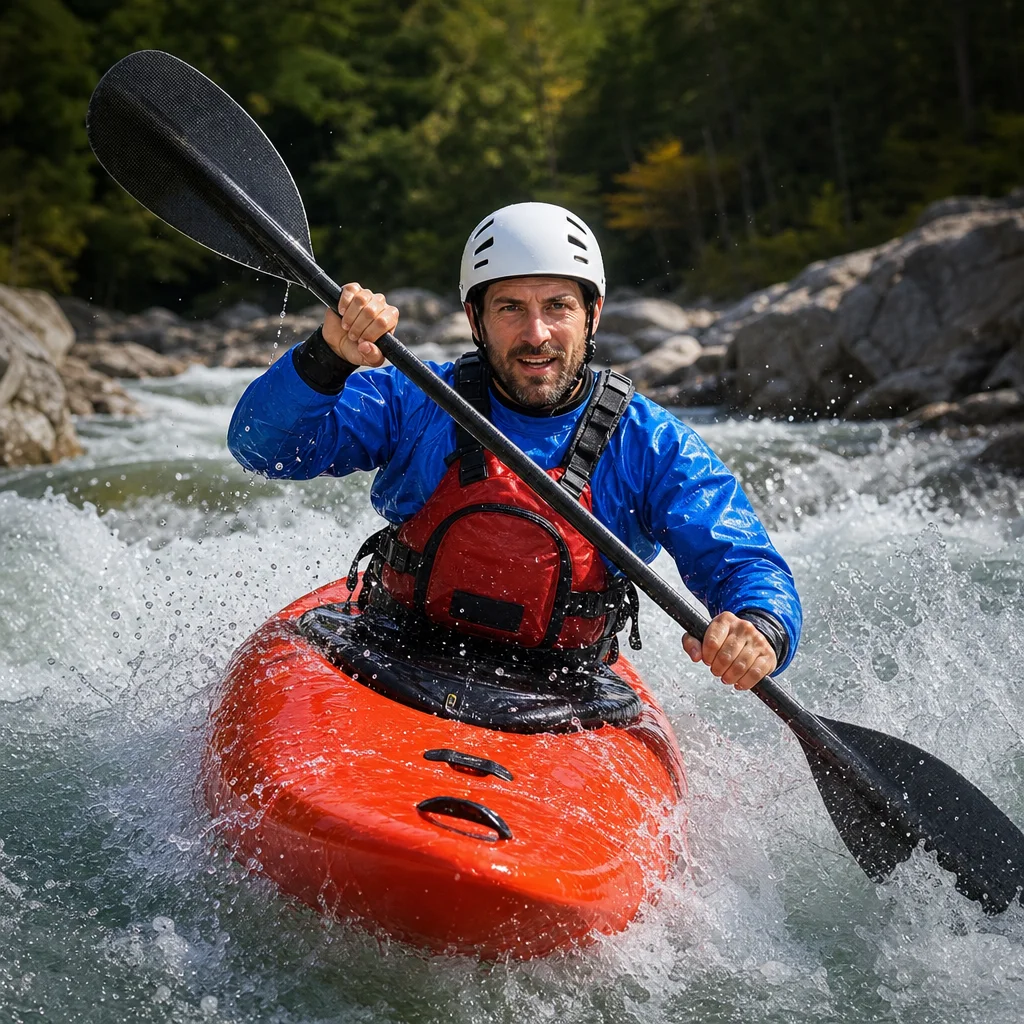
Your kayak can feel slow for several different reasons, but adding effort is often the least useful first response. If your arms are tiring, your paddle feels heavy, or each stroke seems to move the boat only a short distance, look closely at how the stroke begins, loads, and ends.
The forward stroke works best as a connected movement. Your torso and legs help drive the stroke, your paddle enters cleanly near your feet, and the blade exits around your hip. Small errors in that sequence can create extra drag, wasted movement, and early fatigue.
Start by identifying the symptom
Before changing everything at once, pay attention to what you feel:
- Your forearms burn quickly: You may be gripping too tightly or relying on your arms.
- Your shoulders feel strained: You may be reaching too far, lifting the top hand, or losing torso rotation.
- The kayak surges and slows with every stroke: Your stroke may be too short, too abrupt, or poorly timed.
- The paddle feels powerful but the kayak barely responds: The blade may be slipping, entering at the wrong angle, or staying in the water past the useful part of the stroke.
- The boat wanders: Your strokes may be uneven, your blade may be too far from the hull, or you may be correcting direction instead of driving forward.
Use one correction at a time. That makes it easier to tell whether a change actually helps.
Mistake 1: Paddling mostly with your arms
What goes wrong
Arm-dominant paddling usually looks like repeated pulling with the lower arm while the torso stays mostly still. It can feel active because your biceps and forearms are working hard, but the muscles doing most of the work are relatively small and fatigue quickly.
The result is often a short, weak stroke. You may also bend and straighten the elbows excessively, which makes the paddle path less stable.
How to recover
Keep your lower arm reasonably straight during the power phase and rotate your torso toward the side of the stroke. Think of moving the paddle by turning your body, not by curling it toward you.
Your top hand should move forward and slightly across the boat as the lower blade travels back. The top hand helps control the paddle angle and supports torso rotation; it shouldn’t simply rise and fall with every stroke.
Try this drill in calm water:
- Slow your cadence.
- Take a comfortable stroke on one side.
- Notice whether your chest turns toward the paddle side as the blade enters.
- Let the torso rotate back as the blade travels toward your hip.
- Switch sides while keeping your hands relaxed.
You don’t need an exaggerated twist. A controlled rotation that stays comfortable is more useful than forcing a large range of motion.
Mistake 2: Reaching too far forward
What goes wrong
A long reach can seem like a way to get more distance from every stroke. In practice, reaching well beyond your comfortable catch position can tilt the torso, lock the shoulder into a vulnerable position, and make the blade enter at a poor angle.
If your upper body collapses forward or your lower arm is fully stretched before the blade enters, you may lose control at the catch. The first part of the stroke can then pull upward or outward instead of driving the kayak forward.
How to recover
Reach forward with your torso rotation rather than by extending your shoulder as far as it will go. Keep the shoulder supported and the elbow relaxed. Place the blade near your feet or slightly ahead of them, depending on your kayak, paddle, and comfortable technique.
The goal isn’t the farthest possible reach. The goal is a clean catch that lets you apply pressure without straining the shoulder.
Practice placing the blade quietly. A splashy, abrupt entry often signals that you’re throwing the blade forward rather than setting it into the water under control.
Mistake 3: Letting posture collapse
What goes wrong
A rounded back, low chest, or slumped seat position makes torso rotation harder. It can also cause you to paddle from a fixed, compressed position, so your arms take over because your core and legs aren’t contributing effectively.
Poor posture doesn’t always feel uncomfortable at first. It may develop gradually as you tire, especially during a long, steady paddle.
How to recover
Sit tall without becoming rigid. Keep your head balanced over your torso, your shoulders relaxed, and your chest open enough to rotate. Your feet should have firm contact with the foot braces or footrest, while your knees remain comfortably supported according to the kayak’s fit.
Use your legs as part of the connection to the boat. As you rotate and press through one foot, the opposite side can relax slightly. The movement should be subtle; you aren’t trying to stomp on the foot braces.
Every few minutes, reset your posture:
- Relax your grip.
- Drop your shoulders away from your ears.
- Reconnect your feet with the footrest.
- Sit tall and let your torso turn.
These small resets can prevent fatigue from changing your stroke mechanics.
Mistake 4: Pulling past the hip
What goes wrong
Many paddlers keep the blade in the water too long, hoping to get more power from each stroke. Once the blade passes your hip, however, its leverage for forward propulsion usually decreases. Continuing the pull can make the paddle move outward, lift water, or drag against the kayak.
This often causes the boat to slow slightly at the end of each stroke. It can also encourage excessive torso rotation and place unnecessary stress on the lower shoulder.
How to recover
Think of the stroke as ending when your lower hand reaches roughly your hip. At that point, release the blade cleanly and prepare for the next catch. The exact exit position varies with your kayak, paddle length, torso mobility, and stroke style, so don’t treat your hip as a rigid measurement.
A useful test is to make several quiet strokes and listen for the exit. If the blade produces a strong dragging sound behind you, try exiting earlier. You should feel the blade load during the middle of the stroke, then release without a hard tug.
A slightly shorter stroke with a clean exit is often more sustainable than a long stroke that loses pressure and pulls the boat off line.
Mistake 5: Using a low, flat paddle angle
What goes wrong
If the paddle shaft stays nearly horizontal, the blade may travel far from the kayak and push water sideways. This can create more turning force than forward drive, particularly if your hands drift away from the centerline.
A low angle can also make it difficult to keep the blade fully engaged during the power phase.
How to recover
Use a moderately higher paddle angle if it feels natural and controlled. Keep the working blade closer to the kayak and guide the top hand forward rather than sweeping it widely across the boat.
You don’t need to hold the paddle vertically or force a racing-style stroke. Focus on keeping the blade planted and the shaft stable while your torso rotates.
Mistake 6: Increasing cadence instead of improving connection
What goes wrong
When a kayak feels slow, many paddlers immediately take faster strokes. A high cadence can hide a weak catch, rushed rotation, or blade slip. It also increases fatigue, especially if every stroke is driven by the arms.
How to recover
Reduce your cadence briefly and make each stroke deliberate. Feel for three stages: clean entry, connected power, and early exit. Once those stages feel consistent, gradually increase the rhythm without losing the connection.
If the boat moves more smoothly at a slower pace, that’s useful information. You may need better blade placement and body rotation rather than more effort.
A simple troubleshooting routine
When you have safe, calm water and enough room to maneuver, use this sequence:
- Paddle normally for a minute and notice where you feel fatigue.
- Slow down and relax your grip.
- Shorten the reach slightly.
- Rotate your torso toward each catch.
- Exit the blade around the hip instead of pulling behind you.
- Compare the boat’s glide and your effort.
Change only one or two details during each test. If you adjust your reach, posture, cadence, and paddle angle simultaneously, you won’t know which change made the difference.
Choose a calm practice window: Work on stroke corrections close to shore or in conditions well within your ability, and stop if fatigue, wind, current, or boat traffic makes technique practice distracting or unsafe.
Don’t overlook equipment and conditions
Technique is important, but it isn’t the only reason a kayak may feel slow. Extra gear, low tire pressure on a transport cart, a damaged hull, an incorrectly adjusted footrest, or a paddle that doesn’t suit your size can all affect comfort and efficiency.
Wind and current can also make a normal pace feel disappointing. Compare your effort in both directions rather than judging speed from one leg of the trip. If the kayak glides normally when you stop paddling, the issue may be conditions rather than a major stroke problem.
Check the basics before making drastic changes: secure loose gear, confirm that the kayak is properly loaded, and make sure your paddle grip and seat position allow comfortable rotation.
Practical next steps
On your next outing, focus on just three priorities: relaxed hands, torso rotation, and an early blade exit. Keep the stroke comfortable rather than trying to maximize reach or force.
After a few minutes, ask yourself whether the kayak feels smoother, whether your arms are working less, and whether the boat maintains its glide between strokes. If it does, keep refining that movement gradually. Efficient paddling usually comes from removing wasted motion, not from pulling harder.