How to Use a Kayak Rudder Without Letting It Do All the Work
I’ll explain how to deploy a kayak rudder at the right time, blend it with effective strokes, and spot trim or technique problems before the rudder becomes a substitute for control.
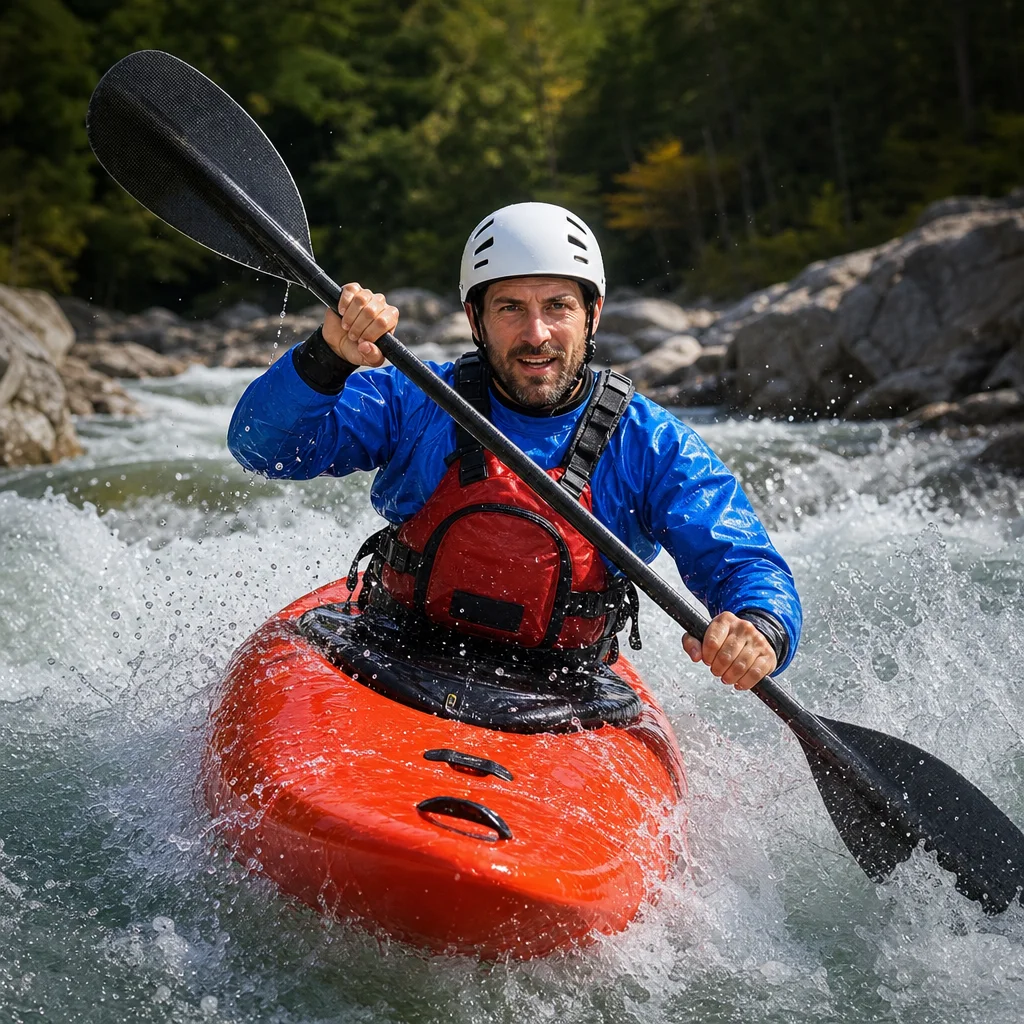
A rudder can make a kayak easier to hold on course, especially in wind, current, or waves. The common mistake is treating it like a steering wheel: put the blade down, press a pedal, and let it correct every movement. That approach may work briefly, but it can also create extra drag and hide problems with your stroke, edging, or how the kayak is loaded.
Use the rudder as a supporting tool. Your paddle strokes, body position, and boat trim should still provide most of the control. The rudder then helps you maintain direction or make small corrections without interrupting your rhythm.
What a kayak rudder is meant to do
A rudder is a movable blade mounted near the stern. When it is lowered into the water, foot pedals control its angle. Turning the blade changes the water flow around the stern, helping the kayak turn or resist unwanted yaw.
Its most useful job is usually course correction, not initiating every turn. For example, a rudder can help when:
- A crosswind keeps pushing the bow off course
- Current affects one side of the kayak more than the other
- You are paddling a long, tracking-oriented kayak
- You need to make a small correction without taking a strong stroke
- You are carrying a load that makes the kayak respond differently
- You are tired and want to reduce repeated corrective strokes during a straight crossing
A rudder doesn't replace good balance or an effective forward stroke. It also doesn't correct poor trim by itself. If the kayak constantly wants to turn, investigate why instead of leaving the rudder heavily angled for the entire trip.
Start with the rudder retracted
For many normal paddling situations, begin with the rudder out of the water. A well-trimmed kayak should be manageable with paddle strokes and subtle edging, particularly on calm water.
Retracting the blade can reduce drag and gives you clearer feedback about how the kayak is behaving. If it immediately swings to one side, you have useful information. The cause could be an uneven stroke, an inefficient posture, wind, current, or the way your equipment is packed.
Practice on open, calm water where you have room to drift. Paddle forward with a relaxed, repeatable stroke and observe whether the kayak holds a reasonably straight course. It doesn't need to travel perfectly straight after every stroke. Small changes in direction are normal and can often be corrected with a light sweep, a brief stern rudder stroke, or a small change in edge.
Lower it before you need it
If conditions are becoming more difficult, deploy the rudder while you still have room and stability. Don't wait until the kayak is already turning sharply in breaking waves, a narrow channel, or strong current.
Use the control line or lever according to your kayak’s design, and confirm that the blade is fully in the water. Some systems allow partial deployment, but a partly lowered blade may be less predictable and can create an awkward load on the mechanism. Know how your particular rudder operates before relying on it away from shore.
Keep the rudder centered when it isn't actively correcting. A centered blade creates less steering input than one left slightly turned, which helps you tell whether the kayak itself is tracking properly.
Coordinate your feet, torso, and paddle
Rudder control works best when your feet provide a stable platform rather than constantly chasing the pedals. Keep both feet connected to the foot braces with comfortable pressure. Your knees and thighs should help you stay connected to the boat, while your torso remains available for rotation.
To make a gradual turn to the right on a conventional pedal system, press the right pedal forward and allow the left pedal to move back. The rudder blade angles to the right, and the stern is directed left, helping the bow turn right. The opposite input produces a left turn.
Because pedal layouts and rudder linkages differ, confirm the direction at slow speed in open water. If the kayak turns opposite to what you expect, stop and check the system rather than trying to adapt while near an obstacle.
Avoid holding a pedal hard against its limit for ordinary course corrections. Use the smallest input that produces the desired result, then return toward center. Large, abrupt rudder movements can make the kayak veer, increase drag, and encourage you to overcorrect in the other direction.
At the same time, keep paddling. Your forward stroke supplies speed and momentum; the rudder fine-tunes the direction. If you stop paddling and rely on the blade alone, the kayak may slow down while still failing to turn as smoothly as you expect.
Use strokes to start turns and the rudder to support them
A paddle stroke should usually begin the turn. The rudder can then help hold or shape the turn, particularly when the kayak has a strong tendency to straighten itself.
For a gradual turn to the right, you might combine a few of these actions:
- Reduce pressure on the right side of your forward stroke.
- Use a sweep stroke on the left side to move the bow right.
- Add a small right-pedal input if the kayak keeps resisting the turn.
- Center the rudder as the kayak reaches the new heading.
- Resume balanced forward strokes.
Your exact combination depends on the kayak, speed, wind, and desired turn. The important idea is to avoid asking the rudder to perform the entire maneuver. A paddle stroke changes the kayak’s direction while maintaining your connection to the boat. The rudder is better suited to controlled assistance and course holding.
In a stronger turn, edging may also help. Leaning the kayak slightly toward the inside of the turn can make it more responsive, but only use an edge you can control confidently. Keep your upper body balanced and avoid leaning your shoulders excessively. In rough conditions, maintain a stable posture and choose the least aggressive input that keeps the boat predictable.
When the rudder is especially helpful
Crosswinds and quartering winds
A wind from the side or front quarter can make the bow or stern wander. Rather than constantly taking corrective strokes, deploy the rudder and use a modest pedal input to maintain your heading. Keep checking your paddle rhythm and body position; the wind may change as you move around a shoreline or behind an island.
Current and moving water
Current can push the kayak off course even when the surface looks calm. A rudder can help you maintain a ferry angle or stay aligned with your intended route, but it doesn't remove the need to read the water and choose a safe line.
Long, heavily tracking kayaks
A long touring kayak may hold a heading well but resist quick turns. In that case, the rudder can reduce the effort required for small adjustments. Use paddle strokes to establish the new direction, then center the rudder once the boat is settled.
Fatigue late in a trip
When your stroke becomes less consistent, a rudder can reduce the number of corrective strokes needed. This is a sensible use of the system, but fatigue is also a reason to shorten the route, rest, or seek calmer water. Rudder assistance shouldn't be used to push beyond your ability to control the kayak.
Check your control before harder water: Before entering wind, current, surf, or a busy channel, confirm that the rudder deploys, retracts, and responds in the expected direction. Wear your properly fitted personal flotation device and keep enough space to stop, turn, or recover if the system becomes difficult to use.
Signs the rudder is doing too much
A rudder may be compensating for a problem when you notice any of the following:
- The kayak turns sharply whenever the blade is centered
- You need constant pedal pressure to paddle straight in calm water
- The stern feels low or the bow rides unusually high
- The kayak becomes difficult to control when the rudder is retracted
- You make large pedal movements and then immediately reverse them
- Your paddle strokes are short, uneven, or mostly corrective
- The blade is left angled even when you are traveling straight
First check your trim. Heavy items should be secured and distributed so the kayak sits in a balanced, predictable position. Avoid placing too much weight at either end. Then check your seating position, foot-brace adjustment, and stroke mechanics.
If the problem continues, inspect the rudder itself. Look for a blade that isn't fully deployed, a control line with excessive slack, a pedal that doesn't move smoothly, or an obstruction near the stern. Make adjustments on shore when possible. A rudder system that feels loose or unreliable deserves attention before a longer trip.
A simple practice progression
Practice in three stages:
- Paddle without the rudder. Make forward strokes, sweep strokes, and gentle edging adjustments. Notice how the kayak responds.
- Deploy the rudder and keep it centered. Continue paddling and compare the boat’s feel with the blade retracted.
- Add small pedal inputs. Make a minor correction, release the pressure, and watch how quickly the kayak responds. Repeat in both directions.
Next, practice combining a sweep stroke with a small rudder input. Try to create a smooth turn without stopping your forward momentum. Finish by retracting the blade and returning to paddle-only control.
This progression builds a useful habit: you learn what the kayak and paddle can do first, then add the rudder where it provides a clear benefit.
Practical next steps
Use the rudder when it reduces repeated corrections, helps you manage wind or current, or makes a long kayak more responsive. Keep it centered when you don't need steering input, and use the smallest pedal movement that works.
On your next calm-water outing, spend a few minutes comparing rudder-out and rudder-in control. If the kayak requires constant rudder pressure, pause to check trim, stroke balance, and equipment setup. The goal isn't to avoid the rudder; it is to make sure the rudder is assisting your technique rather than concealing a problem.