How to Paddle More Efficiently When Wearing Winter Layers
You can add warmth with fewer, better-chosen layers instead of piling on bulky clothing. I’ll show you how to adjust posture, stroke mechanics, cockpit fit, and warm-up habits so winter paddling stays efficient and controlled.
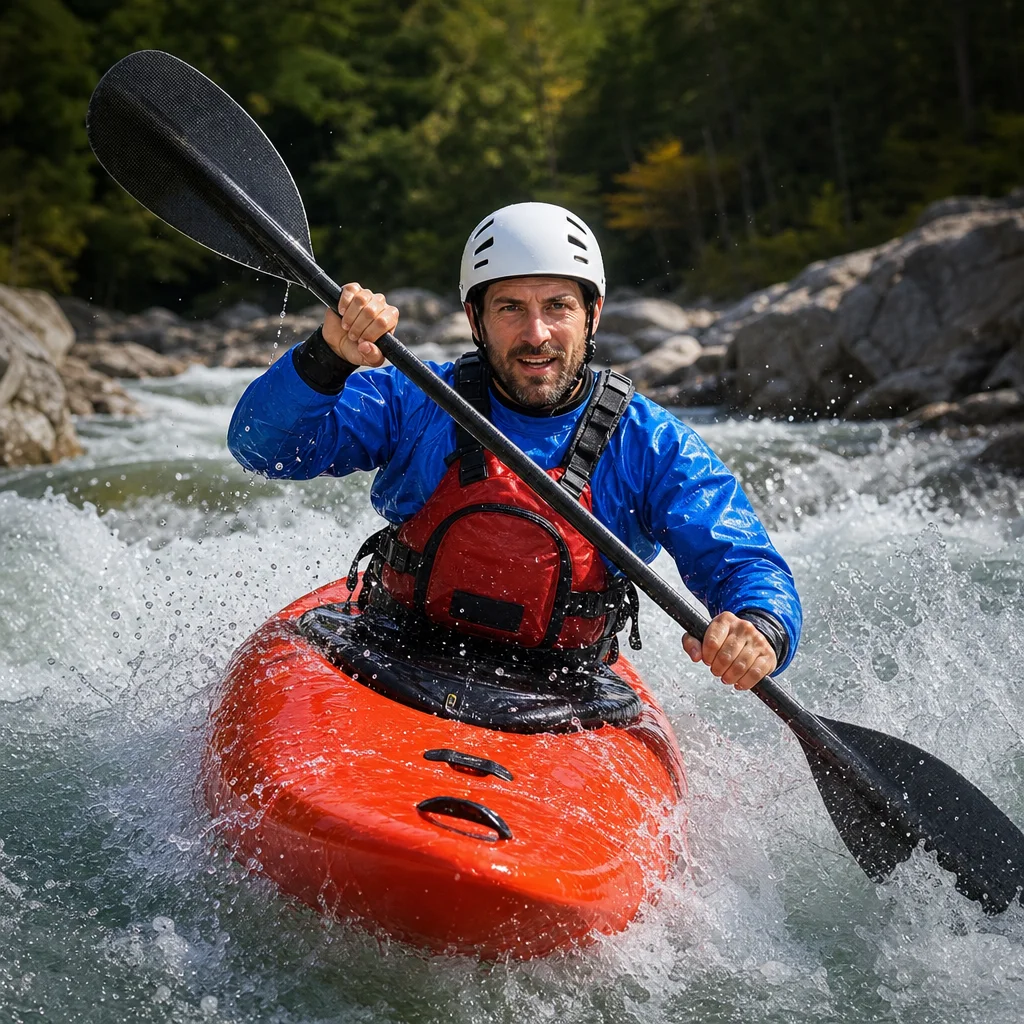
Cold-weather paddling often creates a frustrating trade-off: the layers that keep you warm can also make your stroke shorter, your torso stiffer, and your cockpit feel cramped. You don’t necessarily need more strength to compensate. You need to reduce bulk where it interferes with movement and make a few deliberate technique adjustments.
The goal is simple: stay warm without turning every stroke into a full-body struggle. A streamlined clothing system, an upright posture, and a slightly more compact stroke can help you paddle efficiently while keeping your movements controlled.
Start with the layers that affect movement most
Not all insulation creates the same problem. Bulky material around your shoulders, elbows, waist, and hips can limit rotation or interfere with the paddle shaft. Several thin, flexible layers are usually easier to move in than one thick garment, but even thin layers can become restrictive when stacked too tightly.
Pay particular attention to these areas:
- Shoulders: Excess fabric can make it harder to lift and rotate your arms.
- Armpits: Tight or stiff material can shorten your forward reach.
- Waist and lower back: Bunched layers can push you forward or prevent a neutral sitting position.
- Hips and knees: Extra bulk can make the cockpit feel smaller and limit leg drive.
- Wrists: Thick cuffs can catch on the paddle shaft or make a relaxed grip difficult.
Before launching, sit in your kayak with the complete clothing system you plan to wear. Put on your PFD, hold the paddle, and make several slow forward strokes. Rotate from side to side, reach forward, and lift each elbow. If a seam pulls, a cuff catches, or your jacket rides up, that problem will probably become more noticeable after an hour on the water.
A useful winter setup often includes a moisture-managing base layer, a flexible insulating layer, and a wind- or water-resistant outer layer selected for your conditions. The exact combination depends on the temperature, wind, water, activity level, and whether your clothing is intended to protect you during immersion. Warmth on land isn't the only measure of a suitable paddling layer.
Check your cold-water setup: Before heading out, confirm that your clothing, PFD, and cockpit arrangement still work together when fully layered. Local water temperature, air temperature, wind, and launch conditions can change the consequences of a capsize, so adjust your plan to the conditions rather than relying on a familiar outfit.
Sit tall before trying to paddle harder
Winter layers can gradually push you into a collapsed posture. A thick jacket may press against your abdomen, while extra fabric behind your lower back can tilt your pelvis forward. You may then compensate by hunching your shoulders or reaching only with your arms.
Start with a neutral, upright position:
- Sit evenly on both sitting bones.
- Keep your lower back comfortably supported without leaning heavily against the seatback.
- Let your shoulders remain low and relaxed.
- Keep your head over your torso rather than reaching your chin forward.
- Allow your knees and feet to maintain light contact with the kayak’s supports.
This position gives your torso more room to rotate inside the layers. It also reduces the tendency to pull with your arms alone.
If a jacket hem or waist layer bunches behind you, pull it smooth before settling into the kayak. Don’t keep shifting your hips during the stroke to escape a pressure point. A small clothing adjustment at the launch is usually more effective than trying to paddle around the problem.
Use a compact stroke instead of forcing a long reach
Heavy layers can make a long, high-reaching stroke feel powerful at first, but an exaggerated reach may strain your shoulders and pull your torso out of alignment. Efficiency comes from placing the blade cleanly, rotating within your available range, and removing it before the stroke becomes awkward.
For a forward stroke in bulky clothing:
- Reach only as far as you can while keeping your shoulder relaxed.
- Enter the blade near your feet or slightly ahead of them, according to your kayak and technique.
- Rotate your torso as far as your clothing comfortably allows.
- Keep the lower hand relaxed and let the upper hand guide the shaft.
- Exit the blade around your hip instead of dragging it behind you.
- Return the blade smoothly, without rushing the recovery.
Your stroke may be a little shorter in winter. That isn’t automatically a problem. A clean, repeatable stroke with moderate effort is usually more sustainable than a long stroke that causes your shoulders to tense or your torso to collapse.
Think of maintaining a steady rhythm rather than maximizing each pull. If your layers restrict rotation, slightly increase cadence while reducing force. This can help you preserve forward momentum without trying to overpower the clothing.
Keep your elbows and hands inside an efficient range
Winter paddling becomes tiring when the arms travel too far from the body. Bulky sleeves can encourage you to lift your elbows, flare them outward, or grip the paddle tightly to control the extra friction.
Instead, keep your elbows comfortably bent and let them move naturally with the stroke. Your hands should stay within a range where you can relax your forearms. If the paddle feels difficult to control, check your grip before changing your technique. A firm grip is useful for control, but squeezing continuously wastes energy and can make cold hands feel worse.
On the recovery, avoid swinging the paddle in a wide arc around your layers. Bring it forward through a compact path that clears your knees and clothing without brushing against your jacket. If your cuffs catch on the shaft, try a lower-profile glove or mitten system, provided it still gives you the warmth and control you need.
Adjust the cockpit before the water exposes the problem
Extra clothing can change how you fit in the kayak. It may reduce room around your hips, lift your knees, or make your feet feel too close to the foot supports. Those changes affect edging, rotation, bracing, and your ability to exit if necessary.
Do a clothing-and-cockpit test on shore. With your full layers and PFD on, check that you can:
- Sit upright without pressure across your chest or abdomen.
- Move your knees and legs enough to control the kayak.
- Reach the foot supports without locking your knees.
- Rotate your torso without striking the cockpit rim.
- Enter and exit without clothing snagging.
- Keep your spray skirt accessible and correctly fitted, if you use one.
Avoid making major outfitting changes casually on the water. A small adjustment to a seat or foot support can affect the kayak’s handling, and a setup that feels comfortable may not provide the same control. Make one change at a time, then test it in calm, shallow conditions appropriate for your skill level.
Warm up without overheating before launch
Starting cold and stiff encourages short, tense strokes. Starting overheated can leave you damp before you even reach the water. Either problem can make your clothing less effective.
Use a brief, low-intensity warm-up before launching. Walk around, swing your arms gently, rotate your torso, and practice a few slow shoulder movements. Keep the warm-up easy enough that you don’t begin sweating heavily. The point is to restore comfortable movement, not to exhaust yourself beside the ramp.
Organize your layers so you can make a small adjustment after launching only when it’s safe to do so. For example, you might begin with an outer layer partially vented and close it once you’re moving into wind. Don’t remove essential protective clothing on the water simply to feel more comfortable during a brief warm spell; conditions can change quickly, and a capsize leaves little room for improvisation.
Use short technique checks during the trip
Every few minutes, run through a quick efficiency check:
- Are your shoulders still relaxed?
- Are you rotating your torso, or pulling mostly with your arms?
- Is your blade entering cleanly?
- Are you lifting the paddle higher than necessary to clear your clothing?
- Has a layer bunched behind your back or around your hips?
- Are you gripping the shaft more tightly as you get colder?
Correct one issue at a time. Drop your shoulders, smooth a layer at the next safe pause, or reduce your stroke length slightly. Small corrections prevent fatigue from building into poor balance and hurried decisions.
If your hands are getting numb, your clothing is wet, or you’re struggling to maintain control, treat that as a safety concern rather than a technique challenge. Turn back or stop at a suitable location before the problem becomes harder to manage.
A minimalist winter paddling checklist
Before your next outing, focus on the few choices that have the largest effect:
- Choose flexible layers that leave your shoulders and hips room to move.
- Test the complete outfit in the kayak before launching.
- Smooth bunched fabric behind your back and under your PFD.
- Sit upright and rotate from your torso instead of reaching farther with your arms.
- Use a clean, compact stroke with a relaxed grip.
- Confirm that your cockpit, spray skirt, and exit path still work with winter clothing.
- Warm up gently without sweating heavily.
- Reassess your posture and clothing during the trip.
You don’t have to paddle aggressively to overcome winter layers. Keep the clothing system streamlined, preserve a comfortable upright posture, and let your stroke become slightly shorter and more rhythmic when necessary. Those adjustments can make cold-weather paddling feel less restrictive while leaving more energy for the decisions that matter on the water.