How to Recover When You Miss a Kayak Turnoff on a River
Paddling harder is rarely the answer to a missed river turnoff; the safer choice is usually to stabilize, assess, and commit to a new plan. I’ll walk you through the first useful steps for recovering without turning one mistake into a larger problem.
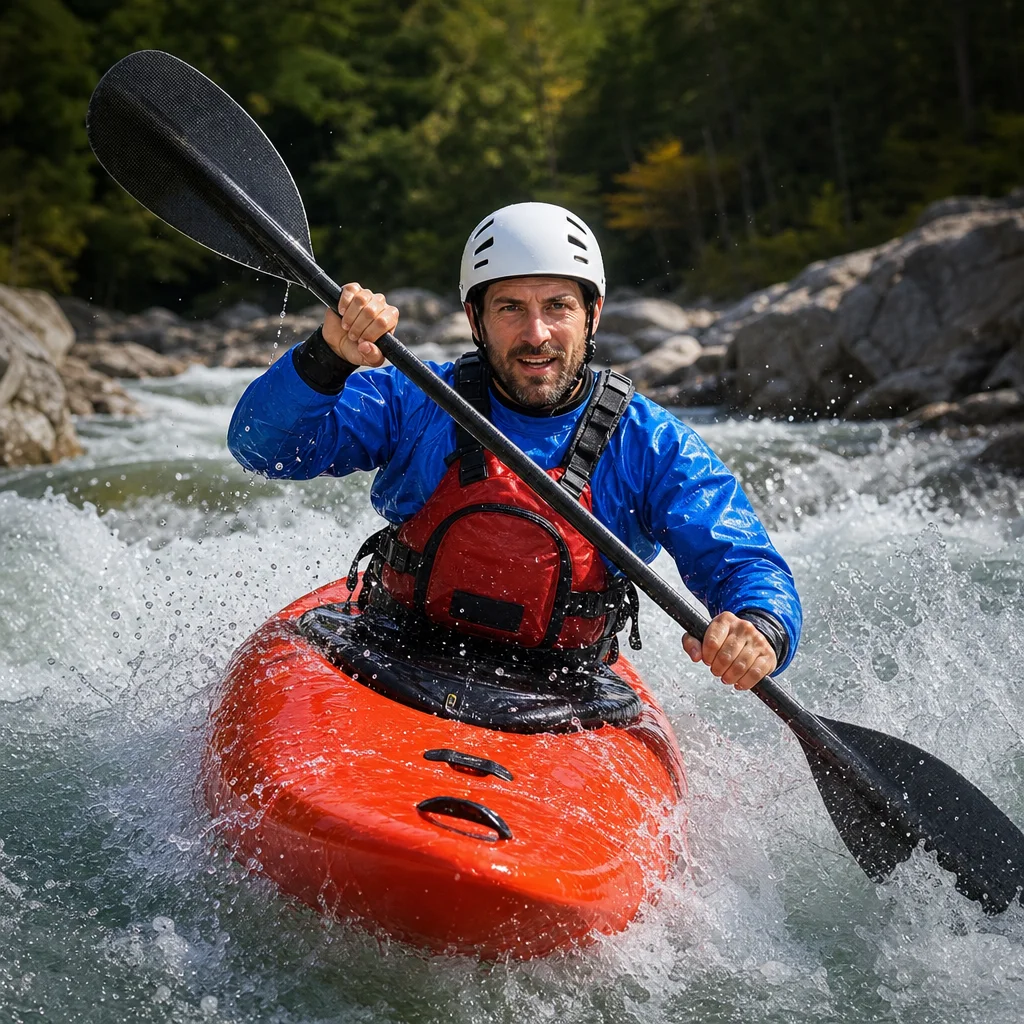
Missing a river turnoff can make you feel as if you need to fix the mistake immediately. That reaction often leads to rushed ferrying, unstable backpaddling, or a last-second move toward a shoreline you haven’t assessed.
The better response is to stop treating the original turnoff as the only acceptable outcome. Once you’re past it, your job is to keep the group together, identify the safest available water, and choose a revised plan based on the river you’re actually on.
Stabilize Before You Try to Correct Course
Your first priority is control, not distance. Keep your kayak pointed in a stable direction, maintain enough momentum to steer, and avoid making a hard move simply because the missed turnoff is still visible behind you.
If the current is pushing you toward a hazard, use the strokes you already know to move into safer water. Depending on the river, that may mean:
- Angling toward an open eddy
- Moving away from a strainer, undercut bank, rock garden, or spillway
- Holding the center of a clear channel temporarily
- Using controlled backstrokes to reduce speed before choosing a landing
A missed turnoff is usually recoverable when you still have time and space. It becomes more serious when you let the river carry you into the next decision without actively making one.
Don’t Chase a Disappearing Turnoff
Trying to paddle upstream from moving water can be appropriate in a broad, slow section with plenty of room. It’s a poor default in constricted or technical water. A forceful upstream attempt may turn your kayak sideways, reduce your ability to see downstream, or carry you into rocks while you’re focused on the bank behind you.
If the turnoff is more than a few strokes away, the current is strong, or the approach requires crossing the main flow at an awkward angle, assume that the original option may be gone. Look for the next safe control point instead.
Communicate the Change Clearly
On a group trip, the paddler who misses the turnoff should communicate as soon as it’s safe to do so. Use the signals your group agreed on before launching. If voice carries, a short message is better than a detailed explanation:
- “I missed it.”
- “I’m stable.”
- “Next safe eddy.”
- “Continue only if you have clear water.”
The group should avoid splitting into an unplanned chase. A stronger paddler may be able to catch up, but following someone into an unknown section can turn one navigation error into several.
If the river is too loud for reliable communication, move to a visible eddy or shoreline position before discussing the plan. Make sure every paddler knows whether the revised plan is to regroup, continue to the next takeout, or get off the water at the first practical location.
Reassess the River Ahead
Once you’ve stabilized, identify what lies downstream and what options remain. Your decision should account for more than the distance to the next map feature.
Consider:
- Current speed and river width
- The next rapid, ledge, or constriction
- Whether the missed turnoff was a takeout, side channel, portage, or access point
- The availability of eddies before the next hazard
- Shoreline access and the condition of the banks
- Your group’s experience, fatigue, and equipment
- Whether the next section was part of the original plan
A turnoff that leads to a calm side channel may be replaceable by the next eddy. A takeout above a rapid may not be. If the next planned section includes water your group hasn’t assessed, don’t assume that familiarity with the current section transfers automatically.
Check the next decision point: Before continuing, compare your actual position with a current river map, guidebook, or trip plan, and confirm that the next downstream section is appropriate for your group and conditions. River access, hazards, and restrictions can change, so use local information when it’s available.
Choose Among Three Recovery Options
Most missed turnoffs lead to one of three practical choices: catch a safe eddy, land at the next reasonable access point, or continue through a known section to a later takeout.
Catch a Safe Eddy
An eddy gives you time to regroup and examine the river. Enter it only when the approach is clear and you can make the move without crossing into a hazard.
As you enter, reduce your angle and keep your body balanced. A strong eddy line can turn the kayak unexpectedly, so avoid leaning aggressively toward the current. Once inside, move far enough from the eddy line to stay in controlled water.
From there, you can wait for the group, review the map, and decide whether an upstream ferry is sensible. If the eddy is small, shallow, or close to a hazard, it may be better as a brief staging point than as a place to assemble the entire group.
Land at the Next Practical Access Point
If the original takeout is behind you and the next section is unsuitable, look for a safe landing rather than forcing a return. A gravel bar, open bank, or established access point may provide a better solution than an improvised climb at a steep or brush-covered shoreline.
Before landing, check the current at the bank, submerged obstacles, private-property concerns, and how you’ll get the boats and people out. Don’t trade a navigation problem for a swim, a damaged kayak, or an unsafe scramble.
If the landing isn't an official access point, respect posted restrictions and local land-use rules. You may need to carry boats farther or arrange a pickup from a location that is reachable by road.
Continue Through a Known Section
Continuing can be reasonable when the downstream route is familiar, conditions are within your group’s ability, and everyone has enough energy and daylight. It’s not a good choice merely because turning around feels inconvenient.
Set a new endpoint. Estimate the additional distance and time, then consider whether the group has enough food, water, warm layers, and daylight for the change. If the revised route includes a rapid or hazard you haven’t scouted, stop at the next reliable opportunity and assess it from shore.
When an Upstream Ferry Is Reasonable
An upstream ferry can recover some missed turnoffs, but it requires the right combination of river width, current speed, boat control, and open space. You need room to angle across the current without being pushed into rocks, strainers, or another vessel.
Before attempting it, ask:
- Can you clearly see the route back to the turnoff?
- Is the water between you and the turnoff free of hazards?
- Can you enter the current without losing control?
- Do you have enough strength for the crossing and the return?
- Can the rest of the group wait safely while you make the move?
If any answer is uncertain, continue to a safer control point. Intermediate paddlers sometimes overestimate how much ground they can regain because the bank appears close. In moving water, a short diagonal crossing can require substantial effort, and the cost of a failed attempt is often higher than the cost of continuing downstream.
Prevent the Same Mistake on the Next Section
After the immediate problem is resolved, identify why the turnoff was missed. Common causes include approaching too fast, looking only at the shoreline, following another boat without confirming the route, or relying on a bend or landmark that looks different from the water.
For the rest of the trip:
- Have the lead paddler identify the turnoff before the group reaches it.
- Slow down upstream of the decision point when the river allows.
- Look for channel shape, current direction, and shoreline openings rather than one isolated landmark.
- Keep enough spacing to see signals without creating a long gap.
- Confirm the next stopping point before launching from an eddy.
- Mark known hazards and turnoffs on a waterproof map or navigation device.
The person in front shouldn't be expected to make every navigation decision alone. A second paddler can watch the opposite bank, compare the river with the map, and confirm the route before the group commits.
A Simple Recovery Checklist
When you miss a river turnoff:
- Control the kayak. Move away from immediate hazards and avoid a rushed correction.
- Account for the group. Communicate whether you’re stable and where you intend to regroup.
- Find the next control point. Look for an eddy, clear shoreline, or known downstream access.
- Recheck the route. Confirm the next section, hazards, access, and remaining daylight.
- Choose deliberately. Ferry back only when the water and space make it a low-risk option.
- Set a revised endpoint. Make sure the whole group understands the new plan.
The most useful recovery isn't always the one that returns you to the original route. It’s the one that keeps the group out of avoidable hazards and gives you enough control to finish—or end—the trip safely. Once you’re back on shore, update your notes with the missed turnoff, the visual cues you overlooked, and the safer decision point you’ll use next time.